
Plants are masters of adaptation. When conditions aren’t ideal, they respond in ways that can seem strange—like stretching sideways, leaning dramatically, or twisting unnaturally. If you’ve noticed your houseplant tilting toward the window or bending at odd angles, you’re not imagining things. This growth pattern often signals an underlying issue, most commonly related to light or root health. Understanding the cause is the first step to correcting it and restoring balanced, upright growth.
While some plants naturally grow in sprawling or trailing forms, a sudden shift from vertical to horizontal growth in an otherwise upright species is a red flag. Whether it’s a fiddle leaf fig leaning like the Tower of Pisa or a peace lily curving toward the wall, these signs point to environmental stress. Addressing them early prevents long-term damage and supports stronger, healthier development.
Understanding Phototropism: Why Plants Reach for Light
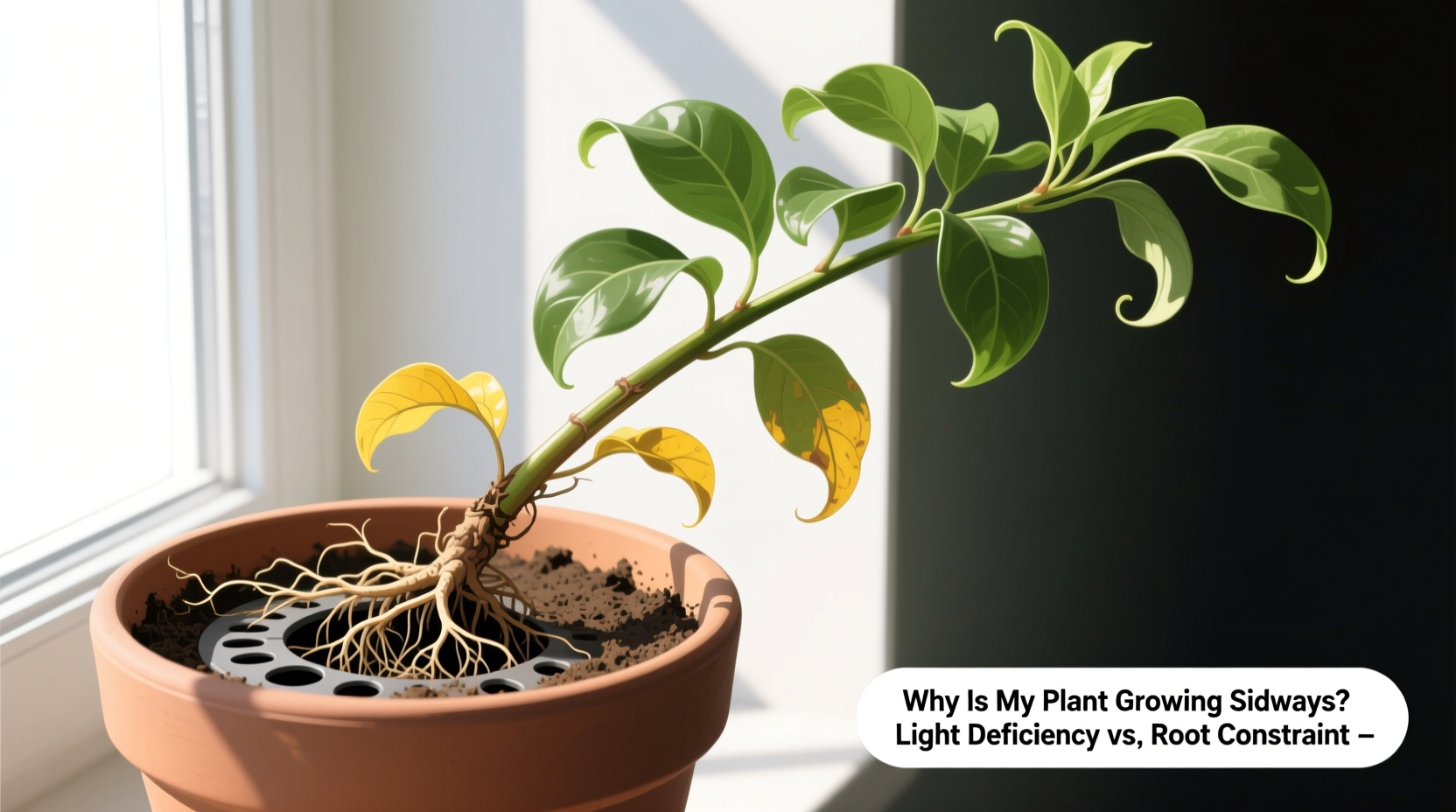
At the heart of many sideways-growing plants is phototropism—the natural tendency of plants to grow toward a light source. In the wild, this helps them compete for sunlight beneath dense canopies. Indoors, however, artificial lighting setups and fixed window positions create uneven exposure, leading to lopsided development.
When light comes predominantly from one direction—such as a south-facing window—plants elongate their stems on the shaded side to reposition their leaves toward the light. This causes the entire plant to lean. Over time, the stem may become weak, stretched, and unable to support itself without intervention.
Not all plants react the same way. High-light lovers like pothos, rubber plants, and monstera are especially prone to phototropic bending. Low-light tolerant species such as snake plants or ZZ plants may show slower responses but will still lean if left unrotated for months.
Signs Your Plant Is Seeking More Light
- Stems elongating and appearing thin or leggy
- Leaves spaced far apart (increased internodal distance)
- One-sided foliage development
- Visible curvature toward windows or lamps
- New growth consistently emerging on one side
Correcting light imbalance doesn’t always require moving the plant. Strategic rotation, supplemental lighting, and reflective surfaces can significantly improve symmetry without disrupting your room layout.
Root Health: The Hidden Factor Behind Sideways Growth
Beneath the soil, unseen issues can compromise a plant’s stability and posture. Root systems anchor the plant and absorb water and nutrients essential for structural integrity. When roots are damaged, overcrowded, or rotting, the plant loses its ability to stand upright—even if light conditions are perfect.
Root-bound plants, common in fast-growing species, develop circular root patterns that restrict nutrient uptake and oxygen flow. As the root ball fills the container, the plant becomes top-heavy and unstable, often tipping over or leaning due to poor anchorage.
“Over 60% of indoor plant issues originate below the surface. A wobbly plant isn’t just about light—it’s often a cry for root space.” — Dr. Lena Torres, Urban Horticulturist & Botanical Researcher
Root rot, caused by overwatering or poor drainage, softens the root structure and leads to decay. Without firm roots, the base of the plant weakens, causing it to flop or grow sideways despite adequate light. Symptoms include yellowing leaves, mushy stems at the base, and a foul odor from the soil.
How to Check Root Health
- Gently slide the plant out of its pot, supporting the base of the stem.
- Inspect the roots: healthy ones are firm and white or tan; rotted roots are brown, black, and slimy.
- Look for roots circling tightly around the soil mass—a sign of being root-bound.
- If more than two-thirds of the roots are damaged or encircling, repotting is necessary.
Other Contributing Factors Beyond Light and Roots
While light and root issues are primary culprits, several secondary factors can contribute to sideways growth:
- Gravitropism disruption: Some plants lose their sense of “up” due to physical disturbance, such as being knocked over or frequently shifted.
- Uneven watering: Consistently watering one side of the pot encourages roots to grow asymmetrically, pulling the plant off-center.
- Pest infestation: Insects like spider mites or scale can weaken stems and reduce vigor, making plants more prone to bending.
- Genetic variation: Certain cultivars naturally exhibit vining or cascading habits—ensure you're not mistaking normal growth for a problem.
Additionally, mechanical stress—like pets brushing against a plant or HVAC drafts—can cause persistent leaning. These forces trigger thigmomorphogenesis, a process where plants alter their growth patterns in response to touch or wind pressure.
Mini Case Study: The Leaning Fiddle Leaf Fig
Sarah, a plant enthusiast in Chicago, noticed her fiddle leaf fig was leaning sharply toward the living room window. Despite regular watering and fertilizing, new leaves emerged only on the right side, and the trunk had developed a 30-degree angle over six months.
She initially assumed it needed more light and moved it closer to the window—only to see the tilt worsen. After consulting a local nursery, she learned that while light was a factor, the real issue was root constriction. The plant had been in the same pot for three years, and roots were circling the interior.
Sarah repotted the fig into a larger container with fresh, well-draining soil and began rotating it weekly. Within two months, new growth appeared more evenly, and the plant gradually straightened as she staked the stem temporarily. Her experience highlights how multiple factors—light and roots—can interact, requiring a holistic solution.
Step-by-Step Guide to Correct Sideways Growth
Fixing a leaning plant involves diagnosis, correction, and ongoing maintenance. Follow this timeline to restore balance and promote upright development:
Week 1: Assess and Diagnose
- Observe the direction of lean and correlate it with light sources.
- Check for signs of root issues: wobbliness, slow drainage, yellow leaves.
- Determine if the plant is root-bound or suffering from rot.
Week 2: Adjust Environment
- Rotate the plant 90 degrees every 7 days.
- Add a grow light opposite the current lean to balance exposure.
- Ensure the pot is level and placed away from strong air currents.
Week 3: Repot If Necessary
- Select a new pot 1–2 inches larger in diameter with drainage holes.
- Use a suitable soil mix (e.g., cactus/succulent blend for arid plants, peat-based for tropicals).
- Loosen circling roots gently and trim any rotted sections with sterilized scissors.
- Replant at the same depth, water lightly, and stake if needed.
Weeks 4–8: Monitor and Support
- Continue rotating weekly.
- Watch for new growth direction—ideally more centered.
- Use soft plant ties or stakes to guide upright development without damaging stems.
- Avoid heavy pruning during recovery to minimize stress.
Month 3+: Maintain Balance
- Establish a routine care schedule including rotation and seasonal repotting.
- Inspect roots annually during spring, the ideal time for transplanting.
- Adjust lighting as seasons change—winter sun angles differ from summer.
Troubleshooting Table: Common Causes and Solutions
| Symptom | Likely Cause | Solution |
|---|---|---|
| Plant leans toward window | Uneven light exposure (phototropism) | Rotate weekly; add supplemental lighting |
| Wobbly base, easy to pull from pot | Root-bound or insufficient root mass | Repot into a larger container with fresh soil |
| Mushy stem base, foul smell | Root rot from overwatering | Trim affected roots; repot in dry, aerated mix |
| Leggy growth, sparse leaves | Chronic low light | Move to brighter location or use full-spectrum grow lights |
| Sudden lean after repotting | Transplant shock or improper planting depth | Stake temporarily; ensure correct depth and firm soil contact |
Frequently Asked Questions
Can I fix a plant that’s already leaning severely?
Yes, in most cases. While you can't reverse old growth, new stems and leaves will grow upright once light and root issues are corrected. Use a stake to gently guide the main stem back into position, securing it loosely with plant tape. Avoid forcing it straight, which could snap the trunk.
Should I prune the leaning part of my plant?
Pruning can help, but timing matters. If the lean is due to etiolation (stretching from low light), cutting back encourages bushier, more compact growth. However, do this only after improving light conditions—otherwise, the plant will simply stretch again. Always use clean tools and prune just above a leaf node.
How do I know if my plant needs more light beyond leaning?
Additional signs include pale or smaller-than-usual leaves, slow growth, lack of flowering in bloomers, and frequent leaf drop. A simple test: place your hand between the plant and the light source. If the shadow is faint or diffuse, light levels are likely too low. Bright, sharp shadows indicate sufficient intensity.
Essential Care Checklist
✔️ Weekly: Rotate plant 90°
✔️ Biweekly: Check soil moisture and leaf color
✔️ Monthly: Inspect for pests and dust leaves
✔️ Annually (spring): Evaluate need for repotting
✔️ As needed: Install grow lights if natural light is inadequate
Conclusion: Restore Balance, Encourage Upright Growth
A plant growing sideways isn’t failing—it’s communicating. Whether it’s reaching desperately for light or struggling with unseen root constraints, every lean tells a story. By observing closely, adjusting care routines, and intervening when necessary, you can correct the trajectory and foster resilient, balanced growth.
Start today: rotate your plant, assess its roots, and evaluate its lighting. Small changes compound into dramatic improvements over time. Healthy plants don’t just survive—they thrive with symmetry, strength, and vitality. Take action now, and watch your green companions stand tall once more.




 浙公网安备
33010002000092号
浙公网安备
33010002000092号 浙B2-20120091-4
Comments
No comments yet. Why don't you start the discussion?