
A pre-lit Christmas tree should bring warmth, joy, and a festive glow to your home—not frustration from flickering lights. Yet, many households encounter this issue each holiday season. Flickering can range from a minor annoyance to a sign of a deeper electrical problem that could compromise safety. Understanding the root causes helps you fix the issue quickly and safely, ensuring your tree remains a centerpiece of cheer rather than concern.
Flickering in pre-lit trees often stems from how modern light strings are wired and powered. Unlike older incandescent setups, today’s LED-lit trees use low-voltage circuits with tight tolerances. A single malfunctioning bulb or poor connection can disrupt the entire strand. This article breaks down the most common electrical reasons behind flickering, offers practical solutions, and provides expert-backed advice to keep your tree shining steadily throughout the season.
How Pre-Lit Trees Are Wired: The Basics
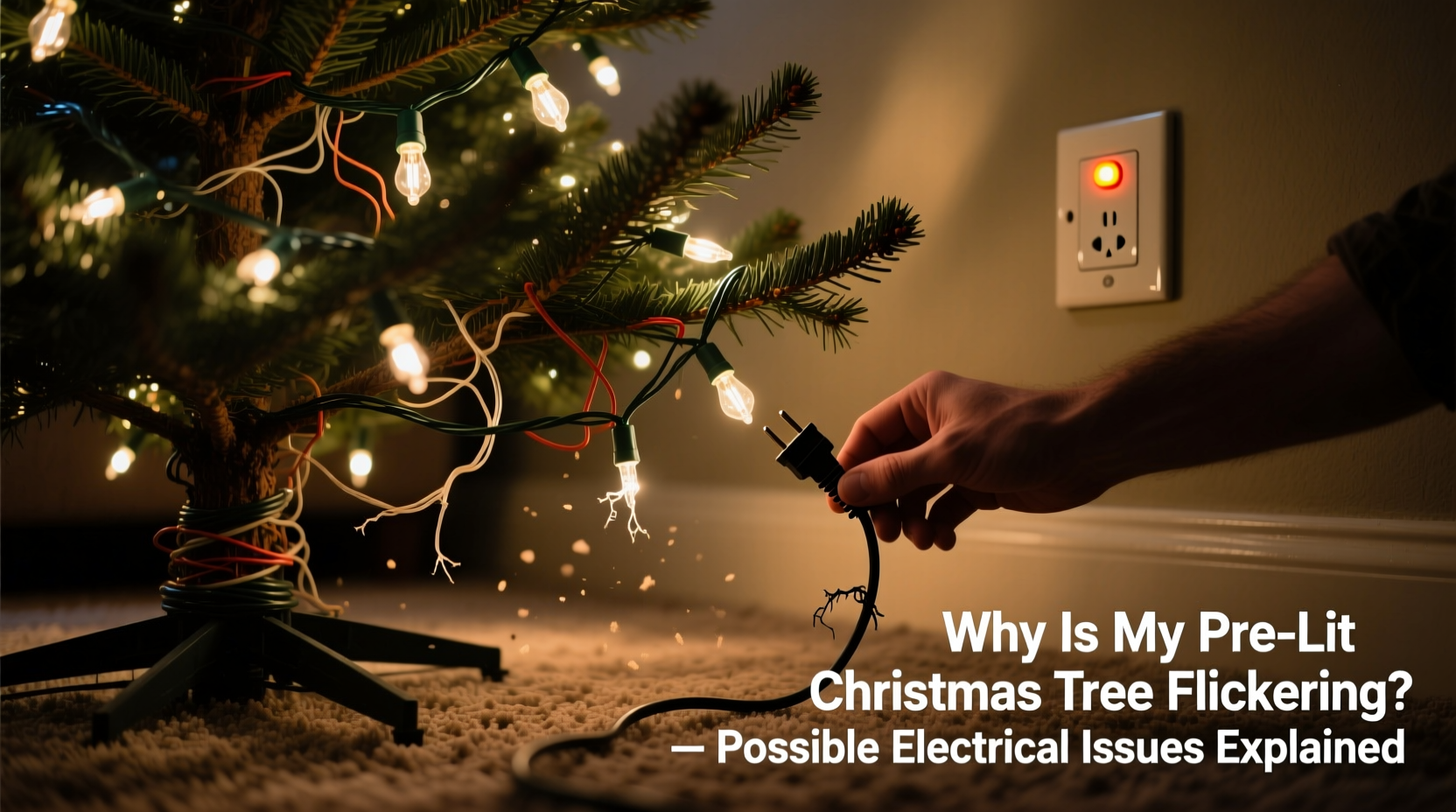
Most pre-lit Christmas trees use either series-wired or parallel-wired light strings—though the majority rely on series circuits. In a series configuration, electricity flows through each bulb in sequence. If one bulb fails, becomes loose, or develops high resistance, it interrupts the circuit and affects all bulbs downstream. This is why a single faulty bulb can cause sections—or even the entire tree—to dim or flicker unpredictably.
Modern LED trees often incorporate shunt technology within each bulb. When a filament burns out, the shunt activates and reroutes current to keep the rest of the string lit. However, if the shunt fails or the bulb isn’t making proper contact, flickering occurs as the circuit intermittently connects and disconnects.
Parallel-wired systems are less common but more reliable. Each bulb has its own path to power, so one failure doesn’t affect others. Still, even these can flicker due to voltage fluctuations or transformer issues. Knowing your tree’s wiring type helps determine where to focus troubleshooting efforts.
Common Electrical Causes of Flickering Lights
Flickering isn’t random—it’s a symptom of an underlying electrical inconsistency. Below are the most frequent culprits:
1. Loose or Poorly Seated Bulbs
The number one cause of flickering in pre-lit trees is a bulb that isn’t fully inserted into its socket. Even a slight gap can create intermittent contact, leading to blinking or dimming. This is especially common after storage, when vibrations during transport can jostle bulbs loose.
2. Corroded or Dirty Sockets
Over time, dust, moisture, or oxidation can build up inside light sockets. This corrosion increases electrical resistance, disrupting current flow and causing flickering. Trees stored in damp basements or garages are particularly vulnerable.
3. Faulty or Failing Bulbs
Even if a bulb appears intact, internal damage or shunt failure can cause inconsistent conductivity. LEDs are long-lasting, but they aren’t immune to early failure—especially if subjected to power surges during previous use.
4. Damaged Wiring or Pinched Cords
Bent branches during assembly can pinch internal wires, damaging insulation or breaking conductors. This leads to short circuits or intermittent connections that manifest as flickering. Inspect trunk and branch junctions carefully for signs of wire strain.
5. Overloaded or Low-Quality Power Adapter/Transformer
Many pre-lit trees, especially taller models, rely on a transformer to step down household voltage to safe levels for LEDs. Using an incorrect or worn-out adapter can result in unstable output, causing lights to pulse or dim. Cheap third-party replacements often lack proper regulation.
6. Outlet or Circuit Issues
Sometimes, the problem isn’t the tree at all. A loose wall outlet connection, shared circuit with high-draw appliances, or voltage fluctuations in your home’s electrical system can make lights flicker. Test the outlet with another device to rule this out.
“Intermittent lighting on pre-lit trees is almost always a sign of compromised continuity in the circuit—whether from a loose bulb, damaged wire, or failing component.” — Carlos Mendez, Residential Electrical Systems Technician
Step-by-Step Guide to Diagnose and Fix Flickering
Follow this systematic approach to identify and resolve the source of flickering without guesswork.
- Unplug the tree completely. Safety first—always work on disconnected equipment.
- Inspect all visible bulbs. Look for darkened, cracked, or loose bulbs. Gently press each one to ensure it’s seated firmly. Rotate slightly to clean contacts via friction.
- Check for bent or pinched wires. Trace cords along branches and trunk connections. Pay attention to areas where branches fold or connect to the center pole.
- Test the power source. Plug the tree into a different outlet known to work well. Avoid extension cords if possible; if needed, use a heavy-duty, surge-protected one.
- Use a light tester or multimeter (optional). For advanced users, test continuity across suspect bulbs or measure output voltage at the transformer. A reading below 90% of rated voltage indicates a power supply issue.
- Replace suspect bulbs. Use manufacturer-recommended replacements. Never mix LED and incandescent bulbs—they have different voltage requirements.
- Reassemble and test incrementally. After adjustments, plug in the tree section by section (if modular) to isolate problematic segments.
Troubleshooting Checklist
- ✅ Unplugged tree before inspection
- ✅ Checked all bulbs for looseness or damage
- ✅ Cleaned corroded sockets with cotton swab and isopropyl alcohol
- ✅ Verified correct transformer is being used (voltage and amperage match)
- ✅ Tested tree on a different, reliable wall outlet
- ✅ Inspected wiring for kinks, crushing, or exposed conductors
- ✅ Replaced any visibly faulty bulbs with correct type
- ✅ Ensured no other high-power devices share the same circuit
Do’s and Don’ts: Managing Electrical Integrity
| Do | Don’t |
|---|---|
| Use only manufacturer-specified replacement bulbs | Mix LED and incandescent bulbs on the same string |
| Store the tree in a dry, temperature-stable environment | Store in damp basements or hot attics |
| Plug directly into a wall outlet when possible | Daisy-chain multiple pre-lit trees unless explicitly allowed |
| Clean sockets gently with alcohol and a non-conductive tool | Use metal objects to probe sockets |
| Inspect annually before setup | Leave the tree plugged in unattended or overnight if flickering persists |
Real Example: A Case of Persistent Flickering
Sarah from Ohio purchased a 7.5-foot pre-lit LED tree five years ago. Last season, she noticed the top two sections flickered erratically. She replaced several bulbs but saw no improvement. Frustrated, she unplugged the tree and inspected the central pole connection. Upon removing the topmost branch, she found a thin copper wire had been pinched between the plastic housing and the metal rod. The insulation was worn, causing intermittent grounding. After carefully re-routing the wire and securing it with electrical tape, the flickering stopped immediately.
This case highlights how internal wiring damage—often invisible until disassembled—can mimic bulb-related issues. It also underscores the importance of checking mechanical stress points during annual setup.
When to Replace vs. Repair
While many flickering problems are fixable, some indicate the tree has reached the end of its safe lifespan. Consider replacement if:
- You’ve replaced multiple bulbs and checked all connections with no resolution.
- There are visible signs of melted insulation, scorch marks, or burning smells.
- The transformer feels excessively hot during operation.
- The tree is over 10 years old and uses outdated LED drivers or unregulated power supplies.
Manufacturers typically rate pre-lit trees for 5–10 seasons of regular use. Beyond that, cumulative wear on internal components increases fire risk and reduces reliability. Investing in a new, UL-listed model with a warranty may be safer and more cost-effective than repeated repairs.
Frequently Asked Questions
Can a flickering pre-lit tree be dangerous?
Occasional flickering due to a loose bulb is usually not hazardous. However, persistent or worsening flickering—especially accompanied by heat, sparks, or odor—can signal an electrical fault that poses a fire risk. Unplug the tree immediately and inspect thoroughly.
Why do only some sections of my tree flicker?
Pre-lit trees are often divided into multiple light circuits. If only one section flickers, the issue is likely isolated to that segment—such as a loose bulb, damaged wire in that branch, or a failed fuse specific to that circuit. Focus your inspection there first.
Is it worth repairing an older pre-lit tree?
It depends on the age and extent of damage. Simple fixes like replacing bulbs or cleaning sockets are worthwhile. But if internal wiring is compromised or the transformer is failing, repair costs and effort may exceed the value of a new tree. Prioritize safety over sentimentality.
Final Thoughts: Keep Your Tree Safe and Steady
A flickering pre-lit Christmas tree doesn’t have to ruin your holiday spirit. With a methodical approach, most electrical issues can be diagnosed and resolved using basic tools and careful observation. Remember that flickering is a warning sign—not just of inconvenience, but potentially of electrical instability. Addressing it promptly protects both your home and your peace of mind.
Start with the simplest explanations: loose bulbs and dirty sockets. Work your way up to wiring and power supply checks. Document what you find each season to stay ahead of recurring issues. And if uncertainty arises, don’t hesitate to consult a qualified electrician—especially when dealing with hardwired components or suspected shorts.




 浙公网安备
33010002000092号
浙公网安备
33010002000092号 浙B2-20120091-4
Comments
No comments yet. Why don't you start the discussion?