
Every holiday season, millions of homes rely on pre-lit Christmas trees for convenience and charm. But when the lights fail—especially in sections—the magic fades fast. A dark branch on an otherwise glowing tree isn’t just disappointing; it can be puzzling. The good news? Most lighting issues are fixable with a bit of patience and the right approach. Understanding how pre-lit trees work, what causes partial failures, and how to systematically troubleshoot them can save time, money, and seasonal stress.
How Pre-Lit Trees Work: The Basics
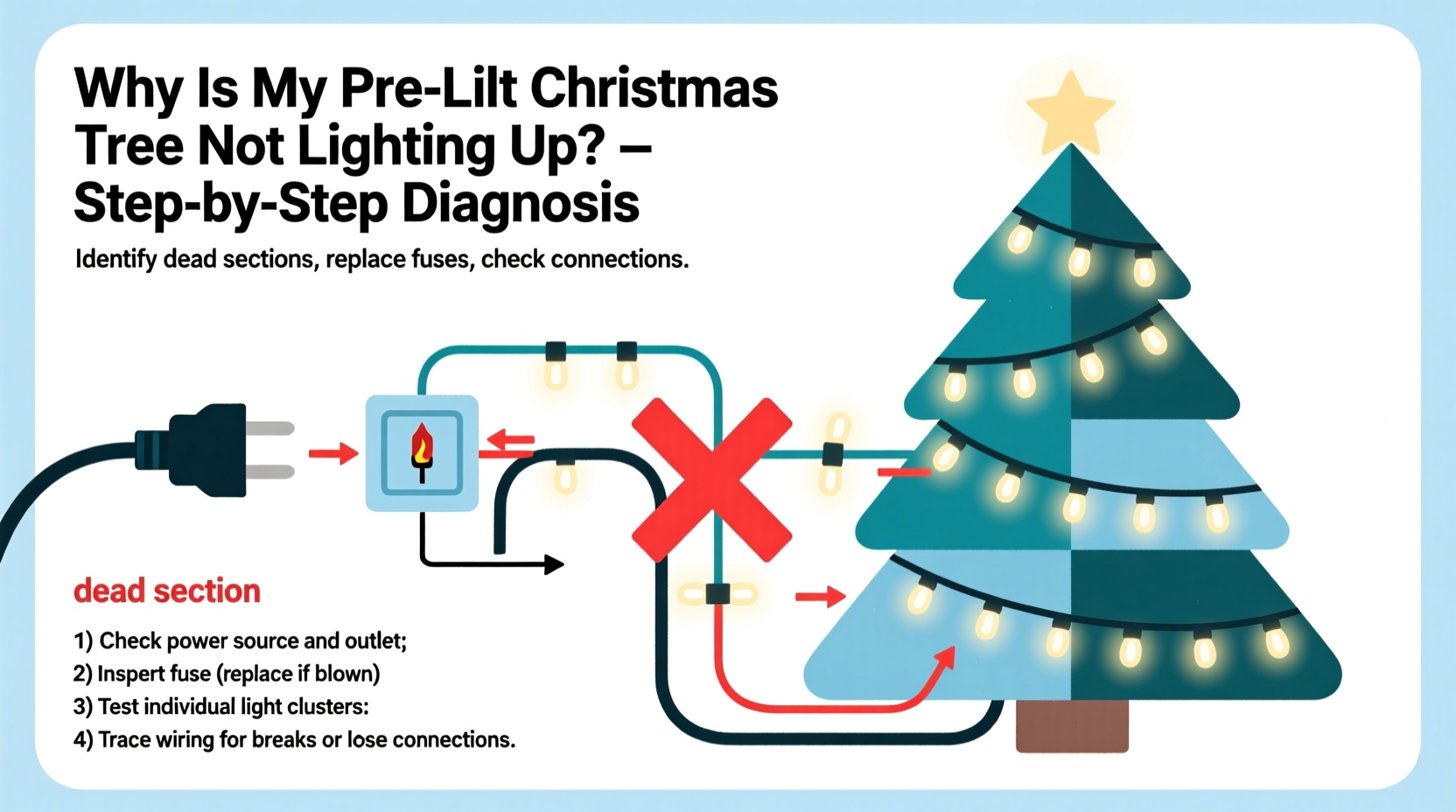
Pre-lit artificial Christmas trees come with permanent light strings woven into the branches during manufacturing. These lights are typically connected in a series or series-parallel configuration, meaning each bulb shares a circuit with others. If one bulb fails—or its connection breaks—it can disrupt the entire section. Unlike traditional string lights where you can replace strands, pre-lit trees require more precise diagnostics because the wiring is embedded and often inaccessible without disassembly.
The lights are usually mini-incandescent or LED, with LEDs becoming more common due to their energy efficiency and longer lifespan. However, both types can suffer from similar failure points: loose bulbs, broken wires, faulty fuses, or power supply issues.
Common Causes of Dead Sections
A single dark zone on your tree doesn’t mean the whole setup is doomed. In most cases, only a portion of the circuit has failed. Here are the top reasons why sections go dark:
- Faulty or missing bulb: One burned-out or improperly seated bulb can break the circuit, causing an entire strand to go dark.
- Loose bulb connection: Over time, vibrations from assembly or storage can cause bulbs to shift slightly out of their sockets.
- Blown fuse: Many light strings have small fuses in the plug. A power surge or moisture exposure can blow these.
- Damaged wiring: Bent branches during packing or unpacking can pinch or sever internal wires.
- Power distribution issues: Some trees use multiple plugs or connectors between sections. A loose connection at the base or between tiers can cut power to upper sections.
- Defective controller or timer: If your tree uses a remote or built-in timer, a malfunction there may prevent certain lights from activating.
“About 70% of pre-lit tree lighting problems stem from a single bulb failure or poor socket contact. It’s rarely the entire string.” — Greg Thompson, Electrical Technician & Holiday Lighting Specialist
Step-by-Step Guide to Diagnosing Dead Sections
Follow this methodical process to identify and resolve lighting issues on your pre-lit tree. This guide assumes the tree is fully assembled and plugged in, but always disconnect power before handling components.
- Verify power source and outlet
Plug another device into the same outlet to confirm it’s working. Use a surge protector and ensure the tree’s main plug is fully inserted. - Check all connections between sections
If your tree assembles in tiers, disconnect and reconnect each segment. Look for bent pins, corrosion, or debris in the connectors. Wipe contacts with a dry cloth if needed. - Inspect the plug for fuses
Many pre-lit trees have a small access panel on the male plug containing two tiny fuses (usually 3–5 amp). Use a flashlight to check if they’re blackened or broken. Replace with identical fuses only—never higher-rated ones. - Test each bulb visually and physically
Walk around the dark section. Look for bulbs that are darkened, cracked, or visibly loose. Gently press each bulb into its socket. Incandescent bulbs often have a small filament that should be intact; if it’s broken, that’s likely your culprit. - Use a light tester or multimeter
For precision, use a non-contact voltage tester along the strand to detect where current stops. Alternatively, a multimeter set to continuity mode can help trace breaks in the circuit. - Swap suspect bulbs with known working ones
Remove a bulb from a functioning section and insert it into a questionable socket in the dark area. If the section lights up, the original bulb was faulty. - Examine wire routing for damage
Trace the wire path from the base of the dark section. Look for kinks, exposed copper, or crushed insulation—common near hinge points or where branches fold.
What to Do If No Bulbs Are the Issue
If all bulbs appear functional and connections are secure, the problem may lie deeper. Some pre-lit trees use “shunt-wired” bulbs, which allow current to bypass a dead bulb. However, if the shunt fails or the bulb is missing entirely, the circuit breaks. In such cases, replacing the bulb—even if it looks fine—can restore continuity.
Additionally, some LED trees use low-voltage drivers or rectifiers built into the base. If the driver fails, only parts of the tree may receive power. These units aren’t user-replaceable in most models, so contacting the manufacturer for a replacement part may be necessary.
Troubleshooting Table: Do’s and Don’ts
| Do’s | Don’ts |
|---|---|
| Unplug the tree before inspection | Never force a connector or bend pins |
| Use only manufacturer-specified replacement bulbs | Don’t mix bulb types (e.g., incandescent with LED) |
| Replace fuses with the correct amperage | Don’t overload the circuit with additional strings |
| Store the tree standing upright in a cool, dry place | Don’t pack the tree while lights are tangled or stressed |
| Clean bulbs gently with a dry microfiber cloth | Don’t use water or cleaning sprays near electrical components |
Real Example: A Case of the Mysterious Middle Section
Sarah from Ohio purchased a 7.5-foot pre-lit fir tree three years ago. Last holiday season, the top and bottom lit perfectly, but the middle third remained dark. She checked the outlet, reconnected all sections, and even tried a different power strip—all to no avail.
After reading online forums, she decided to test each bulb manually. On the second tier, she found one bulb slightly loose. When she pressed it down, it clicked into place—and the entire section flickered on. Later, she realized that during storage, the branch had been compressed, shifting the bulb just enough to break the circuit. Since then, she stores her tree with extra padding around the midsection and inspects every bulb before setup.
This case highlights how minor physical disruptions can lead to major lighting failures—and how simple fixes often solve seemingly complex problems.
Prevention Checklist: Keep Your Tree Glowing Year After Year
To minimize future lighting issues, follow this annual maintenance checklist:
- ✅ Carefully disassemble the tree after the holidays, noting connector positions
- ✅ Inspect all bulbs for looseness or damage before storing
- ✅ Wrap branches gently to avoid pinching wires
- ✅ Store in a dedicated tree bag with ventilation and rod support
- ✅ Keep in a climate-controlled environment—avoid attics or damp basements
- ✅ Test the tree before decorating each year, not after
- ✅ Label connectors if your tree has multiple power lines
- ✅ Replace aging bulbs proactively, especially if using incandescent lights
Frequently Asked Questions
Can I replace a section of lights on a pre-lit tree?
Most manufacturers do not design pre-lit trees for full strand replacement. However, individual bulbs and fuses can be replaced. For severe wire damage, some people retrofit LED rope lights along the branch, though this alters the original look. Check warranty terms—some brands offer free replacements within the first few years.
Why do only some colors go out on a multi-color tree?
In multi-color pre-lit trees, each color often runs on a separate circuit. If red lights are out but green and white work, the issue is isolated to the red circuit—likely a blown fuse, bad connection, or failed controller channel. Check the plug fuses specific to that color line and ensure the controller is set correctly.
Is it safe to cut out a dead section and reconnect the wires?
No. Cutting and splicing wires on pre-lit trees is unsafe and not recommended. These circuits are low-voltage but still pose fire and shock risks if improperly handled. Splices can overheat, and DIY repairs void warranties. Instead, contact the manufacturer for repair kits or consider professional rewiring services specializing in holiday décor.
When to Replace vs. Repair
Not every problem has a practical fix. Consider replacement if:
- The tree is over 5–7 years old and experiencing repeated failures
- Multiple sections are dark despite troubleshooting
- Wiring is visibly frayed or exposed throughout the trunk
- The manufacturer no longer supports the model with replacement parts
On the other hand, repair makes sense if:
- The issue is isolated to one bulb or fuse
- The tree is under warranty
- You’ve successfully fixed similar issues before
- It’s a high-end model worth the effort
“Treat your pre-lit tree like a long-term appliance. Regular care prevents most failures. A five-minute bulb check before decorating can save hours of frustration later.” — Linda Ruiz, Home Décor Technologist
Conclusion: Shine Bright This Season
A dark section on your pre-lit Christmas tree doesn’t have to dim your holiday spirit. With a clear understanding of how these systems operate and a structured approach to diagnosis, most lighting issues are solvable at home. Start simple—check connections, test fuses, and inspect bulbs—before moving to advanced checks. Preventive habits like careful storage and annual testing will extend your tree’s life and reliability for years to come.




 浙公网安备
33010002000092号
浙公网安备
33010002000092号 浙B2-20120091-4
Comments
No comments yet. Why don't you start the discussion?