
Pothos (Epipremnum aureum) is one of the most popular houseplants for beginners and experienced growers alike, thanks to its resilience and ease of propagation. Many gardeners choose to propagate pothos in water because it allows them to monitor root development closely. However, a common frustration arises when cuttings fail to produce roots—or worse, show signs of decline after initial promise. If your propagated pothos isn’t growing roots in water, you're not alone. This comprehensive guide breaks down the science behind successful rooting, identifies the most frequent causes of failure, and offers actionable solutions to get your cutting back on track.
Understanding Pothos Propagation Basics
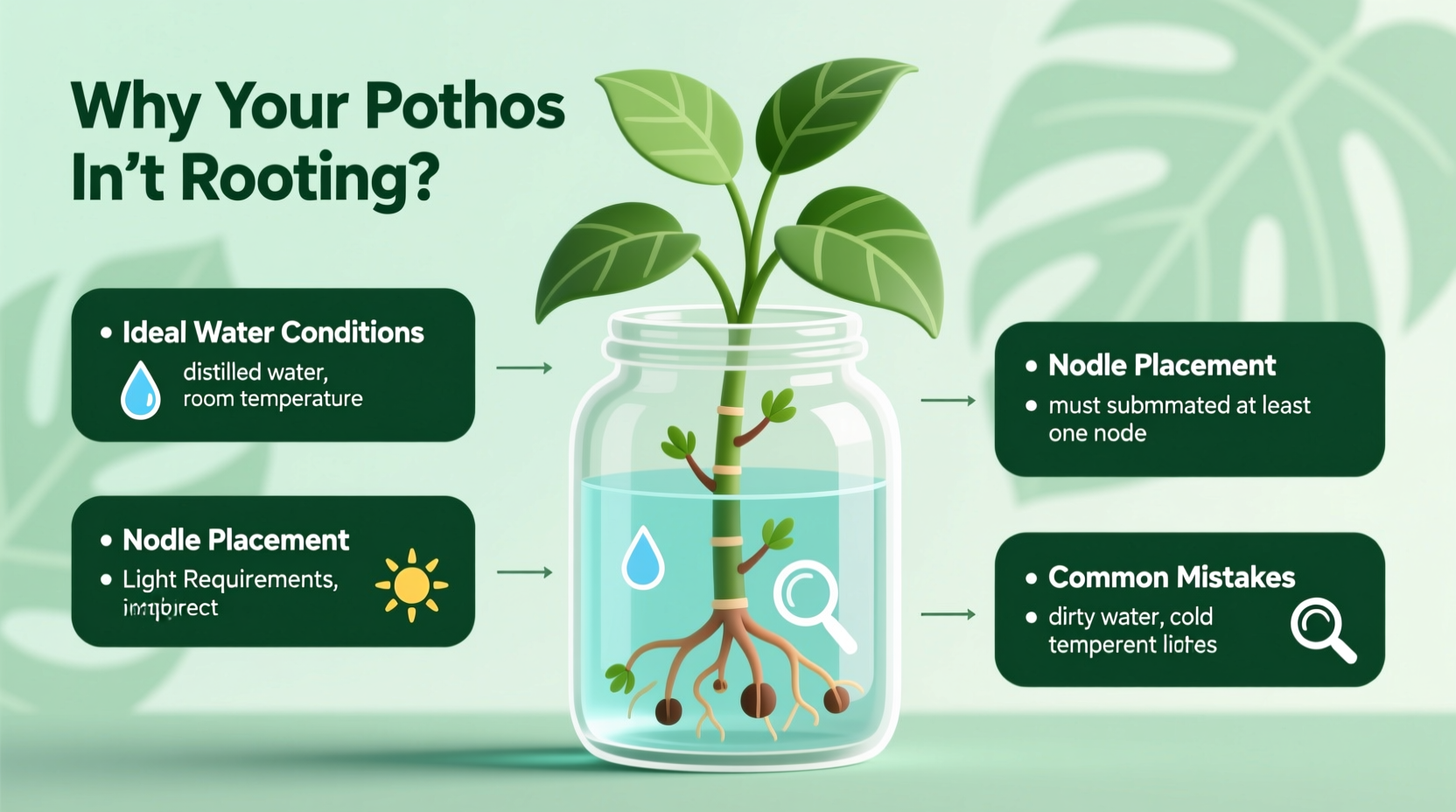
Propagation is the process of creating new plants from a portion of the parent plant. For pothos, stem cuttings placed in water can develop roots and eventually grow into independent plants. The key to success lies in understanding what the cutting needs during this vulnerable stage: access to oxygen, clean water, adequate light, and at least one node—the small bump on the stem where roots and leaves emerge.
A healthy pothos cutting should include:
- At least one node submerged in water (this is non-negotiable for root growth)
- One or two healthy leaves above the waterline
- A clean cut made just below a node using sterilized scissors or pruners
- No more than three leaves per cutting to reduce stress and water loss
While pothos is known for its hardiness, even the toughest plants have limits. When conditions aren’t ideal, root initiation stalls, and rot can set in. Recognizing early warning signs—like yellowing leaves, mushy stems, or cloudy water—is critical to intervention before the cutting is lost.
Common Reasons Why Your Pothos Isn’t Rooting
Several factors can prevent root development in water-propagated pothos. Identifying the root cause—no pun intended—is essential for correcting the issue.
1. Missing or Submerged Node
The single most common mistake is placing a cutting in water without including a node. Nodes are the only part of the stem capable of producing roots. If your cutting has no node, it will never root, regardless of care. Even if a node is present, submerging it too deeply or covering it with debris can inhibit oxygen exchange and slow growth.
2. Poor Water Quality
Stagnant, dirty, or chemically treated water creates an inhospitable environment for root development. Tap water often contains chlorine and fluoride, which can damage delicate tissues. Over time, organic matter from decaying leaves or bacterial buildup clouds the water and depletes oxygen, promoting rot instead of growth.
3. Inadequate Light Conditions
While pothos tolerates low light as a mature plant, cuttings require brighter, indirect light to photosynthesize and generate energy for root formation. Placing a jar in a dark corner or behind furniture drastically slows or halts progress. Direct sunlight, however, can overheat the water and scorch leaves.
4. Low Temperatures
Rooting is a metabolic process that depends on warmth. Pothos thrives in temperatures between 65°F and 80°F (18°C–27°C). In cooler environments—especially below 60°F (15°C)—cellular activity slows, delaying or stopping root initiation entirely.
5. Old or Unhealthy Cuttings
Cuttings taken from weak, diseased, or overly mature vines may lack the vitality needed to produce roots. Older stems become woody and less responsive to propagation. Similarly, cuttings with damaged nodes or excessive leaf loss struggle to sustain themselves during the rooting phase.
6. Lack of Oxygen
Submerged stems rely on dissolved oxygen in the water for respiration. Without regular water changes or proper container design, oxygen levels drop, especially if the jar is narrow or overfilled. Anaerobic conditions encourage harmful bacteria and root rot.
“Nodes are the engine of propagation. No node, no roots. It’s that simple.” — Dr. Linda Chen, Horticulturist and Plant Physiology Researcher
Troubleshooting Checklist: What to Do Now
If your pothos cutting hasn’t developed roots after 2–3 weeks, follow this checklist to diagnose and fix the problem.
- Confirm the presence of at least one node below the waterline.
- Inspect the stem for mushiness, discoloration, or foul odor—signs of rot.
- Replace the water with fresh, dechlorinated water immediately.
- Move the container to a bright spot with indirect sunlight (e.g., near an east-facing window).
- Trim off any yellow or dead leaves to reduce stress on the cutting.
- If the stem is soft or blackened, cut above healthy tissue and re-propagate.
- Ensure room temperature stays above 65°F (18°C).
- Change the water every 5–7 days to maintain oxygen levels and prevent algae.
Step-by-Step Guide to Successful Pothos Propagation in Water
Follow this proven method to maximize your chances of successful rooting.
- Select a Healthy Vine: Choose a vigorous, green stem from the parent plant with multiple nodes and healthy leaves.
- Make the Cut: Using sterilized scissors, cut 4–6 inches below a node at a 45-degree angle. This increases surface area for water absorption.
- Prepare the Cutting: Remove the lowest leaf so the node will be submerged. Leave 1–2 leaves above water.
- Use Clean Vessel: A clear glass jar or bottle works best—it allows you to monitor root growth and water clarity.
- Add Water: Fill the container with room-temperature, dechlorinated water. Submerge only the node(s), not the leaves.
- Place in Ideal Location: Set the jar in a warm area with bright, indirect light. Avoid direct sun and drafts.
- Maintain Weekly Care: Change the water weekly. Rinse the stem gently if slime or film develops.
- Wait Patiently: Roots typically appear in 7–14 days. Some varieties may take up to 3 weeks.
- Transplant When Ready: Once roots are 1–2 inches long, transfer to soil or continue growing in water with liquid fertilizer.
Do’s and Don’ts of Water Propagation
| Do’s | Don’ts |
|---|---|
| Use clean, sharp tools to make cuts | Use dull or unsterilized scissors (risk of infection) |
| Change water weekly | Let water sit for weeks without changing |
| Provide bright, indirect light | Place in dark corners or direct hot sun |
| Submerge only the node, not leaves | Leave leaves soaking in water (promotes rot) |
| Keep temperature above 65°F | Propagate near cold windows in winter |
| Be patient—some cuttings take time | Discard cuttings too early (wait at least 3–4 weeks) |
Real Example: Sarah’s Slow-Growing Pothos
Sarah, a home gardener in Portland, Oregon, took several pothos cuttings in late October. She placed them in decorative vases near her north-facing window. After three weeks, no roots had formed, and one cutting began to yellow. Concerned, she reviewed her setup and realized the light was too low and the water hadn’t been changed since day one. She moved the jars to a brighter shelf, replaced the water with filtered water, and trimmed the unhealthy leaves. Within ten days, tiny white roots appeared. By week six, all cuttings had robust root systems and were ready for potting. Her experience underscores how environmental adjustments—even late in the process—can revive stalled propagation.
Frequently Asked Questions
How long does it take for pothos to root in water?
Most pothos cuttings begin showing roots within 7 to 14 days under optimal conditions. Slower growth may occur in cooler temperatures or low light. Wait at least 3–4 weeks before concluding a cutting has failed.
Can I add fertilizer to the water during propagation?
It’s not recommended during the initial rooting phase. Fertilizer can burn tender new tissues and promote algae growth. Once roots are established (1–2 inches long), you can add a diluted liquid houseplant fertilizer (¼ strength) every 4–6 weeks if keeping the plant in water long-term.
Why is my pothos cutting turning yellow?
Yellowing leaves usually indicate stress. Common causes include poor water quality, insufficient light, lack of oxygen, or the natural aging of the leaf. If only one leaf yellows, remove it and continue care. If multiple leaves yellow rapidly, check for stem rot and replace the water immediately.
Expert Tips for Long-Term Success
Once your pothos develops roots, ongoing care determines whether it thrives or stagnates. While some people keep pothos in water indefinitely, others prefer transplanting to soil for faster growth. If transferring to soil, ease the transition by moistening potting mix and avoiding immediate exposure to intense light.
To support continued health:
- Continue changing water weekly, even after roots form.
- Wipe the jar regularly to prevent algae buildup.
- Rotate the container occasionally for even growth.
- Prune leggy vines to encourage bushier growth.
Conclusion: Patience and Precision Pay Off
Propagating pothos in water is simple in theory but requires attention to detail in practice. Most failures stem from overlooked basics: missing nodes, stale water, inadequate light, or cold temperatures. By systematically addressing each factor, you can revive stalled cuttings and achieve consistent success. Remember, propagation is as much about observation as it is about action. Watch your cuttings closely, respond to changes quickly, and trust the process. With the right care, nearly every healthy pothos cutting can develop strong roots and grow into a vibrant new plant.




 浙公网安备
33010002000092号
浙公网安备
33010002000092号 浙B2-20120091-4
Comments
No comments yet. Why don't you start the discussion?