
Rabbits are naturally curious, active animals whose behaviors often stem from deeply ingrained instincts. If you’ve noticed your rabbit persistently digging at the carpet—scratching, pawing, or even seeming obsessed—it’s not random mischief. This behavior is rooted in survival mechanisms developed over thousands of years in the wild. Understanding why your rabbit digs can transform frustration into empathy and guide you toward effective, humane solutions.
In domestic settings, rabbits don’t have access to the environments they evolved for—so their instincts manifest in unexpected ways. Carpet digging may seem odd, but it’s a natural expression of nesting, burrowing, marking territory, or even stress relief. By decoding what drives this behavior, you can create a home that satisfies your rabbit’s needs while protecting your floors and peace of mind.
The Evolutionary Roots of Rabbit Digging
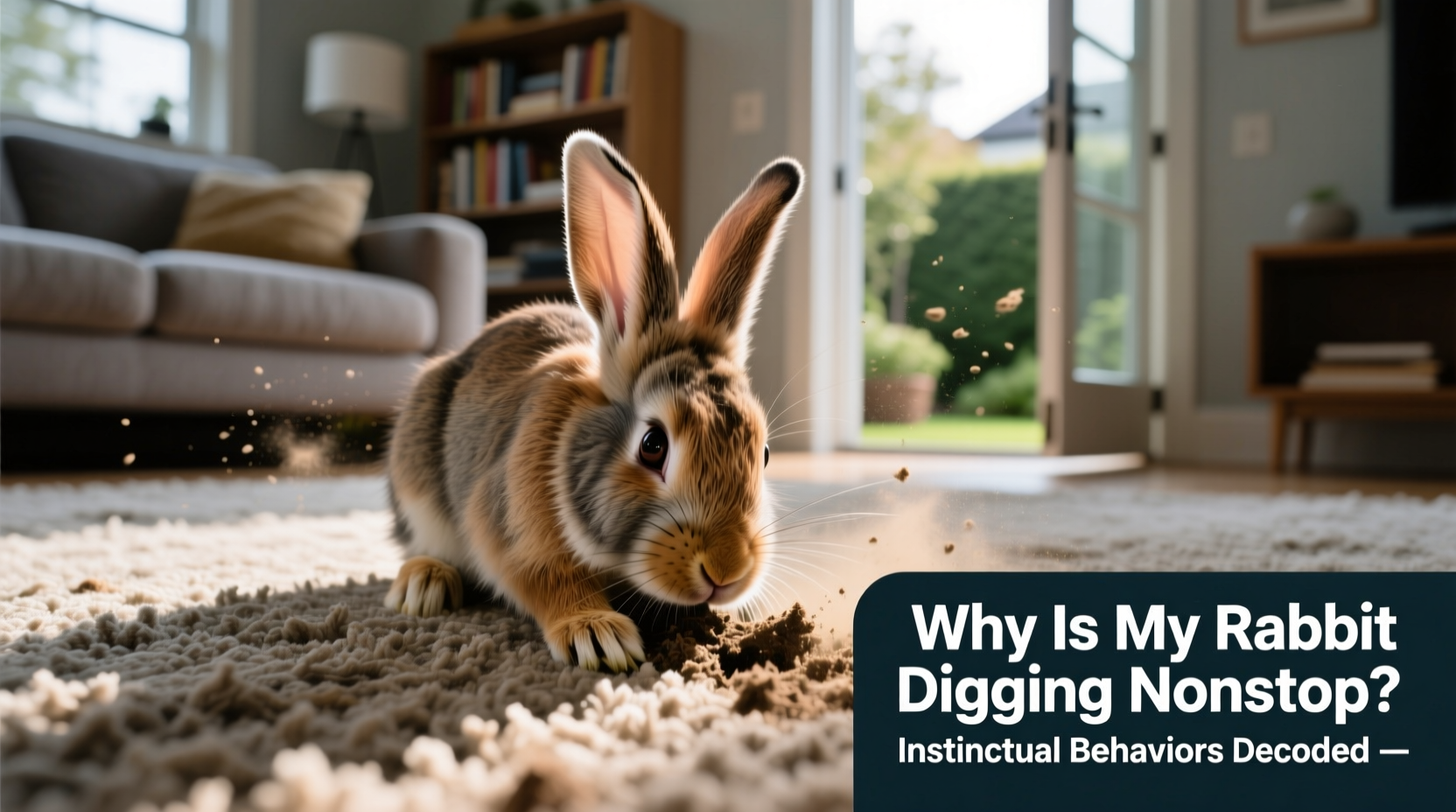
In the wild, rabbits are burrowers. They live in complex underground systems called warrens, which they dig themselves using powerful hind legs and sharp front claws. These burrows serve multiple critical functions: shelter from predators, temperature regulation, safe spaces for raising young, and escape routes during threats. Digging isn’t just a habit—it’s essential to their survival.
Domestic rabbits retain these instincts despite generations of selective breeding. Even when provided with food, safety, and companionship, their brains still operate on ancestral programming. When your rabbit digs at the carpet, it’s not trying to destroy your home; it’s responding to an internal drive to create a secure space.
This instinct is especially strong in unspayed or unneutered rabbits. Hormonal fluctuations, particularly in females preparing for potential litters, can intensify nesting behaviors. A female rabbit may dig obsessively as she prepares a “nest” for kits—even if she has no mate. Similarly, male rabbits may dig to mark territory or simulate den-building.
“Digging is one of the most fundamental rabbit behaviors. It's not something they grow out of—it's part of who they are.” — Dr. Rebecca Sanderson, Exotic Animal Behavior Specialist
Common Triggers Behind Carpet Digging
While digging is instinctive, specific environmental and emotional factors can amplify the behavior. Identifying the trigger helps determine whether intervention is needed and what kind of support your rabbit requires.
- Nesting impulses: Unspayed females often exhibit intense digging in response to hormonal cycles. This may include circling, pulling fur, and arranging soft materials.
- Seeking comfort or security: Rabbits may dig at quiet corners of carpet to create a cozy, enclosed space where they feel hidden from perceived threats.
- Boredom or lack of stimulation: Without sufficient toys, tunnels, or exploration opportunities, rabbits redirect energy into repetitive actions like carpet scratching.
- Attention-seeking: If digging previously resulted in interaction (even scolding), your rabbit may repeat it to initiate contact.
- Marking territory: Rabbits have scent glands under their chins and paws. Digging can deposit pheromones, signaling ownership of a space.
- Stress or anxiety: Changes in environment, loud noises, or new pets can cause displacement behaviors such as excessive grooming or digging.
How to Redirect Digging Behavior Humanely
You cannot eliminate digging instinct, nor should you try. Instead, provide appropriate outlets that align with your rabbit’s nature. The goal is not to stop digging—but to guide it toward acceptable areas.
Step-by-Step Guide to Redirecting Carpet Digging
- Assess the environment: Ensure your rabbit has enough space, hiding spots, and mental stimulation. A cramped cage encourages destructive outlet behaviors.
- Introduce digging boxes: Fill a sturdy cardboard box or plastic bin with shredded paper, hay, or soil-free potting mix. Place it in your rabbit’s favorite digging zone.
- Encourage use with rewards: Toss treats into the box or hide small snacks beneath the substrate to spark interest.
- Add tunnels and hideouts: PVC pipes, fabric tunnels, or wooden houses mimic burrow systems and satisfy the need for enclosed spaces.
- Use deterrents strategically: Cover high-dig zones with washable rugs, yoga mats, or double-sided tape (safe for paws) to discourage access without punishment.
- Spay or neuter your rabbit: This significantly reduces hormonally driven nesting and territorial behaviors in most cases.
- Rotate toys regularly: Novelty prevents boredom. Cardboard tubes, willow balls, and crinkle toys keep paws busy.
Recommended Digging Substrates
| Material | Pros | Cons | Safety Notes |
|---|---|---|---|
| Shredded paper (non-glossy) | Inexpensive, easy to replace, soft on paws | Can scatter easily | Avoid ink-heavy paper; never use newspaper regularly due to ink concerns |
| Oaten or timothy hay | Edible, encourages natural foraging | May attract insects if damp | Safe if ingested; ideal for nesting setups |
| Soil-free potting mix (organic) | Realistic texture, holds shape for tunneling | Messy, may get kicked outside box | Ensure no fertilizers, perlite, or vermiculite; supervise use |
| Fabric scraps (cotton only) | Good for nesting simulations | Can tangle or be ingested | Only offer under supervision; avoid synthetics or loose threads |
Mini Case Study: Luna the Lopsided Digger
Luna, a 2-year-old Holland Lop, began digging relentlessly at the corner of her owner’s bedroom carpet every evening. Her owner, Sarah, initially thought it was behavioral defiance and tried blocking the area with furniture. When Luna started chewing the leg of the bed nearby, Sarah consulted a rabbit-savvy veterinarian.
Upon evaluation, Luna was found to be unspayed and entering regular reproductive cycles. The vet explained that her digging was a nesting instinct triggered by rising progesterone levels. Sarah opted for spaying, introduced a hay-filled digging box near Luna’s sleeping area, and added a covered igloo for privacy.
Within three weeks, carpet digging decreased by 90%. Luna now spends time rearranging hay in her box and occasionally pulls strands to line her igloo—natural nesting redirected appropriately. Sarah reports improved overall calmness and reduced chewing.
This case highlights how medical, environmental, and behavioral strategies work best together—not in isolation.
Checklist: Creating a Dig-Friendly Rabbit Environment
Use this checklist to ensure your rabbit’s needs are met while minimizing unwanted carpet damage:
- ✅ Provide at least one dedicated digging box filled with safe material
- ✅ Offer multiple hiding places (tunnels, covered shelters)
- ✅ Spay or neuter your rabbit unless breeding intentionally
- ✅ Rotate enrichment items weekly to prevent boredom
- ✅ Protect high-traffic digging zones with removable floor covers
- ✅ Spend daily interactive time to reduce attention-seeking digging
- ✅ Monitor for signs of stress (thumping, overgrooming, aggression)
- ✅ Avoid yelling or physical punishment—these increase anxiety and worsen behavior
Frequently Asked Questions
Is carpet digging harmful to my rabbit?
Occasional digging is normal and harmless. However, prolonged digging on hard surfaces can lead to worn-down nails, sore paws, or muscle strain. Ingesting carpet fibers from chewing may cause gastrointestinal blockages. If digging becomes obsessive or injures your rabbit, intervention is necessary.
Will my rabbit grow out of digging?
No. Digging is a lifelong instinct, much like a bird’s urge to fly or a dog’s desire to dig. While intensity may fluctuate with age or health, the behavior won’t disappear. The key is redirection, not elimination.
Can I train my rabbit not to dig at all?
You cannot train a rabbit to suppress natural instincts entirely. Attempts to do so often result in stress-related issues like overgrooming, aggression, or depression. Instead, focus on training your rabbit *where* it’s okay to dig—just as you’d teach a dog where to relieve itself.
Expert Insight: Why Suppression Backfires
Punishing or discouraging natural behaviors leads to psychological distress in prey animals like rabbits. Unlike dogs, which are social pack animals trained through hierarchy, rabbits rely on predictability and safety. When their core behaviors are blocked without alternatives, they become anxious and withdrawn—or escalate the very behavior you’re trying to stop.
“When we label instinctual acts as 'bad behavior,' we misunderstand the animal. The solution isn't obedience—it's accommodation.” — Dr. Alan Prescott, Veterinary Ethologist
Experts emphasize that successful rabbit care involves designing environments that allow species-specific behaviors. Enrichment isn’t optional—it’s a welfare requirement.
Conclusion: Embrace the Instinct, Not the Damage
Your rabbit isn’t misbehaving by digging at the carpet—it’s communicating through instinct. What might look like destruction is actually a plea for a more suitable outlet. Rather than resisting this natural tendency, embrace it as a window into your rabbit’s inner world.
By providing proper digging opportunities, ensuring medical wellness (especially spaying/neutering), and enriching the living space, you honor your rabbit’s biology while preserving your home. The result is a happier, healthier companion who feels secure and understood.




 浙公网安备
33010002000092号
浙公网安备
33010002000092号 浙B2-20120091-4
Comments
No comments yet. Why don't you start the discussion?