
A quiet kitchen is one of the small joys of modern living—until it’s interrupted by an unexpected buzzing sound coming from your refrigerator in the middle of the night. If you’ve ever been jolted awake by a low, persistent hum or intermittent electric buzz from your fridge, you're not alone. While some refrigerator sounds are normal, a new or intensified buzzing noise—especially during nighttime hours—can signal an underlying issue that needs attention.
This guide dives deep into why refrigerators make buzzing noises at night, what components are typically involved, and how to diagnose and resolve the problem before it escalates into costly repairs or food spoilage. From simple fixes you can do yourself to signs that demand professional help, this article equips you with practical knowledge to restore peace—and proper cooling—to your kitchen.
Why Nighttime Buzzing Is More Noticeable
One reason a buzzing refrigerator might seem worse at night has less to do with the appliance itself and more to do with your environment. During the day, ambient household noise—footsteps, appliances, conversation, traffic—masks many subtle sounds. At night, when background noise drops significantly, even minor vibrations or electrical hums become more apparent.
Additionally, refrigerators often cycle on more frequently at night. As kitchen temperatures stabilize and doors remain closed for longer periods, the internal thermostat may trigger cooling cycles during off-peak hours. These cycles activate components like the compressor, condenser fan, and evaporator fan—all of which can produce audible sounds.
However, while increased audibility is normal, a sudden change in tone—such as a loud, continuous buzz instead of a soft hum—should not be ignored. That kind of shift often points to mechanical stress, electrical issues, or failing parts.
Common Causes of Refrigerator Buzzing Noises
Buzzing sounds originate from various internal systems. Identifying the source begins with understanding which components generate noise and under what conditions.
1. Compressor Strain
The compressor is the heart of your refrigerator’s cooling system. Located at the back or bottom of most models, it circulates refrigerant and maintains temperature. When functioning normally, it emits a low hum. But if it struggles due to age, dirt buildup, or voltage issues, it may produce a loud buzzing or vibrating sound.
Older compressors or those operating in poorly ventilated spaces often work harder, increasing both noise and wear. A failing start relay—a small electrical component attached to the compressor—can also cause buzzing without startup, indicating the motor isn’t receiving enough power to engage properly.
2. Condenser Fan Obstruction
The condenser fan helps dissipate heat from the coils, usually located near the compressor. Dust, pet hair, or debris can accumulate over time, causing the fan blades to wobble or rub against housing. This imbalance leads to a rhythmic buzzing or grinding noise, especially noticeable during cooling cycles.
In models where the fan runs continuously, any obstruction becomes a constant annoyance. The noise may intensify at night when other sounds fade.
3. Evaporator Fan Issues
Inside the freezer compartment, the evaporator fan circulates cold air throughout the refrigerator. If ice builds up around the fan motor or blades, it can restrict movement and create a high-pitched buzz. In some cases, worn bearings in older units generate similar sounds even without visible frost.
4. Water Inlet Valve Hum
If your refrigerator has a water dispenser or ice maker, the solenoid water inlet valve opens briefly to allow water flow. When activated, it produces a brief buzzing or humming noise. Normally, this lasts only a few seconds. However, if the valve is faulty or water pressure is too high, it may vibrate continuously or chatter, creating an ongoing buzz—sometimes triggered by automatic ice production late at night.
5. Loose Components or Mounting Screws
Vibrations from normal operation can loosen screws, brackets, or panels over time. A loose drip pan, side panel, or poorly secured refrigerator door can resonate with internal vibrations, amplifying otherwise quiet sounds into noticeable buzzing. This is particularly common in freestanding units placed on uneven floors.
“Many service calls for ‘noisy fridges’ turn out to be simple fixes—like cleaning the condenser coils or tightening a loose screw. Don’t assume it’s a major failure until you’ve ruled out the basics.” — Carlos Mendez, Appliance Repair Technician with 18 years of field experience
Step-by-Step Troubleshooting Guide
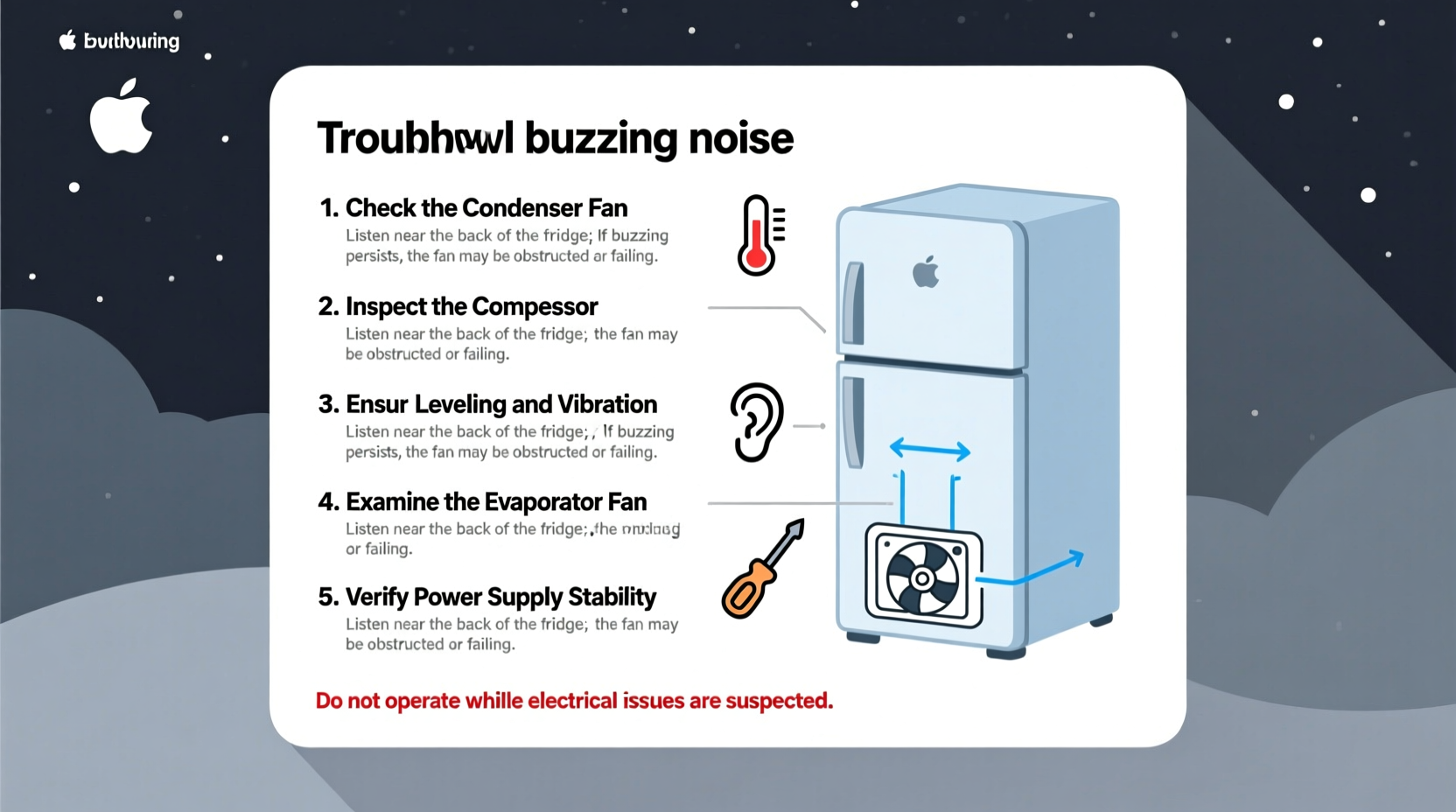
Before calling a technician, follow this systematic approach to identify and potentially resolve the buzzing noise.
- Unplug the refrigerator for safety. Wait two minutes to discharge residual electricity.
- Clear space around the unit. Pull it away from the wall to access the rear and underside.
- Inspect the condenser coils. Use a brush or vacuum to remove dust, lint, or pet hair. Dirty coils force the compressor and fan to work harder, increasing strain and noise.
- Check the condenser fan. Manually spin the blade. It should rotate freely without resistance or scraping. Listen for bearing noise or wobble.
- Examine the compressor area. Look for loose wires, damaged insulation, or a rattling start relay. Gently shake the relay—if you hear a rattle inside, it’s likely failed.
- Open the freezer compartment. Remove the rear panel (if accessible) to inspect the evaporator fan. Clear any ice buildup using a plastic tool and warm water (never metal).
- Test the water inlet valve. If buzzing coincides with ice maker activity, shut off the water supply and disable the ice maker. If the noise stops, the valve or water pressure may be the culprit.
- Ensure the refrigerator is level. Use a bubble level on the top shelf. Adjust the front leveling legs until balanced. An unlevel fridge can cause internal components to shift and vibrate.
- Plug the unit back in and observe. Stand nearby for 10–15 minutes to monitor when and how the noise returns.
Troubleshooting Checklist
- ✅ Unplugged refrigerator before inspection
- ✅ Cleared dust from condenser coils and fan
- ✅ Verified condenser fan spins freely
- ✅ Checked for ice buildup around evaporator fan
- ✅ Inspected water inlet valve and ice maker function
- ✅ Confirmed refrigerator is level on floor
- ✅ Listened for noise after reconnection
- ✅ Documented frequency and pattern of buzzing
When to Call a Professional
Some issues require expert tools and training. Avoid opening sealed refrigerant lines or attempting electrical repairs unless you’re certified. Here are red flags that warrant professional service:
- Persistent buzzing with no cooling: Indicates possible compressor failure or refrigerant leak.
- Burning smell or scorch marks: Signals electrical overload or short circuit.
- Frequent tripping of circuit breaker: May point to a failing compressor motor or wiring fault.
- Noise continues after cleaning and leveling: Suggests internal motor wear or bearing failure.
Technicians use multimeters to test relays, ammeters to check compressor draw, and manometers to verify refrigerant pressure. These diagnostics go beyond DIY capabilities and ensure accurate repair.
Preventive Maintenance to Reduce Noise
Regular upkeep prevents many common causes of buzzing. Incorporate these habits into your home maintenance routine:
| Maintenance Task | Frequency | Benefit |
|---|---|---|
| Vacuum condenser coils | Every 6 months | Improves efficiency, reduces compressor strain |
| Inspect and clean condenser fan | Annually | Prevents vibration and overheating |
| Defrost freezer (if manual) | As needed (¼ inch ice) | Reduces evaporator fan load |
| Check door seals | Twice yearly | Ensures efficient cooling, fewer cycles |
| Verify water pressure (for ice makers) | Annually | Prevents inlet valve chatter (ideal: 20–120 psi) |
Real Example: Nighttime Buzzing Resolved in Three Steps
Sarah, a homeowner in Portland, noticed her refrigerator started buzzing loudly every night around 2 a.m. The sound lasted 10–15 minutes and woke her husband regularly. She followed the troubleshooting steps above:
- She unplugged the fridge and cleaned the dusty coils at the back.
- Upon closer inspection, she found the condenser fan blade was bent slightly, touching the housing.
- After straightening the blade and ensuring free rotation, she reconnected the unit.
The buzzing stopped completely. Sarah later learned her cat had knocked over a storage bin behind the fridge months earlier, nudging it forward and bending the fan. A $0 fix saved her a service call and restored quiet nights.
Frequently Asked Questions
Is a buzzing refrigerator dangerous?
Not always. Occasional buzzing during cooling cycles is normal. However, continuous buzzing accompanied by heat, burning smells, or lack of cooling can indicate electrical or mechanical failure and should be addressed immediately.
Why does my fridge buzz only at night?
Nighttime silence makes normal sounds more noticeable. Additionally, refrigerators often run longer cycles at night due to stable kitchen temperatures and automatic defrost or ice-making schedules. If the noise is new or louder than before, investigate potential issues.
Can a dirty coil cause buzzing?
Yes. Clogged condenser coils reduce heat dissipation, forcing the compressor and fan to work harder. This added strain increases vibration and noise. Regular cleaning prevents this common cause of excessive buzzing.
Conclusion: Silence Starts with Smart Action
A buzzing refrigerator at night doesn’t have to disrupt your sleep or signal disaster. With a methodical approach, many causes can be diagnosed and resolved quickly—often without cost. Start with the simplest explanations: dust, imbalance, or minor obstructions. Use the checklist and step-by-step guide to rule out common culprits before assuming major failure.
Remember, preventive care extends not only the life of your appliance but also the peace of your home. By maintaining clean coils, ensuring proper ventilation, and staying alert to changes in sound, you protect both your food and your tranquility.




 浙公网安备
33010002000092号
浙公网安备
33010002000092号 浙B2-20120091-4
Comments
No comments yet. Why don't you start the discussion?