
If you’ve ever lifted the lid of your pot only to find a gluey, overcooked mess instead of fluffy grains, you’re not alone. Mushy rice is one of the most common kitchen frustrations—especially when cooking on the stovetop. While rice seems simple, small variations in water ratio, heat control, and timing can drastically affect the outcome. The good news? Understanding the differences between stovetop and rice cooker methods can transform your results. This guide breaks down why rice turns mushy, compares both techniques in detail, and provides actionable solutions for consistently perfect rice.
Why Rice Turns Mushy: The Science Behind Overcooked Grains
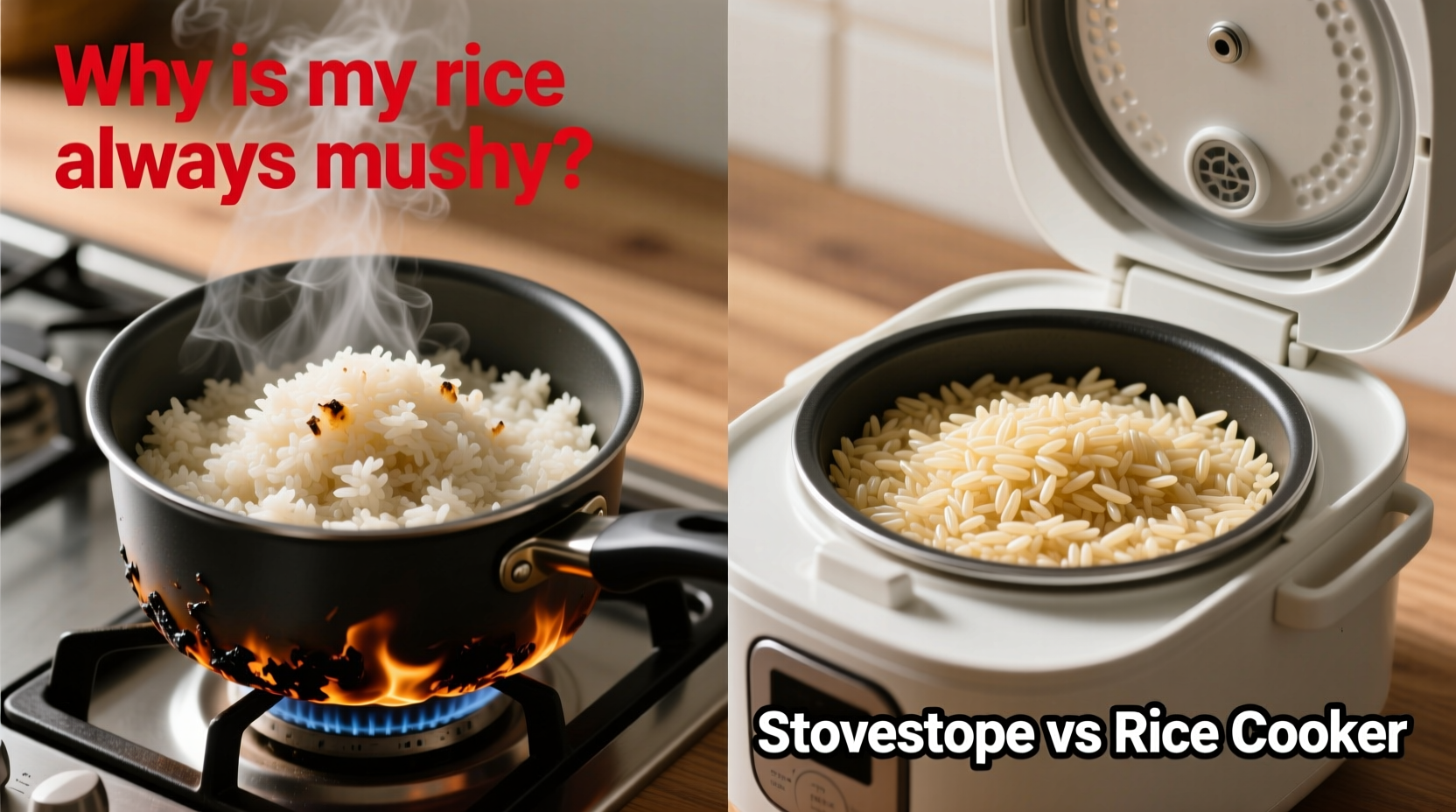
Rice becomes mushy when it absorbs too much water or is exposed to excessive heat for too long. During cooking, starch granules inside the rice grains swell and gelatinize. When this process goes too far—due to excess moisture or prolonged boiling—the grains rupture, releasing starch into the surrounding water. This creates a sticky, clumpy texture that’s far from ideal.
The primary culprits behind mushy rice include:
- Incorrect water-to-rice ratio: Too much water leads to oversaturation.
- Inconsistent heat: Boiling too hard or failing to reduce heat after boiling causes uneven cooking.
- Lid management: Removing the lid too often releases steam, forcing longer cook times and potential overcooking.
- Not rinsing rice: Excess surface starch contributes to stickiness, especially in white rice.
- Overcooking: Even an extra 5–10 minutes can turn tender rice into mush.
Stovetop Rice: Precision Required, But Prone to Errors
Cooking rice on the stovetop offers full control—but only if you're attentive. The traditional method involves bringing water to a boil, adding rice, reducing to a simmer, covering, and cooking for 15–20 minutes. However, maintaining a consistent low simmer is difficult on most home stoves, which often run too hot even on the lowest setting.
Many people assume that once the water boils, they can simply cover and walk away. But stove burners don’t self-regulate. A slight increase in heat can push the pot from simmer to rolling boil, increasing internal pressure and accelerating starch release. Additionally, lifting the lid to check progress disrupts the steam balance, prolonging cooking time and risking uneven absorption.
“On the stovetop, rice cooking is as much about feel as it is about measurement. It takes practice to recognize the right sound—the gentle hiss of a true simmer.” — Chef Daniel Park, Culinary Instructor at Boston Artisan Kitchen
Another issue is variability between pots and pans. Thin-bottomed cookware heats unevenly, creating hot spots that scorch some grains while others remain undercooked. Without a tight-fitting lid, steam escapes, altering the moisture dynamics critical to proper gelatinization.
Step-by-Step Guide to Better Stovetop Rice
- Rinse the rice: Use a fine-mesh strainer and cold water until runoff is clear (about 3–4 rinses).
- Measure accurately: Use a 1:1.5 ratio of long-grain white rice to water (e.g., 1 cup rice to 1.5 cups water).
- Use the right pot: Choose a heavy-bottomed saucepan with a tight-fitting lid to ensure even heating and minimal steam loss.
- Boil, then reduce: Bring to a rapid boil, stir once, then immediately reduce to the lowest possible heat.
- Cover and cook undisturbed: Cook for exactly 15 minutes. Do not peek.
- Rest off heat: Turn off the burner, leave covered, and let sit for 10 minutes to allow residual steam to finish the job.
- Fluff with a fork: Gently separate grains to prevent compaction.
Rice Cooker Advantage: Consistency Through Automation
A rice cooker eliminates many variables that plague stovetop cooking. These appliances use thermal sensors to detect temperature changes during the cooking process. As water is absorbed and the temperature inside the pot rises above 212°F (100°C), the cooker automatically switches from “cook” to “warm” mode, preventing overcooking.
This phase transition detection is key. Unlike a human who might misjudge timing or heat levels, a rice cooker precisely identifies when the water has been fully absorbed and the rice is done. This technology ensures that even if you walk away, your rice won’t burn or turn to mush.
Beyond automation, rice cookers maintain a sealed environment. Steam circulates evenly, promoting uniform cooking. Most models also feature a “keep warm” function that maintains optimal serving temperature without further cooking—something nearly impossible to achieve safely on the stovetop.
Mini Case Study: From Mushy Disaster to Flawless Results
Sophia, a home cook in Portland, struggled for years with gummy rice on her electric stove. She followed online recipes but consistently ended up with porridge-like results. After switching to a $40 fuzzy logic rice cooker, she noticed immediate improvement. By using the preset “white rice” function and sticking to the included measuring cup, her rice came out light and separated every time. She later realized her old pot wasn’t thick enough and her stove’s low setting was still too high—issues the rice cooker bypassed entirely.
“I used to think I just wasn’t cut out for cooking rice,” she said. “Now I make it twice a week without thinking. The machine does the work, and I get perfect results.”
Stovetop vs Rice Cooker: Detailed Comparison
| Factor | Stovetop Method | Rice Cooker |
|---|---|---|
| Water Ratio Accuracy | Highly dependent on user; easy to mismeasure | More forgiving due to automatic shutoff |
| Heat Control | Precise adjustment needed; prone to overheating | Automatically regulates based on internal temp |
| Consistency | Varies by cook, stove, and pot | Highly consistent across uses |
| User Attention | Requires monitoring and timing | Set-and-forget operation |
| Texture Outcome | Risk of mushiness or burning if not careful | Even, fluffy grains with minimal effort |
| Multifunctionality | Can be used for other cooking tasks | Some models offer steaming, slow cooking, etc. |
| Learning Curve | Moderate to high for consistent results | Low; follow manufacturer instructions |
The data shows that while the stovetop offers flexibility, it demands skill and attention. In contrast, the rice cooker trades manual control for reliability—ideal for busy households or those new to rice preparation.
Common Myths About Rice Cooking Debunked
Several misconceptions contribute to poor results. Addressing them can improve outcomes regardless of method:
- Myth: All rice needs the same water ratio. Brown rice typically requires more water (1:2 ratio), while sushi rice may need less (1:1.25).
- Myth: You should stir rice while cooking. Stirring breaks grains and releases starch, increasing stickiness.
- Myth: Instant rice is just “fake” rice. It’s pre-gelatinized and dehydrated, designed for speed, not inferior quality.
- Myth: Rice cookers are only for white rice. Modern models handle brown, wild, basmati, and even porridge settings.
Troubleshooting Checklist: Fix Mushy Rice for Good
Use this checklist to diagnose and correct issues in your rice-making process:
- ✅ Did you rinse the rice before cooking? (Especially important for white rice)
- ✅ Did you measure water precisely with a standard cup?
- ✅ Did you use a heavy-bottomed pot with a tight lid (stovetop)?
- ✅ Did you bring to boil, then immediately reduce to the lowest heat?
- ✅ Did you avoid lifting the lid during cooking?
- ✅ Did you let the rice rest for 10 minutes after cooking?
- ✅ Is your rice cooker functioning properly? (Check for mineral buildup or sensor issues)
- ✅ Are you using the correct setting for your rice type?
Frequently Asked Questions
Can I fix mushy rice after it’s cooked?
Once rice is overcooked, you can’t reverse the starch breakdown. However, you can repurpose it: spread it thinly on a baking sheet to dry slightly for fried rice, or blend it into rice pudding. Prevention is far more effective than correction.
Does the type of rice affect mushiness?
Yes. Short-grain varieties like sushi rice naturally have higher starch content and are meant to be slightly sticky. Long-grain types like basmati or jasmine should stay fluffy. Choosing the right rice for your dish matters as much as technique.
Is a high-end rice cooker worth the investment?
For occasional users, a basic $30–$50 model suffices. But if you eat rice daily or want versatility, a fuzzy logic or induction-heated cooker (like Zojirushi or Tiger) offers superior temperature control, better textures, and multi-menu functions. These can be a worthwhile long-term investment.
Master Your Method and Enjoy Perfect Rice
The difference between mushy and magnificent rice often comes down to consistency and control. The stovetop method rewards attention and experience but leaves room for error. The rice cooker prioritizes convenience and repeatability, making it ideal for dependable results with minimal effort.
Whether you choose to refine your stovetop technique or embrace appliance-assisted cooking, understanding the science of starch, water, and heat gives you power over the outcome. Start with precise measurements, proper rinsing, and undisturbed steaming. Then, evaluate your tools and habits honestly. Small adjustments yield dramatic improvements.




 浙公网安备
33010002000092号
浙公网安备
33010002000092号 浙B2-20120091-4
Comments
No comments yet. Why don't you start the discussion?