
Living with a roommate means sharing more than just space—it often means negotiating everything from chores to noise levels, and especially temperature. If you’re constantly adjusting the thermostat while your roommate shivers under a blanket, you’re not alone. One person feels like it’s summer; the other insists it’s arctic winter. This common household conflict stems from real physiological, psychological, and environmental factors. Understanding why your roommate is always cold—and how to find middle ground—can transform tension into harmony.
The Science Behind Feeling Cold
Body temperature perception isn’t uniform across individuals. What feels comfortable to one person may feel chilly or stifling to another. Several biological and lifestyle factors influence how cold someone feels.
- Metabolism: People with faster metabolisms generate more internal heat. Those with slower metabolic rates, particularly women and older adults, tend to feel colder because their bodies produce less heat at rest.
- Body composition: Muscle tissue generates more heat than fat. Individuals with higher muscle mass often feel warmer, even in cooler environments.
- Circulation: Poor blood flow, especially in extremities, can make someone feel cold regardless of ambient temperature. Conditions like Raynaud’s phenomenon or hypothyroidism amplify this sensation.
- Hormonal fluctuations: Women may experience temperature sensitivity during menstrual cycles, pregnancy, or menopause due to hormonal shifts affecting thermoregulation.
- Medications: Beta-blockers, certain antidepressants, and antihistamines can lower core body temperature or impair circulation.
“Temperature perception is highly individual. Two people in the same room can have vastly different comfort zones based on physiology and health status.” — Dr. Lena Torres, Clinical Physiologist and Thermoregulation Researcher
Environmental and Behavioral Factors
Beyond biology, the environment plays a critical role in how cold someone feels. Even if the thermostat reads 70°F (21°C), several elements can create microclimates within a room.
| Factor | Effect on Perceived Temperature | Solution |
|---|---|---|
| Drafts from windows or doors | Creates localized cold spots | Seal gaps, use draft stoppers |
| Carpet vs. hardwood floors | Floors affect radiant heat loss | Add rugs, wear slippers |
| Direct sunlight exposure | Warm during day, cold at night | Use curtains strategically |
| Proximity to HVAC vents | Uneven airflow causes discomfort | Adjust vent direction or use deflectors |
| Room insulation quality | Poor insulation = rapid heat loss | Upgrade insulation or use space heaters wisely |
Additionally, behavioral habits contribute significantly. A roommate who spends hours sitting still while studying or working may feel colder than someone moving around the apartment frequently. Clothing choices also matter: someone in lightweight cotton pajamas will naturally feel chillier than a roommate bundled in fleece.
A Real-Life Scenario: The Winter Roommate Standoff
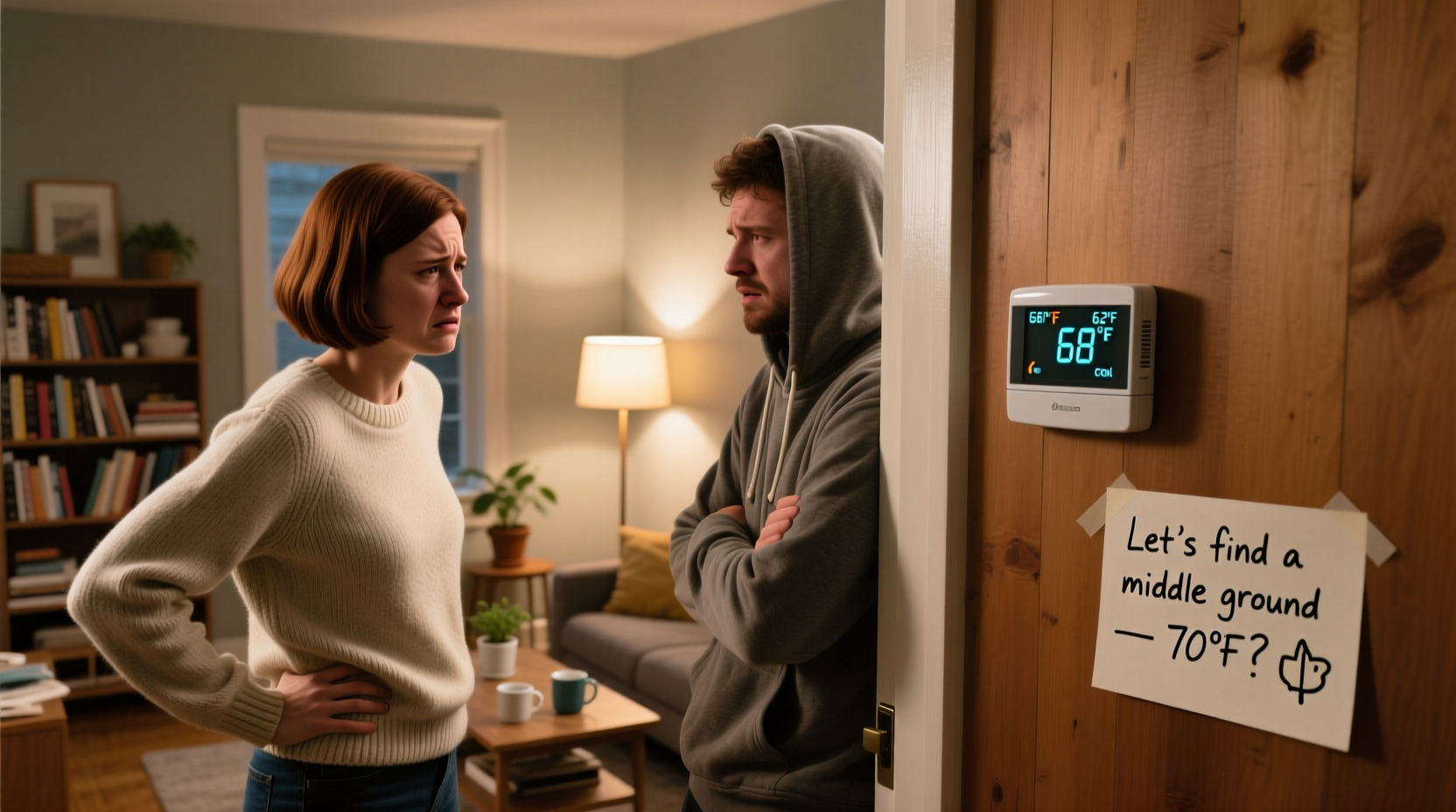
Consider Sarah and Jordan, roommates in a two-bedroom apartment in Chicago. During winter, Sarah keeps her bedroom door open and wears thick socks, yet complains the living room is “like an icebox” at 68°F. Jordan, meanwhile, sleeps with the window cracked and finds 68°F perfectly comfortable.
After weeks of silent thermostat battles, they decided to track indoor temperatures and habits. Using a smart thermometer, they discovered that Sarah’s side of the apartment was consistently 3–4 degrees colder due to an uninsulated exterior wall. Jordan, who works from home and moves around frequently, underestimated how sedentary Sarah’s job was—she spent eight hours daily at a desk near a drafty window.
Instead of arguing over numbers, they compromised: Sarah added a small rug and used a heated throw blanket, while Jordan agreed to close the window at night and raise the thermostat to 70°F between 6 PM and 10 PM—their shared evening hours. They also sealed the window gap with weather stripping. Within a week, both reported improved comfort without excessive energy costs.
Step-by-Step Guide to Finding Thermostat Harmony
Resolving temperature conflicts requires empathy, communication, and strategy. Follow these steps to reach a sustainable compromise.
- Open a non-confrontational conversation. Start by asking, “I’ve noticed we seem to feel the temperature differently. Can we talk about how to make it work for both of us?” Avoid blaming language like “You’re always turning it down!”
- Identify each person’s comfort range. Use a scale from 65°F to 75°F and ask when each of you starts feeling too hot or too cold. Write it down to visualize overlap.
- Measure actual room temperatures. Use a digital thermometer in different areas. You might discover inconsistencies due to poor airflow or insulation.
- Set zone-based schedules. Agree on a baseline temperature (e.g., 68°F) when no one is home, then allow temporary adjustments during shared hours. For example, raise to 71°F in the evening if both are present.
- Invest in personal solutions. Encourage individual adaptations like space heaters (used safely), heated blankets, fans, or moisture-wicking sleepwear.
- Review and adjust monthly. Seasons change, so should your agreement. Reassess comfort levels and energy bills every few weeks.
Do’s and Don’ts of Shared Temperature Management
| Do’s | Don’ts |
|---|---|
| Use programmable thermostats to automate changes | Change settings secretly without discussion |
| Wear layers instead of adjusting the thermostat | Leave windows open in winter to cool the space |
| Use fans in summer to enhance evaporative cooling | Set the AC below 68°F or heat above 75°F routinely |
| Seal drafts and insulate windows | Blame each other for sensitivity |
| Agree on emergency overrides (e.g., illness) | Let resentment build over small changes |
Practical Checklist for Roommates
Use this checklist to align expectations and prevent future disputes:
- ✅ Discuss temperature preferences openly and respectfully
- ✅ Measure room temperatures in different zones
- ✅ Agree on a baseline thermostat setting (e.g., 68–70°F)
- ✅ Set scheduled adjustments for mornings, evenings, and absences
- ✅ Purchase personal comfort items (blankets, fans, robes)
- ✅ Inspect and seal drafts around windows and doors
- ✅ Review agreement monthly and adjust as needed
- ✅ Split heating/cooling costs fairly based on usage patterns
Frequently Asked Questions
Why does my roommate feel cold even when the thermostat says it’s warm?
Thermostats measure air temperature, not how people experience it. Factors like drafts, radiant heat loss through walls, clothing, activity level, and individual metabolism mean two people can feel very different at the same setting. Your roommate may be in a cold microclimate or have a lower thermal comfort threshold.
Is there a scientifically ideal indoor temperature for shared spaces?
The U.S. Department of Energy recommends 68°F (20°C) in winter and 78°F (26°C) in summer for energy efficiency and general comfort. However, “ideal” varies by individual. Most adults find 68–72°F acceptable when dressed appropriately. The key is finding a range where both parties can adapt with minor personal adjustments.
Can we use a smart thermostat to help resolve this?
Yes. Smart thermostats like Nest or Ecobee allow scheduling, remote access, and occupancy sensing. You can program temperature shifts based on time of day or whether anyone is home. Some models even learn habits over time. Just ensure both roommates have access and agree on settings to avoid misuse.
Conclusion: Comfort Is a Shared Responsibility
Temperature wars don’t have to define your roommate relationship. Recognizing that feeling cold—or hot—is influenced by a mix of biology, behavior, and environment allows for more compassionate problem-solving. Instead of viewing the thermostat as a battleground, treat it as a shared tool for collective comfort.
The goal isn’t perfect symmetry in preference, but fairness in accommodation. By combining structural improvements, personal adaptations, and clear communication, you can maintain a peaceful home without freezing your budget or your relationship. Small compromises today lead to long-term harmony tomorrow.




 浙公网安备
33010002000092号
浙公网安备
33010002000092号 浙B2-20120091-4
Comments
No comments yet. Why don't you start the discussion?