
If you've ever argued over the thermostat with your roommate—sweating in a t-shirt while they're wrapped in three layers—you're not alone. This common household tension often boils down to one person feeling perpetually cold while the other feels just fine. But why? The answer isn't just about personal preference. It's rooted in physiology, gender differences, metabolism, circulation, and even psychological factors. Understanding the science behind temperature sensitivity can help reduce conflict and foster empathy in shared living spaces.
The Biology of Feeling Cold
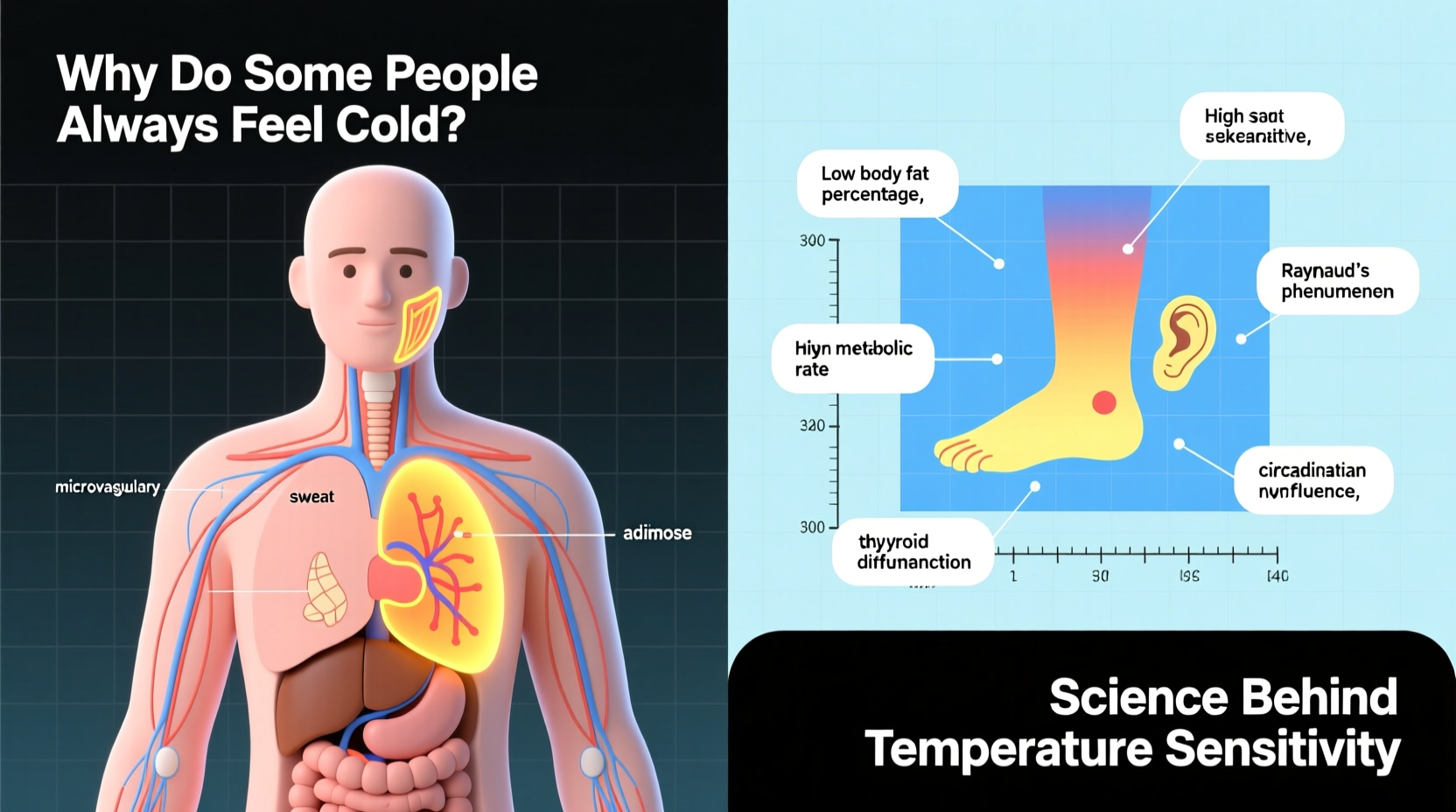
Human body temperature is tightly regulated by the hypothalamus, a region in the brain that acts as the body’s thermostat. While the average core body temperature is around 98.6°F (37°C), individual baselines can vary slightly. What differs more significantly is how people *perceive* temperature, especially at the skin level.
Peripheral temperature—how warm or cool your hands and feet feel—is largely influenced by blood flow. When the body senses cold, it constricts blood vessels in the extremities to preserve heat in the core. Some individuals experience this vasoconstriction more intensely, making their hands and feet feel icy even in mildly cool environments.
Women, on average, have lower resting metabolic rates than men and often have higher percentages of body fat distributed subcutaneously (just under the skin). While fat insulates the core, it can also make the skin more sensitive to temperature changes. This means women may feel colder at room temperature, even if their core temperature is normal.
“Women tend to have a lower skin temperature than men in the same environment, which contributes to their increased sensation of cold.” — Dr. Emily Stone, Thermoregulation Researcher, Johns Hopkins University
Metabolism and Body Composition
Your metabolic rate—the speed at which your body burns calories to produce heat—plays a major role in how warm you feel. People with faster metabolisms generate more internal heat and are less likely to feel chilly. Factors affecting metabolism include:
- Muscle mass: Muscle tissue is more metabolically active than fat. Individuals with higher muscle mass generate more heat at rest.
- Thyroid function: An underactive thyroid (hypothyroidism) slows metabolism and commonly causes persistent cold sensitivity.
- Diet and hydration: Skipping meals or being dehydrated reduces energy production and impairs circulation.
- Age: Metabolism tends to slow with age, which is why older adults often prefer warmer environments.
A roommate who eats irregularly, exercises infrequently, or has an undiagnosed thyroid condition may genuinely feel colder than someone with a robust metabolism—even in the same room.
Gender Differences in Temperature Perception
Multiple studies confirm that women report feeling colder than men in identical conditions. A 2015 study published in Nature Climate Change found that standard office temperature settings are based on a 1960s model calibrated for the average 40-year-old, 154-pound man—leaving many women uncomfortably cold.
Key reasons for this disparity include:
| Factor | Effect on Men | Effect on Women |
|---|---|---|
| Average muscle mass | Higher (more heat production) | Lower (less baseline heat) |
| Skin blood flow | Less reactive to cold | More prone to vasoconstriction |
| Core vs. skin temp | Warmer skin in neutral temps | Cooler skin, especially hands/feet |
| Hormonal fluctuations | Minimal daily variation | Progesterone drops in luteal phase increase cold sensitivity |
Additionally, estrogen influences how the body regulates temperature. During certain phases of the menstrual cycle, particularly premenstrually, women may feel colder due to shifts in hormone levels.
Environmental and Behavioral Influences
Even with biological predispositions, external factors heavily influence how cold someone feels. These include clothing choices, activity level, and micro-environment within a shared space.
For example, a roommate who sits still for long periods—such as while studying or working at a desk—generates less body heat than someone moving around frequently. Similarly, wearing cotton socks instead of wool, or sitting on a cold floor, can drastically increase the sensation of cold.
Room layout matters too. Drafts from windows, air conditioning vents, or poorly insulated walls create microclimates. One person might be in a warm spot near a radiator, while another sits directly in a draft.
Mini Case Study: The Dorm Room Dilemma
Jamie and Taylor shared a college dorm room in a historic building with uneven heating. Jamie, a 20-year-old woman majoring in literature, wore hoodies year-round and kept a blanket on her bed. Taylor, a male engineering student, slept in shorts and complained the room was stuffy.
After weeks of thermostat battles, they measured temperatures in different parts of the room using a digital thermometer. They discovered a 7°F difference between Taylor’s side (near the heater) and Jamie’s (under a drafty window). By rearranging furniture, adding a small rug, and using a space heater on a timer near Jamie’s desk, they achieved a compromise. Jamie also started doing light stretches every hour to boost circulation.
Their solution wasn’t about winning the thermostat war—it was about recognizing that both experiences were valid and addressing the real environmental causes.
Medical Conditions That Increase Cold Sensitivity
Persistent coldness isn’t always just about biology or environment. Certain medical conditions can cause abnormal temperature sensitivity:
- Anemia: Low red blood cell count reduces oxygen delivery and impairs heat production.
- Hypothyroidism: Underactive thyroid slows metabolism, leading to chronic fatigue and cold intolerance.
- Raynaud’s phenomenon: Blood vessels in fingers and toes overreact to cold, causing numbness and color changes.
- Diabetes: Nerve damage and poor circulation can alter temperature perception.
- Low body weight: Insufficient fat stores reduce insulation.
If your roommate consistently feels cold—even in warm rooms, while bundled up—it may be worth suggesting a visit to a healthcare provider. Early diagnosis of conditions like hypothyroidism can dramatically improve quality of life.
Practical Solutions for Roommates
Living with someone who feels cold differently than you doesn’t have to lead to constant conflict. With empathy and strategy, you can create a shared environment that works for both of you.
Step-by-Step Guide to Finding Thermal Harmony
- Measure actual temperatures: Use a digital thermometer to check different areas of the room. Identify drafts or hot spots.
- Set a baseline thermostat range: Aim for 68–72°F (20–22°C), the generally accepted comfort zone. Adjust by 1° every few days to find mutual acceptance.
- Layer strategically: Encourage each person to dress in layers rather than adjusting the whole environment. Thermal underwear, sweaters, and slippers allow personal control.
- Use localized solutions: A small space heater for the cold-prone roommate, or a fan for the one who overheats, reduces global adjustments.
- Improve insulation: Add draft stoppers, thermal curtains, or rugs to stabilize room temperature.
- Sync habits: Agree on thermostat schedules—cooler at night, warmer in the morning—based on shared routines.
Do’s and Don’ts for Managing Temperature Conflicts
| Do | Don’t |
|---|---|
| Communicate openly about comfort levels | Mock or dismiss their feelings (“It’s not that cold!”) |
| Use zone-specific heating or cooling | Constantly adjust the thermostat without notice |
| Support healthy habits (nutrition, movement) | Assume laziness or exaggeration |
| Test for drafts and insulation issues | Blame personality differences for physical sensations |
Frequently Asked Questions
Can stress make someone feel colder?
Yes. Stress triggers the sympathetic nervous system, which can cause vasoconstriction—reducing blood flow to the extremities and creating a sensation of coldness, especially in the hands and feet. Chronic stress may amplify baseline cold sensitivity.
Why do some people feel cold but have warm skin?
This paradox can occur due to hormonal imbalances or nervous system dysregulation. For instance, hyperthyroidism can cause internal heat but poor circulation, leading to mixed signals. It may also reflect psychological factors like anxiety, which alters temperature perception.
Is it normal to feel colder as you age?
Yes. Aging reduces metabolic rate, thins subcutaneous fat, and impairs circulation and sweat regulation. Older adults often need warmer environments for comfort and safety, as prolonged cold exposure increases fall risk and cardiovascular strain.
Final Thoughts: Empathy Over Thermostats
The question \"Why is my roommate always cold?\" isn’t just about temperature—it’s about understanding human variability. Biology, environment, and health all intersect to shape how we experience comfort. Rather than viewing thermostat disagreements as petty conflicts, see them as opportunities to practice empathy and problem-solving.
Small accommodations—like letting one person use a heated blanket or agreeing on a nightly temperature schedule—can preserve harmony without sacrificing personal comfort. And sometimes, simply acknowledging, “I know it feels cold to you, even if I don’t feel it,” can defuse tension more effectively than any adjustment to the HVAC system.
“The most effective climate control in a shared space isn’t the thermostat—it’s communication.” — Dr. Lena Patel, Behavioral Scientist, Cornell University
Checklist: Achieving Temperature Peace in Shared Living
- ✅ Measure room temperature in different zones
- ✅ Discuss individual comfort preferences without judgment
- ✅ Invest in personal solutions (blankets, fans, rugs)
- ✅ Set a fair thermostat schedule
- ✅ Check for underlying health issues if coldness is extreme
- ✅ Revisit the arrangement monthly and adjust as seasons change




 浙公网安备
33010002000092号
浙公网安备
33010002000092号 浙B2-20120091-4
Comments
No comments yet. Why don't you start the discussion?