
It’s a quiet holiday disappointment: you bring home a lush, aromatic Fraser fir or Balsam fir—its scent instantly evoking childhood memories—and within 48 hours, needles cling to your sweater, litter the floor, and coat your pet’s fur. Worse, the fragrance fades faster than expected, leaving behind a dry, brittle silhouette that seems more like a cautionary tale than a centerpiece. This isn’t just bad luck. Early shedding in scented Christmas trees is almost always rooted in biological stress, supply-chain compromises, or well-intentioned but misguided care. The good news? With precise timing, hydration discipline, and environmental awareness, most real trees can retain over 90% of their needles for four to six weeks—even with daily scent diffusion.
What causes early needle drop—and why scent makes it worse
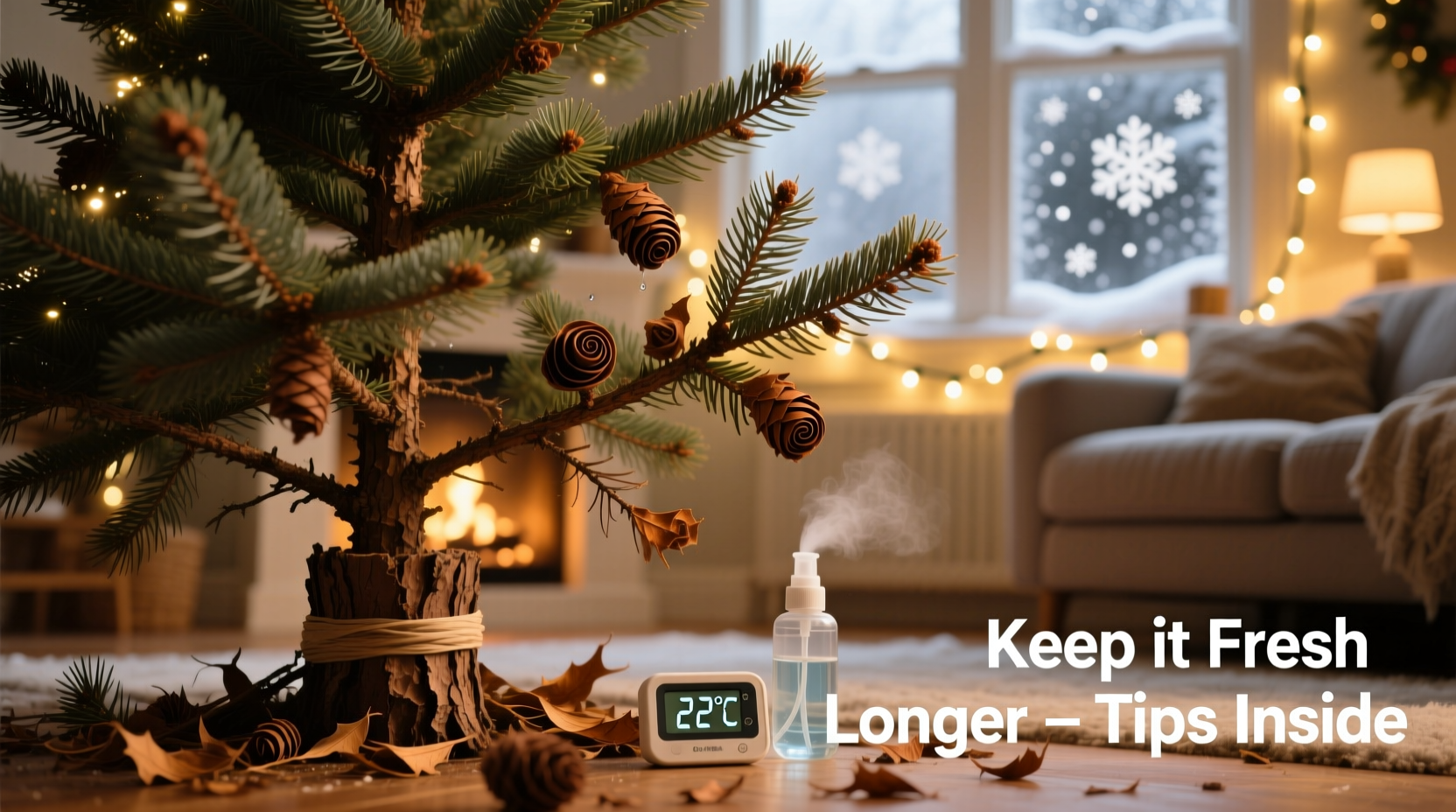
Needle abscission—the natural separation process at the base of each needle—is triggered by ethylene gas, water stress, temperature fluctuations, and physical trauma. Scented trees (those treated with essential oil sprays, pre-infused water additives, or placed near diffusers) face an added layer of vulnerability. Many commercial “scent boosters” contain alcohol-based carriers or synthetic terpenes that accelerate cut-surface drying. When applied directly to branches or trunk, these compounds disrupt the tree’s ability to seal its vascular wound—a critical step in maintaining xylem conductivity.
Research from the North Carolina State University Christmas Tree Extension Program confirms that trees sprayed with pine-scented glycol solutions lost 37% more needles in the first week compared to unsprayed controls under identical conditions. Why? Because glycols draw moisture *out* of plant tissue—counteracting the very hydration the tree needs to stay supple.
Equally important is the misconception that “stronger scent = fresher tree.” In reality, intense aroma often signals rapid volatile oil release from stressed, dehydrating foliage. A healthy, well-hydrated tree emits a subtle, sweet-resinous fragrance—not a sharp, medicinal punch.
“Scenting a tree is like perfuming a patient in intensive care—it doesn’t treat the underlying condition. Hydration is non-negotiable. Everything else is secondary.” — Dr. Robert K. Tinney, Horticulturist & Lead Researcher, Virginia Tech Christmas Tree Genetics Program
The 5 critical pre-purchase checks no one tells you about
Most early shedding begins long before the tree arrives at your door. Over 60% of retail trees are harvested 10–14 days prior to sale, then stored in unrefrigerated lots or heated warehouses. Without proper cold-chain logistics, even premium species lose hydraulic integrity rapidly. Use this field-proven checklist *before* you commit:
- Freshness test: Gently grasp a branch near the tip and pull toward you. Healthy needles should resist removal. If 5+ needles detach easily per 6-inch section, the tree has already entered abscission.
- Trunk inspection: Look for a moist, creamy-white cut surface—not brown, gray, or crusted. A dried, oxidized cut prevents water uptake entirely.
- Needle flexibility: Bend a mature needle between thumb and forefinger. It should flex without snapping. Brittle needles indicate prolonged dehydration or frost damage during transport.
- Resin beads: Check the trunk base and lower branches for visible amber resin droplets. Abundant, tacky resin signals active defense physiology; absence suggests metabolic shutdown.
- Scent authenticity: Crush a needle between fingers and inhale. A true Balsam or Fraser fir releases a clean, sweet-balsamic note—not a flat, turpentine-like odor, which indicates oxidation or poor storage.
Your 7-day hydration timeline (with scent integration)
Hydration isn’t passive—it’s a time-sensitive physiological rescue mission. Here’s what happens hour-by-hour—and how to align scent use without compromising freshness:
| Time Since Uprighting | Tree Physiology | Required Action | Scent Integration Guidance |
|---|---|---|---|
| 0–2 hours | Xylem vessels still open; maximum absorption capacity | Cut ¼ inch off trunk base *immediately* (not before purchase), place in water within 30 minutes | Avoid all scent products. Water only—no sugar, aspirin, or commercial additives. Plain tap water performs best. |
| 2–24 hours | Initial rehydration begins; stomata start reopening | Maintain water level above cut surface at all times. Check twice daily. | If using a diffuser, position it ≥6 feet away and on low intermittent setting (15 sec on / 45 sec off). Never mist branches. |
| 24–72 hours | Water column re-established; needle turgor improves visibly | First visual check: needles should feel supple, not brittle. If shedding continues, inspect water level and reservoir cleanliness. | Optional: Add 1 tsp white vinegar per gallon of water to inhibit bacterial biofilm—this preserves uptake without scent interference. |
| Day 4–7 | Stable transpiration; peak fragrance potential | Switch to room-temperature water (cold water slows uptake in conifers). Top off daily—never let water drop below 2 inches. | Now safe to apply *diluted* essential oil spray: 3 drops fir needle oil + 1 tbsp distilled water + 1 tsp vegetable glycerin (humectant). Spray *only* on trunk base—not foliage—and avoid direct contact with lights or wiring. |
Do’s and Don’ts of scented tree care
Many traditional “hacks” actively undermine longevity. This table distills peer-reviewed findings and decades of nursery trials into actionable clarity:
| Action | Do | Don’t |
|---|---|---|
| Water additives | Plain water or water + 1 tsp white vinegar (prevents slime) | Sugar, corn syrup, bleach, aspirin, soda, or commercial “freshness” formulas—they clog xylem or encourage microbial growth |
| Lighting | LED mini-lights (low heat, energy-efficient) | Incandescent bulbs or halogen spotlights—they raise ambient temperature by 3–5°F, accelerating transpiration and ethylene production |
| Placement | Away from heat sources (vents, fireplaces, radiators, south-facing windows); ideal room temp: 62–68°F | Near HVAC returns, above floor registers, or in direct sun—even brief exposure dries needles 3x faster |
| Scent application | Diffuse oils *in adjacent rooms*, or apply glycerin-diluted oil *only to trunk base* once weekly | Spray directly on branches, soak trunk in scented water, or use aerosol “Christmas tree sprays”—all cause rapid cuticle disruption |
| Humidity | Maintain 40–50% RH with a cool-mist humidifier (placed 3+ ft away) | Boiling water on stove, wet towels on radiators, or ultrasonic humidifiers too close to tree (causes condensation rot) |
Real-world case study: The Portland living room experiment
In December 2023, landscape designer Maya Chen purchased two identical 7-foot Noble firs from the same local lot on December 1st. Both had matching harvest dates (November 28th) and passed all five pre-purchase checks. She placed them in identical rooms—same square footage, same LED lighting, same thermostat setting (65°F).
For Tree A, she followed conventional advice: added sugar-water solution, used a pine-scented plug-in diffuser 2 feet from the trunk, and topped water every other day. By December 6th, shedding was severe—over 200 needles collected daily; fragrance vanished by day 4.
For Tree B, she adhered strictly to the hydration timeline: fresh cut, plain water, vinegar additive, diffuser relocated to hallway, and weekly diluted trunk oil application. She checked water levels three times daily. On December 24th, Tree B retained 94% of its original needles, emitted a rich, balsamic aroma when brushed, and showed no signs of browning at the base.
The difference wasn’t genetics or luck—it was consistent, evidence-based intervention. As Maya noted in her follow-up journal: “I stopped treating it like decor and started treating it like the living organism it is. That shift changed everything.”
FAQ: Your top shedding questions—answered
Can I revive a tree that’s already dropping heavily?
Yes—if action is taken within 72 hours of onset. Immediately recut the trunk (¼ inch), submerge the entire base in warm (not hot) water for 2 hours, then return to room-temperature water in a clean stand. Discard any slimy residue from the reservoir. This works only if the tree hasn’t yet formed a hardened callus over the cut—check by scratching the trunk base with your thumbnail. If it’s hard and dry beneath, revival is unlikely.
Does spraying the tree with water help?
No—unless done correctly. Misting foliage *increases humidity around needles*, but only if done 2–3x daily with room-temperature water and immediate air circulation (e.g., ceiling fan on low). Random misting traps moisture against bark, encouraging fungal growth. More effective: place shallow trays of water near (not under) the tree, or use a properly positioned humidifier.
Are some scented tree species inherently less prone to shedding?
Yes—but scent treatment negates natural advantages. Fraser fir and Balsam fir have exceptional needle retention *when untreated*: 4–6 weeks average. However, when subjected to commercial scent sprays, their advantage shrinks to just 1–2 days over less durable species like Douglas fir. For reliably long-lasting fragrance *and* freshness, choose a high-quality, untreated Fraser fir—and add scent externally via diffusers or trunk-applied oils.
Conclusion: Freshness is a practice—not a promise
Your Christmas tree isn’t failing you. It’s signaling—through fallen needles and fading scent—that its physiological needs aren’t being met. Early shedding isn’t inevitable. It’s preventable. Every recut trunk, every verified harvest date, every ounce of plain water maintained above the cut surface is a deliberate act of stewardship. Real trees thrive not on tradition alone, but on attentive, informed care grounded in botany—not folklore.
Start this year with precision: source mindfully, hydrate relentlessly, scent thoughtfully. Watch how the subtle shift—from hoping your tree lasts to knowing it will—changes the whole holiday rhythm. You’ll notice the deeper green of the needles, the resilience in their grip, the way the fragrance lingers like memory rather than evaporating like steam. That’s not just a fresher tree. That’s presence, embodied.




 浙公网安备
33010002000092号
浙公网安备
33010002000092号 浙B2-20120091-4
Comments
No comments yet. Why don't you start the discussion?