
If your screen starts flickering every time you join a Zoom meeting, you're not alone. This issue affects countless remote workers, students, and professionals who rely on stable video communication. Screen flickering during Zoom calls can range from mild visual distractions to full-on interruptions that make it impossible to follow the conversation. The root causes vary widely—from outdated drivers and software conflicts to hardware limitations and power-saving settings. Understanding what triggers this behavior is the first step toward resolving it permanently.
Flickering typically appears as rapid flashes, rolling lines, or intermittent dimming across the display, often worsening when Zoom activates your camera or shares someone else’s video feed. While it might seem like a minor annoyance at first, persistent flickering can lead to eye strain, reduced productivity, and even headaches over time. The good news: most cases are fixable with targeted adjustments. This guide walks through proven troubleshooting methods tailored specifically for laptop users experiencing flickering during Zoom sessions.
Understanding Why Screens Flicker During Zoom Calls
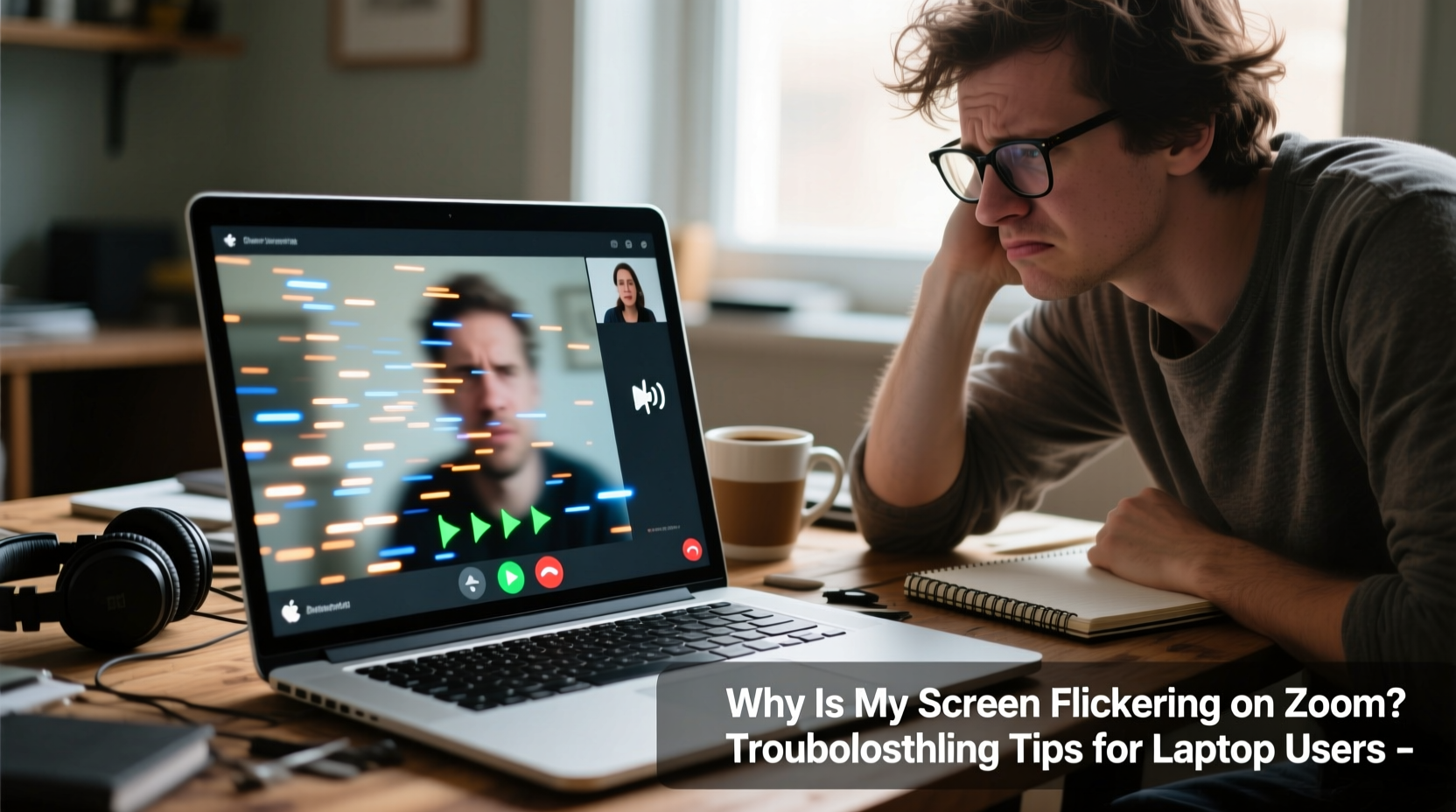
Laptop screens flicker during Zoom calls due to a mismatch between system resources, display hardware, and real-time video processing demands. Zoom uses significant GPU (graphics processing unit) and CPU power to encode and decode video streams, especially in group meetings with multiple participants. When your laptop struggles to keep up, the operating system may reduce display refresh rates or throttle performance—leading to visible flickering.
Another common cause is driver incompatibility. Graphics drivers manage how your screen renders motion and color. Outdated or corrupted drivers often fail under the dynamic load of video conferencing, resulting in unstable output. Additionally, some laptops use adaptive brightness or power-saving modes that misinterpret Zoom’s changing visuals as environmental light shifts, triggering unwanted screen fluctuations.
External factors such as connected monitors, HDMI cables, or docking stations can also contribute. Even software overlays like screen recorders, chat widgets, or antivirus pop-ups may interfere with Zoom’s rendering process, causing graphical glitches.
“Display flicker during video calls is rarely just a Zoom problem—it's usually a symptom of underlying system stress or configuration issues.” — Dr. Lena Patel, Display Systems Engineer at TechReliability Labs
Step-by-Step Guide to Diagnose and Fix Flickering
Resolving screen flickering requires a methodical approach. Jumping straight to reinstalling software without diagnosing the source can waste time. Follow these steps in order to isolate and eliminate the cause:
- Reproduce the Issue Outside Zoom: Open another video conferencing app (e.g., Google Meet or Microsoft Teams). If flickering occurs there too, the problem is likely system-wide, not Zoom-specific.
- Check for Visual Patterns: Is the flicker constant or does it spike when video sharing starts? Does it happen only on battery power? These clues point to power management or GPU load issues.
- Test on an External Monitor: Connect your laptop to a second display. If the external monitor shows no flicker, the issue lies within your laptop’s built-in display or its internal connection.
- Boot into Safe Mode: Restart your laptop in safe mode (Windows) or safe boot (macOS). Run a test Zoom call. If flickering stops, a third-party application is interfering.
- Update Your Operating System: Ensure your OS is current. Missing patches can introduce display bugs that affect video apps.
Essential Software and Driver Fixes
Software-related flickering is the most common—and often easiest to resolve. Start with your graphics drivers, which are central to display stability.
Update or Reinstall Graphics Drivers
Outdated drivers cannot efficiently handle modern video codecs used by Zoom. To update:
- Windows: Press Win + X, select Device Manager, expand \"Display adapters,\" right-click your GPU (Intel, NVIDIA, AMD), and choose \"Update driver.\" Select \"Search automatically for updated driver software.\"
- Manual Install: Visit the manufacturer’s website (intel.com, nvidia.com, amd.com) and download the latest driver for your exact model.
- Clean Installation: Use tools like DDU (Display Driver Uninstaller) to remove old drivers completely before installing new ones.
Adjust Zoom’s Hardware Acceleration Settings
Zoom uses hardware acceleration to offload video processing to the GPU. But on older or underpowered laptops, this can overwhelm the graphics chip, causing flicker.
To disable it:
- Open Zoom desktop app.
- Go to Settings > Video.
- Uncheck “Enable hardware acceleration for video.”
- Restart Zoom and test a call.
This forces Zoom to use CPU-based rendering, which is less efficient but more stable on low-end systems.
Close Background Applications
Apps running in the background—especially those using the camera or screen capture—can conflict with Zoom. Common culprits include:
- Antivirus software with real-time screen scanning
- Cloud storage sync tools (Dropbox, OneDrive)
- Chat apps with active screen-sharing features (Slack, Discord)
- Browser tabs streaming video
Close unnecessary programs before joining a call. Use Task Manager (Ctrl+Shift+Esc) to identify high-GPU processes.
Power and Display Settings That Impact Stability
Many laptops default to aggressive power-saving profiles that reduce screen refresh rate or GPU performance to extend battery life. While helpful for document work, these settings destabilize video rendering.
Switch to High-Performance Power Plan (Windows)
- Navigate to Control Panel > Hardware and Sound > Power Options.
- Select “High performance” or “Best performance.”
- Click “Change plan settings,” then “Change advanced power settings.”
- Expand “Graphics,” then “Power Management,” and set “Minimum processor state” to 100%.
Disable Adaptive Brightness
Some laptops misinterpret screen content changes in Zoom as ambient light shifts, triggering automatic brightness adjustments that appear as flickering.
To turn it off (Windows):
- Go to Settings > System > Display.
- Toggle off “Change brightness automatically when lighting changes.”
(macOS):
- System Settings > Displays > uncheck “Automatically adjust brightness.”
Adjust Refresh Rate Manually
A mismatched refresh rate can cause flicker. Most laptops run at 60Hz, but some support 120Hz or higher. If your system switches dynamically, it may glitch during Zoom calls.
To check and set refresh rate (Windows):
- Right-click desktop > Display settings.
- Scroll down to “Advanced display settings.”
- Click “Choose refresh rate” and select 60 Hz (recommended for stability).
Hardware Considerations and Long-Term Solutions
If software fixes don’t resolve the flicker, the issue may stem from aging or failing hardware. Laptops over three years old are particularly vulnerable due to wear on internal components.
Potential Hardware Causes
- Failing backlight: A dying LED backlight can cause rhythmic flickering, especially noticeable in dark scenes.
- Loose display cable: The ribbon cable connecting the screen to the motherboard can degrade or come loose from repeated lid movement.
- Overheating GPU: Dust buildup or poor ventilation leads to thermal throttling, which disrupts video output.
When to Seek Professional Repair
If flickering persists after all software troubleshooting, consider professional diagnostics. A technician can inspect the display assembly, test with a replacement panel, and verify GPU health. For older laptops, upgrading to a newer model with better integrated graphics (e.g., Intel Iris Xe, Apple M-series chips) may be more cost-effective than repeated repairs.
Mini Case Study: Remote Worker Resolves Chronic Flicker
Sarah, a project manager using a 4-year-old Dell Latitude, experienced severe screen flickering during daily Zoom standups. She tried restarting and updating Zoom, but the issue returned each day. After following the steps above, she discovered her Intel graphics driver was two versions behind. Updating it eliminated 80% of the flicker. She then disabled hardware acceleration in Zoom and switched to the high-performance power plan. The remaining flicker vanished. Sarah now schedules monthly driver checks and avoids multitasking during calls—her screen has remained stable for over six weeks.
Troubleshooting Checklist
Use this checklist to quickly address screen flickering:
- ✅ Restart your laptop and router
- ✅ Update Zoom to the latest version
- ✅ Update graphics drivers (Intel/NVIDIA/AMD)
- ✅ Disable hardware acceleration in Zoom settings
- ✅ Close background apps using camera or GPU
- ✅ Switch to high-performance power mode
- ✅ Turn off adaptive brightness
- ✅ Test with an external monitor
- ✅ Boot into safe mode to rule out software conflicts
- ✅ Clean vents and ensure proper cooling
Do’s and Don’ts: Screen Flicker Edition
| Do’s | Don’ts |
|---|---|
| Keep your OS and drivers updated | Ignore recurring flicker—it often worsens over time |
| Use Zoom’s built-in diagnostic tool (Settings > Audio & Video) | Run multiple video apps simultaneously |
| Lower Zoom video quality if on a weak system | Assume it’s a Zoom bug without testing other apps |
| Monitor laptop temperature during calls | Place laptop on soft surfaces that block airflow |
FAQ
Can a virus cause my screen to flicker on Zoom?
Directly, no—but malware consuming system resources can indirectly cause display instability. Run a full antivirus scan if you notice unusual slowdowns alongside flickering.
Does screen flicker damage my eyes?
Prolonged exposure to flickering screens can cause eye strain, headaches, and fatigue. The American Optometric Association recommends addressing persistent flicker immediately to protect visual comfort.
Will upgrading RAM help with screen flickering?
Not directly. Flickering is primarily tied to GPU, drivers, or display hardware. However, insufficient RAM can slow overall system performance, contributing to lag that exacerbates visual glitches.
Conclusion: Take Control of Your Video Call Experience
Screen flickering on Zoom calls doesn’t have to be a permanent frustration. With the right combination of driver updates, power settings, and application management, most laptop users can restore smooth, reliable video performance. The key is systematic troubleshooting—start with software, validate hardware, and optimize your environment. Small adjustments today can prevent bigger issues tomorrow. Don’t wait for the flicker to get worse. Apply these fixes now and reclaim clear, distraction-free Zoom meetings.




 浙公网安备
33010002000092号
浙公网安备
33010002000092号 浙B2-20120091-4
Comments
No comments yet. Why don't you start the discussion?