
It’s a quiet evening, the lights are off, and you’re moving through a dim room—when suddenly, you notice your silhouette projected sharply onto the wall. There’s no lamp on, no flashlight in hand, and yet your shadow is unmistakably there. This experience can be unsettling or even eerie, but more often than not, it has a logical explanation rooted in physics and perception. Shadows don’t appear without light; they simply require a light source, visible or otherwise. The key lies in understanding how light behaves, where it might be coming from, and why your brain may not immediately register its presence.
This phenomenon is more common than you might think. Whether it's due to ambient city lighting sneaking through curtains, electronic devices emitting faint glows, or even bioluminescent effects in rare cases, shadows in apparent darkness are usually the result of indirect or overlooked illumination. By exploring the science behind light and shadow, identifying common culprits, and learning how human vision adapts to low-light conditions, you can demystify this curious occurrence and regain confidence in your surroundings.
The Science Behind Shadows and Light
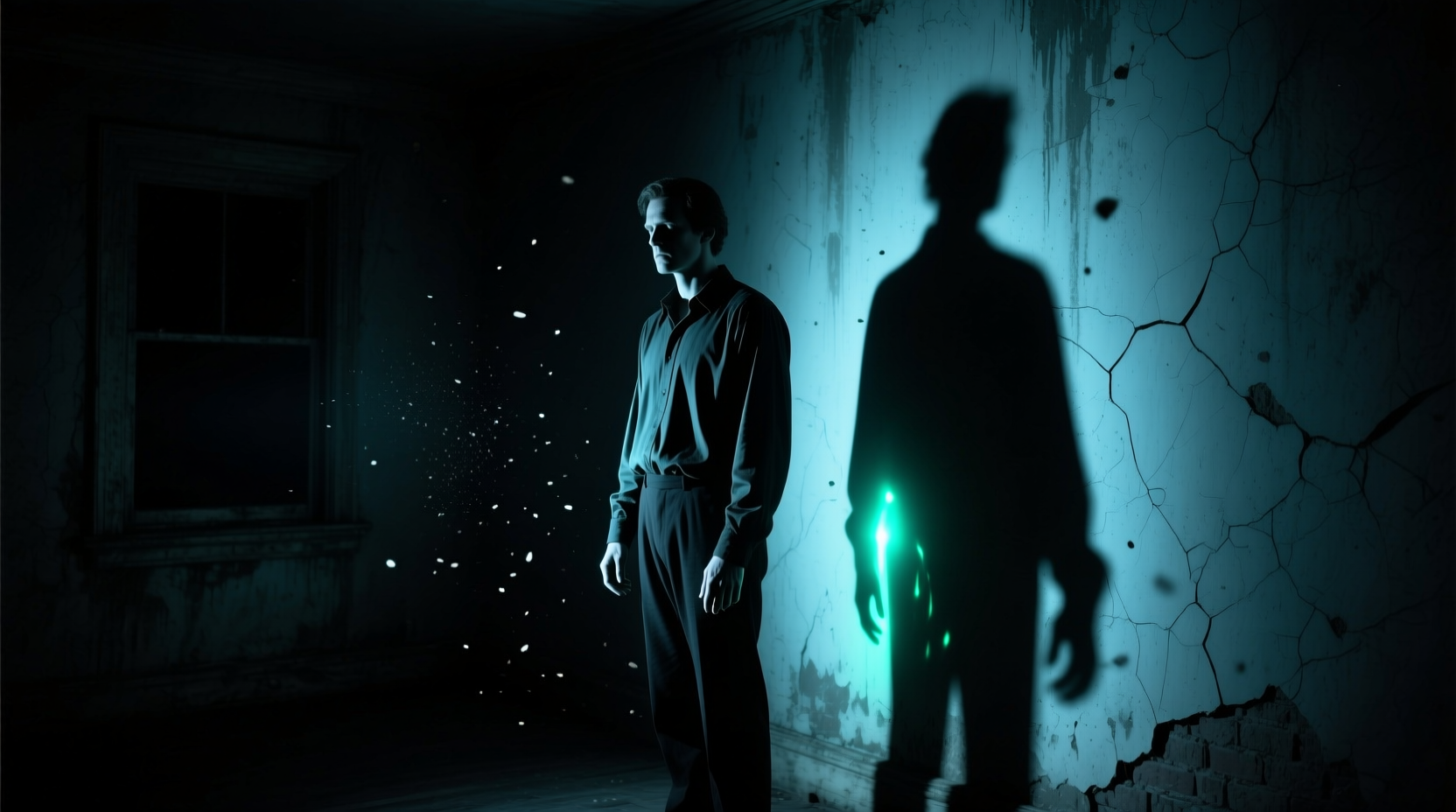
A shadow forms when an opaque object blocks light from traveling in a straight line. For a shadow to exist, three elements must be present: a light source, an object (in this case, you), and a surface (like a wall) where the shadow becomes visible. The absence of a perceived light source doesn't mean one isn't present—it may simply be too subtle for immediate detection.
Human eyes adapt remarkably well to low-light environments through a process called dark adaptation. Rod cells in the retina become more sensitive over time, allowing us to see in near-darkness after several minutes. However, this adaptation can also make faint light sources appear negligible or imperceptible until they produce a noticeable effect—like casting a shadow. Once your shadow appears, your brain retroactively searches for the cause, often missing the subtle glow that made it possible.
Light doesn’t need to be bright to cast a shadow. Even low-intensity sources such as LED indicators, distant streetlights, or reflected moonlight can generate enough contrast against a wall to outline your form, especially if the background is relatively uniform and the angle is right.
Common Hidden Light Sources That Create Shadows
Many modern environments contain unnoticed emitters of light. These sources are often designed to be unobtrusive, which makes them easy to overlook—until they cast a shadow. Below are some of the most frequent contributors:
- LED indicators on electronics: Chargers, TVs, routers, smoke detectors, and smart home devices often have small LEDs that glow red, green, or blue. While individually dim, these can reflect off walls and illuminate a room just enough to create silhouettes.
- Streetlights and outdoor lighting: Urban and suburban areas are bathed in artificial light at night. Light pollution can enter homes through windows, especially if curtains are thin or partially open. A distant sodium-vapor lamp might seem too far to matter, but its steady beam can travel through glass and project clear shadows.
- Moonlight: On clear nights with a full or nearly full moon, natural illumination can be surprisingly strong. Moonlight reflects sunlight and, while much dimmer, can still cast soft shadows—particularly in rooms with light-colored walls and minimal obstruction.
- Neighbor’s lights: Exterior lights, indoor lamps, or illuminated signs from nearby buildings can angle into your space, creating unexpected lighting conditions.
- Digital clocks and appliances: Devices with illuminated displays, such as microwaves, ovens, or alarm clocks, emit consistent low-level light that accumulates in enclosed spaces.
“Even a 1-lumen LED, equivalent to a single candle seen from 30 feet away, can cast a detectable shadow under the right conditions.” — Dr. Lena Patel, Optical Physicist, MIT Media Lab
Step-by-Step Guide: How to Identify the Source of Your Mysterious Shadow
If you're experiencing unexplained shadows at night, follow this systematic approach to uncover the true light source.
- Observe the timing: Note when the shadow appears. Is it only during certain hours? If it coincides with streetlights turning on or your neighbor’s routine, external lighting may be involved.
- Eliminate variables: Turn off all electronics one by one. Unplug devices with indicator lights and cover digital displays with tape or cloth.
- Block external light: Close blinds, draw blackout curtains, or use towels to seal gaps around windows. This isolates indoor vs. outdoor sources.
- Wait for dark adaptation: Spend 15–20 minutes in complete darkness. Let your eyes adjust fully. Then, slowly move around the room and watch for any faint glows.
- Use a camera: Smartphone cameras, especially in night mode, can detect light invisible to the naked eye. Point your phone at walls and corners to spot hidden sources.
- Check reflective surfaces: Mirrors, glass tables, or glossy furniture can bounce light from unseen angles, contributing to shadow formation.
- Test with an object: Place a small item like a vase or book in front of the wall. If it casts a shadow too, you’ve confirmed a directional light source is active.
Real-World Example: The Case of the Living Room Silhouette
Sarah, a resident of downtown Chicago, began noticing her shadow on the living room wall every night around 10:30 PM. No lights were on, and she initially thought it was a trick of the mind. Concerned, she recorded a video and posted it online, sparking debate about paranormal activity. However, a physics enthusiast pointed out a crucial detail: Sarah’s apartment faced a tall office building across the street.
Upon closer inspection, she discovered that a security light atop the building shone directly into her window at a low angle during those hours. The light was diffused and didn’t flood the room, making it barely noticeable. But because her white wall acted as a projection surface and her body blocked part of the beam, a distinct shadow formed. When she closed her blinds completely, the shadow vanished. What seemed mysterious was simply geometry and overlooked illumination.
This case underscores how urban environments create complex lighting interactions. Light doesn’t always announce itself—it can slip in quietly and reveal itself only through secondary effects like shadows.
Do’s and Don’ts: Managing Low-Light Shadows
| Do | Don’t |
|---|---|
| Use blackout curtains to eliminate external light intrusion. | Assume the shadow is supernatural without investigating light sources. |
| Cover or disable LED indicators on non-essential devices. | Ignore reflections from mirrors or glass surfaces. |
| Use red nightlights if needed—they preserve night vision and reduce shadow contrast. | Leave digital devices face-up on dark surfaces where their glow can spread. |
| Test room darkness with a camera app to detect hidden light. | Rely solely on initial visual assessment in low-light conditions. |
Frequently Asked Questions
Can a shadow appear without any light at all?
No. Shadows are defined by the absence of light in a specific area caused by an object blocking a light source. Total darkness means no shadows can form. If you see a shadow, some light is present—even if imperceptible at first.
Why do I only see the shadow when I move?
Stationary objects blend into the visual field over time, especially in low light. Movement creates contrast and draws attention to changes in brightness. Your brain detects motion before it registers the light source, making the shadow seem to \"appear\" suddenly.
Could this be related to infrared or ultraviolet light?
Possibly, but unlikely in everyday scenarios. Some security cameras use infrared (IR) illumination, which is invisible to humans but can affect cameras. If your smartphone captures a shadow that you can't see, IR might be involved. However, UV light rarely contributes to visible shadows indoors.
Expert Insight: Perception vs. Reality in Low Light
“Our brains are wired to interpret visual cues based on expectation. In darkness, we assume safety from visibility—but light doesn’t need to be obvious to be effective. A shadow is often the first clue that something is illuminating our world, even when we don’t feel it.” — Dr. Marcus Tran, Cognitive Neuroscientist, University of Toronto
This perceptual delay explains why many people report feeling “watched” or unnerved when they see a shadow with no apparent cause. The brain struggles to reconcile the physical evidence (the shadow) with the lack of sensory confirmation (no visible light). This gap can trigger mild anxiety or supernatural interpretations. Education and awareness help bridge that gap, replacing fear with understanding.
Conclusion: Understanding Light, One Shadow at a Time
The appearance of a shadow in what seems like total darkness is not a glitch in reality—it’s a lesson in observation. Light is more pervasive and subtle than we often acknowledge. From the faint glow of a router’s status light to the distant gleam of a streetlamp, countless sources shape our environment in ways we don’t immediately perceive. Shadows are not ghosts; they are messengers, revealing the presence of illumination we’ve overlooked.
By applying scientific reasoning, conducting simple experiments, and refining your awareness of light behavior, you can decode these moments of mystery. Instead of dismissing them as oddities or fearing the unknown, you gain insight into the hidden dynamics of your living space.




 浙公网安备
33010002000092号
浙公网安备
33010002000092号 浙B2-20120091-4
Comments
No comments yet. Why don't you start the discussion?