
Shadows are a familiar part of daily life—cast by the sun, streetlights, or even indoor lamps. Most people assume shadows are consistent in appearance, but many have noticed that their shadow can appear significantly darker on some days than others. The variation isn’t imagined; it’s rooted in real atmospheric science. While sunlight seems constant, its interaction with Earth’s atmosphere changes constantly due to weather patterns, pollution levels, humidity, and solar angle. These factors affect not only the brightness of daylight but also the depth, contrast, and clarity of shadows. Understanding this phenomenon reveals how intricately our environment shapes everyday visual experiences.
The Science Behind Shadow Formation
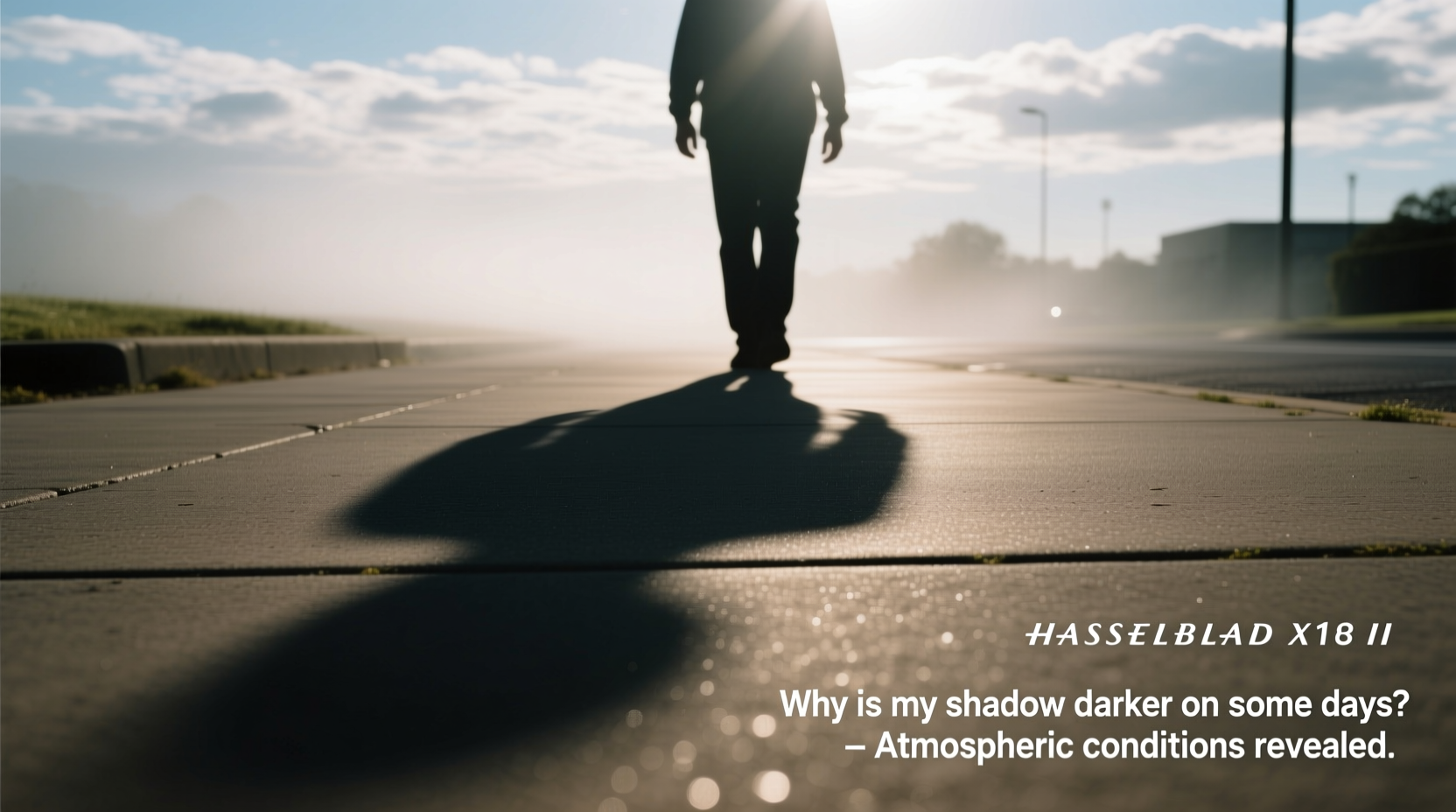
A shadow forms when an opaque object blocks light from a source—in most outdoor cases, the sun. The darkness of a shadow depends on how much ambient (surrounding) light reaches the area behind the object. In ideal conditions, such as direct overhead sunlight on a clear day, shadows appear sharply defined and intensely dark because there is minimal scattered light to illuminate the shadowed region.
However, light doesn't travel through the atmosphere unchanged. As sunlight enters Earth's atmosphere, it interacts with gases, water vapor, dust, and pollutants. These particles scatter shorter wavelengths (blue and violet) more than longer ones (red and yellow), which is why the sky appears blue—a phenomenon known as Rayleigh scattering. This same scattering also plays a critical role in determining shadow quality.
When significant diffuse light fills the environment—light that has been redirected in multiple directions by atmospheric particles—the shadowed areas receive more illumination. This reduces contrast between lit and unlit zones, making shadows appear lighter or \"softer.\" Conversely, when scattering is minimal, shadows remain deep and well-defined.
Key Factors That Influence Shadow Darkness
Several atmospheric conditions work individually or in combination to alter the perceived darkness of your shadow. These include cloud cover, humidity levels, air pollution, time of day, and altitude.
- Cloud Cover: Thin, high-altitude cirrus clouds may slightly diffuse sunlight without eliminating sharp shadows. However, thick overcast layers act like giant diffusers, scattering light uniformly across the sky. Under such conditions, shadows become faint or disappear entirely.
- Humidity: High moisture content in the air increases light scattering. Water droplets suspend in the lower atmosphere during humid conditions, enhancing Mie scattering—which affects all wavelengths equally. This leads to softer lighting and less intense shadows.
- Air Pollution and Particulates: Urban environments often contain higher concentrations of aerosols, smoke, and dust. These larger particles increase forward scattering, reducing directional contrast and muting shadows. Paradoxically, very polluted skies can sometimes create deeper shadows if the overall light level drops dramatically while direct beams still penetrate intermittently.
- Solar Elevation: At midday, when the sun is highest, shadows are shortest and darkest due to maximum direct irradiance and minimal atmospheric interference. Early morning or late afternoon sunlight travels through more atmosphere, increasing scattering and weakening shadow contrast.
- Altitude: At higher elevations, the atmosphere is thinner, meaning fewer molecules and particles to scatter sunlight. This results in crisper shadows with greater contrast, especially noticeable in mountainous regions.
How Atmospheric Clarity Affects Light Quality
The term “atmospheric clarity” refers to how transparent the air is to incoming sunlight. It’s influenced by both natural and human-made factors. On days with high clarity—such as after rainfall cleanses the air or in remote rural areas—shadows appear darker and more distinct. Rain removes airborne particulates and settles dust, leaving the atmosphere clearer and allowing more direct sunlight to reach the surface with minimal diffusion.
In contrast, smoggy or hazy days reduce clarity. Haze, often composed of fine particulate matter (PM2.5), absorbs and scatters light before it reaches the ground. While overall brightness might decrease, the proportion of indirect light increases, filling in shadows and diminishing their intensity. This effect is particularly evident in cities during temperature inversions, where cool air traps pollutants near the surface.
“Shadow contrast is one of the most sensitive indicators of atmospheric optical conditions. Even subtle changes in aerosol concentration can visibly soften shadow edges.” — Dr. Lena Torres, Atmospheric Optics Researcher, University of Colorado Boulder
Real-World Example: Desert vs. Coastal Shadows
Consider two environments: a dry desert and a tropical coastline. In the Arizona desert on a clear spring day, the air is typically low in humidity and free of heavy pollution. The sky appears deeply blue, and shadows cast by people or rocks are jet-black with razor-sharp edges. This is due to minimal atmospheric diffusion and high solar elevation.
Now imagine standing on a beach in Miami during midsummer. The air is saturated with moisture, and sea salt aerosols hang in the breeze. Even under full sun, shadows appear grayish and slightly blurred around the edges. The abundant water vapor and tiny reflective particles scatter light from all directions, effectively “filling in” the shadow zone with ambient glow.
This contrast illustrates how local climate directly impacts visual perception—even something as simple as your own silhouette on the pavement.
Do’s and Don’ts for Observing Shadow Variability
| Do | Don’t |
|---|---|
| Observe shadows at the same time of day for accurate comparison | Compare early morning shadows to midday ones without accounting for solar angle |
| Note weather conditions like humidity, cloud type, and visibility | Assume all sunny days produce identical shadow effects |
| Use a white surface (like concrete) to better judge shadow darkness | Try to assess shadow intensity on dark or uneven surfaces |
| Pay attention after rain or strong winds, which clear the air | Ignore recent environmental events like wildfires or dust storms |
| Take note of air quality reports in urban areas | Dismiss pollution as irrelevant to visual phenomena |
Step-by-Step Guide to Tracking Shadow Changes
If you're curious about how atmospheric conditions affect your shadow, here’s a practical method to document variations over time:
- Choose a Fixed Observation Point: Pick a flat, light-colored outdoor surface near your home or workplace where shadows fall consistently at a certain time of day.
- Select a Consistent Time: Aim for solar noon (when the sun is highest), as this minimizes angular variables. Use a solar calculator app if needed.
- Stand in the Same Position: Wear similar clothing and stand upright to keep body shape and shadow size consistent.
- Record Environmental Data: Note temperature, humidity, cloud cover (type and coverage), and any visible haze or pollution. Check local air quality index (AQI) values online.
- Evaluate Shadow Characteristics: Assess darkness (on a scale of 1–10), edge sharpness (crisp, soft, or absent), and contrast against surroundings.
- Maintain a Log: Keep a journal or digital spreadsheet with dates, observations, and photos (if allowed). Over weeks, patterns will emerge linking specific conditions to shadow intensity.
- Analyze Trends: Look for correlations—e.g., darker shadows following rain, lighter ones during high-humidity periods.
This process turns casual observation into citizen science, offering insight into invisible atmospheric dynamics.
Common Misconceptions About Shadow Darkness
Many people believe that shadow darkness depends solely on whether it’s sunny or cloudy. But this oversimplification misses key nuances. For instance, some assume UV intensity correlates directly with shadow depth—but ultraviolet radiation isn’t visible to the eye and doesn’t impact perceived shadow darkness. Similarly, brightness meters measure total illuminance, not contrast, so a bright but hazy day may feel luminous yet yield weak shadows.
Another misconception is that shadows are “absence of light.” While technically true, they’re better understood as zones receiving *less direct* light. The amount of *indirect* (scattered) light determines how dark they appear. In heavily diffused environments, shadows aren’t truly dark—they’re just relatively dimmer than surrounding areas.
Frequently Asked Questions
Why does my shadow look almost black some days but gray on others?
The color and depth of your shadow depend on the ratio of direct to diffuse sunlight. On clear, dry days with clean air, direct sunlight dominates, creating high-contrast, near-black shadows. On humid or hazy days, scattered light floods the shadow area, raising its brightness and making it appear gray.
Can pollution make shadows darker?
Generally, no—pollution tends to lighten shadows by increasing diffuse light. However, in extreme cases like wildfire smoke, where sunlight is dramatically reduced but still partially directional, shadows may appear unusually deep due to lowered ambient brightness, even though the air is filled with particles.
Are shadows darker at higher altitudes?
Yes, typically. At higher elevations, the atmosphere is thinner and contains fewer scattering particles. With less diffusion, direct sunlight remains strong, producing sharper, darker shadows. Skiers often notice this effect on snowfields, where shadows appear intensely black against bright white backgrounds.
Conclusion: Embrace the Subtleties of Light and Atmosphere
The next time you glance down and notice your shadow looks unusually dark, take a moment to consider what the atmosphere is telling you. That deep silhouette could signal exceptionally clear air, low humidity, or optimal solar positioning—all invisible forces shaping your visual world. By paying attention to these small cues, you gain a deeper appreciation for the dynamic interplay between light, weather, and environment.
Understanding why shadows vary isn’t just a scientific curiosity—it enhances awareness of air quality, climate patterns, and even personal health (as poor atmospheric clarity often correlates with respiratory risks). Whether you're a photographer seeking perfect contrast, a student exploring optics, or simply someone who enjoys observing nature, recognizing the causes behind shadow darkness adds richness to everyday experience.




 浙公网安备
33010002000092号
浙公网安备
33010002000092号 浙B2-20120091-4
Comments
No comments yet. Why don't you start the discussion?