
If you’ve been tossing and turning at night, waking up frequently, or feeling unrested despite spending enough time in bed, you're not alone. Restless sleep has become increasingly common—and while stress and anxiety often take the blame, deeper lifestyle habits are usually at play. The quality of your rest isn’t just about how long you sleep; it’s shaped by what you do during the day, how you manage your environment, and even the rhythm of your body’s internal clock. Understanding the root causes can help you make targeted changes that lead to more peaceful, uninterrupted nights.
Digital Overload and Blue Light Exposure
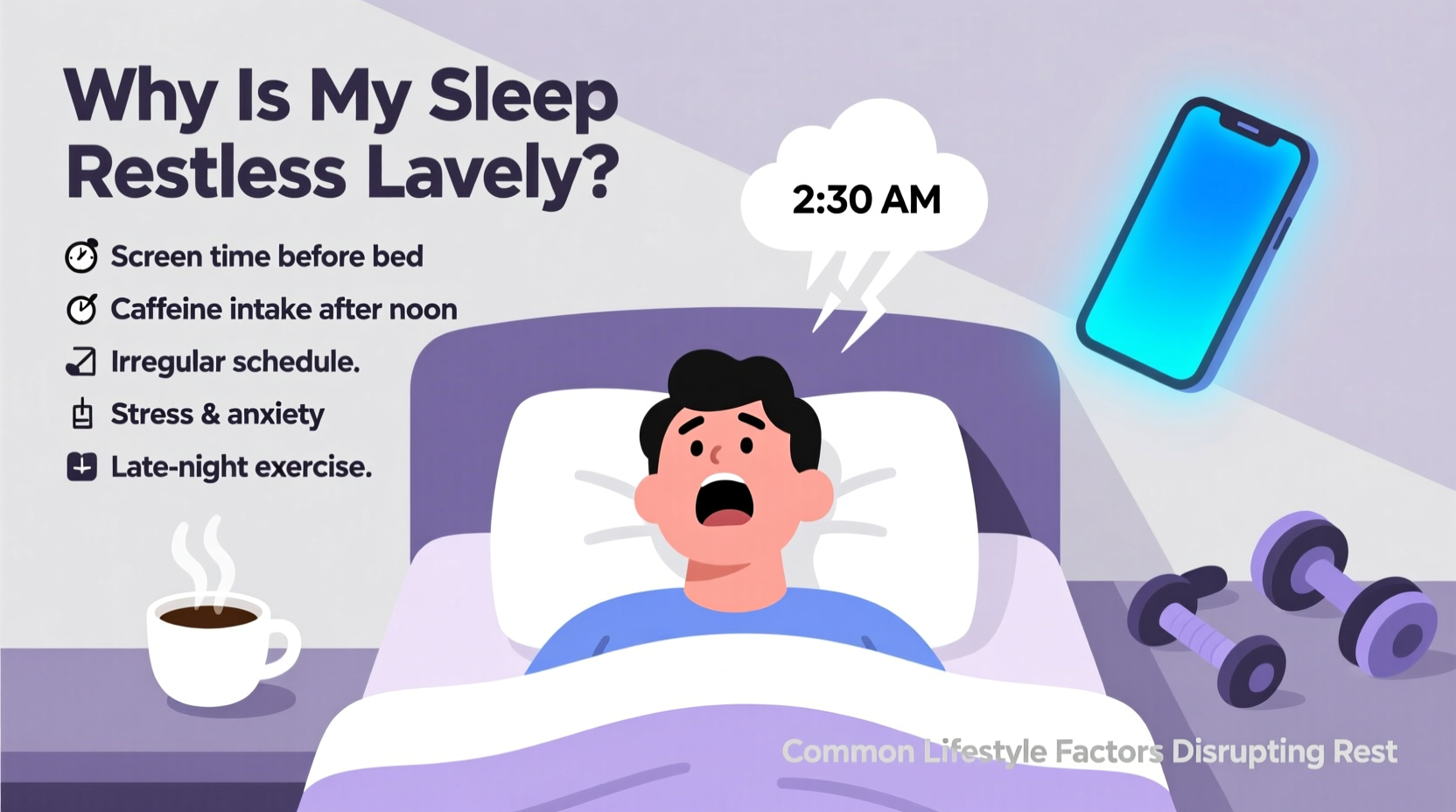
One of the most pervasive yet underestimated culprits behind disrupted sleep is screen time—especially in the hours before bed. Smartphones, tablets, laptops, and televisions emit blue light, which suppresses melatonin, the hormone responsible for signaling sleep onset. When melatonin production is delayed, your body struggles to transition into rest mode.
A 2023 study published in Sleep Medicine Reviews found that individuals who used screens within one hour of bedtime experienced a 30% longer sleep latency—the time it takes to fall asleep—and reported lower sleep efficiency. This means they spent more time awake in bed, even if total sleep duration appeared normal.
It’s not just the light that’s problematic—content matters too. Engaging with social media, work emails, or intense TV shows activates the brain, increasing mental arousal and making relaxation difficult. The combination of physiological disruption (melatonin suppression) and psychological stimulation creates a double barrier to restful sleep.
Caffeine and Stimulant Timing
Coffee, energy drinks, and even certain teas contain stimulants that can linger in your system far longer than expected. While many people believe caffeine only affects them if consumed late in the day, its half-life ranges from 3 to 7 hours depending on individual metabolism. That morning latte or afternoon soda might still be active when you’re trying to wind down.
Research from the Journal of Clinical Sleep Medicine indicates that consuming caffeine even six hours before bedtime can reduce total sleep time by more than one hour. For sensitive individuals, effects may persist up to 8–10 hours after intake.
| Beverage | Average Caffeine Content | Recommended Cut-off Time |
|---|---|---|
| Coffee (8 oz) | 95 mg | 12:00 PM – 2:00 PM |
| Black Tea (8 oz) | 47 mg | 2:00 PM – 4:00 PM |
| Energy Drink (8 oz) | 80 mg | No later than noon |
| Dark Chocolate (1.5 oz) | 20 mg | Evening consumption limited |
The timing of stimulants is as important as the amount. Even moderate coffee drinkers may unknowingly sabotage their sleep if they consume caffeine too late in the day. Consider switching to decaf after lunch or opting for herbal infusions like chamomile or rooibos.
Inconsistent Sleep Schedules and Circadian Misalignment
Your body runs on a natural 24-hour rhythm known as the circadian clock, which regulates everything from alertness to digestion to sleep. When this rhythm is disrupted—by irregular bedtimes, weekend “sleep-ins,” or shift work—your internal clock becomes misaligned. This leads to fragmented sleep, difficulty falling asleep, and reduced deep sleep stages.
For example, going to bed at 10:00 PM Monday through Friday but staying up until 1:00 AM on weekends creates a phenomenon called \"social jetlag.\" Your body experiences a time shift similar to crossing time zones, impairing sleep quality even if you get eight hours.
“Consistency is the cornerstone of good sleep hygiene. Going to bed and waking up at the same time every day—even on weekends—strengthens your circadian rhythm and improves sleep depth.” — Dr. Lena Torres, Sleep Neurologist, Stanford Center for Sleep Sciences
Over time, inconsistent schedules desensitize your body’s response to natural cues like sunlight and darkness, weakening the signals that promote wakefulness during the day and drowsiness at night.
Stress, Mental Load, and Hyperarousal
Modern life often comes with an overwhelming cognitive load—work deadlines, family responsibilities, financial concerns, and constant connectivity. When the mind remains in a state of hyperarousal, it becomes difficult to disengage at bedtime. This mental tension manifests physically: increased heart rate, muscle tension, and racing thoughts—all of which interfere with the ability to relax and stay asleep.
A real-world example illustrates this well: Sarah, a 34-year-old project manager, began experiencing frequent nighttime awakenings after transitioning to a remote role. Her days blurred together, work crept into evenings, and she found herself mentally reviewing tasks while lying in bed. Despite sleeping seven hours, she felt exhausted. Only after implementing structured evening rituals—journaling, setting tomorrow’s priorities, and unplugging—did her sleep stabilize.
Chronic stress elevates cortisol, a hormone that promotes alertness. Elevated cortisol at night disrupts both sleep onset and maintenance. Mind-body practices such as mindfulness meditation, progressive muscle relaxation, or gratitude journaling can significantly reduce pre-sleep arousal.
Poor Sleep Environment and Physical Discomfort
Your bedroom should function as a sanctuary for rest—but many environments inadvertently promote wakefulness. Factors like room temperature, noise levels, mattress quality, and lighting all influence sleep continuity.
- Temperature: The ideal sleep temperature is between 60–67°F (15–19°C). A room that’s too warm can cause restlessness and frequent awakenings.
- Noise: Even low-level background sounds—traffic, snoring, appliances—can fragment sleep without fully waking you.
- Light: Streetlights, LED indicators on electronics, or early sunrise can suppress melatonin and interrupt REM cycles.
- Mattress & Pillows: Worn-out support systems contribute to physical discomfort, leading to micro-movements and position shifts throughout the night.
Small environmental tweaks often yield dramatic improvements. One study found that participants who optimized their bedroom climate and reduced light exposure increased their deep sleep by 13% over four weeks.
Step-by-Step Guide to Restoring Restful Sleep
Improving sleep isn’t about drastic overhauls—it’s about consistent, intentional adjustments. Follow this five-day reset plan to begin reclaiming restful nights:
- Day 1: Audit Your Current Habits
Create a simple log tracking bedtime, wake time, caffeine intake, screen use before bed, and how rested you feel. Identify patterns over 24 hours. - Day 2: Set Fixed Sleep Times
Choose a bedtime and wake-up time within a 30-minute window and stick to it for seven days, including weekends. - Day 3: Create a Wind-Down Routine
Begin 60 minutes before bed: dim lights, turn off screens, and engage in calming activities like reading, gentle yoga, or listening to soft music. - Day 4: Optimize Your Bedroom
Remove electronics, adjust thermostat, add blackout curtains, and replace old pillows or mattresses if needed. - Day 5: Limit Stimulants and Heavy Meals
Stop caffeine by 2:00 PM and avoid large meals within three hours of bedtime to prevent indigestion and reflux.
After the initial reset, continue refining based on what works best for your body. Sleep improvement is personal—what helps one person may not suit another.
Sleep-Friendly Lifestyle Checklist
Use this checklist weekly to stay on track:
- ✅ No screens 90 minutes before bed
- ✅ Caffeine cut-off by early afternoon
- ✅ Consistent sleep and wake times (±30 min)
- ✅ Bedroom kept cool, dark, and quiet
- ✅ Stress-reducing activity before bed (e.g., journaling, breathing exercises)
- ✅ Regular physical activity (but not within 3 hours of bedtime)
- ✅ Avoid alcohol close to bedtime (disrupts second-half sleep)
- ✅ Reserve bed for sleep and intimacy only (no working or watching TV)
Frequently Asked Questions
Why do I wake up at the same time every night?
Waking up consistently around 2–4 AM may indicate elevated cortisol due to stress, blood sugar fluctuations, or liver activity peaks in traditional Chinese medicine frameworks. It can also signal sleep maintenance insomnia, often linked to anxiety or poor sleep hygiene. Addressing underlying stress and stabilizing blood sugar with a balanced dinner can help.
Can lack of exercise cause restless sleep?
Yes. Physical inactivity reduces the body’s need for recovery sleep, diminishing sleep pressure—the drive to sleep that builds throughout the day. Regular movement, especially outdoors, strengthens circadian rhythms and increases time spent in deep sleep. Aim for at least 30 minutes of moderate activity most days, preferably in the morning or afternoon.
Is it bad to nap if I have restless sleep?
Short naps (10–20 minutes) can be refreshing, but long or late-day naps reduce sleep pressure at night. If you’re struggling with nighttime rest, limit naps to early afternoon and keep them under 30 minutes. For chronic insomnia, eliminating naps temporarily may improve nighttime consolidation.
Conclusion: Reclaiming Rest Starts Today
Restless sleep is rarely caused by a single factor—it’s the cumulative effect of daily choices that either support or undermine your body’s natural need for recovery. From screen exposure and caffeine timing to stress management and sleep environment, each element plays a role in whether you drift into deep, restorative rest or spend the night caught in cycles of wakefulness.
The good news is that most lifestyle-related sleep disruptions are reversible. You don’t need medication or expensive devices to see change. What you need is awareness, consistency, and small, sustainable actions taken daily. Start tonight: put the phone away, adjust the thermostat, and give yourself permission to slow down. Quality sleep isn’t a luxury—it’s a foundation for health, clarity, and resilience.




 浙公网安备
33010002000092号
浙公网安备
33010002000092号 浙B2-20120091-4
Comments
No comments yet. Why don't you start the discussion?