
If you’ve ever poured a freshly blended smoothie into a glass only to return moments later to find layers of liquid at the bottom and foam or pulp on top, you’re not alone. Smoothie separation is one of the most common frustrations among health-conscious drinkers. While it may look unappetizing, separation isn’t necessarily a sign of poor quality—it’s often a natural result of physics and ingredient composition. Understanding the science behind this phenomenon empowers you to create smoother, more stable blends that hold together from first sip to last.
This article dives deep into the reasons behind smoothie separation, explores the role of ingredients and equipment, and offers practical solutions for achieving a consistently uniform texture. Whether you're a daily smoothie drinker or just starting out, these insights will help you craft beverages that are as visually appealing as they are nutritious.
The Science Behind Smoothie Separation
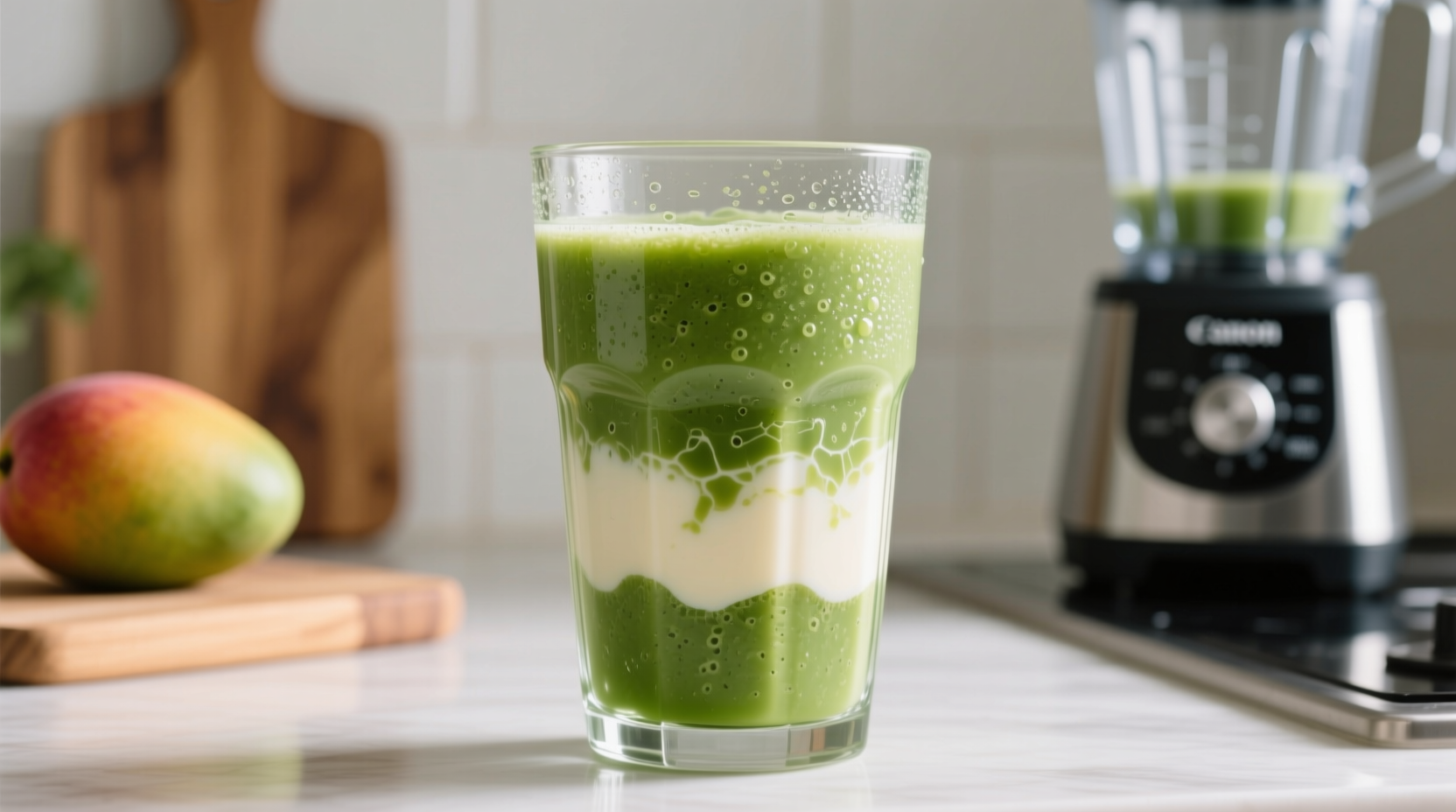
Smoothie separation occurs due to differences in density, solubility, and emulsification between ingredients. When liquids and solids are blended, they temporarily form a suspension—tiny particles dispersed throughout a liquid. However, without stabilizing agents or proper binding, gravity eventually pulls heavier components downward while lighter ones rise.
Water-based liquids like juice, coconut water, or plain water have low viscosity and don’t naturally bind well with fats or fibers. Meanwhile, fibrous fruits (like apples or pears), leafy greens, and seeds tend to clump or sink over time. Fats such as nut butters, avocado, or flaxseed oil can separate and float due to their lower density than water.
Additionally, air incorporated during blending creates foam, which rises and breaks down over time, contributing to surface layering. This process is entirely natural and doesn’t indicate spoilage—but it does affect texture and drinking experience.
“Separation in smoothies is inevitable if there’s no emulsifier or thickener present. It’s not a flaw—it’s physics.” — Dr. Lena Torres, Food Scientist & Nutritional Biochemist
Key Ingredients That Influence Stability
The choice of ingredients plays a decisive role in whether your smoothie stays mixed. Some components act as natural thickeners or emulsifiers, helping to suspend particles and prevent rapid layering. Others accelerate separation if used improperly.
| Ingredient Type | Effect on Stability | Best Practices |
|---|---|---|
| Frozen fruit (banana, berries) | Increases thickness and slows separation | Use as base; avoid over-diluting with liquid |
| Nut butters (peanut, almond) | Acts as emulsifier; improves cohesion | Add 1 tbsp per serving for binding effect |
| Avocado | Creamy fat helps stabilize texture | Blends best when combined with acidic liquids |
| Chia or flax seeds | Form gel when hydrated; excellent stabilizers | Soak 10 mins before blending or use ground form |
| Dairy/non-dairy milk | Thinner options increase separation risk | Opt for oat or soy milk—they’re naturally creamier |
| Leafy greens (spinach, kale) | High fiber can settle quickly | Blend thoroughly; pair with strong thickeners |
| Protein powders | Vary widely—some contain emulsifiers | Look for lecithin-containing formulas |
How Blending Technique Affects Texture
Even with ideal ingredients, poor blending technique can lead to premature separation. The goal is to achieve a homogeneous mixture where all components are finely broken down and evenly distributed.
Start by layering ingredients properly in the blender: liquids at the bottom help the blades move freely, followed by soft ingredients, then frozen or dense items on top. This prevents motor strain and ensures even processing.
Blend in stages if necessary. Begin at low speed to break up large chunks, then gradually increase to high for 30–60 seconds. High-powered blenders like Vitamix or Blendtec can fully pulverize fiber and release plant cell contents, creating a more cohesive blend. Lower-wattage models may leave micro-particles intact, which settle faster.
Avoid over-blending, especially with leafy greens, as excessive air incorporation leads to foaming. Foam collapses over time, leaving behind separated liquid. Pause halfway through blending to scrape down sides with a spatula for consistent results.
Step-by-Step: Build a Stable Smoothie
- Add ½ cup liquid base – Choose oat milk, coconut milk, or kefir for creaminess.
- Include 1 cup frozen fruit – Banana, mango, or mixed berries add thickness.
- Incorporate 1 tbsp healthy fat – Almond butter, avocado, or tahini for emulsification.
- Add fiber-rich thickeners – 1 tsp chia seeds, 1 tbsp oats, or ¼ cup cooked cauliflower.
- Include greens or protein – Spinach, collagen, or plant-based powder.
- Blend smartly – Start slow, ramp up, blend 45 seconds, scrape, blend 15 more seconds.
- Pour immediately – Serve right away or shake/stir before drinking if stored briefly.
Common Mistakes That Cause Separation
Even experienced smoothie makers fall into traps that undermine stability. Recognizing these errors can dramatically improve consistency.
- Too much liquid: Diluting beyond 1:2 ratio (liquid to solids) weakens structure.
- Using only watery bases: Apple juice or plain water lack viscosity; balance with creamier options.
- Skipping emulsifiers: Omitting nut butter, egg yolk (in certain recipes), or lecithin reduces binding power.
- Not pre-soaking seeds: Chia and flax need hydration to activate their gelling properties.
- Adding ice instead of frozen fruit: Ice melts quickly, introducing excess water post-blend.
- Storing too long before drinking: Even stable smoothies separate after 30+ minutes unless shaken.
Real Example: Fixing a Morning Green Smoothie
Sarah, a busy teacher, relied on green smoothies for breakfast but grew frustrated when her drink separated within minutes, forcing her to stir awkwardly before sipping. Her original recipe included:
- 1 cup spinach
- ½ banana
- ½ apple
- 1 cup apple juice
- Ice cubes
The result was thin, foamy, and visibly layered after five minutes. After adjusting her formula based on stability principles, she revised it to:
- ½ cup oat milk + ¼ cup water
- 1 cup frozen mango (replacing apple)
- ½ frozen banana
- 1 cup spinach
- 1 tbsp almond butter
- 1 tsp chia seeds (soaked 10 mins)
She blended it in stages using a high-speed blender. The new version stayed uniform for over 20 minutes and had a richer mouthfeel. Sarah now prepares double batches and stores them in sealed jars, shaking before consumption—proof that small tweaks yield big improvements.
Expert Tips for Long-Lasting Smoothies
To go beyond basic blending, consider advanced techniques used by nutritionists and chefs to maximize stability and nutrient retention.
One effective method is using natural emulsifiers. Sunflower lecithin, available in granule or powder form, is derived from sunflower seeds and helps bind fats and water. Just ½ teaspoon per smoothie significantly reduces separation without altering flavor.
Another strategy is temperature control. Blending cold ingredients maintains viscosity longer. Conversely, room-temperature liquids speed up particle movement and settling. Always use frozen fruit or chill your liquid base beforehand.
If you prep smoothies ahead of time, portion them into mason jars and store upright in the fridge for up to 24 hours. Shake vigorously before drinking—never stir, as shaking reintroduces air and remixes suspended particles more effectively.
“Pre-making smoothies is fine, but always include a stabilizer like chia, oats, or yogurt. And shake—don’t pour—after storage.” — Maya Chen, Registered Dietitian & Wellness Coach
Frequently Asked Questions
Is a separating smoothie safe to drink?
Yes. Separation is a physical change, not a sign of spoilage. As long as the ingredients were fresh and stored properly, the smoothie remains safe to consume. Simply shake or stir before drinking.
Can I fix a separated smoothie after it happens?
Absolutely. Pour it back into the blender for 10–15 seconds, or shake it vigorously in a sealed container. Avoid stirring with a spoon, as it rarely re-integrates settled fibers effectively.
Do protein powders prevent separation?
Some do. Powders containing added emulsifiers like sunflower lecithin or guar gum help stabilize texture. Whey and casein proteins also increase viscosity slightly. However, not all brands are equal—check labels for functional additives.
Checklist: Build a Non-Separating Smoothie
- ✅ Use a creamy liquid base (oat, soy, or coconut milk)
- ✅ Include frozen fruit instead of ice
- ✅ Add 1 tbsp nut butter or avocado
- ✅ Incorporate a natural thickener (chia, flax, oats, yogurt)
- ✅ Soak chia or flax seeds before blending
- ✅ Blend in correct order: liquid first, then soft, then frozen
- ✅ Use high-speed blender for full emulsification
- ✅ Store in sealed container and shake before drinking
Conclusion: Master the Art of the Stable Smoothie
Smoothie separation isn’t a flaw—it’s feedback. It tells you what’s working and what needs adjustment in your recipe. By understanding ingredient interactions, optimizing your blending process, and applying simple stabilizing techniques, you can transform your smoothies from inconsistent mixtures into creamy, unified drinks that stay blended from start to finish.
The key lies in balance: enough liquid to blend smoothly, enough solids to provide body, and the right binders to keep everything together. Once you master this formula, you’ll enjoy not only better texture but greater confidence in your daily routine. No more sad, layered drinks—just vibrant, nourishing blends that look as good as they taste.




 浙公网安备
33010002000092号
浙公网安备
33010002000092号 浙B2-20120091-4
Comments
No comments yet. Why don't you start the discussion?