
A smoothie that separates shortly after blending can be frustrating—especially when you’ve carefully selected ingredients for nutrition and flavor. Instead of a creamy, unified drink, you’re left with layers of liquid at the bottom and foam or pulp on top. This isn’t just unappealing; it can also affect taste and texture. The good news: separation is preventable. Understanding the science behind emulsification, ingredient ratios, and blending technique allows you to create consistently smooth, stable smoothies every time.
Separation occurs when components fail to bind properly. Liquids sink, solids rise, and air creates unstable foam. But by adjusting your approach—from ingredient order to equipment use—you can eliminate this issue and enjoy a perfectly blended beverage from first sip to last.
The Science Behind Smoothie Separation
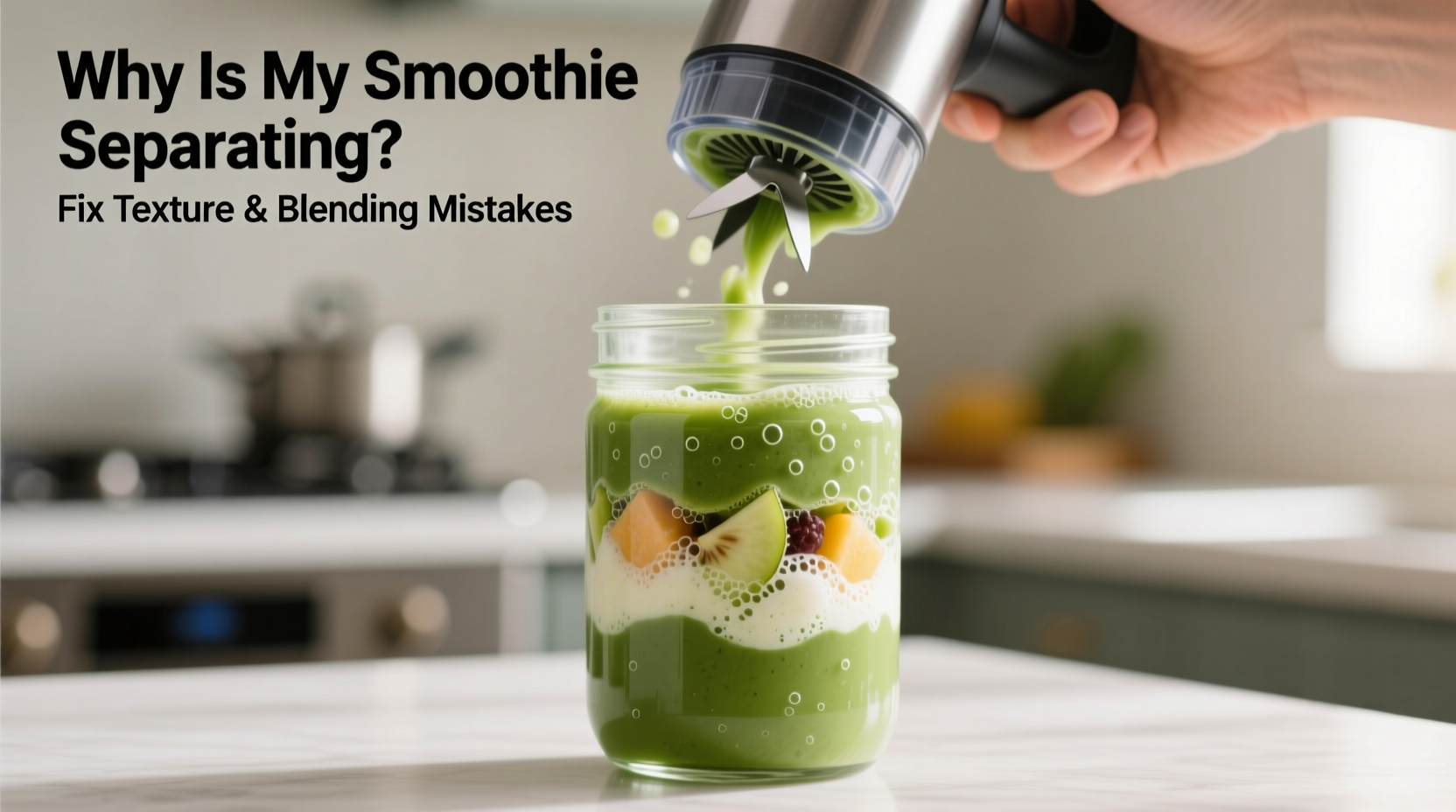
Smoothies are emulsions—mixtures of two or more liquids that don’t naturally blend, like oil and water. In food terms, emulsions rely on stabilizers (such as fiber, proteins, or natural gums) to keep ingredients suspended. When these stabilizers are missing or improperly activated, separation happens quickly.
Liquid-heavy blends without enough thickening agents will separate within minutes. Ingredients like banana, oats, chia seeds, or nut butters act as natural thickeners and emulsifiers. Without them, your smoothie lacks structural integrity. Additionally, temperature plays a role: cold ingredients slow molecular movement, helping maintain consistency longer than room-temperature mixes.
Air incorporation during blending also contributes. Over-blending introduces too much air, creating a frothy layer that destabilizes the mixture. Once the air bubbles collapse, the remaining liquid settles unevenly.
“Texture stability in smoothies depends on ingredient synergy and mechanical processing. It’s not just what you blend—it’s how you blend it.” — Dr. Lena Torres, Food Scientist & Nutritional Formulation Specialist
Common Blending Mistakes That Cause Separation
Even with healthy ingredients, poor technique leads to disappointing results. These common errors sabotage texture and promote rapid separation:
- Adding liquids first: Pouring all the liquid into the blender before solids can cause blades to spin inefficiently, leading to uneven mixing and weak emulsification.
- Using too much liquid: Excess water, juice, or milk dilutes the mixture, reducing viscosity and making it harder for fibers and fats to suspend particles.
- Under-blending or over-blending: Too little time leaves chunks unprocessed; too long whips in excess air and heats the mixture slightly, accelerating separation.
- Ignoring ingredient temperature: Warm liquids or room-temperature fruits increase kinetic energy in the mix, encouraging faster phase separation.
- Skipping emulsifiers: Omitting ingredients like flaxseed, avocado, yogurt, or tahini removes natural binding agents critical for cohesion.
How to Fix Smoothie Texture: A Step-by-Step Guide
Follow this proven method to create a smooth, stable blend that resists separation for up to an hour (or longer if stored properly).
- Start with frozen fruit: Use at least 1 cup of frozen fruit (e.g., berries, mango, banana). Frozen ingredients chill the mix rapidly, slowing molecular movement and improving thickness.
- Add thickeners next: Include 1–2 tablespoons of chia seeds, ground flax, oats, or nut butter. These provide soluble fiber and healthy fats that stabilize the emulsion.
- Layer protein and powders: Add protein powder, collagen, or greens now. Placing dry ingredients above liquids prevents clumping.
- Pour liquid in the middle: Use just enough liquid to allow the blades to move freely—typically ½ to ¾ cup. Opt for thicker liquids like coconut water, almond milk, or kefir instead of watery juices.
- Top with leafy greens: Spinach, kale, or herbs go last so they’re pulled down into the vortex immediately.
- Blend in stages: Start on low for 10 seconds to pull ingredients down, then increase to high for 30–45 seconds until completely smooth.
- Pause and scrape (if needed): For high-powered blenders, this may not be necessary. For standard models, stop once to push down stubborn chunks.
- Serve immediately or store correctly: If not drinking right away, transfer to a sealed mason jar and refrigerate upright. Shake well before consuming.
Best Ingredients for Stable Smoothies
Certain foods naturally enhance texture and reduce separation. Prioritize those with high pectin, mucilage, or fat content.
| Ingredient | Function | Recommended Amount |
|---|---|---|
| Banana (frozen) | Natural thickener, adds creaminess | ½ to 1 medium |
| Avocado | Healthy fats create rich texture | ¼ to ½ fruit |
| Chia or flax seeds | Form gel when hydrated, stabilize emulsion | 1 tbsp (soaked optional) |
| Oats (rolled or quick) | Soluble fiber binds liquid | 2–4 tbsp |
| Nut or seed butter | Fats emulsify liquids and solids | 1–2 tbsp |
| Yogurt or kefir | Proteins and probiotics improve mouthfeel | ¼ to ½ cup |
| Coconut meat or milk | High-fat content enhances stability | ¼ cup or 2–4 oz |
Equipment Matters: Choosing the Right Blender
Your blender significantly impacts texture. Not all machines can generate the torque and speed needed for true homogenization.
High-performance blenders (e.g., Vitamix, Blendtec) create a vortex that pulls ingredients downward, ensuring even processing. They also heat blends slightly through friction, which helps emulsify fats and dissolve powders. In contrast, budget models often leave pockets of unblended material and introduce inconsistent air flow, increasing separation risk.
If using a personal blender or single-serve cup system, consider blending in smaller batches and allowing extra time. Pulse blending can help break up large chunks before continuous operation.
Blender Performance Checklist
- Motor power: At least 600 watts for consistent performance
- Vortex formation: Look for a deep pull toward the center during blending
- Variable speeds: Essential for controlled processing
- Durability: Stainless steel blades resist dulling over time
- Container shape: Narrower bases promote better circulation
Real Example: From Separated Mess to Perfect Blend
Sarah, a busy nurse, made green smoothies every morning for energy during her 12-hour shifts. Despite using spinach, banana, protein powder, and almond milk, her smoothie always separated by the time she reached work. The bottom was watery, while a foamy green layer floated on top.
After reviewing her process, she realized she was adding almond milk first, using mostly fresh fruit, and blending for only 20 seconds. She adjusted her method: starting with frozen banana and spinach at the bottom, adding chia seeds and protein powder, pouring almond milk last, and blending for 45 seconds on high. She also began storing her smoothie in a sealed jar instead of an open container.
The result? A thick, uniform smoothie that stayed mixed for over 90 minutes. Sarah reported better satiety and no more textural disappointment mid-shift.
Do’s and Don’ts of Smoothie Preparation
| Do | Don’t |
|---|---|
| Use frozen fruit as a base | Use only fresh fruit and ice (ice melts and waters down blend) |
| Add a fat source (nut butter, avocado) | Skip fats entirely—they’re essential for emulsification |
| Blend longer than you think necessary | Stop blending as soon as it looks “mixed” |
| Store in airtight glass jars | Leave smoothies in the blender pitcher (oxidation accelerates separation) |
| Shake or stir before drinking if stored | Assume it’s ruined if layered—most can be revived with agitation |
Frequently Asked Questions
Why does my smoothie separate even though I used a high-speed blender?
Even powerful blenders can’t compensate for imbalanced recipes. Too much liquid or insufficient thickeners will still lead to separation. Also, blending too briefly or adding ingredients in the wrong order affects results. Ensure you're using at least one emulsifying ingredient and blending for 45–60 seconds on high.
Can I fix a separated smoothie after it happens?
Yes. Simply shake it vigorously in a sealed container or re-blend for 15–20 seconds. If it's been sitting for hours, check for spoilage signs (off smell, mold), but short-term separation is normal and reversible.
How long should a well-made smoothie stay blended?
A properly formulated smoothie with adequate thickeners and emulsifiers should remain homogeneous for 1–2 hours at room temperature, or up to 24 hours refrigerated. Shake well before drinking if stored.
Final Tips for Consistently Great Smoothies
Preventing separation isn’t about perfection—it’s about consistency in preparation. Small adjustments compound into dramatically better results. Keep a log of your ingredient ratios and note which combinations hold together best. Over time, you’ll develop an intuitive sense for balance.
Also, clean your blender promptly. Residual buildup can interfere with blade efficiency and introduce off-flavors. Rinse immediately after use, and perform a deep clean weekly with warm water and mild detergent.
Take Action Today
You don’t need expensive ingredients or gadgets to make a smoothie that stays blended. What matters most is understanding how components interact and applying smart techniques. Revisit your current recipe: Is there enough fiber? Are you layering correctly? Are you blending long enough?
Make one change tomorrow—add chia seeds, switch to frozen banana, or extend blending time. Observe the difference. Small steps lead to lasting improvements in texture, taste, and satisfaction.




 浙公网安备
33010002000092号
浙公网安备
33010002000092号 浙B2-20120091-4
Comments
No comments yet. Why don't you start the discussion?