
Smoothies are a go-to for quick nutrition—packed with fruits, vegetables, protein, and healthy fats. But nothing disrupts the experience like opening your fridge to find a glass of separated layers: a watery pool on the bottom, pulp floating on top, and maybe a greasy film if you added nut butter. This isn’t spoilage—it’s physics. Understanding why smoothies separate and how to prevent it transforms an inconsistent drink into a consistently creamy, satisfying meal or snack.
Separation happens due to differences in density, polarity, and emulsification failure among ingredients. When components don’t bind properly, gravity takes over. The good news? With the right knowledge and minor adjustments, you can create smoothies that stay blended from first sip to last.
The Science Behind Smoothie Separation
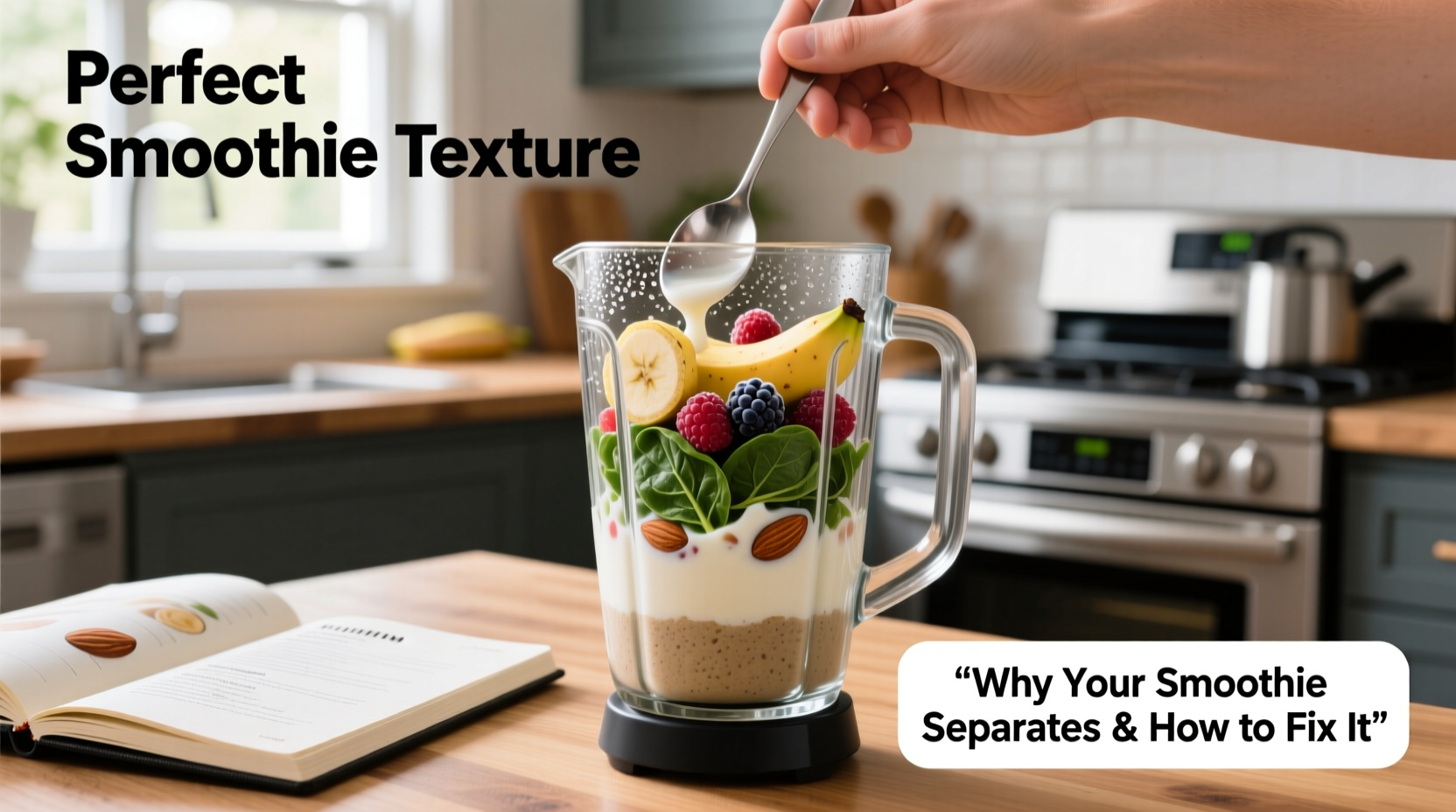
At its core, a smoothie is a suspension—a mixture where solid particles are dispersed throughout a liquid. Unlike true solutions (like salt in water), suspensions are unstable over time. Ingredients naturally begin to settle based on weight and molecular compatibility.
Fruit fibers, leafy greens, and thickeners like chia seeds or oats add bulk but may not fully dissolve. Liquids such as water, coconut water, or almond milk are less dense and tend to rise or form a layer beneath heavier solids. Fats—like avocado, MCT oil, or nut butters—are nonpolar and resist mixing with polar liquids (mostly water-based). Without proper emulsification, these fats bead up and float.
This process accelerates when:
- The blender lacks sufficient power to break down cell walls in fibrous greens or seeds.
- Liquids outnumber thickening agents.
- Ingredients aren't added in the correct order.
- Temperature contrasts exist (e.g., frozen fruit dropped into room-temperature liquid).
As food scientist Dr. Lena Park explains:
“Blending creates temporary emulsions, but without stabilizers or proper technique, phase separation is inevitable. Think of it like salad dressing—shake it, and it looks uniform; let it sit, and oil floats. Smoothies behave similarly unless formulated with binding agents.” — Dr. Lena Park, Food Biophysicist, University of California, Davis
Common Causes of Texture Breakdown
Not all separation is equal. Identifying the type helps diagnose the root cause.
Layering: Water at Bottom, Pulp on Top
This indicates poor fiber integration. High-water fruits like watermelon or cucumber release juice quickly. Without enough viscosity-building ingredients, the liquid drains away from thicker components.
Fat Beading or Oily Sheen
Nut butters, oils, or full-fat dairy fail to incorporate when not emulsified properly. This often occurs when fat-rich ingredients are added too early or the blend time is insufficient.
Foaming or Air Bubbles Trapped in Gel
Over-blending leafy greens or using high-speed blenders without adequate liquid leads to air incorporation. While not harmful, foam destabilizes texture and speeds separation by creating uneven density pockets.
Sediment Build-Up After Chilling
Cold temperatures slow molecular movement, making re-suspension harder. Some ingredients, like ground flax or protein powders, absorb liquid over time and sink.
How to Prevent Separation: A Step-by-Step Guide
Texture stability begins before you press “blend.” Follow this sequence to maximize homogeneity and shelf life.
- Start with Liquids: Pour 75% of your liquid base (water, milk, juice) into the blender first. This creates a fluid environment for blades to circulate ingredients efficiently.
- Add Soft Solids Next: Include bananas, yogurt, cottage cheese, or steamed sweet potatoes. These help build creaminess and act as natural binders.
- Incorporate Powders and Stabilizers: Add protein powder, collagen, or superfood blends now so they disperse evenly without clumping.
- Layer Fibrous Ingredients: Place spinach, kale, or celery above softer items. The downward force of blending pulls them into the vortex.
- Top with Frozen or Dense Items: Add frozen fruit, ice cubes, or avocado last. Their weight helps push other ingredients down into the blade path.
- Blend in Stages: Start slow (pulse 3–5 times), then increase to high speed. Run for 45–60 seconds until completely smooth. Pause halfway to scrape sides if needed.
- Add Final Liquid: Pour remaining liquid through the lid while blending to fine-tune consistency without disrupting emulsion.
This method ensures even processing and minimizes air pockets. It also reduces strain on your blender motor and prevents overheating.
Key Ingredients That Improve Texture Stability
Some foods do more than nourish—they stabilize. Incorporate these functional ingredients to fight separation:
| Ingredient | Function | Recommended Amount (per 16 oz smoothie) |
|---|---|---|
| Banana (frozen) | Natural thickener; pectin content enhances viscosity | ½ medium |
| Avocado | Healthy fats + fiber; acts as emulsifier | ¼ fruit |
| Chia or Flax Seeds (ground) | Form gel matrix when hydrated; bind water and oil | 1 tbsp |
| Oats (rolled or quick) | Beta-glucans increase thickness and suspension | 2–3 tbsp |
| Yogurt or Kefir | Proteins and live cultures improve mouthfeel and stability | ¼–½ cup |
| Nut Butter (natural) | Emulsifies fats when blended thoroughly | 1–2 tsp |
For longer-lasting smoothies (e.g., meal prep), consider adding ¼ teaspoon of xanthan gum. This food-grade hydrocolloid is used commercially to prevent syneresis (weeping) and phase separation. Just a pinch significantly improves shelf stability—even after refrigeration.
Real Example: Fixing a Morning Green Smoothie
Alex prepares a daily green smoothie: spinach, pineapple, banana, water, and a scoop of plant-based protein. By mid-morning, the smoothie has separated into three distinct layers—heavy sediment at the bottom, a thin clear liquid in the middle, and foamy green residue on top. Frustrated, Alex almost gives up.
After reviewing formulation principles, Alex makes three changes:
- Replaces half the water with unsweetened almond milk for richer base viscosity.
- Adds 1 tablespoon of soaked chia seeds.
- Adjusts ingredient order: liquid first, then banana, protein powder, chia, spinach, and finally frozen pineapple on top.
The result? A denser, silkier texture that stays mixed for over four hours. Even after refrigeration, a quick shake restores uniformity. Alex now preps two days’ worth in advance, confident the texture won’t degrade.
Storage and Serving Best Practices
Even perfectly blended smoothies will eventually separate. Minimize this with smart storage.
- Use Airtight Containers: Oxygen exposure promotes oxidation and texture breakdown. Fill jars to the brim to reduce headspace.
- Store Upright in Fridge: Keep containers vertical to maintain layered integrity until consumption.
- Shake, Don’t Stir: Agitation via shaking reintroduces air and remixes phases more effectively than stirring with a spoon.
- Consume Within 24 Hours: Nutrient degradation and microbial growth begin beyond this point, especially with fresh produce.
If reheating isn’t an option (and it usually isn’t for smoothies), avoid freezing entire portions unless you’re prepared to re-blend upon thawing. Ice crystals rupture cell structures, leading to graininess and faster separation post-thaw.
Checklist: Build a Non-Separating Smoothie
Use this checklist before every blend to ensure optimal texture:
- ▢ Choose a high-speed blender with sharp, durable blades
- ▢ Use at least one thickening agent (banana, avocado, oats, etc.)
- ▢ Include a stabilizer (chia, flax, xanthan gum)
- ▢ Layer ingredients in the correct order
- ▢ Blend long enough—minimum 45 seconds on high
- ▢ Taste and adjust: too thin? Add ice or oats. Too thick? Stream in more liquid while blending.
- ▢ Transfer immediately to an airtight container
- ▢ Label with date and time if prepping ahead
Frequently Asked Questions
Can I fix a separated smoothie after it happens?
Yes. Simply pour it back into the blender and run for 20–30 seconds. Alternatively, shake vigorously in a sealed bottle. If separation was caused by fat beading, brief re-blending usually reincorporates oils successfully.
Does using ice prevent separation?
No. Ice dilutes the smoothie as it melts, worsening separation. Instead of relying on ice for thickness, use frozen fruit or avocado. They add body without excess water.
Is separation a sign of spoilage?
Not necessarily. Physical separation is normal and expected. However, if you detect sour smell, fizzing, mold, or slimy texture, discard it immediately. These indicate bacterial fermentation.
Final Thoughts: Consistency Is Achievable
Smoothie separation isn’t a flaw in your routine—it’s feedback. Each instance reveals an opportunity to refine your formula, technique, or equipment. The goal isn’t perfection but progress: moving from unpredictable sludge to a reliable, nutrient-dense beverage you can count on.
You don’t need gourmet ingredients or lab equipment. Just attention to detail—ingredient order, balance of components, and blending discipline. Once you master the rhythm, you’ll spend less time troubleshooting and more time enjoying the benefits of a well-made smoothie.




 浙公网安备
33010002000092号
浙公网安备
33010002000092号 浙B2-20120091-4
Comments
No comments yet. Why don't you start the discussion?