
A smoothie that separates into distinct layers moments after blending can be frustrating—especially when you're aiming for a creamy, uniform texture. This issue isn't just cosmetic; it often signals poor nutrient integration, inconsistent flavor, and a less satisfying drinking experience. The root cause usually lies in improper ingredient layering and blending technique. Understanding the science behind smoothie composition and mastering the correct order of adding ingredients can transform your results from grainy and separated to silky and stable.
Smoothies are more than just blended fruits and liquids—they’re emulsions. When done right, they form a cohesive suspension where solids remain evenly distributed in liquid. But when layering is off, heavier ingredients sink, lighter ones float, and the final product loses its integrity within minutes. Fixing this doesn’t require new equipment or exotic stabilizers—it starts with how you load your blender.
The Science Behind Smoothie Separation
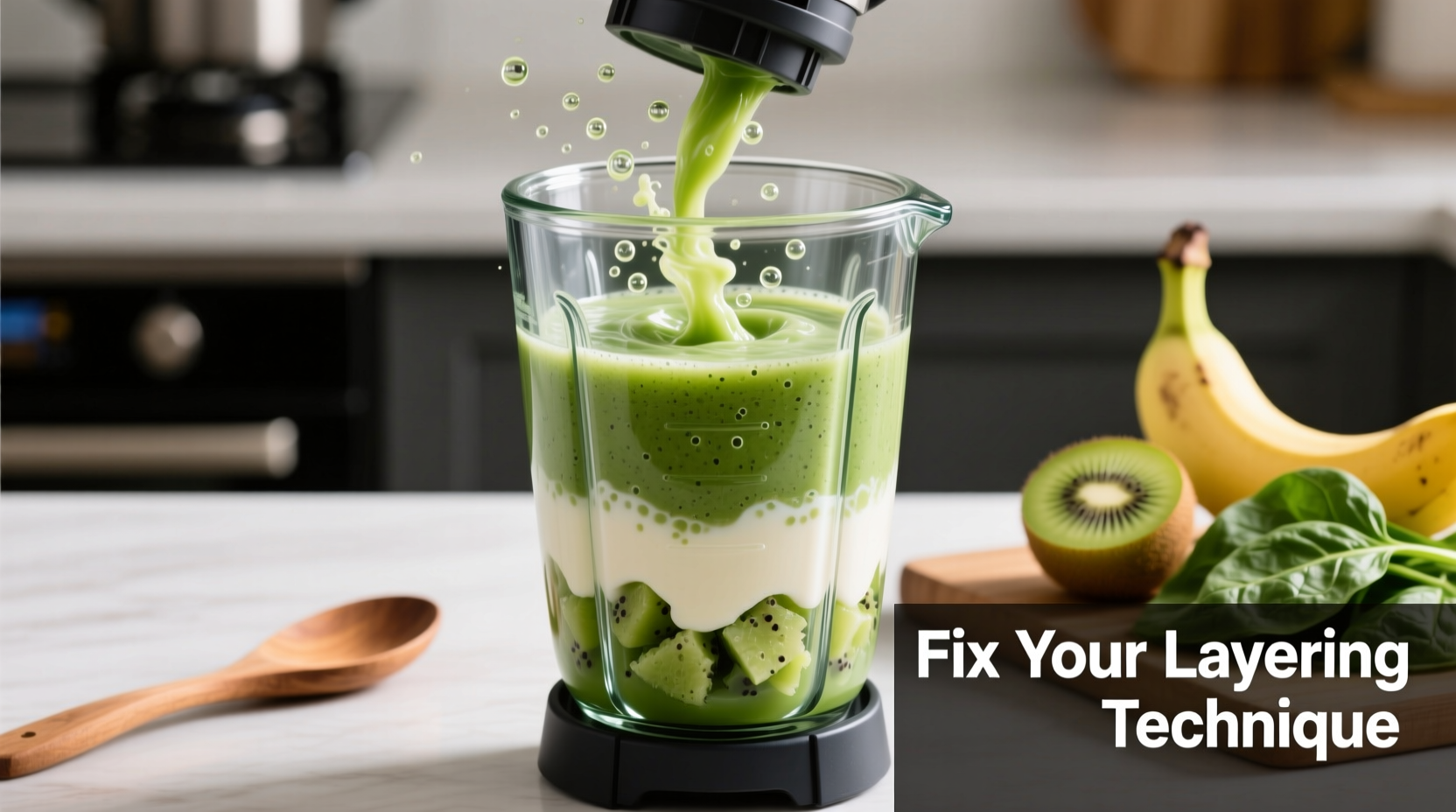
Smoothie separation occurs due to differences in density, viscosity, and particle size among ingredients. Liquids like water, almond milk, or juice have low viscosity and high fluidity, causing them to rise or settle depending on what’s mixed with them. Thicker components such as banana, avocado, yogurt, or nut butter add body but may clump if not properly incorporated. Powders like protein, greens, or collagen dissolve unevenly if introduced at the wrong stage.
When ingredients aren’t layered correctly, the blender blades struggle to create an even vortex. Instead of pulling everything downward into the blade path, some materials float above or get trapped along the sides. This leads to partial blending—some parts are over-processed while others remain untouched. Once poured, gravity takes over: dense fibers sink, oils rise, and liquids separate.
According to Dr. Lena Torres, food scientist and author of *The Physics of Blending*, “Layering matters because blenders work by creating turbulence from the bottom up. If heavy solids sit on top, they never reach the shear zone near the blades. You end up with a stratified mixture, not a true blend.”
“Proper layering ensures all ingredients pass through the high-shear zone near the blades, creating a stable emulsion.” — Dr. Lena Torres, Food Scientist
How Ingredient Order Affects Blend Stability
The way you add ingredients to your blender directly impacts mixing efficiency. Most people dump everything in haphazardly, assuming the machine will sort it out. But blenders rely on hydrodynamic flow—liquid movement created by spinning blades—to pull material down and circulate it. Without proper layering, this flow breaks down.
Think of your blender jar as a vertical reactor. The motor generates rotational energy at the base, which moves upward in a spiral motion. For optimal blending, lighter, liquid ingredients should be at the bottom to initiate flow, while denser items go on top so they fall into the vortex.
The Correct Layering Sequence
To prevent separation, follow this five-step layering method:
- Liquids first: Pour in water, milk, coconut water, or juice. These create the initial fluid environment needed for blade engagement.
- Powders next: Add protein powder, matcha, cocoa, flaxseed, or supplements. Placing them above liquid prevents clumping and allows immediate dispersion.
- Soft fruits and yogurt: Items like banana, mango, or Greek yogurt go here. They’re dense enough to press powders down but soft enough to break down quickly.
- Frozen ingredients: Ice, frozen berries, or mango chunks belong near the top. Their weight helps push lower layers into the blades during blending.
- Leafy greens last: Spinach, kale, or herbs should be added on top. They’re light and tend to get stuck on the sides unless forced down by heavier items.
This sequence maximizes blade efficiency and minimizes air pockets. It also reduces the need for excessive scraping or pausing mid-blend.
Common Mistakes That Cause Separation
Even with good intentions, many home blenders make subtle errors that sabotage consistency. Here are the most frequent culprits:
- Adding ice first: Ice sinks and blocks blade rotation, leaving liquids unblended on top.
- Overloading the blender: Too many ingredients restrict circulation, leading to incomplete mixing.
- Using too little liquid: Insufficient fluid prevents proper vortex formation, resulting in chunky textures.
- Blending too briefly: High-speed bursts may chop ingredients but fail to fully emulsify fats and fibers.
- Ignoring blade wear: Dull or damaged blades reduce shear force, compromising blend quality.
One common scenario involves someone tossing spinach, frozen fruit, protein powder, and almond milk into the blender without regard to order. After blending, the spinach floats on top, the powder forms gritty patches, and the liquid clears at the bottom. The issue isn’t the recipe—it’s the process.
Mini Case Study: From Separated to Silky
Jamal, a fitness instructor in Portland, struggled with his morning post-workout smoothie consistently separating within five minutes. His typical mix included almond milk, peanut butter, banana, spinach, ice, and whey protein. Despite using a high-powered blender, he’d find a greasy film on top (from peanut butter), green flecks floating (spinach), and sediment at the bottom (undissolved protein).
After consulting a nutritionist, he adjusted his layering: 1 cup almond milk (bottom), 1 scoop protein (middle), banana and peanut butter (next), ice (above), and finally spinach on top. He also increased blending time from 30 to 60 seconds and used a tamper to guide ingredients down. Result? A thick, uniform smoothie that stayed mixed for over 30 minutes—no stirring required.
Step-by-Step Guide to Prevent Smoothie Separation
Follow this practical routine to achieve consistent, non-separating smoothies every time:
- Measure ingredients beforehand: Have everything ready to avoid mid-blend adjustments.
- Add liquid base (½–1 cup): Start with water, milk, or juice to cover the blades completely.
- Sprinkle dry ingredients: Protein, greens powder, chia seeds, or spices go directly onto the liquid.
- Add soft produce: Banana, cooked sweet potato, avocado, or yogurt help weigh down powders.
- Place frozen elements: Use frozen fruit or ice cubes to chill and thicken the blend.
- Top with leafy greens: Let spinach or kale rest on top to be pulled down during blending.
- Blend in stages: Start low to combine, then ramp to high for 45–60 seconds.
- Use a tamper (if available): Gently push ingredients toward the blades during blending.
- Check consistency: Pause and swirl the jar if needed, but avoid over-pausing.
- Pour immediately: Serve right after blending to enjoy peak texture before natural settling begins.
Do’s and Don’ts of Smoothie Layering
| Do’s | Don’ts |
|---|---|
| Start with enough liquid to cover the blades | Don’t add ice or frozen fruit at the bottom |
| Layer powders above liquid but below solids | Don’t dump all ingredients randomly |
| Put leafy greens on top to trap them in the vortex | Don’t overload the blender past the max fill line |
| Use a tamper to guide thick mixtures | Don’t blend for less than 45 seconds on high |
| Include a natural emulsifier like nut butter or avocado | Don’t skip blending time to save energy |
Natural Stabilizers to Improve Texture
Beyond layering, certain ingredients act as natural binders that enhance smoothie stability. These don’t just improve texture—they add nutritional value too.
- Avocado: High in healthy fats and fiber, it creates a creamy emulsion that resists separation.
- Nut butters: Peanut, almond, or cashew butter contain oils that coat particles and slow sedimentation.
- Chia or flaxseeds: When hydrated, they form a gel-like matrix that traps liquid and solids.
- Yogurt or kefir: Probiotic-rich dairy adds protein and lactic acid, improving suspension.
- Oats: Rolled oats absorb liquid and thicken the blend, reducing phase separation.
Incorporating one of these stabilizers can extend your smoothie’s shelf life in the glass by 15–20 minutes—long enough to enjoy it leisurely without constant stirring.
FAQ
Why does my smoothie separate even with a powerful blender?
Even high-wattage blenders can’t compensate for poor layering or insufficient blending time. If ingredients aren’t arranged to feed into the vortex, parts will remain unblended. Also, some natural separation is normal over time due to gravity, but proper technique delays it significantly.
Can I prep smoothie ingredients the night before?
Yes, but store them in the correct order. Use a freezer-safe jar or bag and layer from top to bottom (greens, frozen fruit, soft fruit, powders, then liquid on top when ready). Avoid pre-mixing wet and dry ingredients for long periods to prevent premature breakdown.
Is it safe to drink a separated smoothie?
Absolutely. Separation is a physical change, not a safety issue. Just shake or stir before consuming to recombine nutrients. However, if the smoothie smells sour or has been left out over two hours, discard it.
Checklist: Perfect Smoothie Layering Routine
- ☐ Measure all ingredients before starting
- ☐ Add liquid base first (covers blades)
- ☐ Sprinkle powders evenly over liquid
- ☐ Layer soft fruits or yogurt next
- ☐ Add frozen items above
- ☐ Place leafy greens on top
- ☐ Blend on low for 10 seconds, then high for 45–60 seconds
- ☐ Use a tamper to guide ingredients (if possible)
- ☐ Pour immediately and enjoy within 15–20 minutes
Conclusion
Smoothie separation isn’t inevitable—it’s a fixable result of improper technique. By understanding how blenders work and applying strategic layering, you can consistently create drinks that are creamy, well-integrated, and satisfying from first sip to last. The key is respecting the physics of blending: liquids initiate flow, powders need immersion, and weight drives circulation. With this knowledge, you’re no longer guessing—you’re engineering better results.




 浙公网安备
33010002000092号
浙公网安备
33010002000092号 浙B2-20120091-4
Comments
No comments yet. Why don't you start the discussion?