
There’s nothing more disappointing than pouring a smoothie into a glass, only to see it split into layers within minutes—watery liquid at the bottom, foam on top, and chunks of fruit floating awkwardly in between. This common issue isn’t just unappealing; it can ruin the experience of what should be a satisfying, nutrient-packed drink. The good news? Smoothie separation is both preventable and fixable. With a few strategic ingredient choices, blending techniques, and timing adjustments, you can achieve a luxuriously creamy, uniform texture that stays blended from first sip to last.
The Science Behind Smoothie Separation
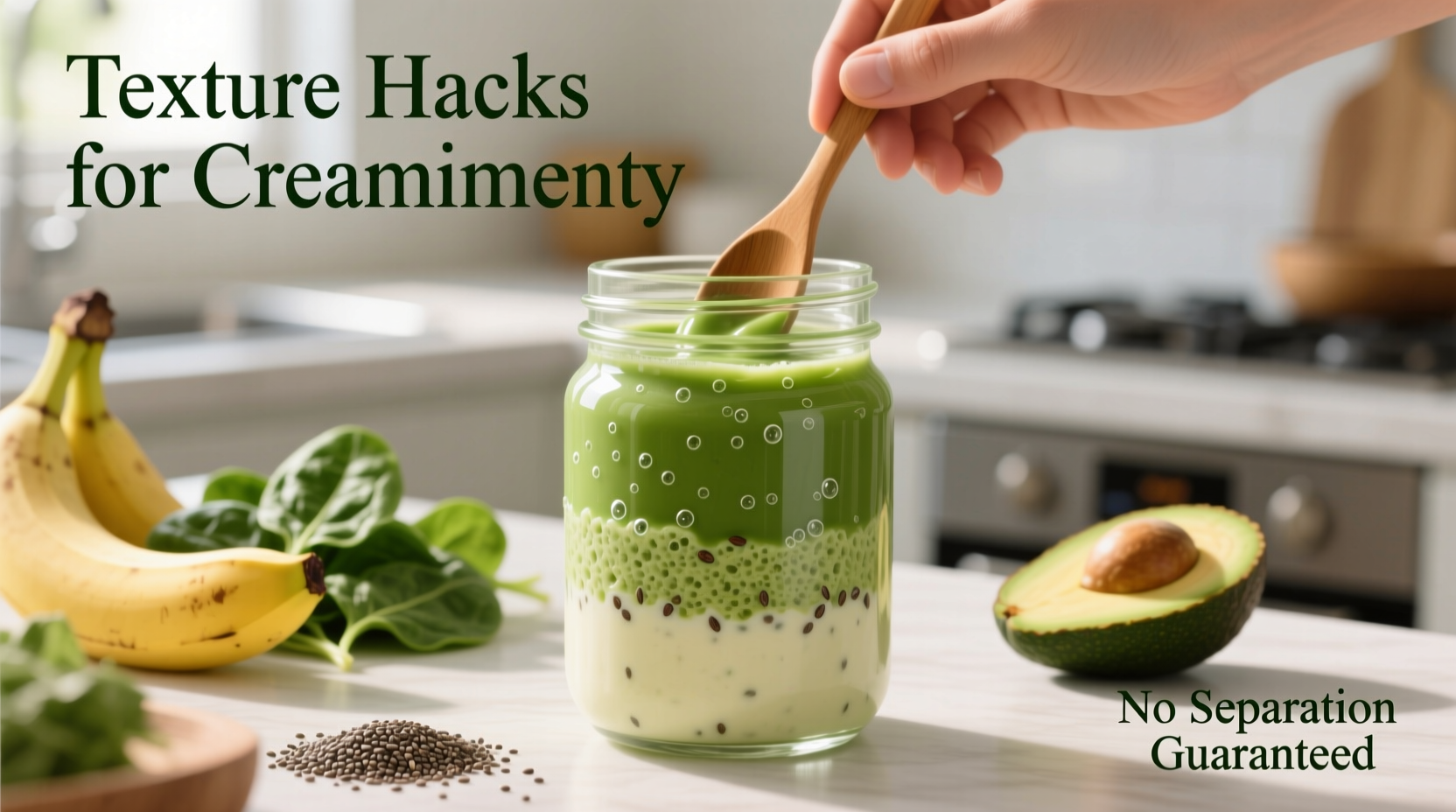
Smoothies separate due to differences in density, fat content, and emulsification between ingredients. When liquids like water, juice, or milk sit beneath thicker components such as banana, yogurt, or nut butter, gravity pulls them apart over time. Unlike naturally cohesive mixtures like soups or sauces, smoothies often lack stabilizers or emulsifiers that bind oil and water-based components together. This leads to phase separation—essentially, the breakdown of a temporary suspension into distinct layers.
Fruit fibers also play a role. High-water fruits like watermelon or cucumber release liquid quickly once blended, while fibrous greens like kale or spinach can clump if not properly broken down. Additionally, temperature affects viscosity: warm ingredients reduce thickness, making separation more likely. Even the order in which you add ingredients to your blender influences how well everything integrates.
“Most smoothie separation comes down to improper layering and missing emulsifiers. It’s not about the blender—it’s about formulation.” — Dr. Lena Tran, Food Scientist & Nutritional Biochemist
Texture Hacks for Creamier, Stable Smoothies
Achieving a velvety, non-separating smoothie isn’t magic—it’s method. Below are proven strategies to enhance mouthfeel, improve cohesion, and extend stability.
1. Use a Cream Base Instead of Water or Juice
Liquids with higher fat and protein content create richer emulsions. Replace plain water or sugary juices with bases like full-fat coconut milk, Greek yogurt, kefir, or even cottage cheese blended smooth. These ingredients contain natural emulsifiers (like casein in dairy) that help suspend solids evenly.
2. Incorporate Natural Thickeners and Binders
Certain ingredients act as hydrocolloids—substances that absorb water and form gels. Adding just a small amount can dramatically improve texture retention.
- Banana (frozen): Adds creaminess and pectin, a natural thickener.
- Chia seeds: Absorb up to 10 times their weight in liquid, forming a gel matrix.
- Flaxseed meal: Rich in soluble fiber, helping stabilize the mixture.
- Oats: Blend into a fine powder first; they add body without grit.
- Avocado: High in healthy fats and contributes to a silky mouthfeel.
3. Emulsify with Healthy Fats
Fat doesn’t just add flavor—it helps bind water-based ingredients. Nut butters (almond, peanut, cashew), tahini, MCT oil, or even a teaspoon of olive oil can act as emulsifying agents. They coat particles and slow sedimentation by reducing surface tension between phases.
4. Pre-Chill Ingredients and Use Frozen Fruit
Cold temperatures increase viscosity. Blending with frozen fruit not only eliminates the need for ice (which dilutes flavor and texture when it melts) but also creates a denser, smoother consistency. Avoid thawed fruit unless necessary, as released moisture promotes separation.
5. Blend in Stages for Maximum Breakdown
Start with liquids and powders, then gradually add soft ingredients before finishing with frozen or fibrous ones. This allows the blades to process each component thoroughly. High-speed blenders benefit from a 30-second initial blend followed by a pause to scrape down sides, ensuring no pockets of unblended material remain.
Step-by-Step Guide to a Non-Separating Smoothie
Follow this sequence to build a stable, creamy smoothie from scratch:
- Add liquid base first – Pour in ½–¾ cup of thick liquid (e.g., coconut milk, kefir).
- Incorporate powders and seeds – Add protein powder, chia, flax, or collagen while blending begins.
- Include soft thickeners – Add half a banana, avocado, or cooked oats.
- Layer in greens – Spinach blends easily; kale should be de-stemmed and added mid-blend.
- Finish with frozen fruit – Add last to maintain vortex and ensure even pulverization.
- Blend for 45–60 seconds – Use tamper tool if needed to push ingredients down.
- Serve immediately or store correctly – If not drinking right away, minimize air exposure and refrigerate upright.
Common Mistakes That Cause Separation
Even with quality ingredients, poor technique can sabotage results. Here are frequent errors and how to avoid them:
| Mistake | Why It Causes Separation | Solution |
|---|---|---|
| Using too much juice or water | Dilutes viscosity and lacks binding agents | Replace with creamy liquids like yogurt or nut milk |
| Adding ice instead of frozen fruit | Ice melts quickly, thinning the mixture | Use frozen bananas, mango, or berries instead |
| Overloading with leafy greens | Fibers don’t break down fully, creating clumps | Limit to 1–2 cups; blend greens with liquid first |
| Not using any binder | No structural support for suspension | Add chia, flax, oats, or avocado |
| Storing in wide-mouth containers | Increased surface area speeds separation | Use narrow bottles and shake before drinking |
Real Example: From Soggy to Silky
Jamie, a fitness coach in Portland, used to make morning smoothies with almond milk, spinach, banana, and protein powder. Within 20 minutes, the drink would separate into three layers: green sludge at the bottom, clear liquid in the middle, and foam on top. After adjusting his recipe based on texture science, he made key changes:
- Swapped almond milk for full-fat coconut milk
- Added 1 tbsp chia seeds soaked for 10 minutes
- Used frozen banana instead of fresh
- Blended greens with liquid first for 20 seconds
- Stored in a tall, narrow bottle with a secure lid
The result? A smoothie that stayed uniformly blended for over two hours—even during his commute. “It’s like night and day,” Jamie said. “Now I actually look forward to drinking it, not just forcing it down.”
Checklist: Build Your Perfect Creamy Smoothie
Use this checklist before blending to ensure optimal texture and stability:
- ✅ Chose a creamy liquid base (coconut milk, yogurt, kefir)
- ✅ Included at least one thickener (banana, chia, oats, avocado)
- ✅ Added a healthy fat (nut butter, flax, MCT oil)
- ✅ Used frozen fruit instead of ice
- ✅ Measured greens appropriately (1–2 cups max)
- ✅ Layered ingredients in correct order
- ✅ Blended long enough (45+ seconds)
- ✅ Stored in an airtight, narrow container if not consumed immediately
Frequently Asked Questions
Can I prep smoothies the night before without separation?
Yes, but with precautions. Prepare and blend fully, then store in a sealed container in the fridge. Shake vigorously before drinking. For best results, keep thickeners like chia or flax in the mix—they’ll continue absorbing liquid overnight and help maintain structure. Avoid adding ice or watery fruits like melon if prepping ahead.
Why does my smoothie get foamy on top?
Foaming occurs when air is whipped into the mixture, especially with high-speed blenders or excess liquid. To reduce foam, avoid overfilling the blender, blend in shorter bursts, and let the smoothie sit for a minute post-blend. Using room-temperature liquids instead of cold can also minimize frothing, though cold is better for texture.
Is separation a sign of spoilage?
No. Separation is a physical process, not a chemical one. As long as ingredients were fresh and stored properly, a separated smoothie is still safe to drink. Simply shake or stir it back together. However, if you notice sour smell, mold, or off-taste, discard it immediately.
Expert Insight: The Role of Emulsifiers in Homemade Blends
While commercial smoothies often use additives like xanthan gum or guar gum, home blenders can achieve similar results naturally. According to culinary researcher Maria Kim, “You don’t need lab-made stabilizers. Whole foods like chia, flax, and avocado provide soluble fiber and lipids that mimic industrial emulsifiers. The trick is balance—one tablespoon of chia per 16 oz smoothie is usually enough.”
“Emulsification isn’t just for salad dressings. In smoothies, it’s the invisible force holding nutrition and pleasure together.” — Maria Kim, Culinary Research Associate, Institute of Food Innovation
Final Tips for Long-Lasting Smoothie Success
Consistency in texture starts with consistency in practice. Treat your smoothie like a crafted beverage—not just a dump-and-blend routine. Pay attention to ratios: aim for a 40-40-20 balance—40% liquid, 40% fruits/vegetables, 20% boosters (proteins, fats, thickeners). Rotate ingredients seasonally but keep core textural elements constant.
If you're sharing smoothies with kids or packing them for work, consider portable solutions like insulated bottles that maintain temperature and reduce agitation. And always clean your blender immediately after use—residue buildup can affect future blends’ performance.
Conclusion
Smoothie separation isn’t inevitable—it’s a solvable problem rooted in ingredient selection and technique. By understanding the science of emulsification, leveraging natural thickeners, and refining your blending process, you can transform your smoothies from grainy, layered messes into rich, cohesive drinks that taste as good as they look. Whether you’re fueling a workout, feeding a family, or simply enjoying a quiet morning ritual, a creamy, stable smoothie enhances both satisfaction and nutrition.




 浙公网安备
33010002000092号
浙公网安备
33010002000092号 浙B2-20120091-4
Comments
No comments yet. Why don't you start the discussion?