
It’s a common concern among reptile keepers: your snake hasn’t eaten in weeks, or even months, and you’re starting to worry. Unlike mammals, snakes have unique metabolic processes that allow them to survive extended periods without food. But how long is too long? And what does it mean when your snake refuses to eat? Understanding the natural behaviors, environmental factors, and health indicators can help you determine whether your snake's fasting is normal or a sign of a deeper issue.
Snakes are ectothermic predators with slow metabolisms. In the wild, meals can be scarce, so their bodies evolved to endure prolonged fasts. Captive snakes often mirror this behavior, especially during certain times of the year or life stages. However, persistent refusal to eat—especially in younger or newly acquired animals—can signal stress, improper husbandry, or illness. This guide breaks down the most common reasons snakes stop eating, how long fasting is acceptable, and what steps you should take to support your pet.
Common Reasons Snakes Stop Eating
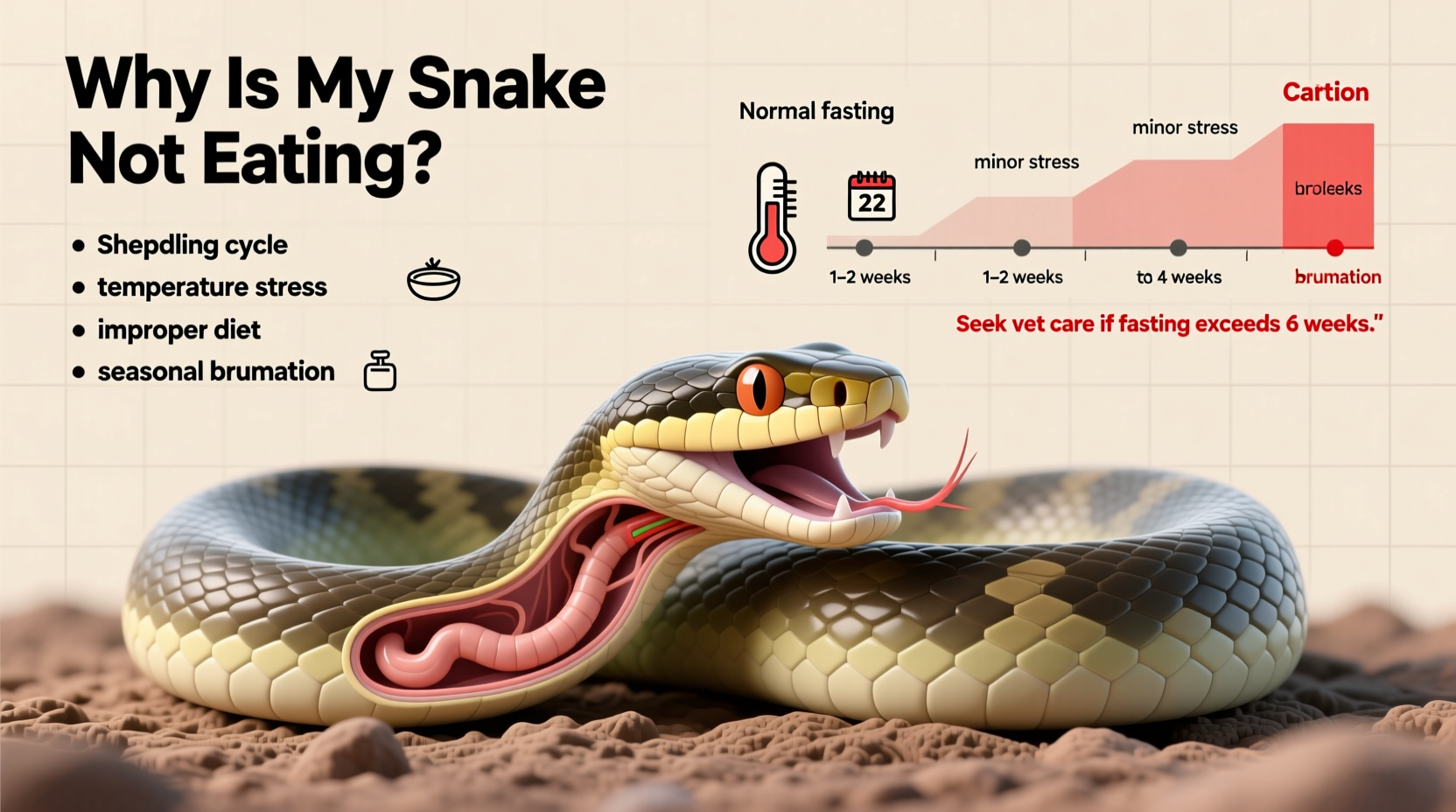
Not every skipped meal means something is wrong. Many factors influence a snake’s appetite, and some are entirely natural. Recognizing these can prevent unnecessary panic and misguided interventions.
- Brumation (Reptilian Hibernation): Especially in temperate species like corn snakes or king snakes, reduced appetite in cooler months is normal. Brumation is a period of decreased activity and metabolism, often accompanied by fasting.
- Shedding Cycle: Snakes typically stop eating 5–7 days before shedding. Their eyes cloud over, and they become reclusive. Appetite usually returns within a few days after shedding completes.
- Stress from Environment: A new enclosure, loud noises, frequent handling, or nearby pets can cause anxiety, leading to food refusal.
- Breeding Season Behavior: Males may lose interest in food during breeding season as they focus on seeking mates. Females may fast while developing eggs.
- Inappropriate Prey: Size, type, temperature, or movement of prey can deter feeding. Some snakes prefer live over frozen-thawed, or vice versa.
- Poor Husbandry Conditions: Incorrect temperature gradients, humidity levels, or lack of hiding spots can suppress appetite.
How Long Is Normal for Snake Fasting?
Fasting duration varies significantly based on species, age, size, and health. While a young ball python skipping meals raises concern, an adult reticulated python fasting for several months might be typical.
| Snake Type | Average Fasting Duration (Healthy Adult) | When to Be Concerned |
|---|---|---|
| Ball Python | 1–3 months | Over 3 months, or rapid weight loss |
| Corn Snake | 1–2 months (seasonal) | More than 2 months outside brumation |
| Kingsnake | 1–3 months (brumation-related) | Prolonged refusal post-warming cycle |
| Boa Constrictor | 2–4 months (adults) | Consistent refusal beyond 4 months |
| Reticulated Python | 3–6 months (common in adults) | Weight loss exceeding 10% body mass |
| Hatchlings & Juveniles | 2–4 weeks maximum | Any refusal beyond 4 weeks |
Note: Hatchlings and juveniles grow rapidly and require regular feeding (every 5–7 days). Prolonged fasting in young snakes is never normal and requires immediate attention.
“Adult snakes can fast for months without harm, but weight monitoring is critical. A 10% body weight loss is a red flag.” — Dr. Rebecca Thompson, DVM, Reptile Medicine Specialist
Step-by-Step Guide to Assessing and Addressing Feeding Refusal
If your snake hasn’t eaten in over its typical interval, follow this systematic approach to identify and resolve the issue.
- Review Enclosure Conditions: Check temperatures at both ends of the tank with a reliable digital thermometer. Ensure humidity is appropriate for the species (e.g., 50–60% for ball pythons, higher for rainforest species).
- Inspect for Shedding Signs: Cloudy eyes or dull skin indicate an upcoming shed. Wait until shedding is complete before offering food again.
- Evaluate Stress Factors: Has anything changed recently? New tank, location, lighting, or household activity? Minimize disturbances and provide secure hides on both warm and cool sides.
- Vary Prey Presentation: Try different prey types (mouse vs. rat), sizes (slightly smaller or larger), or methods (tease with tongs, use scent transfer from bird to rodent).
- Fast and Re-Warm Strategy: For snakes in brumation-like states, gently increase ambient temperature over 3–5 days and offer food after two full heat cycles.
- Weigh Your Snake: Use a gram scale weekly. Record data to track trends. Sudden drops signal trouble.
- Consult a Veterinarian: If fasting exceeds species norms, weight loss occurs, or secondary symptoms appear (lethargy, discharge, regurgitation), seek a reptile-savvy vet.
Checklist: When to Worry About Your Snake Not Eating
- Weight loss exceeding 10% of body mass
- Regurgitation or vomiting after attempted feeding
- Lethargy or inability to coil properly
- Discharge from mouth or nose
- Difficulty breathing or gaping
- Fecal changes (diarrhea, parasites, blood)
- Refusal to eat lasting more than 3 months (for non-brumating species)
- Dehydration (skin tenting when gently pinched)
Real Case Example: The Ball Python That Wouldn’t Eat
Jamie adopted a male ball python from a breeder in November. Initially enthusiastic, the snake stopped eating by December. Despite trying live and thawed mice, varying sizes, and feeding at night, nothing worked. Jamie panicked, fearing illness.
After consulting a reptile forum and a vet, Jamie reviewed the setup: ambient temperature was only 72°F due to winter heating issues. After installing a better heat source and raising the basking zone to 88°F, the snake began exploring more. Two weeks later, Jamie offered a small fuzzy mouse using feeding tongs with a teasing motion. The snake struck and ate.
The issue wasn’t illness—it was suboptimal temperature suppressing metabolism. Once corrected, natural feeding behavior resumed. This case underscores the importance of environmental stability over force-feeding or medication.
Dos and Don’ts of Handling Fasting Snakes
| Do’s | Don’ts |
|---|---|
| Monitor weight weekly with a digital scale | Force-feed without veterinary guidance |
| Maintain consistent heat and humidity | Offer food more than once every 7–10 days during refusal |
| Provide multiple hides and reduce handling | Change diet or prey type abruptly without reason |
| Keep a feeding and shedding journal | Assume fasting always means illness |
| Try scent rubbing (e.g., quail over mouse) | Leave live prey unattended (risk of injury) |
Frequently Asked Questions
Can I feed my snake less frequently if it’s not eating?
Yes—adjust feeding frequency to match your snake’s natural rhythm. Adults often thrive on bi-weekly to monthly feedings. Skipping occasional meals is fine if weight remains stable.
Should I try live prey if frozen-thawed isn’t working?
You can, but only under direct supervision. Live rodents can injure snakes if not taken quickly. Most feeding issues are environmental, not prey-related. Address husbandry first.
Is it safe to syringe-feed a snake at home?
No. Force-feeding or tube-feeding should only be performed by a veterinarian. Improper technique can cause aspiration, esophageal damage, or worsen stress.
Conclusion: Patience and Observation Are Key
Snake fasting is often misunderstood. What looks like a crisis may simply be a reflection of natural instincts. By understanding species-specific behaviors, maintaining optimal habitat conditions, and tracking key health metrics like weight and shedding cycles, you can confidently navigate periods of food refusal.
Remember: not eating doesn’t automatically mean something is wrong. But vigilance matters. Young snakes need consistency. Adults can fast, but not indefinitely. When in doubt, consult a qualified reptile veterinarian rather than experimenting with unproven remedies.




 浙公网安备
33010002000092号
浙公网安备
33010002000092号 浙B2-20120091-4
Comments
No comments yet. Why don't you start the discussion?