
Sometimes the most resilient houseplants send distress signals in subtle ways. The snake plant—known for its hardiness, air-purifying qualities, and architectural beauty—is no exception. When its normally firm, upright green leaves begin to yellow, especially from the base upward, it’s often a cry for help. While several factors can contribute to discoloration, overwatering remains the leading cause. Understanding the connection between excess moisture and leaf degradation is crucial to reversing damage and restoring your plant’s health.
Snake plants (Sansevieria trifasciata) are native to arid regions of West Africa, where they evolved to survive long dry spells. Their thick, succulent-like leaves store water, making them exceptionally drought-tolerant. This adaptation means they thrive on neglect rather than constant attention. Yet, well-meaning plant owners often misinterpret this resilience as a need for regular watering, inadvertently pushing their plants into danger.
The Science Behind Overwatering and Yellowing Leaves
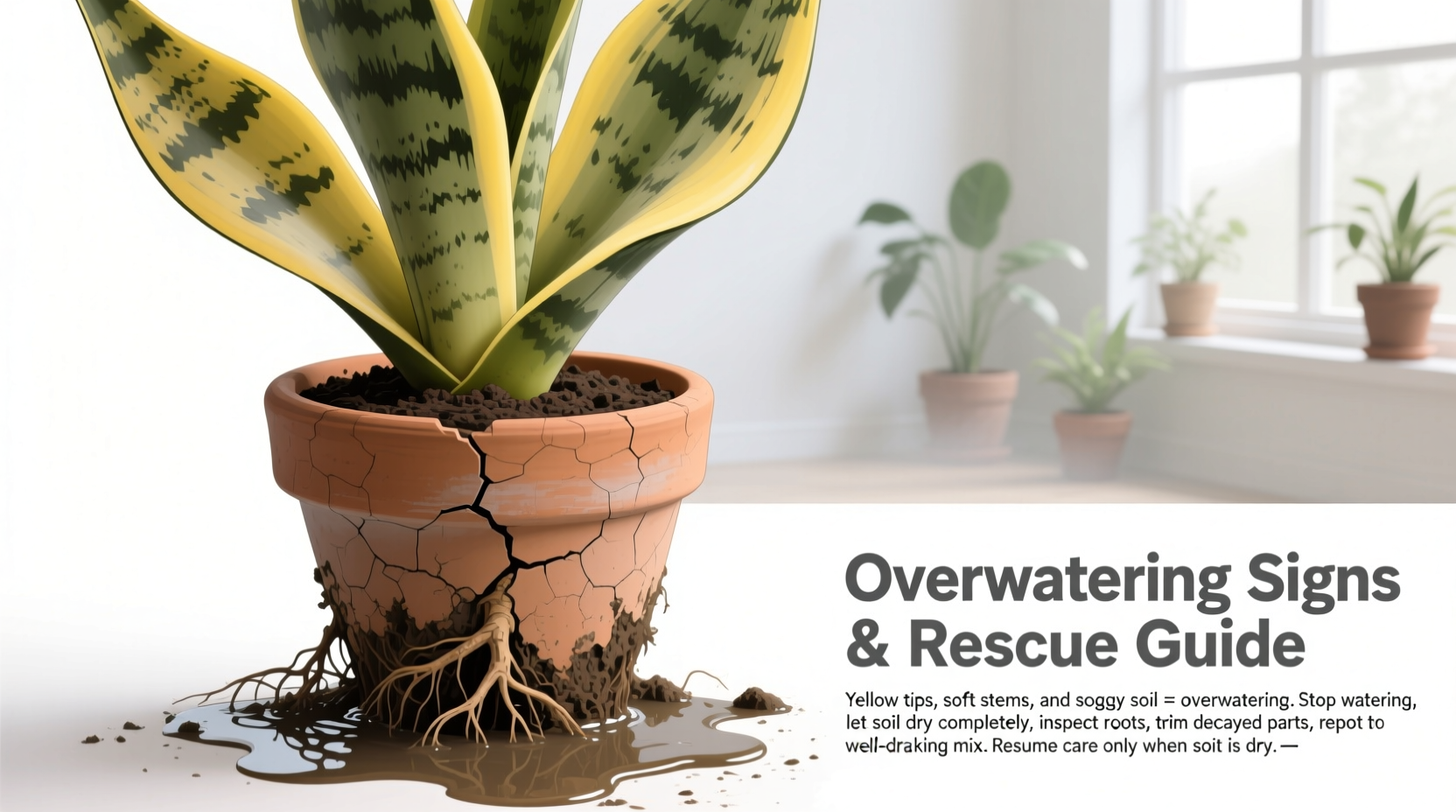
When soil remains saturated for extended periods, oxygen is displaced from the root zone. Roots require oxygen to function properly—without it, cellular respiration halts, and root tissues begin to suffocate. This anaerobic environment promotes the growth of harmful fungi and bacteria, particularly species of *Pythium* and *Fusarium*, which cause root rot.
As roots decay, their ability to absorb water and nutrients diminishes. Ironically, even though the plant is surrounded by water, it begins to starve. The stress triggers chlorophyll breakdown in the leaves, resulting in yellowing—a process known as chlorosis. In snake plants, this typically starts at the lower leaves near the soil line, spreading upward if not corrected.
Overwatering doesn’t just affect roots; it disrupts the entire physiological balance of the plant. Excess moisture weakens cell walls, causing leaves to become soft, mushy, and prone to collapse. If left unchecked, the crown may rot, leading to total plant failure.
Key Signs Your Snake Plant Is Being Overwatered
Recognizing early symptoms of overwatering can mean the difference between recovery and loss. Watch for these telltale indicators:
- Yellowing leaves starting at the base – Unlike natural aging, which affects older leaves sporadically, overwatering causes multiple lower leaves to turn uniformly yellow or pale green.
- Mushy, soft texture – Healthy snake plant leaves are rigid. If they feel squishy or ooze when pressed, root rot is likely present.
- Dark brown or black spots – These lesions, often with a water-soaked appearance, signal advanced tissue decay.
- Foul odor from soil – A sour, musty smell indicates microbial activity from decomposing roots.
- Stunted growth or drooping – Even with adequate light, an overwatered plant will stop producing new shoots and may lean or flop over.
“More houseplants die from kindness than neglect. Overwatering is the number one killer of indoor plants, especially succulents like snake plants.” — Dr. Linda Chen, Urban Horticulturist, University of Illinois Extension
Step-by-Step Guide to Saving an Overwatered Snake Plant
Rescuing a struggling snake plant requires prompt action and careful handling. Follow this timeline to give your plant the best chance of recovery:
- Remove the plant from its pot – Gently loosen the soil and slide the root ball out. Avoid pulling by the leaves, as they may detach easily if weakened.
- Inspect the roots – Healthy roots are firm and white or light tan. Rotted roots appear dark, slimy, and may fall apart with slight pressure. Use sterilized scissors to trim away all damaged tissue, cutting back to healthy growth.
- Clean the remaining roots – Rinse under lukewarm water to remove old soil and debris. This helps you assess the full extent of damage and removes lingering pathogens.
- Let the plant dry – Place the bare-root plant on a clean paper towel in a shaded, well-ventilated area for 1–2 days. This allows wounds to callous and reduces reinfection risk.
- Prepare a new pot and soil mix – Choose a container with drainage holes. Discard old soil entirely. Use a fast-draining mix: combine two parts potting soil, one part perlite, and one part coarse sand or pumice.
- Repot carefully – Position the plant in the center, ensuring the base sits slightly above the soil line to prevent water pooling. Do not water immediately.
- Wait 5–7 days before watering – This gives roots time to recover and adapt to their new environment without added stress.
- Monitor closely – Keep the plant in bright, indirect light. Avoid direct sun, which can scorch stressed foliage. Check weekly for signs of improvement or further decline.
Prevention: How to Water Snake Plants Correctly
Once your plant is stabilized, shift to a sustainable care routine that prevents future issues. Snake plants do not follow a fixed watering schedule—their needs depend on season, humidity, light, and pot size.
| Factor | Watering Guidance | Avoid |
|---|---|---|
| Season | Water every 3–6 weeks in winter; every 2–4 weeks in summer | Daily or weekly watering regardless of conditions |
| Soil Type | Fast-draining cactus/succulent mix | Poorly draining garden soil or peat-heavy mixes |
| Pot Material | Clay or terracotta (promotes evaporation) | Plastic or glazed ceramic without drainage |
| Light Level | Bright indirect light = faster drying = less frequent watering | Low light + wet soil = high rot risk |
| Humidity | Low humidity allows quicker drying; high humidity slows evaporation | Misting leaves or placing in steamy rooms |
Case Study: Reviving a Severely Overwatered ‘Laurentii’
Jessica, a plant enthusiast in Atlanta, noticed her tall yellow-edged snake plant sagging in late October. Several lower leaves had turned completely yellow and felt spongy. She had been watering it every 10 days, assuming consistency was key. After reading about overwatering risks, she decided to act.
She removed the plant and found nearly 70% of the roots were blackened and brittle. Using sterile shears, she trimmed all rotted sections and let the plant dry overnight. She repotted it in a terracotta container with a gritty succulent mix and withheld water for a full week. Within three weeks, new upright growth emerged from the center. Though she lost several large leaves, the plant fully recovered over six months with proper light and cautious watering.
Her takeaway? “I learned that doing less is often better. My snake plant thrives now with just a cup of water once a month.”
Common Mistakes That Worsen the Problem
Even with good intentions, certain habits can sabotage recovery efforts:
- Ignoring drainage – Pots without holes trap water, creating a swamp-like condition no matter how little you water.
- Using moisture-retentive soils – Regular potting mix holds too much water for succulent roots.
- Over-fertilizing – Feeding a stressed plant increases salt buildup and root burn. Wait until new growth appears before applying diluted fertilizer (once every 2–3 months in growing season).
- Repotting into a much larger container – Excess soil retains moisture longer, increasing rot risk. Choose a pot only 1–2 inches wider than the root ball.
- Returning to old habits too soon – Just because a plant survives doesn’t mean it’s ready for frequent watering. Maintain conservative practices long-term.
FAQ: Frequently Asked Questions
Can a snake plant recover from root rot?
Yes, if at least some healthy roots remain. Remove all decayed tissue, repot in fresh, dry medium, and avoid watering immediately. Survival depends on the severity of rot and timely intervention.
Should I cut off yellow leaves?
If a leaf is more than 50% damaged, it won’t recover and should be removed at the base with sterilized shears. This redirects energy to healthy growth and improves appearance. Do not pull—it may damage adjacent leaves.
How can I tell if my snake plant needs water?
Check the soil 2 inches down with your finger or a wooden skewer. If dry, it’s safe to water. Other signs include slightly wrinkled leaf edges or lighter pot weight. Never rely solely on the calendar.
Final Checklist: Action Plan to Save and Prevent Yellowing
- ✅ Inspect for yellow, mushy leaves and foul-smelling soil
- ✅ Remove plant from pot and examine roots
- ✅ Trim all soft, dark, or slimy roots with sterilized tools
- ✅ Allow roots to dry for 24–48 hours
- ✅ Repot in a well-draining mix with drainage holes
- ✅ Withhold water for at least 5–7 days post-repotting
- ✅ Place in bright, indirect light (no direct midday sun)
- ✅ Establish a seasonal watering routine based on soil dryness
- ✅ Monitor monthly for new growth or recurrence of symptoms
- ✅ Rotate plant occasionally for even development
Conclusion: Trust the Plant, Not the Habit
Your snake plant doesn’t need daily attention to thrive—it needs thoughtful observation. Yellowing leaves are not a death sentence but a diagnostic clue pointing to moisture imbalance. By understanding the plant’s natural preferences and adjusting your care accordingly, you can reverse damage and foster long-term vitality.
Stop guessing when to water. Start listening to what your plant shows you. With the right approach, even a severely overwatered snake plant can rebound and continue purifying your air for years to come.




 浙公网安备
33010002000092号
浙公网安备
33010002000092号 浙B2-20120091-4
Comments
No comments yet. Why don't you start the discussion?