
Sour cream is a staple in many kitchens, prized for its rich texture and tangy flavor. It enhances everything from baked potatoes to casseroles and creamy pasta sauces. But if you've ever opened a dish only to find a watery layer floating on top or clumps forming at the edges, you’ve experienced sour cream separation. This phenomenon can be frustrating—especially when you're aiming for a smooth, luxurious finish. The good news? Separation isn’t always a sign of spoilage or failure. Understanding the science behind it helps you control when and why it happens—and how to prevent it.
The Science Behind Sour Cream: What Is It Made Of?
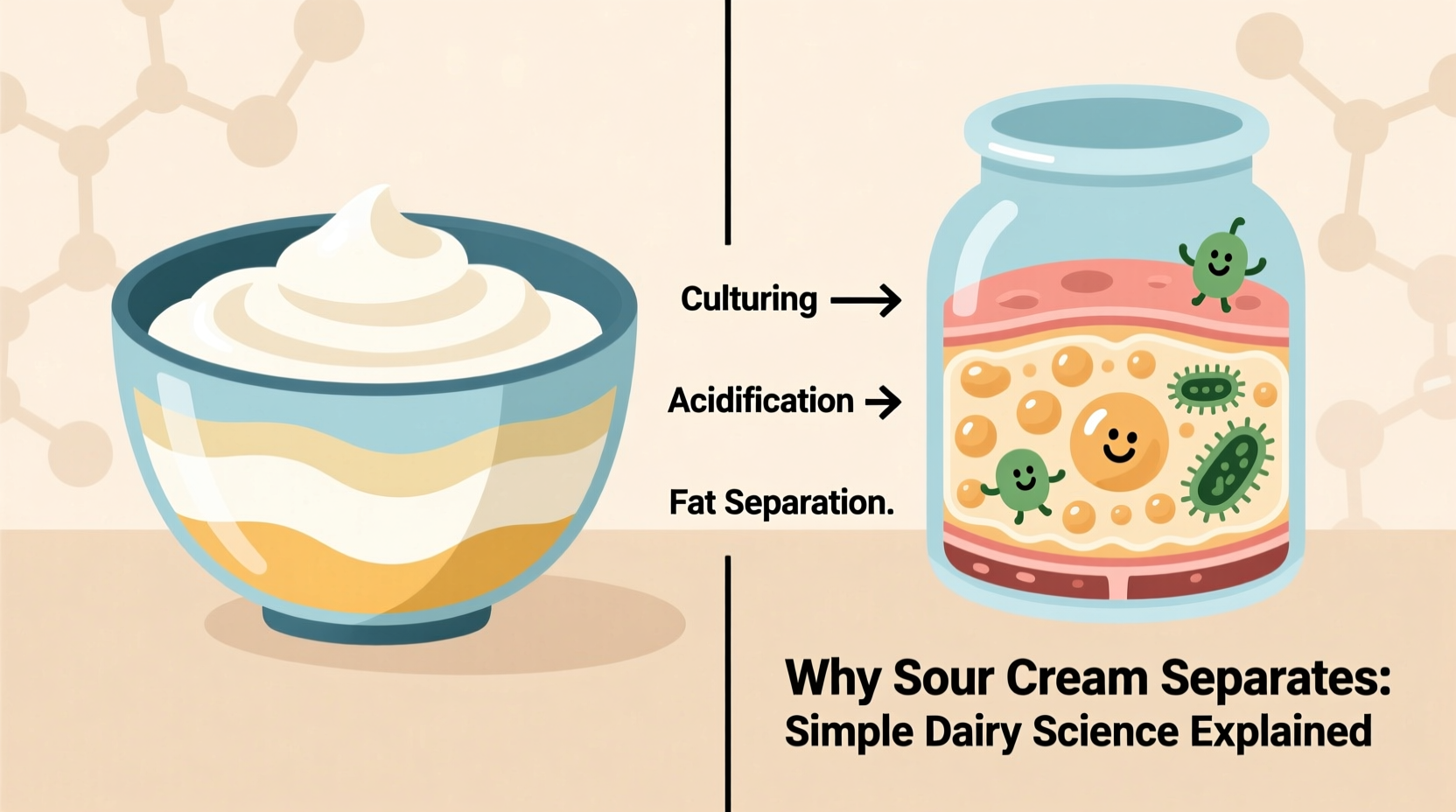
Sour cream starts as pasteurized cream, which is then inoculated with lactic acid bacteria such as Lactococcus lactis. These beneficial microbes ferment the lactose (milk sugar) in the cream, producing lactic acid. As acidity increases, the pH drops, causing the milk proteins—primarily casein—to denature and coagulate. This process thickens the cream and gives sour cream its signature tang and velvety consistency.
In technical terms, sour cream is an emulsion: a stable mixture of fat droplets dispersed throughout a water-based liquid. The protein network formed during fermentation acts like a scaffold, trapping both fat and moisture. When this structure remains intact, the sour cream stays smooth. But when destabilized by heat, acidity, or mechanical force, that delicate balance breaks down, leading to separation.
“Sour cream’s stability hinges on maintaining the right pH and avoiding abrupt changes in temperature or agitation.” — Dr. Miriam Lopez, Food Scientist at the Dairy Research Institute
Why Does Sour Cream Separate in Recipes?
Separation occurs when the emulsion collapses. Instead of staying blended, the liquid whey pools on the surface while fat and protein clump together. While this might look unappetizing, it doesn’t necessarily mean the food is unsafe. Here are the most common causes:
1. Exposure to High Heat
Heat is the number one culprit. Sour cream begins to break down around 180°F (82°C). At high temperatures, the protein matrix weakens, releasing trapped water and allowing fat globules to coalesce. Boiling or prolonged simmering almost guarantees separation.
2. Sudden Temperature Changes
Adding cold sour cream directly to a hot pan or soup shocks the proteins, causing them to contract rapidly and expel liquid. This thermal stress disrupts the emulsion faster than gradual warming would.
3. High Acidity in the Dish
If your recipe already contains acidic ingredients—like tomatoes, vinegar, lemon juice, or wine—the additional acidity can push the pH too low, further destabilizing the protein structure. Since sour cream is already acidic (typically pH 4.5), even small additions can tip the balance.
4. Mechanical Agitation
Stirring vigorously, especially at high heat, introduces air and shear forces that tear apart the emulsion. Overmixing after adding sour cream often leads to graininess or visible curdling.
How to Prevent Sour Cream from Separating: Practical Strategies
You don’t need to eliminate sour cream from cooked dishes—just adjust how you use it. With smart techniques, you can maintain its creamy texture even under heat.
Step-by-Step Guide to Adding Sour Cream Safely
- Remove from heat source: Turn off the stove before adding sour cream. Residual heat is enough to warm it without breaking the emulsion.
- Temper the sour cream: Ladle about ½ cup of the hot liquid into a separate bowl containing the sour cream. Whisk gently until combined and warmed slightly.
- Slowly incorporate back: Pour the tempered mixture slowly into the main dish while stirring gently over low heat or off the burner.
- Avoid boiling afterward: Never return the dish to a boil once sour cream is added.
- Use full-fat versions: Higher fat content improves stability. Low-fat or non-fat sour creams have less fat to stabilize the emulsion and more added thickeners that may behave unpredictably under heat.
Alternative Ingredients for Heat-Stable Creaminess
If your recipe requires prolonged cooking after dairy addition, consider substitutes that tolerate heat better:
- Soured crème fraîche: Naturally higher in fat (around 30%) and more heat-stable due to its richer composition.
- Yogurt (Greek or whole-milk): Can work in some savory dishes but still prone to splitting; best used in marinades or cold applications.
- Cooked roux-thickened sauces: For creamy soups, make a base with flour and butter, then add broth and dairy gradually.
- Silken tofu or cashew cream: Plant-based options that mimic creaminess and hold up well in simmered dishes.
Do’s and Don’ts When Cooking with Sour Cream
| Do’s | Don’ts |
|---|---|
| ✔ Use full-fat sour cream for better emulsion stability | ✘ Add sour cream directly to boiling liquids |
| ✔ Temper sour cream before mixing into hot dishes | ✘ Stir vigorously after adding sour cream |
| ✔ Add sour cream at the end of cooking, off direct heat | ✘ Reboil a sauce after sour cream has been incorporated |
| ✔ Store unused sour cream properly (airtight container, below 40°F) | ✘ Use expired or off-smelling sour cream |
| ✔ Mix in a starch stabilizer (like cornstarch) for extra insurance | ✘ Combine with highly acidic ingredients without balancing pH |
Real Example: A Home Cook’s Experience with Separated Tacos
Jamie, a home cook from Portland, shared her experience making taco soup. She followed a slow-cooker recipe that called for sour cream to be stirred in during the last 30 minutes. After turning the heat up to reduce the broth, she noticed the cream had separated into oily swirls and white clumps. “It looked broken and unappetizing,” she said. “I thought I’d ruined dinner.”
After researching, Jamie realized the mistake: she had boiled the soup after adding the sour cream. For her next batch, she removed the pot from heat, tempered the sour cream with some broth, and folded it in gently. The result was silky and cohesive. “It made all the difference,” she noted. “Now I always add it at the very end.”
This common scenario illustrates how minor adjustments can preserve texture and elevate a dish from salvageable to stellar.
Can You Fix Separated Sour Cream in a Dish?
Yes—sometimes. If separation is mild, you may be able to rescue the sauce or soup:
- Blend it: Use an immersion blender to re-emulsify the mixture. The mechanical action can bring fat and liquid back together.
- Add a stabilizer: A small amount of cold butter or cream whisked in can help reintegrate fats.
- Strain and refresh: In extreme cases, strain out solids and start a new creamy base, then reincorporate the solids.
However, if the dish has been boiled or shows signs of spoilage (off odor, mold), it's best to discard it. Safety comes first.
Frequently Asked Questions
Is separated sour cream safe to eat?
Yes, if the separation occurred during cooking and the ingredients were fresh. It’s a physical change, not a safety issue. However, if the sour cream smelled rancid or showed mold before cooking, do not consume the dish.
Why does store-bought sour cream sometimes have liquid on top?
The liquid is whey, a natural component of milk. It separates over time due to gravity and is harmless. Simply stir it back in. Excessive syneresis (whey expulsion) can indicate age or temperature fluctuations during storage, but not necessarily spoilage.
Can I freeze sour cream to extend its shelf life?
You can, but texture will change upon thawing. Freezing disrupts the emulsion, making it grainy or watery. It’s best used in cooked dishes post-thaw, not as a topping. For optimal quality, use within 1–2 weeks of opening and store at a consistent refrigerator temperature.
Expert Insight: The Role of Stabilizers in Commercial Sour Cream
Many commercial sour creams contain stabilizers like gelatin, guar gum, or carrageenan. These additives help prevent separation during storage and mild heating. According to Dr. Lopez, “Stabilizers bind water and reinforce the protein network, reducing syneresis. But they aren’t foolproof under high heat.”
Homemade or organic brands often skip these additives, which means they may be more delicate. Knowing your product helps anticipate behavior in recipes.
“Even stabilized sour cream has limits. No additive can withstand boiling. Gentle handling is still key.” — Dr. Miriam Lopez
Conclusion: Mastering Sour Cream for Better Results
Sour cream separation isn’t magic—it’s chemistry. By understanding how heat, acidity, and agitation affect its delicate emulsion, you gain control over your cooking outcomes. Whether you’re crafting a comforting chowder, spicing up enchiladas, or dolloping on chili, applying simple techniques like tempering and proper timing ensures creamy, cohesive results every time.
The next time your sour cream threatens to split, remember: it’s not broken, just imbalanced. With a little knowledge and care, you can keep your dishes smooth, satisfying, and worthy of a second helping.




 浙公网安备
33010002000092号
浙公网安备
33010002000092号 浙B2-20120091-4
Comments
No comments yet. Why don't you start the discussion?