
Sourdough bread that turns out dense can be one of the most frustrating experiences for home bakers. You’ve spent hours feeding your starter, mixing the dough, folding, waiting, shaping, and finally baking—only to slice into a brick instead of an open-crumbed, springy loaf. The good news? Density isn’t inevitable. In fact, nearly every case of dense sourdough stems from predictable, fixable issues in technique, timing, or environment.
Understanding the root causes—whether it’s underfermentation, poor gluten development, or incorrect oven temperature—can transform your results. With precise adjustments and consistent practice, you can reliably bake sourdough with an airy crumb, crisp crust, and satisfying rise.
1. Fermentation: The Heart of a Light Loaf
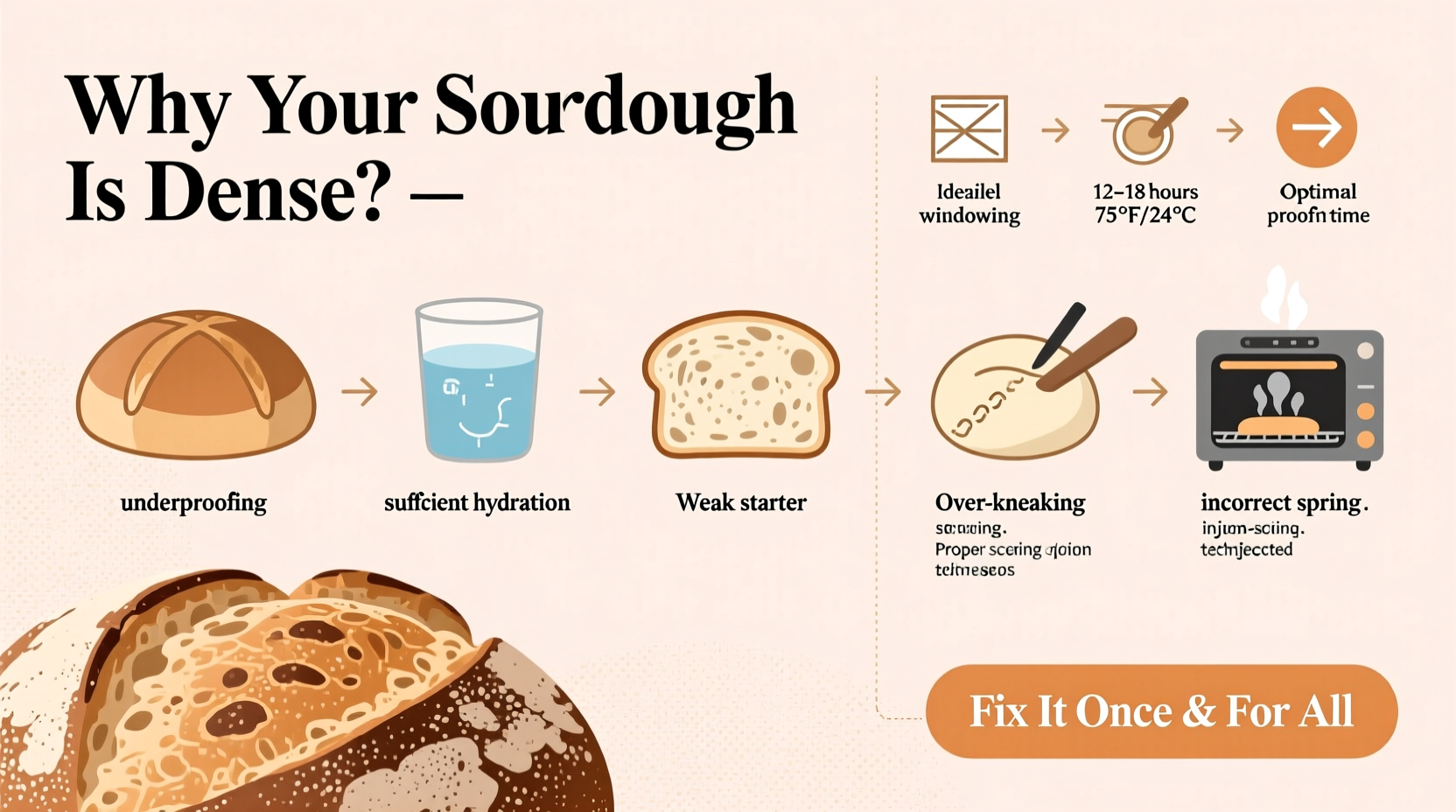
Fermentation is the cornerstone of sourdough success. If your bread is dense, the most likely culprit lies in how fermentation was managed—either too little, too much, or at the wrong temperature.
Underfermented dough lacks the gas production needed to create air pockets. It won’t expand properly during proofing or oven spring, resulting in tight, compact crumbs. Overfermentation, on the other hand, breaks down the gluten structure so much that the dough collapses under its own weight, also leading to density.
The ideal fermentation window depends on ambient temperature, hydration, and starter strength. Cooler temperatures (below 70°F/21°C) slow fermentation, requiring longer bulk fermentation times—sometimes up to 12–14 hours. Warmer environments speed things up, potentially needing only 6–8 hours. Monitoring dough behavior—not just the clock—is key.
Dough readiness is best judged by physical cues: increased volume (about 50–75%), visible bubbles at the surface and sides of the container, and a jiggly, wobbly texture when nudged. A well-fermented dough should feel alive, not stiff or lifeless.
2. Gluten Development: Building the Scaffolding
Gluten is the protein network that traps carbon dioxide produced by your starter. Without sufficient gluten development, gas escapes, and the loaf fails to rise. This leads directly to dense, gummy interiors.
Developing strong gluten doesn’t require kneading like traditional yeast breads, but it does demand attention through techniques like coil folds, stretch-and-folds, or slap-and-folds during bulk fermentation. These gentle manipulations align gluten strands and strengthen the dough’s structure over time.
A typical high-hydration sourdough (75% hydration or more) benefits from 3–4 sets of stretch-and-folds spaced 20–30 minutes apart during the first half of bulk fermentation. Each fold increases elasticity and improves gas retention.
“Gluten isn’t built in a single action—it’s developed progressively through time and tension.” — Ken Forkish, artisan baker and author of *Flour Water Salt Yeast*
If your dough feels slack, tears easily, or spreads out flat when shaped, it likely needs more strength. Try increasing the number of folds or switching to coil folds, which are gentler and better suited for wet doughs.
3. Starter Strength and Timing
Your sourdough starter must be active, predictable, and fed regularly. Baking with a weak or immature starter is a fast track to dense bread.
An effective starter should double within 4–8 hours of feeding at room temperature and have a pleasant tangy aroma—never overly acidic or alcoholic-smelling. If your starter barely rises or smells like nail polish remover, it’s stressed or imbalanced.
To ensure peak performance:
- Feed your starter 8–12 hours before baking using equal parts flour and water by weight.
- Use unbleached all-purpose or bread flour—avoid whole grains exclusively unless adjusted for absorption.
- Keep it warm (75–80°F / 24–27°C) if your kitchen is cold; consider placing it near a radiator or in an oven with the light on.
Baking with an underactive starter means insufficient gas production. Even if the dough looks fine during shaping, it may lack the power to rise in the final stages.
4. Shaping and Scoring: Final Steps That Matter
Even perfectly fermented dough can turn dense if mishandled during shaping or not scored properly.
Shaping creates surface tension—a taut outer skin that helps the loaf hold its shape and expand upward rather than outward. A loose or poorly shaped boule will spread instead of rising, compressing the crumb.
Follow this sequence for tight shaping:
- Preshape into a round and rest for 20–30 minutes (bench rest).
- Flip seam-side up and gently flatten into a rectangle.
- Fold sides toward the center, then roll tightly from bottom to top.
- Seal the seam firmly with the base of your hand.
- Place seam-side up in a floured banneton for final proof.
Scoring allows controlled expansion during oven spring. Deep, decisive cuts (¼ to ½ inch) with a sharp blade let steam escape and guide where the loaf splits. Shallow or hesitant slashes restrict expansion, forcing pressure inward and creating a dense core.
| Issue | Likely Cause | Solution |
|---|---|---|
| Dense crumb, no oven spring | Underproofed dough | Extend bulk fermentation; check for volume increase and bubbles |
| Dense, gummy layer at bottom | Overproofed dough | Shorten final proof; refrigerate earlier |
| Flat loaf, wide spread | Poor shaping or weak gluten | Improve folding technique; tighten shaping |
| Crust too thick, interior heavy | Low oven temperature or no steam | Preheat Dutch oven; bake at 450°F+ with lid on for first 20 min |
| Starter not bubbling | Weak culture or cold environment | Feed twice daily; keep warm; refresh with fresh flour |
5. Baking Environment: Heat, Steam, and Timing
Oven conditions dramatically affect loaf structure. A common mistake is baking at too low a temperature or without adequate steam.
Oven spring—the rapid rise in the first 15–20 minutes of baking—depends on three factors: residual yeast activity, moisture, and heat. Without a hot oven (ideally 450–500°F / 230–260°C), the dough won’t expand quickly enough before the crust sets.
Steam keeps the surface pliable, allowing the loaf to expand freely. Once the crust hardens, expansion stops. Using a preheated Dutch oven traps natural moisture from the dough, mimicking professional steam-injected ovens.
Here’s a reliable baking method:
- Preheat oven and Dutch oven at 475°F (245°C) for at least 45 minutes.
- Transfer dough carefully into the hot pot (use parchment if needed).
- Cover with lid and bake for 20 minutes.
- Uncover, reduce heat to 450°F (230°C), and bake another 20–25 minutes until deeply golden.
- Let cool completely (at least 2 hours) before slicing—cutting too early releases trapped steam and collapses the crumb.
Real Example: From Brick to Boule
Sarah, a home baker in Portland, struggled for months with dense sourdough. Her starter bubbled but didn’t double, her dough felt sticky and collapsed during shaping, and her loaves emerged flat and heavy.
She reviewed each variable systematically:
- Switched from whole wheat to all-purpose flour for feeding her starter.
- Began feeding twice daily and keeping it in a warmer spot (on top of the fridge).
- Introduced four sets of coil folds during bulk fermentation.
- Extended bulk fermentation from 6 to 9 hours based on dough volume, not the clock.
- Improved shaping technique with tighter rolls and better seam sealing.
- Started preheating her Dutch oven for a full hour.
Within two bakes, her crumb opened up significantly. By the third attempt, she achieved a light, irregular crumb with excellent oven spring. The transformation wasn’t magic—it was methodical refinement.
Checklist: Fix Dense Sourdough in 7 Steps
Use this checklist to troubleshoot and improve your next bake:
- ✅ Confirm starter is active and peaks within 8 hours of feeding.
- ✅ Ensure dough increases by 50–75% during bulk fermentation.
- ✅ Perform 3–4 rounds of stretch-and-folds in the first 90 minutes.
- ✅ Shape tightly with surface tension; avoid degassing.
- ✅ Proof in a banneton; use rice flour to prevent sticking.
- ✅ Preheat Dutch oven for at least 45 minutes at 475°F.
- ✅ Score deeply (½ inch) and bake with lid on for first 20 minutes.
Frequently Asked Questions
Why is my sourdough dense even though I followed the recipe exactly?
Recipes provide guidelines, but sourdough responds to environmental variables like temperature, humidity, and flour type. Following times rigidly without observing dough behavior often leads to under- or overfermentation. Focus on visual and tactile cues—volume, bubbles, jiggle—rather than the clock.
Can I fix dense sourdough by adding commercial yeast?
You can, but it defeats the purpose of true sourdough. Instead, address the root cause: starter health, fermentation control, or gluten development. Adding yeast might give a temporary lift, but mastering natural leavening yields better flavor and texture long-term.
Should I refrigerate my dough for longer fermentation?
Yes—cold fermentation (retardation) in the refrigerator slows yeast activity and enhances flavor. However, don’t overproof. Most doughs benefit from 8–16 hours in the fridge. Remove, score, and bake straight from the fridge for improved oven spring.
Conclusion: Turn Density Into Delight
Dense sourdough isn’t a dead end—it’s feedback. Every failed loaf tells you something about your process. Whether it’s a sluggish starter, rushed fermentation, or weak shaping, each issue is solvable with attention and adjustment.
The journey to perfect sourdough isn’t about perfection from the start. It’s about learning to read your dough, trusting the process, and refining your technique over time. With consistent effort, you’ll move from frustration to confidence—one airy, crackling loaf at a time.




 浙公网安备
33010002000092号
浙公网安备
33010002000092号 浙B2-20120091-4
Comments
No comments yet. Why don't you start the discussion?