
A dense, sticky crumb that clings to the teeth instead of tearing cleanly—there’s little more disappointing than slicing into a loaf you’ve nurtured for days only to find it gummy inside. While sourdough baking blends art and science, a gummy interior isn’t inevitable. More often than not, the culprit lies in fermentation imbalances tied directly to your starter’s health or your handling of it. Understanding the root causes—from underproofing to hydration mismatches—can transform your next bake from gluey to glorious.
Understanding Gummy Texture: What Went Wrong?
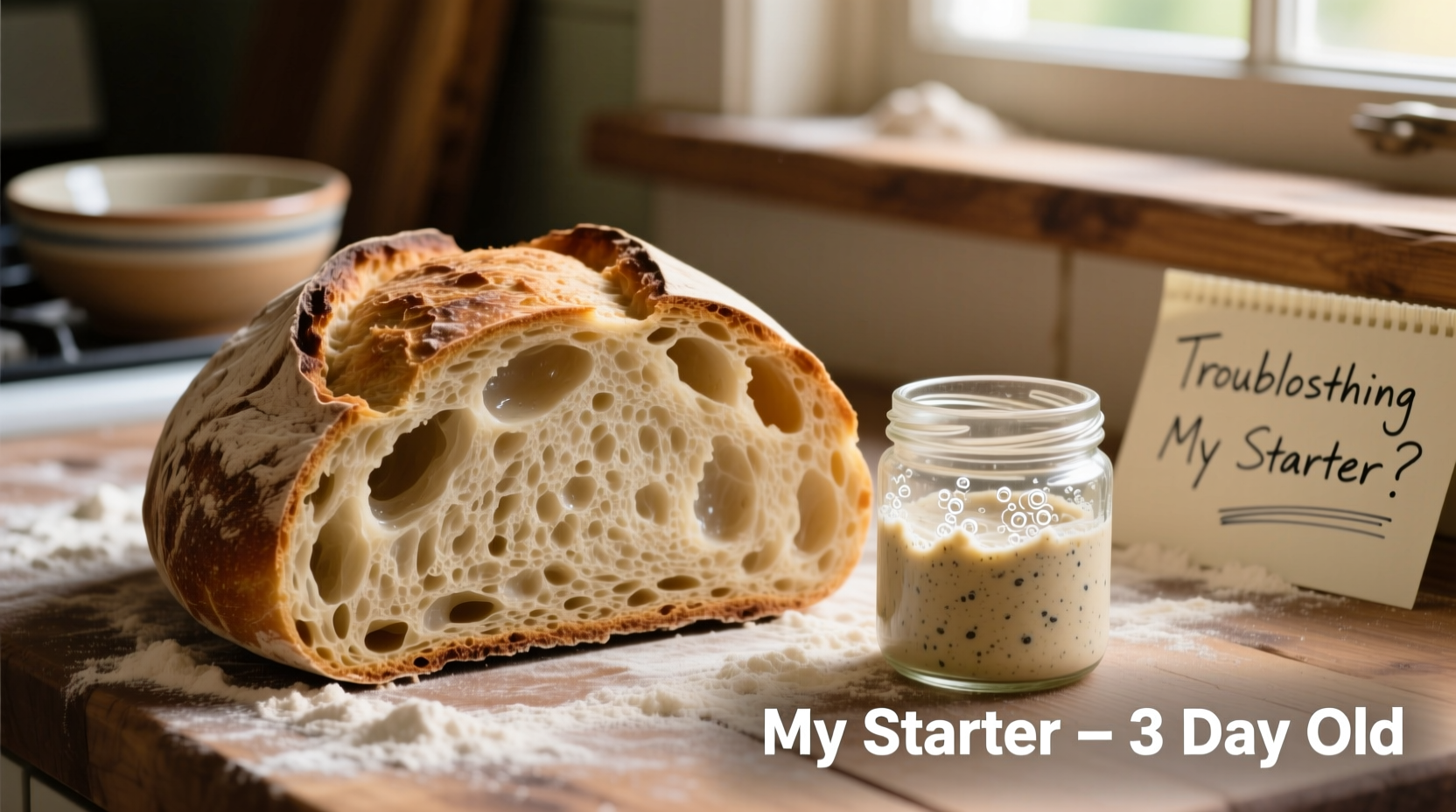
A properly baked sourdough should have an open, airy crumb with a slight chew—not a wet, pasty consistency that collapses when sliced. The gummy texture typically indicates incomplete starch gelatinization or excess moisture trapped in the crumb due to improper oven spring, inadequate baking, or fermentation issues.
While many point fingers at the recipe or oven temperature, the real source often traces back to the starter. A weak or unstable starter fails to produce enough gas and organic acids to fully develop the gluten structure and regulate moisture during baking. Without sufficient fermentation activity, the dough doesn’t mature properly, leading to poor oven spring and uneven crumb set.
“Over 70% of flawed sourdough loaves I see stem from starter mismanagement rather than technique errors.” — Dr. Lydia Chen, Fermentation Scientist, University of Copenhagen
Diagnosing Your Starter: Is It Strong Enough?
Your starter is the engine of your sourdough. If it’s sluggish, inconsistent, or contaminated, no amount of kneading or precise shaping will compensate. A healthy starter should double predictably within 4–8 hours of feeding, exhibit a bubbly, frothy surface, and carry a balanced aroma—tangy but not rancid.
Common signs of a weak starter include:
- Failure to double within 6–8 hours after feeding
- Separation with dark liquid (hooch) forming too quickly
- Inconsistent rise across feedings
- Foul, acetone-like smell instead of pleasantly sour
If your starter shows these symptoms, it may lack microbial diversity or be out of balance. Wild yeast and lactic acid bacteria must coexist in harmony; if one dominates excessively, fermentation suffers. For example, an overabundance of acetic acid can inhibit yeast activity, while too much alcohol from prolonged neglect suppresses both populations.
Step-by-Step Guide to Reviving a Struggling Starter
If your starter is underperforming, follow this structured revival protocol:
- Discard all but 25g of starter. Use a clean jar to avoid cross-contamination.
- Feed with 25g whole grain flour (rye or whole wheat) and 50g filtered water. Whole grains boost microbial diversity.
- Repeat every 12 hours at 70–75°F (21–24°C). Keep it away from drafts or extreme temperatures.
- Observe volume increase and bubble formation. By day 3, you should see consistent doubling.
- Switch to bread flour feedings once stable. Transition gradually over two feedings to maintain strength.
- Test float test before baking. Drop a small spoonful into room-temperature water—it should float if ready.
Note: The float test isn’t foolproof, but when combined with visual cues (bubbles, domed surface), it offers a practical benchmark. A non-floating starter likely lacks gas retention and should be fed again.
Key Baking Factors That Contribute to Gummy Crumb
Even with a strong starter, other variables can sabotage your loaf. Consider these common pitfalls:
| Factor | Problem | Solution |
|---|---|---|
| Underproofing | Dough hasn't fermented long enough; gluten underdeveloped | Extend bulk fermentation; use finger poke test (indent slowly fills) |
| Overhydration | Too much water overwhelms gluten; traps steam post-bake | Reduce hydration by 5–10%; strengthen dough with stretch-and-folds |
| Insufficient Oven Spring | Poor initial rise leads to dense center | Bake in preheated Dutch oven; ensure proper scoring |
| Underbaking | Internal temp below 205°F (96°C); moisture not fully expelled | Use thermometer; bake until internal temp reaches 208–210°F |
| Cooling Too Quickly | Steam trapped in crumb condenses as loaf cools | Cool completely on wire rack (minimum 2 hours) before slicing |
One overlooked factor is cooling time. Slicing into a warm loaf—even after an hour—can result in a gummy appearance simply because residual heat hasn’t dissipated. The starch retrogradation process continues during cooling, and cutting too early interrupts this final structural set.
Mini Case Study: From Sticky Loaf to Bakery-Quality Rise
Sarah, a home baker in Portland, struggled for months with consistently gummy sourdough. Her starter appeared active—bubbly and sour—but her loaves never opened up. She followed recipes precisely, used a Dutch oven, and monitored temperature closely.
The turning point came when she recorded her starter’s behavior. She noticed it peaked quickly (within 4 hours) then collapsed, indicating possible overfermentation. Testing pH revealed high acidity. Adjusting her routine—feeding 1:3:3 (starter:flour:water) every 12 hours with half bread flour, half rye—stabilized microbial balance. She also reduced dough hydration from 80% to 75%.
Within two weeks, her loaves achieved full oven spring, even browning, and a springy, non-gummy crumb. The change wasn’t in her oven or flour—it was in understanding her starter’s rhythm.
Checklist: Pre-Bake Sourdough Readiness
Before mixing your next dough, run through this checklist to prevent gummy results:
- ✅ Starter doubles reliably within 6–8 hours after feeding
- ✅ Starter passes float test (with confirmation via visual cues)
- ✅ Dough temperature during bulk fermentation is between 74–78°F (23–26°C)
- ✅ Bulk fermentation lasts until dough is puffy, jiggly, and ~50% increased in volume
- ✅ Final proof is complete (finger poke leaves slight indentation that slowly rebounds)
- ✅ Oven is fully preheated with Dutch oven inside for at least 45 minutes
- ✅ Internal loaf temperature reaches 208–210°F (98–99°C) before removal
- ✅ Loaf cools completely on a wire rack before slicing
Skipping any of these steps increases the risk of textural flaws. Consistency across all phases—not just baking—is essential.
Environmental Influences on Fermentation
Room temperature, flour quality, and water composition all influence how your starter behaves. Cold kitchens slow fermentation, tempting bakers to extend bulk rise beyond optimal window, which can lead to weakened gluten and overacidification. Conversely, hot environments accelerate fermentation, requiring closer monitoring.
Tap water with chlorine or chloramine can inhibit microbial growth. If your tap water is heavily treated, use filtered or bottled water for feeding. Similarly, bleached flours may lack nutrients needed for robust cultures—opt for unbleached, preferably organic flour when possible.
Seasonal adjustments are normal. In winter, you may need to warm your kitchen spot (using an oven with light on, or a proofing box). In summer, refrigerate part of your starter to slow activity and avoid daily feeding fatigue.
FAQ: Common Questions About Gummy Sourdough
Can I fix a gummy loaf after baking?
No. Once cooled, the texture cannot be changed. However, you can repurpose it—toast thick slices, make sourdough croutons, or use in bread pudding. Prevention is key for future bakes.
Does using more starter speed up fermentation and cause gumminess?
Yes. Excess starter (e.g., 25–30% inoculation) accelerates fermentation but often at the cost of flavor and structure. High inoculation leads to rapid acid production, weakening gluten prematurely. Stick to 15–20% for balanced rise and taste.
Is whole wheat sourdough more prone to being gummy?
Potentially. Whole grain flours absorb more water and contain bran that cuts gluten strands. To prevent gumminess, autolyse longer (30–60 mins), use slightly less water, and ensure thorough gluten development through stretch-and-folds.
Conclusion: Build Confidence Through Consistency
Gummy sourdough isn’t a dead end—it’s feedback. Each loaf tells a story about your starter’s vitality, your timing, and your environment. Rather than chasing perfection, focus on building repeatable processes grounded in observation. Track feeding schedules, note rise times, record oven temperatures. Over time, patterns emerge that reveal exactly where adjustments are needed.
Remember, even professional bakers produce off loaves. The difference lies in diagnosis and correction. With a resilient starter, disciplined fermentation control, and full respect for cooling time, you’ll consistently pull golden, well-structured loaves from your oven—loaves that tear open with grace, not gum together in disappointment.




 浙公网安备
33010002000092号
浙公网安备
33010002000092号 浙B2-20120091-4
Comments
No comments yet. Why don't you start the discussion?