
A healthy sourdough starter should show signs of life within 4 to 8 hours after feeding—rising, bubbling, and emitting a tangy, fermented aroma. When your starter remains flat, silent, and inert, it can be disheartening, especially if you're preparing for a bake. The absence of bubbles indicates that the wild yeast and lactic acid bacteria—the essential microorganisms responsible for leavening and flavor—are not active or present in sufficient numbers.
Several factors influence starter activity: temperature, flour quality, feeding ratio, hydration level, and microbial balance. Understanding these elements allows you to diagnose the issue accurately and take corrective action. This guide breaks down the most common reasons your starter isn’t bubbling, provides actionable solutions, and outlines best practices to maintain a vibrant culture long-term.
Common Causes of Inactivity After Feeding
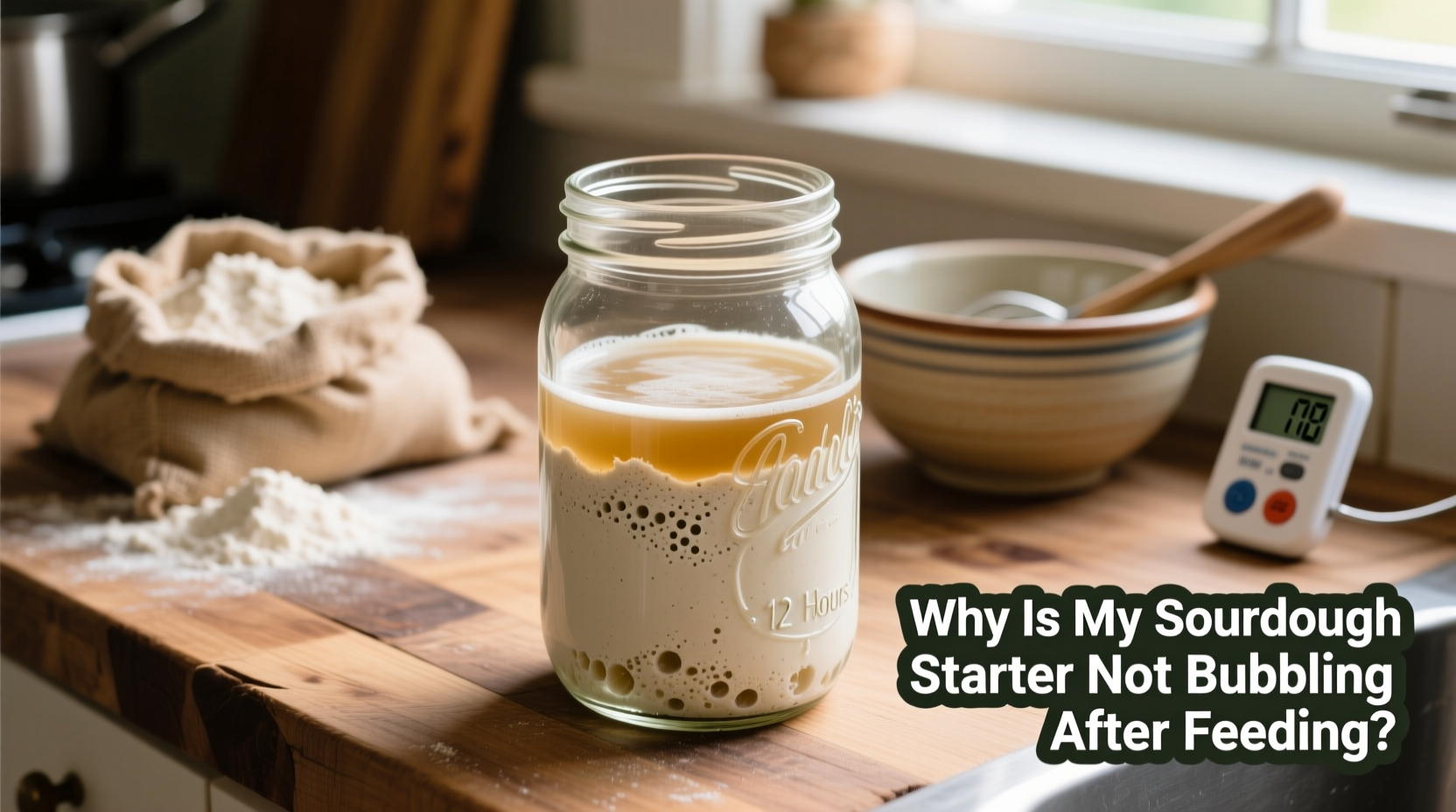
The lack of bubbling after feeding is rarely due to a single cause. More often, it’s a combination of environmental, nutritional, or maintenance-related issues. Identifying the root problem requires observation and adjustment over time.
- Cool ambient temperature: Yeast and bacteria slow significantly below 68°F (20°C). A cold kitchen can delay or halt fermentation.
- Incorrect feeding ratio: Too much flour relative to water or infrequent feedings starves microbes.
- Poor flour quality: Highly processed or bleached flours lack the nutrients microbes need.
- Chlorinated water: Tap water with chlorine or chloramines can inhibit microbial growth.
- Starter age and maturity: New starters (under 7–10 days) may not yet have established a stable microbiome.
- Overfeeding or underfeeding: Imbalanced ratios disrupt microbial equilibrium.
- Contamination or pH imbalance: Harmful bacteria or excessive acidity can suppress yeast activity.
Step-by-Step Troubleshooting Guide
If your starter shows no signs of life post-feeding, follow this structured approach to revive it:
- Check the temperature. Ensure the room is between 70–75°F (21–24°C). Use a seedling mat or insulated container if needed.
- Refresh with high-quality flour. Switch to unbleached all-purpose, whole wheat, or rye flour for added nutrients.
- Use filtered or bottled water. Chlorine and chloramines in tap water can kill sensitive microbes.
- Feed consistently every 12 hours. For sluggish starters, twice-daily feedings at a 1:2:2 ratio (starter:water:flour) help rebuild populations.
- Discard and feed properly. Remove 80% of the starter before each feeding to prevent acid buildup.
- Observe over 48 hours. Look for small bubbles, a slight rise, or a fruity/fermented smell.
- Switch containers if necessary. Use glass or food-safe plastic; avoid metal, which can react with acids.
If no improvement occurs after three days of consistent feeding, consider restarting from scratch using organic whole grain flour to jumpstart microbial colonization.
Feeding Ratios and Their Impact on Activity
The ratio of starter to flour and water directly affects microbial health. A higher ratio of old starter increases acidity, which can suppress yeast. Conversely, a lower ratio gives fresh microbes room to grow.
| Feeding Ratio (S:W:F) | Best For | Effect on Starter |
|---|---|---|
| 1:1:1 | Daily maintenance at room temperature | Balanced acidity and moderate rise |
| 1:2:2 | Reviving weak or dormant starters | Dilutes acidity, promotes rapid yeast growth |
| 1:3:3 | Building strength before baking | Increases volume and gas production |
| 1:4:4 or higher | Infrequent feeding or refrigerated storage | Slower fermentation, risk of starvation |
For a non-bubbling starter, begin with a 1:2:2 ratio using lukewarm water (about 75°F / 24°C) and whole rye flour. Rye contains more soluble sugars and minerals than wheat, making it ideal for jumpstarting fermentation.
Real Example: Reviving a Dormant Starter
Sarah, an amateur baker in Vermont, noticed her starter stopped bubbling after she returned from a two-week vacation. She had left it in the fridge without feeding. Upon retrieval, it had a layer of grayish liquid (hooch) and no rise after feeding.
She followed a revival protocol: discarded 90%, fed with equal parts rye flour and filtered water at a 1:2:2 ratio, and placed the jar in a turned-off oven with the light on (maintaining ~72°F). Within 24 hours, small bubbles appeared. By the second day, the starter doubled in size within 6 hours and passed the float test. Sarah used it successfully in her next loaf of sourdough bread.
This case illustrates that even severely weakened starters can recover with proper care and patience.
Expert Insight on Microbial Health
The balance of microorganisms in a sourdough starter is delicate. Lactobacillus bacteria produce lactic and acetic acids, while wild yeasts like Kazachstania exigua generate carbon dioxide for leavening. Disruptions in pH, temperature, or nutrition can shift this balance.
“Many people expect immediate results, but sourdough is a living ecosystem. It responds to consistency, not force. If your starter isn’t bubbling, don’t double the feed—adjust the environment and wait.” — Dr. Linnea Byström, Food Microbiologist, University of Copenhagen
Dr. Byström emphasizes that overfeeding dilutes microbial concentration, while underfeeding leads to acid accumulation. The key is regular, measured maintenance tailored to your kitchen’s conditions.
Checklist: How to Restore a Non-Bubbling Starter
Follow this checklist to systematically address inactivity:
- ✅ Discard most of the starter (keep only 10–20g)
- ✅ Feed with 50g water and 50g unbleached flour (rye or whole wheat preferred)
- ✅ Use filtered or boiled-cooled water
- ✅ Maintain temperature between 70–75°F (21–24°C)
- ✅ Feed every 12 hours for 2–3 days
- ✅ Observe for bubbles, rise, and pleasant sour smell
- ✅ Perform a float test on day 3: place ½ tsp in room-temp water—if it floats, it’s ready
If the starter still doesn’t bubble by day 4, repeat the process with fresh flour and consider switching to a different brand or type.
When to Start Over
There are cases when revival isn’t possible:
- Visible mold (pink, orange, or fuzzy spots)
- Persistent foul odor (rotten eggs, sewage)
- No response after 5 days of correct feeding
- Exposure to extreme heat or contamination
In such cases, discard the starter entirely and begin anew. Use organic whole rye or whole wheat flour mixed with filtered water in a clean jar. Stir well, cover loosely, and wait 24 hours. Repeat daily feedings, discarding half each time. Most new starters show activity by day 5–7.
“The first week is critical. Don’t give up too soon—many starters appear dead but come back strong by day 6.” — Carl Griffith, Founder, The Sourdough Project
Frequently Asked Questions
How long should I wait before worrying about no bubbles?
Wait at least 12 hours after feeding before assessing activity. In cooler environments, it may take up to 24 hours. Consistent inactivity over 48 hours signals a problem.
Is hooch a bad sign?
Hooch (the dark liquid on top) indicates hunger, not spoilage. Pour it off or stir it in, then feed immediately. Frequent hooch means your starter needs more frequent feedings or a warmer location.
Can I use tap water for my starter?
It depends. If your tap water is heavily chlorinated, it may harm microbes. Let tap water sit uncovered for 24 hours to allow chlorine to evaporate, or use filtered or bottled water for reliability.
Conclusion: Patience and Precision Bring Results
A sourdough starter that isn’t bubbling after feeding isn’t necessarily lost. More often, it’s a signal that conditions need adjustment. Temperature, flour choice, feeding schedule, and water quality all play pivotal roles in microbial vitality. With careful observation and consistent care, most starters can be revived within a few days.
Success in sourdough begins not with perfection, but with persistence. Track your feedings, note changes, and respond to your starter as a living organism—not a machine. Each adjustment brings you closer to understanding its rhythm and unlocking its full potential.




 浙公网安备
33010002000092号
浙公网安备
33010002000092号 浙B2-20120091-4
Comments
No comments yet. Why don't you start the discussion?