
Sourdough baking has seen a renaissance in recent years, with home bakers embracing the art of fermentation for its flavor, texture, and health benefits. But even experienced bakers encounter puzzling moments—like opening their jar to find a layer of dark liquid on top of their starter. This phenomenon, known as \"hooch,\" often raises concern: Is the starter still alive? Has it gone bad? Should you throw it out or stir it in? Understanding why your sourdough starter separates and what hooch really is can transform confusion into confidence.
Sourdough starter separation isn't just common—it's natural. In fact, it's a sign that your starter is actively fermenting. The key lies in interpreting what the separation tells you about feeding frequency, temperature, and microbial balance. More importantly, knowing whether hooch is safe to mix back in ensures you're not discarding a perfectly viable culture unnecessarily.
What Causes Sourdough Starter Separation?
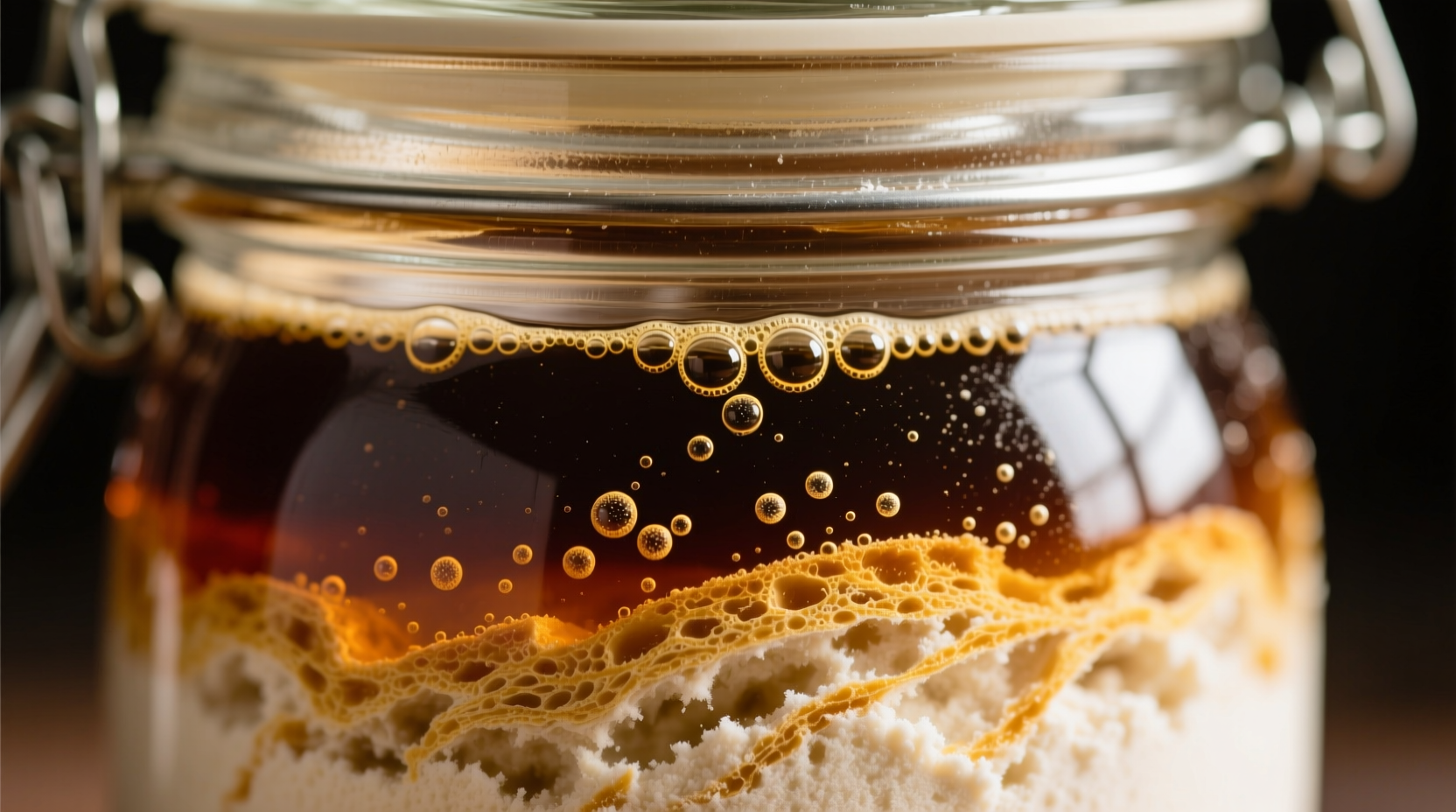
A sourdough starter is a living ecosystem composed of wild yeast and lactic acid bacteria. These microorganisms feed on the carbohydrates in flour, producing carbon dioxide (which leavens bread) and organic acids (which give sourdough its tang). As fermentation progresses, byproducts accumulate, including alcohol—specifically ethanol. When a starter sits too long between feedings, these metabolic processes continue until food runs low.
This leads to separation: a clear or amber-colored liquid forms on top of the thicker, starchy slurry below. That liquid is hooch—essentially alcoholic runoff from prolonged fermentation. The heavier solids settle at the bottom due to gravity, while the lighter alcohol rises. This is completely normal and expected under certain conditions.
Separation typically occurs when:
- The starter hasn’t been fed in 24–72 hours
- It’s stored at room temperature without regular refreshment
- There’s an imbalance between available food (flour) and microbial population
- The environment is warm, accelerating fermentation
Is Hooch Safe to Mix Back In?
Yes, in most cases, hooch is safe to stir back into your sourdough starter. It’s a natural part of the fermentation process and poses no health risk. The ethanol content is minimal and will dissipate during baking. Mixing it in helps retain moisture and reintroduce some fermented flavor compounds back into the culture.
However, there are nuances. The color and smell of the hooch matter:
| Hooch Appearance | Interpretation | Action |
|---|---|---|
| Clear or light amber | Normal fermentation; starter is hungry but healthy | Stir in and feed immediately |
| Dark brown or blackish | Prolonged neglect; possible oxidation or mold risk nearby | Discard hooch, assess for mold, then feed |
| Foul, rotten, or putrid odor | Contamination likely; harmful bacteria may be present | Do not use; discard entire starter |
| White or fuzzy spots in liquid | Mold growth—unsafe for consumption | Discard everything; sanitize container |
If the hooch is light in color and smells mildly alcoholic or vinegary (a sign of acetic acid), mixing it back in is fine. However, if you're uncomfortable with the taste or want a milder sour profile, pouring off the hooch before feeding is also acceptable.
“Hooch is nature’s way of telling you it’s time to feed. It’s not dangerous—it’s diagnostic.” — Dr. Linda Alston, Fermentation Microbiologist, University of Wisconsin-Madison
How to Revive a Separated Sourdough Starter
Reviving a separated starter is straightforward. Follow this step-by-step guide to restore vitality and prepare it for baking.
- Assess the condition: Check for mold, off smells, or discoloration beyond the hooch. If none are present, proceed.
- Decide on hooch handling: For light hooch, stir it in. For dark or excessive amounts, pour it off gently.
- Discard half: Remove about 50% of the starter to manage volume and refresh the ratio of microbes to food.
- Feed with fresh flour and water: Use equal parts (by weight) of unbleached all-purpose or whole grain flour and water. For example, add 50g flour + 50g water to 50g of remaining starter.
- Mix thoroughly: Ensure no dry flour remains. A smooth, paste-like consistency is ideal.
- Cover loosely: Use a breathable lid or cloth secured with a rubber band to allow gas exchange.
- Wait and observe: At room temperature (70–75°F / 21–24°C), check every 8–12 hours for signs of activity—bubbles, rise, domed surface.
- Repeat feeding: Continue feeding every 12 hours until the starter consistently doubles within 6–8 hours.
After two to three consecutive feedings, most neglected starters regain full strength. Consistency is more important than speed—don’t rush the recovery process.
Real Example: Recovering a Forgotten Fridge Starter
Sarah, a home baker in Portland, returned from a two-week vacation to find her refrigerated starter topped with nearly a centimeter of dark liquid. Worried it was ruined, she skimmed online forums before deciding to test it. She poured off the hooch, stirred the remainder, and fed it 1:2:2 (starter:flour:water). After 12 hours, only a few bubbles appeared. Undeterred, she repeated the feeding. By the second day, the starter bubbled vigorously and doubled in size. On day three, she used it to bake a loaf with excellent oven spring and open crumb. Her takeaway? “Don’t panic. Even silent starters often come back with patience.”
Preventing Excessive Separation and Hooch Formation
While some hooch is inevitable, especially with infrequent use, you can minimize it through proper maintenance strategies.
Consider these best practices:
- Adjust feeding frequency: If keeping at room temperature, feed every 12–24 hours depending on ambient temperature.
- Use cooler storage: Refrigeration slows fermentation dramatically. Store in the main compartment (not the door) where temperatures are stable.
- Choose the right flour: Whole grain flours (rye, whole wheat) ferment faster due to higher nutrient content. All-purpose flour offers slower, more predictable activity.
- Monitor hydration: A stiffer starter (lower water content) tends to separate less and produce less hooch.
- Keep a backup: Dry or freeze portions of active starter for emergencies.
For occasional bakers, storing the starter in the refrigerator between uses is practical. Before refrigerating, ensure it’s fully active and recently fed. This gives the microbes a strong foundation for dormancy.
Frequently Asked Questions
Can I bake with a starter that has hooch?
Not immediately. While hooch itself isn’t harmful, a starter showing separation is typically past its peak activity and may lack sufficient strength to leaven dough effectively. Always feed and wait for a full rise cycle before using in recipes.
Does hooch affect the flavor of my bread?
Yes, indirectly. Hooch indicates advanced fermentation, which increases acidity. Baking with an unfed, hooch-laden starter can result in overly sour or dense loaves. Feeding resets the pH and balances microbial populations for optimal performance.
I’ve never seen hooch—does that mean my starter isn’t working?
Not necessarily. Some starters, especially those fed frequently or kept stiff, show little to no hooch. Signs of life like bubbling, rising, and a pleasantly tangy aroma are better indicators of health than liquid separation alone.
Essential Sourdough Starter Care Checklist
Stay proactive with this simple checklist to maintain a robust, reliable starter:
- ✅ Feed every 12–24 hours if kept at room temperature
- ✅ Refrigerate if not baking weekly; feed once every 7–10 days
- ✅ Discard and refresh before each feeding to prevent overaccumulation
- ✅ Use non-chlorinated water (chlorine inhibits microbial growth)
- ✅ Store in a clean glass or food-grade plastic container with headspace
- ✅ Label with feeding date to track schedule
- ✅ Watch for mold, pink streaks, or foul odors—discard if present
- ✅ Keep a log of feeding times, rise times, and environmental conditions
“The healthiest starters aren’t the ones that never form hooch—they’re the ones whose bakers understand what it means.” — Katherine Wong, Artisan Baker & Sourdough Educator
Conclusion: Embrace the Science Behind the Separation
Sourdough starter separation and hooch formation are not flaws—they’re feedback. They tell you when your culture needs attention, much like a fuel gauge indicating it’s time to refill. Rather than reacting with alarm, view these signs as part of the dynamic relationship between baker and microbe. Stirring hooch back in is generally safe and practical, preserving both moisture and flavor complexity. With consistent care, observation, and timely feeding, your starter will remain a resilient, living ingredient ready to transform flour and water into something extraordinary.




 浙公网安备
33010002000092号
浙公网安备
33010002000092号 浙B2-20120091-4
Comments
No comments yet. Why don't you start the discussion?