
There’s nothing more frustrating during the holidays than stringing up your favorite Christmas lights, plugging them in, and realizing only half the strand lights up. This common issue can ruin the festive mood—especially when you're on a time crunch for decorating. But before you toss the strand or buy a new one, it's worth understanding why this happens and how to fix it. Most half-lit light strands aren’t broken beyond repair. With a bit of patience and the right approach, you can often restore full functionality and extend the life of your lights for years to come.
Understanding How Christmas Light Strands Work
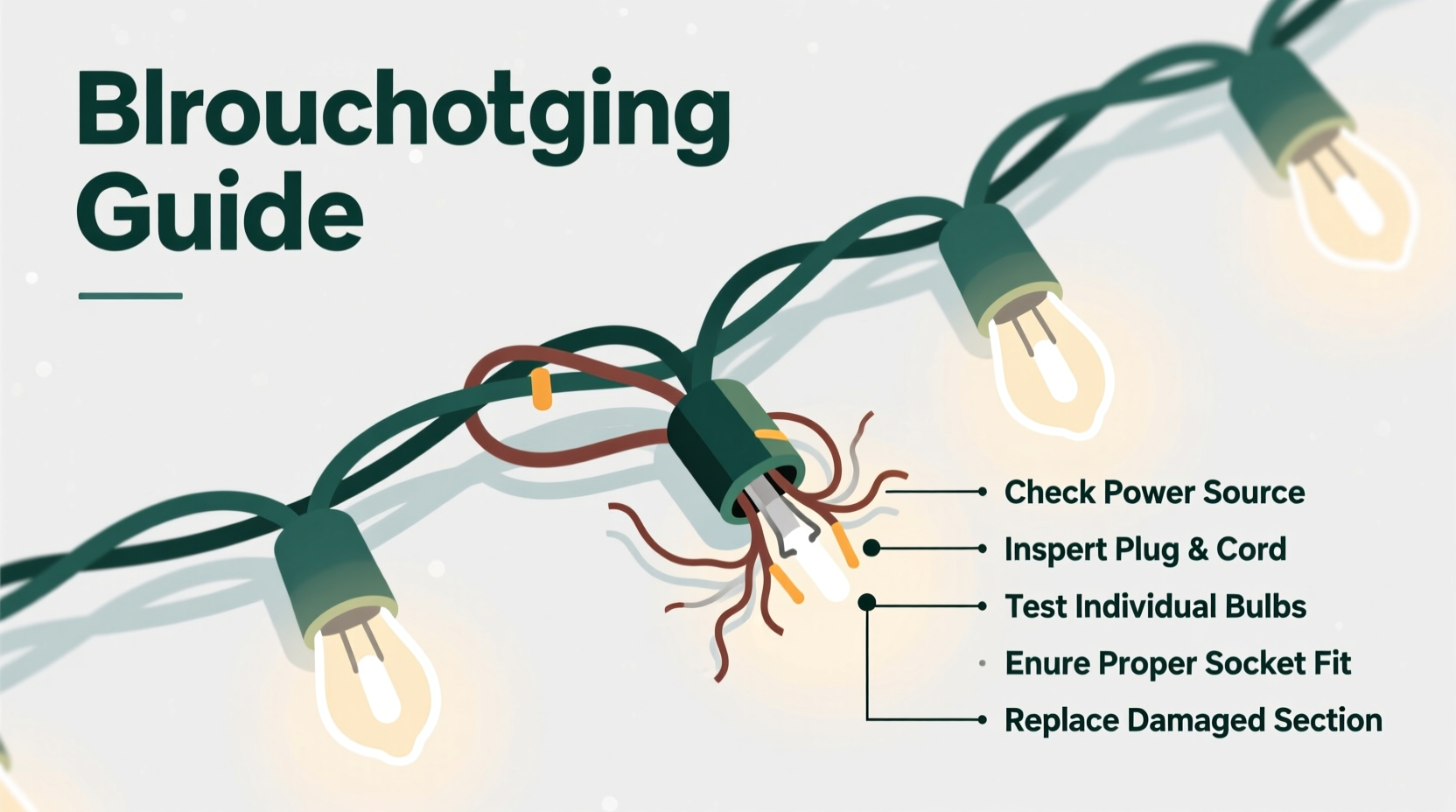
Most traditional incandescent mini Christmas lights are wired in series, meaning electricity flows from one bulb to the next in a continuous circuit. If one bulb fails, becomes loose, or burns out, it can break the circuit and cause an entire section—or half—of the strand to go dark. Some modern strands use shunted sockets or parallel wiring to prevent total failure, but many budget-friendly options still rely on older series designs.
In dual-circuit strands (common in 50-light sets), two separate circuits run side by side, each powering 25 bulbs. These are typically split into two halves: if one half goes out, it usually means there’s a disruption in that specific circuit. LED strands may behave differently due to built-in resistors and lower voltage requirements, but they can still suffer from similar issues like broken connections or faulty bulbs.
“Over 70% of ‘dead’ Christmas light strands brought in for repair simply had one bad bulb or a loose connection.” — Greg Thompson, Holiday Lighting Technician with 15+ years in residential display maintenance
Step-by-Step Guide to Diagnose and Fix Half-Out Lights
Follow this systematic process to identify and resolve the issue causing only half your strand to illuminate. Rushing to replace the entire set could cost you unnecessary money—especially during peak holiday seasons.
- Unplug the strand immediately. Safety first. Always work with lights disconnected from power.
- Inspect visually for obvious damage. Look for cracked bulbs, frayed wires, melted sockets, or sections that appear pinched or chewed (a common issue if stored near rodents).
- Identify which half is out. On dual-circuit strands, one side will be completely dark while the other works normally. Note whether the problem occurs at the beginning, middle, or end of the strand.
- Check the fuses in the plug. Many strands have small, removable fuse covers on the male end. Use a flashlight to inspect the tiny metal filaments inside. If either is broken or cloudy, replace with an identical spare (usually included in the plug compartment).
- Test each bulb in the dead section. Starting near the live portion, gently remove and reseat each bulb. Sometimes a slight shift in position restores contact. Use needle-nose pliers carefully if bulbs are stubborn.
- Look for a “shunt” failure. In incandescent bulbs, a shunt is a backup wire designed to activate when the filament breaks. If the shunt doesn't engage properly, the circuit remains open. A missing or corroded shunt can stop current flow.
- Use a light tester or multimeter. For faster diagnosis, slide a non-contact voltage detector or dedicated Christmas light tester down the dark half. It will beep or light up until it reaches the faulty bulb.
- Replace suspect bulbs one at a time. Swap in known-working bulbs from spares or the good half (temporarily). Replug after each replacement to test.
- Examine wire continuity. If no bulb appears faulty, there may be a cut or broken wire inside the insulation. Flex the wire along the dark section while plugged in (carefully) to see if flickering occurs—indicating an internal break.
- Consider end-to-end connection issues. Some strands fail where the female connector joins the next strand. Corrosion or bent contacts can interrupt power transfer even if individual strands are functional.
Troubleshooting Checklist: What to Check When Half Your Lights Are Out
Use this quick-reference checklist to ensure you don’t miss any critical steps during inspection.
- ✅ Unplugged the strand before handling
- ✅ Checked both fuses in the plug (replace if blown)
- ✅ Visually inspected all bulbs in the dark half
- ✅ Reseated every bulb, especially near the transition point
- ✅ Tested with a light checker tool or multimeter
- ✅ Replaced suspicious bulbs with working ones
- ✅ Examined wire integrity for cuts or crushing
- ✅ Verified the female connector isn’t damaged
- ✅ Tried plugging into a different outlet or circuit
- ✅ Confirmed strand isn’t overloaded with too many connected sets
Common Causes and Solutions Table
| Cause | Symptoms | Solution |
|---|---|---|
| Blown fuse | Entire strand or half won’t turn on; visible break in fuse filament | Replace with same-rated fuse (usually 3A or 5A) |
| Loose or missing bulb | Half-out; socket visibly empty or bulb wobbly | Reseat or replace bulb firmly |
| Burned-out bulb with failed shunt | One dark bulb among others; rest of half unlit | Remove and replace with new bulb |
| Internal wire break | No power past a certain point; flickers when bent | Cut out damaged section and splice, or retire strand |
| Corroded or bent connector | Lights work alone but not when daisy-chained | Clean contacts with rubbing alcohol or replace plug end |
Real Example: A Garage Storage Mishap
Sarah from Portland decorated her porch every year with three long strands of 100-count incandescent lights. One November, she pulled them from a plastic bin stored in her garage and found that the second half of each strand was dark. She replaced fuses, but only one strand came fully alive after bulb replacement.
Digging deeper, she noticed tiny gnaw marks on the insulation near the middle connectors. A mouse had nested in her garage over summer and chewed through the wires. After cutting out the damaged segments and soldering new connections (using heat-shrink tubing), she restored two of the three strands. The third had too much internal damage and was retired.
This case highlights the importance of proper storage. Rodents are attracted to the warmth of electrical cords, and garages without climate control increase the risk of material degradation. Sarah now stores her lights in sealed, hard-shell containers with cedar blocks to deter pests.
Frequently Asked Questions
Can I mix LED and incandescent lights on the same run?
No. Mixing types can overload circuits or cause inconsistent brightness and premature failure. LEDs draw less power, but their internal drivers may not handle the voltage from incandescent strings. Always keep lighting types separate and check manufacturer guidelines.
Why do only half my Christmas lights work after being stored?
The most common reason is a single faulty bulb or blown fuse. Temperature changes, vibration during storage, and physical pressure can loosen bulbs or damage delicate filaments. Always inspect and test strands indoors before hanging them outside.
Is it worth fixing old light strands?
Yes, if the wiring is intact and only bulbs or fuses are the issue. Replacement bulbs cost pennies, and fuses are often included. However, if the insulation is brittle, cracked, or shows signs of overheating (melting, discoloration), it’s safer to recycle the strand and purchase a new, UL-listed set.
Prevention Tips for Long-Term Reliability
Fixing a half-lit strand is useful, but preventing the issue altogether saves time and stress. Follow these habits to maintain reliable performance year after year:
- Label and organize by type and length. Store strands of the same kind together so you’re not mixing incompatible voltages or technologies.
- Test before storing. At the end of the season, plug in each strand to confirm all bulbs work. Fix issues now while tools and replacements are handy.
- Avoid overloading outlets. Most household circuits handle 8–10 standard light strands. Exceeding this risks tripped breakers and overheated wires.
- Use timers and surge protectors. Fluctuations in power can shorten bulb life. Timers also reduce wear by limiting daily runtime.
- Upgrade to commercial-grade or LED strands. Higher-quality lights often feature parallel wiring, better insulation, and longer warranties. LEDs consume less energy and generate less heat, reducing fire risk.
“Treating your Christmas lights like seasonal electronics—not disposable decor—can save hundreds over a decade.” — Rebecca Lin, Energy Efficiency Advisor at GreenHome Alliance
Conclusion: Restore the Glow with Confidence
A strand of Christmas lights with half its bulbs dark isn’t necessarily destined for the trash. More often than not, the fix is simple: a blown fuse, a loose bulb, or a single point of failure that interrupts the circuit. By approaching the problem methodically—starting with safety, moving through visual inspection, and using targeted testing—you can bring your holiday lights back to life.
Beyond immediate repairs, adopting smart storage and maintenance habits ensures your lights remain reliable for many Decembers to come. Whether you’re dealing with vintage incandescents or modern LEDs, understanding how they work empowers you to troubleshoot confidently and decorate without last-minute surprises.




 浙公网安备
33010002000092号
浙公网安备
33010002000092号 浙B2-20120091-4
Comments
No comments yet. Why don't you start the discussion?