
Succulents are prized for their compact forms, vibrant colors, and architectural beauty. When a once-plump rosette begins stretching upward, thinning out into a leggy, pale stalk, it’s a clear sign of distress. This condition—known as etiolation—is one of the most common issues faced by indoor succulent growers. While not immediately fatal, etiolation weakens the plant and diminishes its visual appeal. The good news: with proper intervention, you can halt further damage and even rehabilitate your succulent. Understanding the causes, recognizing early signs, and taking corrective steps are essential to restoring your plant’s health.
What Is Etiolation in Succulents?
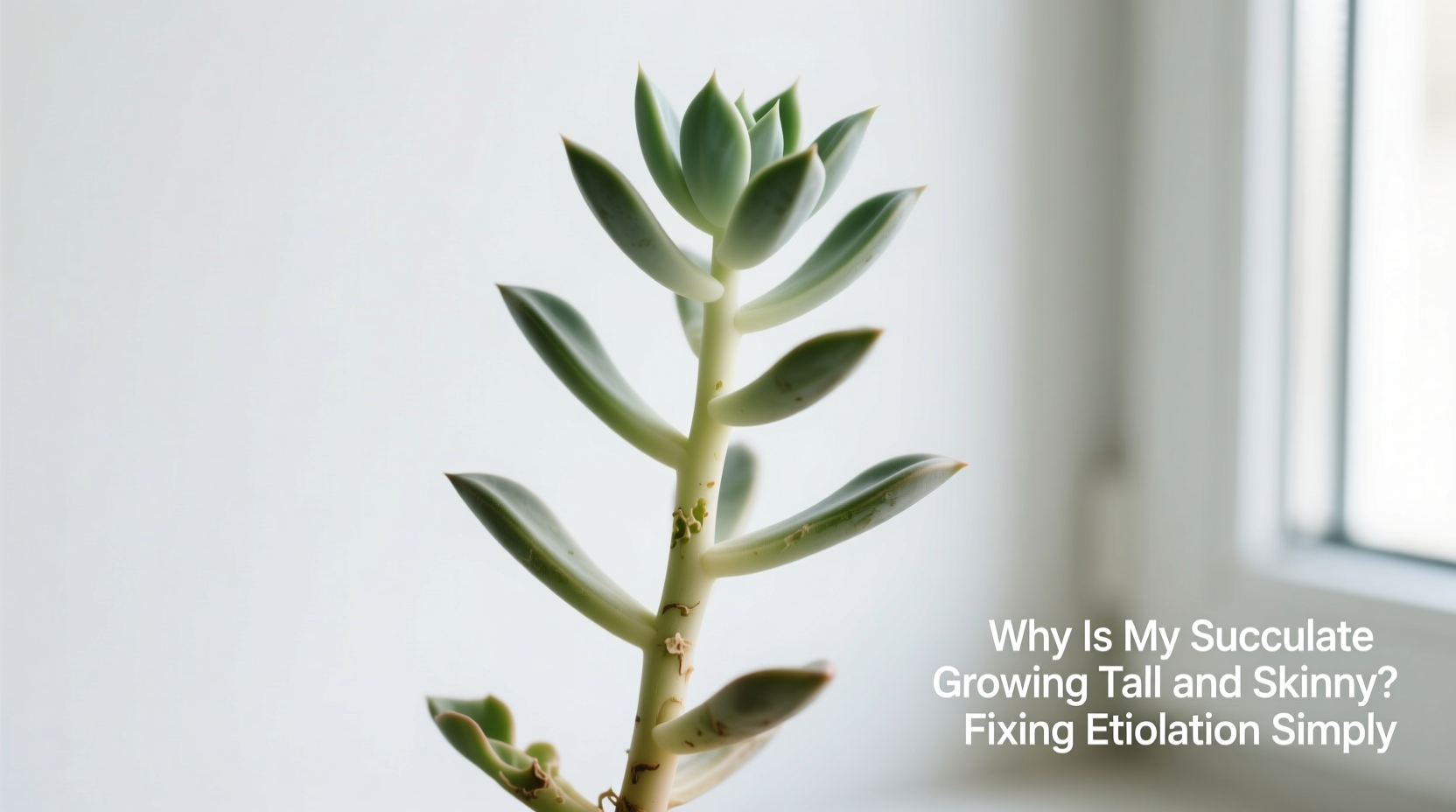
Etiolation occurs when a succulent stretches abnormally in search of light. In low-light environments, the plant elongates its stem and spaces out its leaves to maximize surface area exposed to available light. This survival mechanism comes at a cost: the plant loses density, color, and structural integrity. Leaves become smaller, paler, and widely spaced, while the stem grows weak and unable to support itself.
This process is irreversible in existing growth. Once a stem has stretched, it won’t revert to being short and compact. However, new growth can be healthy if lighting conditions improve. Etiolation doesn’t mean your succulent is doomed—it’s a signal that care adjustments are needed.
“Etiolation is nature’s way of telling us the plant isn’t getting what it needs. It’s not a death sentence, but a call to action.” — Dr. Linda Park, Botanist and Indoor Plant Specialist
Why Are My Succulents Growing Tall and Skinny?
The primary cause of etiolation is insufficient light. But several factors contribute to or worsen the problem:
- Indoor placement away from windows: Even bright rooms often lack the intensity of natural sunlight that succulents require.
- North-facing windows: These receive the least direct sunlight, especially in winter months.
- Overcrowded plant arrangements: Nearby plants may block light, forcing succulents to stretch toward gaps.
- Seasonal changes: Shorter days and weaker sun in fall and winter increase the risk of etiolation.
- Prolonged use of artificial light without proper spectrum or intensity: Standard room lighting does not meet the photosynthetic needs of succulents.
Succulents like Echeveria, Graptopetalum, and Sedum are particularly prone to etiolation because they naturally grow in full sun. When grown indoors under suboptimal conditions, they respond quickly by stretching. Crassula and Haworthia species may etiolate more slowly, but still show signs over time.
How to Fix a Stretched Succulent: A Step-by-Step Guide
Correcting etiolation involves two phases: stopping further stretching and rehabilitating the plant through propagation or pruning. Follow this timeline to restore your succulent:
- Assess the severity: Determine how far the etiolation has progressed. If only slightly stretched, improving light may suffice. If severely leggy, propagation is likely necessary.
- Move to brighter light: Relocate the plant to a south- or west-facing window. If natural light is limited, invest in a full-spectrum LED grow light placed 6–12 inches above the plant for 10–12 hours daily.
- Avoid sudden exposure to intense sun: After living in low light, direct midday sun can scorch the plant. Acclimate gradually over 7–10 days by increasing exposure incrementally.
- Cut the top (if needed): For severely stretched plants, use sterilized scissors to cut off the healthy rosette just above the elongated stem.
- Allow the cutting to callus: Let the cut end dry for 2–3 days to prevent rot.
- Replant the rosette: Place the cutting on well-draining soil. Roots will form from the base within 2–4 weeks.
- Propagate the remaining stem (optional): If lower leaves remain on the old stem, leave it in soil; new pups may sprout from dormant buds.
This method effectively resets the plant’s growth, allowing it to develop a new, compact form under improved conditions.
Prevention: Creating the Ideal Environment for Compact Growth
Preventing etiolation is simpler than correcting it. Focus on three core elements: light, positioning, and monitoring.
Optimize Light Exposure
Succulents thrive on 4–6 hours of direct sunlight daily. South-facing windows are ideal. If natural light is insufficient, supplement with grow lights. Choose LEDs with a color temperature of 5000K–6500K to mimic daylight. Position lights close enough to provide intensity but far enough to avoid heat damage.
Monitor Growth Patterns
Check your plants monthly for early signs of stretching. Look for:
- Increased space between leaves
- Pale or yellowish leaf color
- Leaves leaning strongly in one direction
- Slowed or uneven growth
Use Proper Soil and Containers
Well-draining soil prevents root rot and supports healthy growth. Use a cactus or succulent mix with added perlite or pumice. Pots must have drainage holes. Terracotta containers are ideal—they wick moisture and promote airflow.
| Factor | Do | Avoid |
|---|---|---|
| Light | Direct sun for 4–6 hours; use grow lights indoors | Low-light corners; fluorescent-only lighting |
| Watering | Soak thoroughly, then let dry completely | Light daily misting; waterlogged soil |
| Soil | Fast-draining mix with grit | Regular potting soil; clay-heavy mixes |
| Pot Type | Terracotta with drainage | Decorative pots without holes |
Real Example: Reviving an Etiolated Echeveria
Sarah, an apartment dweller in Chicago, noticed her blue Echeveria ‘Perle von Nürnberg’ was losing its tight rosette shape. Over six months, the center stretched nearly 5 inches upward, with leaves spaced half an inch apart and fading to green-gray. She realized the east-facing kitchen window wasn’t providing enough light, especially during winter.
She moved the plant under a full-spectrum LED grow light for 11 hours daily. After two weeks, no improvement was visible in the existing growth—confirming etiolation could not reverse. She then cut the top rosette, allowed it to callus, and planted it in fresh succulent mix. Within three weeks, roots formed. The original stem, left in the pot, eventually produced two new offsets from its base after eight weeks.
Today, Sarah maintains both the propagated rosette and the new pups under consistent light. The plants are compact, colorful, and growing symmetrically—proof that corrective action works.
Propagation Checklist: Recovering from Etiolation
If your succulent is too stretched to salvage aesthetically, use this checklist to propagate and renew it:
- ☑ Identify a healthy rosette at the top of the stem
- ☑ Sterilize scissors or shears with rubbing alcohol
- ☑ Cut cleanly just below the lowest leaves
- ☑ Let the cutting dry for 2–3 days in a shaded, ventilated area
- ☑ Prepare a pot with cactus mix and drainage
- ☑ Place the cutting on the soil surface (do not bury)
- ☑ Wait 2–3 weeks before watering lightly
- ☑ Keep in bright, indirect light until roots form
- ☑ Gradually introduce to direct sun
Propagation not only rescues the plant’s appearance but also gives you additional succulents to share or re-pot.
Frequently Asked Questions
Can a succulent recover from etiolation without cutting?
No—not in terms of reversing the stretched stem. However, if you improve lighting, future growth may be more compact. The plant won’t “shrink,” but new leaves can emerge tighter and healthier. For cosmetic recovery, propagation is the best option.
Will my succulent die if it’s etiolated?
Etiolation itself isn’t lethal, but it weakens the plant. A stretched succulent is more prone to tipping over, developing rot at the stem base, or failing to produce offsets. Addressing the underlying cause—usually light—prevents further decline.
How long does it take to fix etiolation?
Halting further stretching happens within days of improved light. Propagation takes 2–6 weeks for roots to establish. Full recovery and compact regrowth typically occur over 2–4 months, depending on species and conditions.
Final Thoughts: Healthy Light Leads to Healthy Plants
Etiolation is a common but correctable issue. Recognizing the signs early makes rehabilitation easier and preserves your plant’s vitality. The key lies in understanding that succulents are sun-lovers—even when grown indoors. No amount of careful watering or premium soil can compensate for inadequate light.
By adjusting placement, using supplemental lighting, and knowing when to propagate, you transform a leggy, struggling plant into a thriving specimen. Gardening is a process of observation and response. Each stretched stem teaches you more about your plant’s needs—and your ability to meet them.




 浙公网安备
33010002000092号
浙公网安备
33010002000092号 浙B2-20120091-4
Comments
No comments yet. Why don't you start the discussion?