
Succulents are prized for their compact forms, vibrant colors, and architectural beauty. When a once-tight rosette begins to elongate, with sparse leaves spaced far apart along a weak stem, something has gone awry. This condition—known as etiolation—is one of the most common challenges faced by indoor succulent growers. It’s not just an aesthetic issue; it signals that your plant is struggling to survive under inadequate light. While etiolation can’t be reversed, its effects can be managed, and future occurrences prevented with proper care.
Etiolation occurs when a succulent stretches toward any available light source in a desperate attempt to photosynthesize. The result is a lanky, pale plant that lacks structural integrity and visual appeal. Understanding the causes, recognizing early signs, and taking corrective action are essential steps in restoring your plant’s health and preventing long-term damage.
Understanding Etiolation: What It Is and Why It Happens
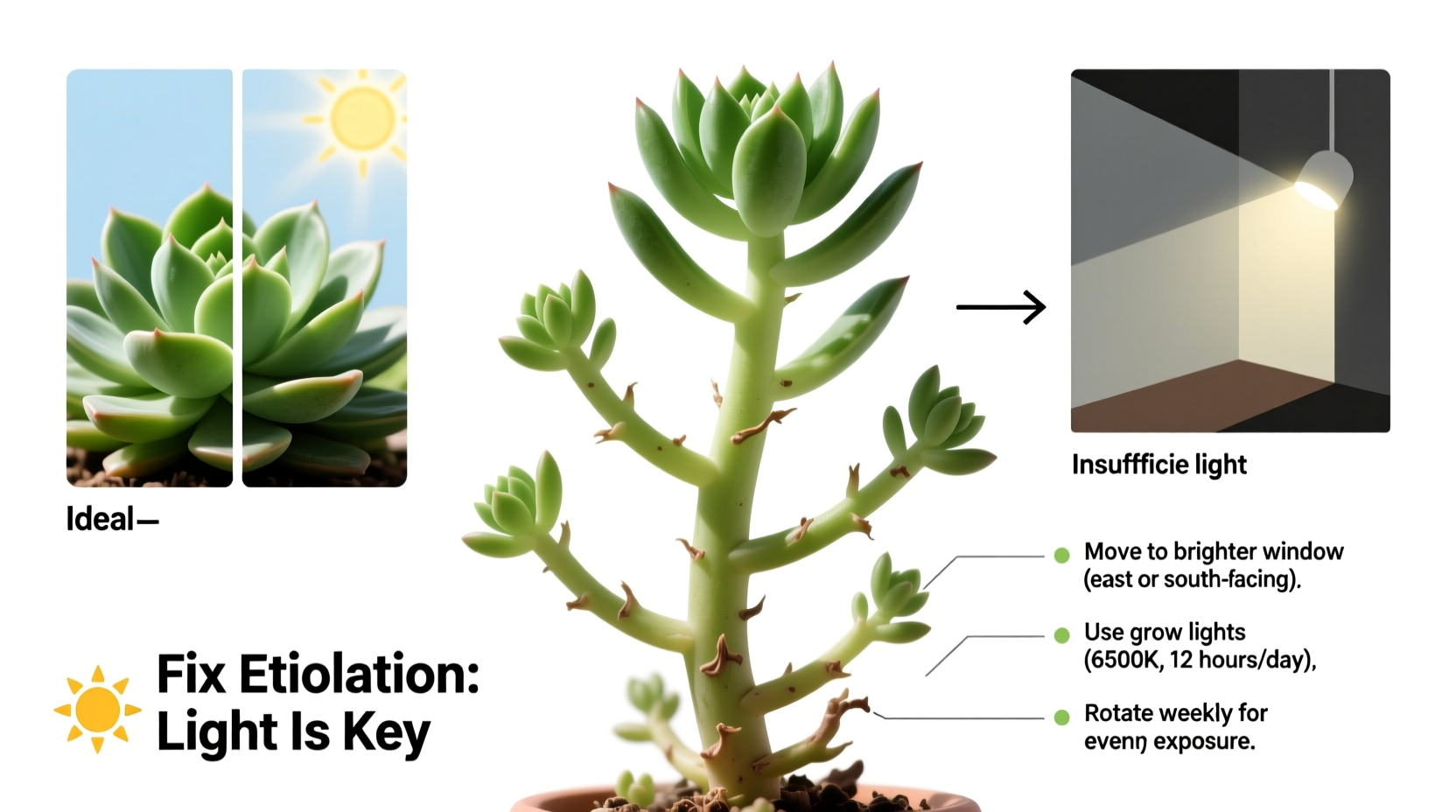
Etiolation is a survival mechanism. In low-light conditions, succulents produce more gibberellins—plant hormones that stimulate stem elongation. This allows the plant to reach toward light, even if that means sacrificing form and density. Unlike some plants that go dormant or simply stop growing, succulents respond actively but ungracefully to poor lighting.
The primary cause of etiolation is insufficient light intensity or duration. Indoor environments, especially those without south-facing windows or supplemental grow lights, often fail to provide the 6–8 hours of bright, indirect sunlight that most succulents require. Over time, this leads to:
- Stretched stems with increased internodal spacing (distance between leaves)
- Pale or washed-out leaf color due to reduced chlorophyll production
- Leaves that face upward rather than radiating outward
- Weakened structure prone to snapping or toppling
While temperature, watering habits, and pot size play roles in overall plant health, light remains the dominant factor in etiolation. A succulent grown in perfect soil with ideal watering but poor light will still stretch. Conversely, a plant receiving abundant light can tolerate minor lapses in other care areas.
How to Fix a Stretched Succulent: Practical Recovery Steps
Once etiolation occurs, the stretched stem won’t revert to its original compact form. However, you can improve the plant’s appearance and encourage new, healthy growth through strategic intervention.
Step-by-Step Guide to Rehabilitating an Etiolated Succulent
- Assess the Severity: Determine how far the stretching has progressed. Mild cases may only need improved lighting. Severe cases require propagation.
- Move to Brighter Light: Relocate the plant to a south-facing window or introduce a full-spectrum LED grow light positioned 6–12 inches above the plant for 10–12 hours daily.
- Cut and Propagate (if needed): For badly stretched plants, use clean, sharp scissors to cut off the top rosette just above the compact leaves. Allow the cutting to callous for 2–3 days before placing it on well-draining soil.
- Encourage New Growth on the Base: The remaining stem may produce new offsets or “pups” over time. Keep soil slightly drier than usual to avoid rot.
- Replant the Rosette: Once roots form (typically in 2–4 weeks), begin watering lightly and gradually increase exposure to direct light.
This method effectively resets the plant’s form. Though it takes patience, the result is a rejuvenated succulent with tight, healthy growth.
Optimizing Lighting Conditions for Healthy Succulents
Preventing etiolation starts with providing consistent, high-quality light. Natural sunlight is best, but many homes lack sufficient access. Understanding light requirements and making smart adjustments ensures long-term success.
| Light Level | Characteristics | Suitable For | Risk of Etiolation |
|---|---|---|---|
| Bright Indirect (South/East Window) | Direct morning sun or filtered afternoon light | Most succulents (Echeveria, Sedum, Graptopetalum) | Low |
| Moderate Light (West Window, Shaded South) | Filtered sun or partial day exposure | Tolerant species (Haworthia, Gasteria) | Moderate |
| Low Light (North Window, Interior Room) | No direct sun, dim ambient light | Few true succulents; better for ZZ or Snake plants | High |
| Supplemental Grow Lights (LED/Fluorescent) | 10–12 hours daily at 6–12\" distance | All indoor succulents in low-natural-light settings | Very Low (when used correctly) |
When relying on artificial lighting, choose full-spectrum LEDs with a color temperature of 5000–6500K. These mimic natural daylight and support robust growth. Set a timer to ensure consistency—plants thrive on routine.
Real Example: Reviving a Stretched Echeveria 'Perle von Nürnberg'
A hobbyist in Chicago noticed her lavender-pink Echeveria had begun to lean and stretch after being moved indoors for winter. Over three months, the center rosette lifted nearly 3 inches, with lower leaves yellowing and spacing widening. She initially assumed underwatering was the cause and increased irrigation, worsening the issue.
After researching etiolation, she took action:
- She placed the plant under a $40 LED grow light for 11 hours daily.
- After two weeks of improved light, no reversal occurred—confirming irreversible stretching.
- She cut the top rosette, leaving a 2-inch stem base.
- The cutting was calloused and replanted; roots appeared in 18 days.
- Within six weeks, both the propagated rosette and original stem produced new pups.
Today, she maintains all indoor succulents under grow lights from October through March. Her collection now shows no signs of stretching, and she reports faster growth and richer pigmentation.
“Etiolation isn’t a death sentence—it’s a clear message from the plant. Respond early, and you’ll not only save the specimen but learn how to grow better ones.” — Dr. Lena Torres, Botanist & Urban Horticulture Consultant
Prevention Checklist: Avoiding Etiolation Before It Starts
Proactive care is always more effective than correction. Use this checklist to maintain optimal growing conditions year-round:
- ✅ Place succulents in a south- or east-facing window whenever possible
- ✅ Supplement natural light with full-spectrum grow lights during winter months
- ✅ Rotate pots every 3–5 days to prevent directional leaning
- ✅ Monitor growth patterns monthly—early stretching is subtle
- ✅ Avoid overcrowding plants, which creates shade and competition
- ✅ Clean windows and light bulbs regularly to maximize brightness
- ✅ Choose appropriate species for your environment (e.g., Haworthia for lower light)
Remember, seasonal changes affect light quality. A spot that works in summer may become insufficient in winter due to shorter days and lower sun angles. Adjustments should be made proactively, not reactively.
Frequently Asked Questions
Can a succulent recover from etiolation naturally?
No. Once a stem has stretched, it will not shorten or regain lost leaves. The plant must be pruned and propagated to restore its compact form. However, with improved lighting, future growth will be dense and healthy.
Is etiolation the same as sunburn?
No. Etiolation results from too little light and causes pale, elongated growth. Sunburn occurs from sudden exposure to intense sunlight and appears as brown, crispy patches on leaves. Both are stress responses but in opposite directions.
Can I leave my succulent under grow lights 24/7?
No. Like natural light, artificial light should follow a day-night cycle. Most succulents need 8–10 hours of darkness for proper respiration and metabolic balance. Run lights for 10–12 hours max per day using a timer for consistency.
Conclusion: Take Action Before It’s Too Late
Etiolation is a common but correctable issue in succulent care. Recognizing the signs early—subtle leaning, increased leaf spacing, fading color—can mean the difference between a salvageable plant and one beyond repair. While the stretched portion cannot be undone, propagation offers a reliable path to renewal. More importantly, optimizing lighting conditions prevents recurrence and promotes thriving, colorful growth.
Don’t wait until your succulent looks like a green question mark. Assess your current setup, invest in quality light sources if needed, and stay vigilant through seasonal shifts. With attentive care, your succulents can remain compact, vibrant, and resilient for years.




 浙公网安备
33010002000092号
浙公网安备
33010002000092号 浙B2-20120091-4
Comments
No comments yet. Why don't you start the discussion?