
Succulents are prized for their resilience, low maintenance, and sculptural beauty. But when their vibrant green leaves begin to turn yellow, it’s a clear signal that something is off. Unlike many houseplants, succulents thrive on neglect rather than constant attention—yet even minor missteps in care can trigger stress responses like discoloration. Understanding the root causes of yellowing is essential to reversing the damage and restoring your plant to full health.
Yellowing in succulents is rarely due to a single factor. It often results from a combination of watering errors, lighting issues, soil conditions, or environmental stress. The good news: with timely intervention, most yellowing succulents can be revived. This guide breaks down the primary causes, highlights common care mistakes, and provides actionable steps to bring your plant back to life.
Common Causes of Yellowing in Succulents
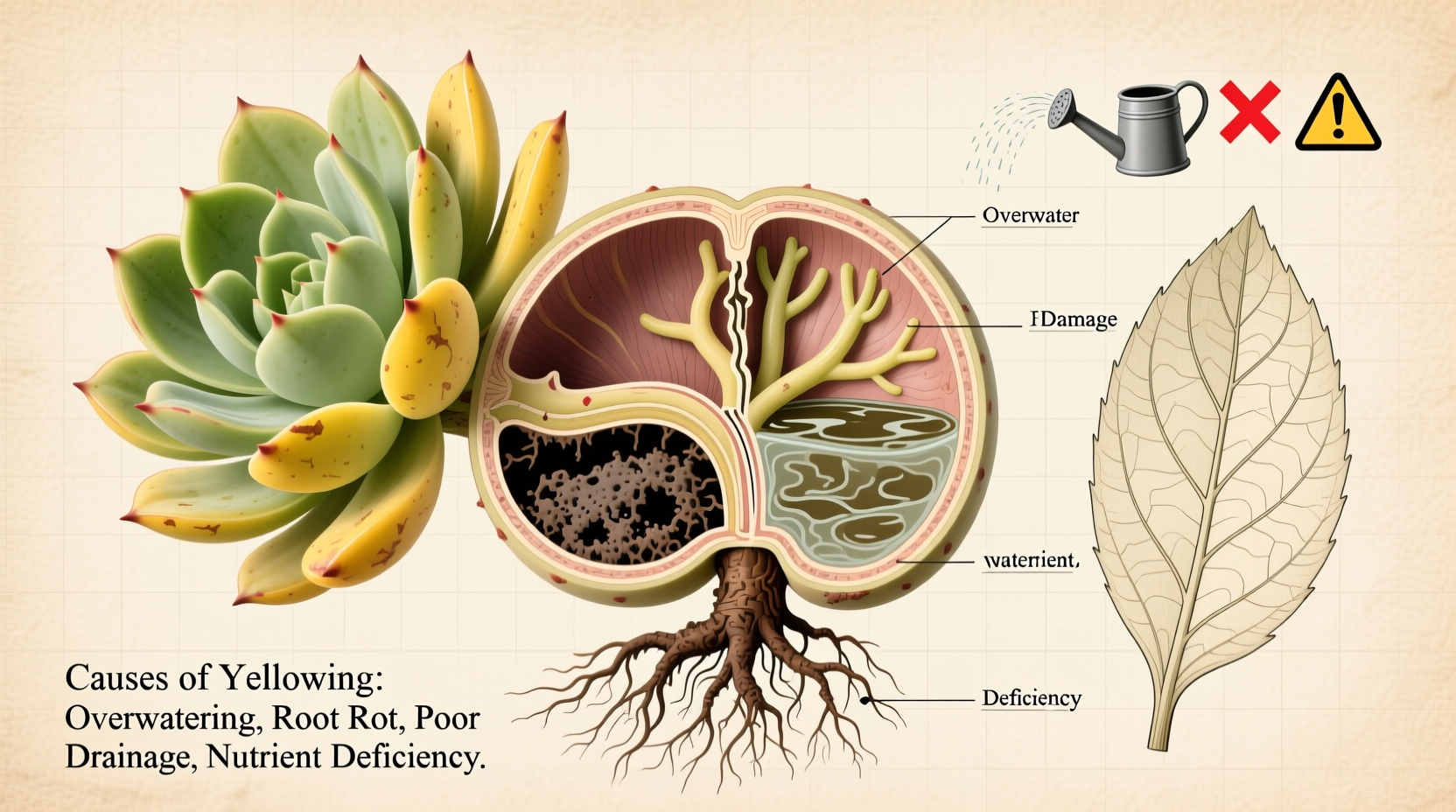
The shift from green to yellow in succulent leaves typically indicates cellular breakdown, often due to stress. While some yellowing may occur naturally as older leaves die off at the base, widespread or top-down discoloration points to deeper problems. Below are the most frequent culprits.
Overwatering: The Leading Cause
Overwatering is responsible for more succulent deaths than any other mistake. These plants store water in their leaves and stems, evolved to survive arid conditions. When soil remains damp for too long, roots suffocate and rot, impairing nutrient uptake. As root decay progresses, leaves turn soft, translucent, and eventually yellow or brown.
Poor Drainage and Soil Compaction
Even with moderate watering, succulents suffer if planted in dense or non-porous soil. Standard potting mixes retain too much moisture, creating a breeding ground for root rot. Similarly, pots without drainage holes trap water, increasing the risk of overhydration.
Inadequate or Excessive Light
Succulents need bright, indirect light to maintain chlorophyll production. Too little light leads to etiolation—stretching and pale, weak growth that often turns yellow. Conversely, sudden exposure to intense direct sunlight can cause sunburn, resulting in yellow or bleached patches on leaves.
Nutrient Imbalance or Fertilizer Burn
Succulents require minimal feeding. Over-fertilizing, especially with nitrogen-heavy formulas, can lead to salt buildup in the soil, damaging roots and causing leaf discoloration. On the flip side, prolonged use of poor-quality soil may lead to nutrient deficiencies that manifest as yellowing.
Temperature Stress and Drafts
Sudden temperature changes, cold drafts, or placement near heating vents can shock succulents. Most thrive in stable environments between 60°F and 80°F (15°C–27°C). Exposure to temperatures below 40°F (4°C) or rapid fluctuations can trigger stress-induced yellowing.
Pests and Disease
Insect infestations like mealybugs, spider mites, or scale can weaken succulents by sucking sap from tissues. This damage disrupts photosynthesis and nutrient flow, leading to yellow spots or overall discoloration. Fungal infections, often stemming from excess moisture, can also contribute.
“Succulents communicate through their leaves. Yellowing isn’t just cosmetic—it’s a distress signal you shouldn’t ignore.” — Dr. Lena Torres, Botanist & Plant Health Specialist
Care Mistakes That Lead to Yellow Leaves
Many well-intentioned caregivers unknowingly harm their succulents by applying typical houseplant routines. Here are the most common errors and how they directly impact plant health.
Mistake 1: Watering on a Schedule Instead of by Need
One of the biggest misconceptions is that plants need regular watering—like every Sunday. Succulents defy this rule. Their water needs depend on season, humidity, light, and pot size. A rigid schedule ignores these variables and often leads to overwatering.
Mistake 2: Using Regular Potting Soil
Standard potting mix holds moisture far longer than succulents can tolerate. Without proper aeration, roots sit in dampness, inviting rot. Always use a gritty, fast-draining blend designed for cacti and succulents.
Mistake 3: Ignoring Signs of Root Rot
By the time yellowing appears above ground, root damage may already be extensive. Many gardeners delay repotting or inspection, assuming the issue will resolve itself. Early detection is critical.
Mistake 4: Moving Plants Suddenly to Full Sun
Indoor-grown succulents acclimated to lower light can’t handle immediate exposure to harsh midday sun. This abrupt change causes photodamage, visible as yellow or white scorched areas.
Mistake 5: Overusing Fertilizer
Fertilizing more than once or twice a year—or using standard houseplant food at full strength—can burn delicate roots. Succulents grow slowly and don’t require rich nutrition.
Step-by-Step Guide to Reviving a Yellowing Succulent
Revival begins with diagnosis. Follow this timeline to assess, treat, and restore your plant.
- Stop watering immediately. If the soil is wet, allow it to dry out completely before proceeding.
- Inspect the plant closely. Check for mushy, translucent leaves (overwatering), dry crispy tips (underwatering), or webbing/white fluff (pests).
- Gently remove the plant from its pot. Shake off old soil and examine the roots. Healthy roots are firm and white; rotted ones are black, brown, or slimy.
- Trim damaged parts. Use sterilized scissors to cut away all soft or discolored leaves and roots. Let the plant callous over for 1–3 days in a dry, shaded area.
- Repot in fresh, well-draining mix. Use a cactus/succulent blend with added perlite or pumice. Choose a pot with drainage holes, preferably unglazed terracotta which wicks moisture.
- Wait before watering. After repotting, wait 5–7 days to encourage new root growth before lightly watering.
- Adjust lighting. Place in bright, indirect light—near an east-facing window is ideal. Avoid direct afternoon sun until the plant recovers.
- Monitor progress weekly. Look for new growth or firming leaves as signs of recovery. Avoid fertilizing for at least 6 weeks.
Do’s and Don’ts: Quick Reference Table
| Do’s | Don’ts |
|---|---|
| Use a gritty, fast-draining soil mix | Use regular potting soil |
| Water only when soil is completely dry | Water on a fixed schedule |
| Provide bright, indirect light | Place in dim corners or scorching sun |
| Choose pots with drainage holes | Keep succulents in containers without drainage |
| Fertilize sparingly (once or twice a year) | Apply fertilizer monthly or at full strength |
| Allow cuttings to callous before planting | Plant freshly cut stems immediately |
Mini Case Study: Reviving a Yellow Jade Plant
Sarah, a plant enthusiast in Portland, noticed her jade plant (Crassula ovata) developing yellow leaves at the base and stem. Initially, she assumed it needed more water and increased her weekly routine. Within two weeks, the condition worsened—leaves dropped, and the stem softened.
After researching, Sarah realized she was overwatering and using a decorative pot without drainage. She removed the plant, found extensive root rot, and trimmed the damaged sections. She repotted it in a terracotta container with a 50/50 mix of cactus soil and perlite. For three weeks, she withheld water and placed it near a bright window.
By week four, new pink-tinted leaves began emerging. Six weeks later, the jade plant showed no further yellowing and had developed firm, healthy growth. Sarah now checks soil moisture with a wooden skewer before watering—a habit she credits for her plant’s recovery.
Checklist: How to Prevent Future Yellowing
- ✅ Test soil moisture before each watering
- ✅ Use pots with drainage holes
- ✅ Repot every 18–24 months with fresh succulent mix
- ✅ Rotate plants occasionally for even light exposure
- ✅ Keep away from air conditioners, heaters, and cold drafts
- ✅ Inspect monthly for pests using a magnifying glass if needed
- ✅ Acclimate plants gradually when changing locations
- ✅ Label your succulents to track species-specific needs
Frequently Asked Questions
Can yellow succulent leaves turn green again?
No, once a leaf turns yellow due to stress or damage, it cannot revert to green. However, stopping the underlying issue prevents further yellowing, and new healthy growth will replace lost foliage over time.
Is it normal for bottom leaves to turn yellow?
Yes, it’s natural for older, lower leaves to dry up and fall off as the plant grows. This process, called senescence, is not a concern unless multiple leaves yellow rapidly or discoloration spreads upward.
How often should I water my succulent?
Most succulents need watering every 2–4 weeks, depending on climate and season. In summer, they may need water every 10–14 days; in winter, once a month or less. Always confirm dry soil before watering.
Conclusion: Act Now to Save Your Succulent
A yellowing succulent doesn’t mean the end—it’s a wake-up call to reassess your care routine. By identifying whether overwatering, poor soil, or environmental stress is to blame, you can take precise action to reverse the damage. Remember, succulents thrive on simplicity: the right pot, the right soil, and the right amount of light and water.
With patience and observation, most plants respond quickly to improved conditions. Start today by checking your succulent’s roots, adjusting its environment, and adopting a “less is more” approach to watering. Your efforts will be rewarded with plump, vibrant foliage and a resilient, long-lived companion.




 浙公网安备
33010002000092号
浙公网安备
33010002000092号 浙B2-20120091-4
Comments
No comments yet. Why don't you start the discussion?