
If you're paying for high-speed internet from Verizon but consistently experience buffering, lag, or failed downloads, you're not alone. Many users report sudden drops in performance despite having a robust fiber or DSL plan. Slow internet can stem from a range of issues — some within your control, others requiring intervention from Verizon. Understanding the root causes and knowing how to systematically troubleshoot them can save time, frustration, and unnecessary service calls.
Common Causes of Slow Verizon Internet
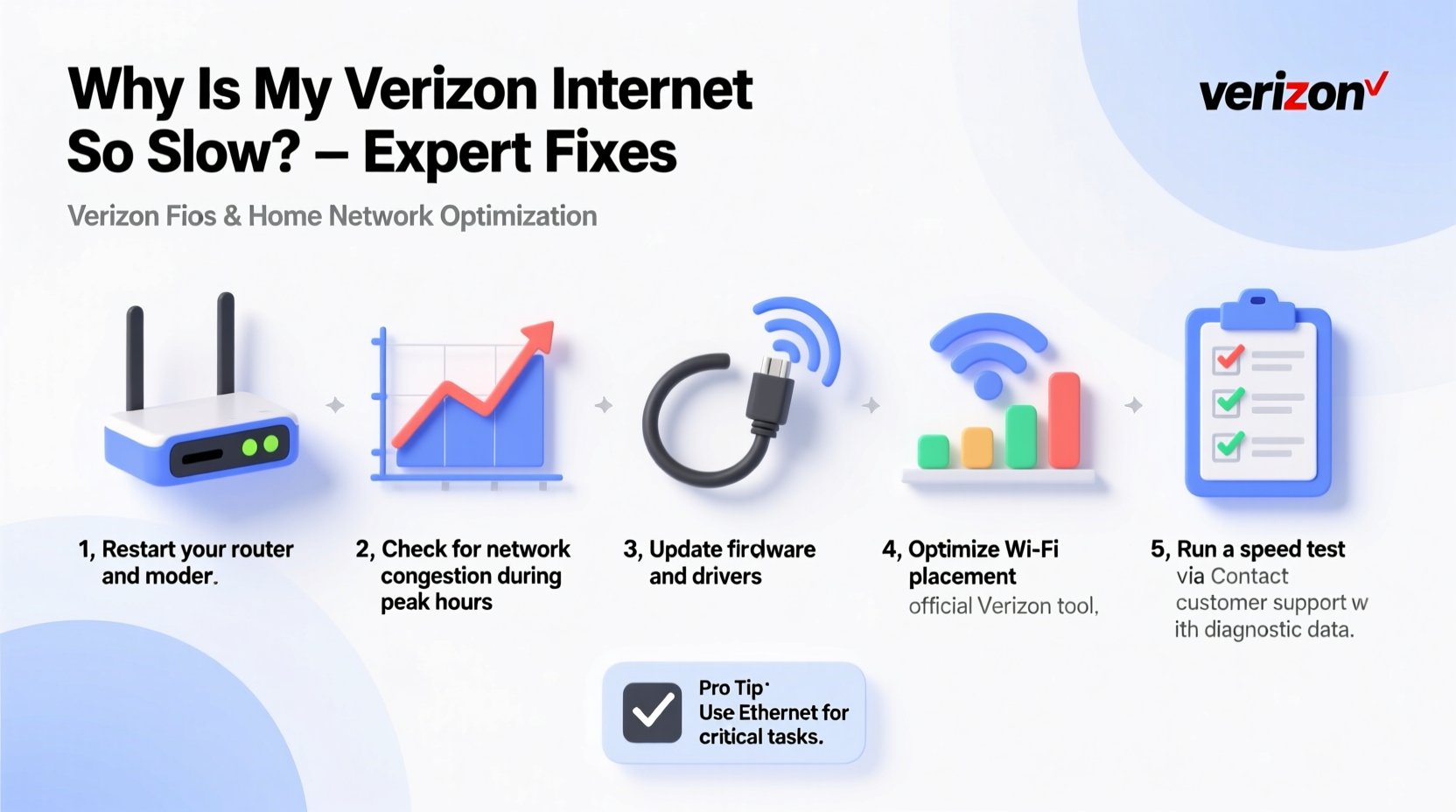
Before jumping into fixes, it’s important to identify what might be causing the slowdown. While Verizon's Fios network is known for reliability, performance hiccups are still possible due to both internal and external factors.
- Network Congestion: High traffic during peak hours (7–10 PM) can reduce speeds, especially on shared infrastructure.
- Router Placement: Physical obstructions, distance, or interference from appliances weaken Wi-Fi signals.
- Outdated Equipment: Older routers may not support current speed tiers or security standards.
- Background Applications: Cloud backups, software updates, or streaming devices consume bandwidth without your awareness.
- Service Outages: Localized outages or maintenance work can temporarily impact connectivity.
- Throttling or Data Caps: Though rare on Fios, some plans may have usage-based limitations.
“Many customers assume their internet issue is with the provider, but over 60% of slowdowns originate within the home network.” — Carlos Mendez, Senior Network Technician at Verizon
Step-by-Step Troubleshooting Guide
Follow this structured approach to diagnose and resolve your connection issues efficiently.
- Test Your Speed Accurately
Use a wired Ethernet connection to a desktop or laptop and run a speed test at speedtest.net or Verizon’s official speed test tool. Compare results to your subscribed plan (e.g., 200 Mbps, 1 Gbps). - Restart Your Equipment
Power down your router and optical network terminal (ONT), wait 60 seconds, then power them back on. This clears temporary glitches and resets connections. - Check for Service Alerts
Visit Verizon’s outage map to see if there’s a reported disruption in your area. - Inspect Cables and Connections
Ensure all fiber/coaxial cables are securely connected and undamaged. Look for kinks, bends, or chew marks (especially from pets). - Update Firmware
Log into your router’s admin panel (usually via 192.168.1.1) and check for firmware updates. Outdated firmware can cause instability and poor performance. - Limit Connected Devices
Disconnect unused smart devices, phones, or tablets. Each device adds overhead, even when idle. - Switch Wi-Fi Bands
If your router supports dual-band (2.4 GHz and 5 GHz), connect high-bandwidth devices (like laptops and TVs) to the less congested 5 GHz band.
Do’s and Don’ts When Dealing with Slow Internet
| Do’s | Don’ts |
|---|---|
| Place your router centrally, elevated, and away from microwaves or cordless phones | Don’t hide your router in a cabinet or basement corner |
| Use Ethernet for critical tasks like gaming or video conferencing | Don’t rely solely on Wi-Fi extenders without proper setup |
| Regularly reboot your router (once a week) | Don’t ignore firmware update notifications |
| Contact Verizon support with speed test results and timestamps | Don’t assume slower speeds are normal without verification |
Real-World Example: Resolving a Persistent Slowdown
Samantha, a remote worker in northern New Jersey, noticed her Verizon Fios 400 Mbps plan was delivering only 30–50 Mbps during video calls. After multiple reboots and failed tech support chats, she followed a methodical approach. She first ran a wired speed test, confirming the drop wasn’t just Wi-Fi related. Then, she checked Verizon’s outage page — no alerts. Next, she inspected her router and noticed the ONT’s “Optical” light was blinking red. A quick call to Verizon confirmed a signal loss due to a damaged fiber line near her mailbox, likely from recent landscaping. Within 24 hours, a technician repaired the line, and her speeds returned to normal.
This case highlights the importance of eliminating internal issues before concluding it’s a provider problem — and knowing which indicator lights matter.
Troubleshooting Checklist
Use this checklist to quickly assess and improve your Verizon internet performance:
- ✅ Run a wired speed test using a computer connected directly to the router
- ✅ Restart the router and ONT (unplug for 60 seconds)
- ✅ Check for active outages in your area via Verizon’s website
- ✅ Ensure router firmware is up to date
- ✅ Move closer to the router or use a wired connection for testing
- ✅ Disconnect unused devices from the network
- ✅ Verify that no single device is consuming excessive bandwidth
- ✅ Examine router LED status lights (steady white/green = good; blinking red = issue)
- ✅ Contact Verizon with detailed test results if problems persist
Frequently Asked Questions
Why is my Verizon internet slow only at certain times of day?
This is typically due to network congestion. During evening hours, many households stream video, game online, or download large files, which can strain local node capacity. If you're on DSL, this effect is more pronounced than on Fios, which has higher capacity.
Does Verizon throttle internet speeds?
Verizon Fios does not throttle based on usage for residential plans. However, if you exceed data limits on select DSL or mobile hotspot plans, reduced speeds may apply until the next billing cycle. Most Fios users have unlimited data.
Can a mesh network improve my Verizon Wi-Fi?
Yes. If your home is large or has dead zones, a mesh Wi-Fi system (like Google Nest Wi-Fi or eero) can significantly improve coverage and stability. Ensure the system supports your speed tier — for gigabit plans, choose models with multi-gig WAN ports.
When to Contact Verizon Support
If you’ve completed all internal troubleshooting and still experience slow speeds — especially on a wired connection — it’s time to escalate. Have your account information, address, and recent speed test results ready. Ask the support agent to check:
- Signal levels at the ONT (optical transmit/receive power)
- Line error rates (FEC/HEC errors on DSL or packet loss on fiber)
- Port status and authentication logs
You have the right to request a technician visit if remote diagnostics fail to resolve the issue. Technicians can test the line from the pole or pedestal to your home and verify internal wiring integrity.
Conclusion
Slow Verizon internet doesn’t have to be a permanent frustration. By understanding the common causes and applying systematic fixes — from optimizing router placement to interpreting diagnostic lights — you can often restore peak performance without waiting for outside help. Most slowdowns are fixable with simple adjustments, but knowing when to involve Verizon ensures deeper issues aren’t overlooked. Take control of your home network today: test, troubleshoot, and optimize for seamless browsing, streaming, and working from home.




 浙公网安备
33010002000092号
浙公网安备
33010002000092号 浙B2-20120091-4
Comments
No comments yet. Why don't you start the discussion?