
In the expansive world of Tite Kubo’s *Bleach*, few characters are as enigmatic or emotionally resonant as Nelliel Tu Odelschwanck—commonly known as Nel. Her appearance as a small, green-haired child with oversized ears and a lisp contrasts sharply with the immense spiritual pressure she carries. This duality isn’t accidental; it’s central to her backstory, power mechanics, and role in the narrative. Understanding why Nel appears as a child requires delving into the lore of Arrancars, Hollow evolution, memory loss, and the consequences of betrayal in Hueco Mundo.
The True Identity Behind the Child Form
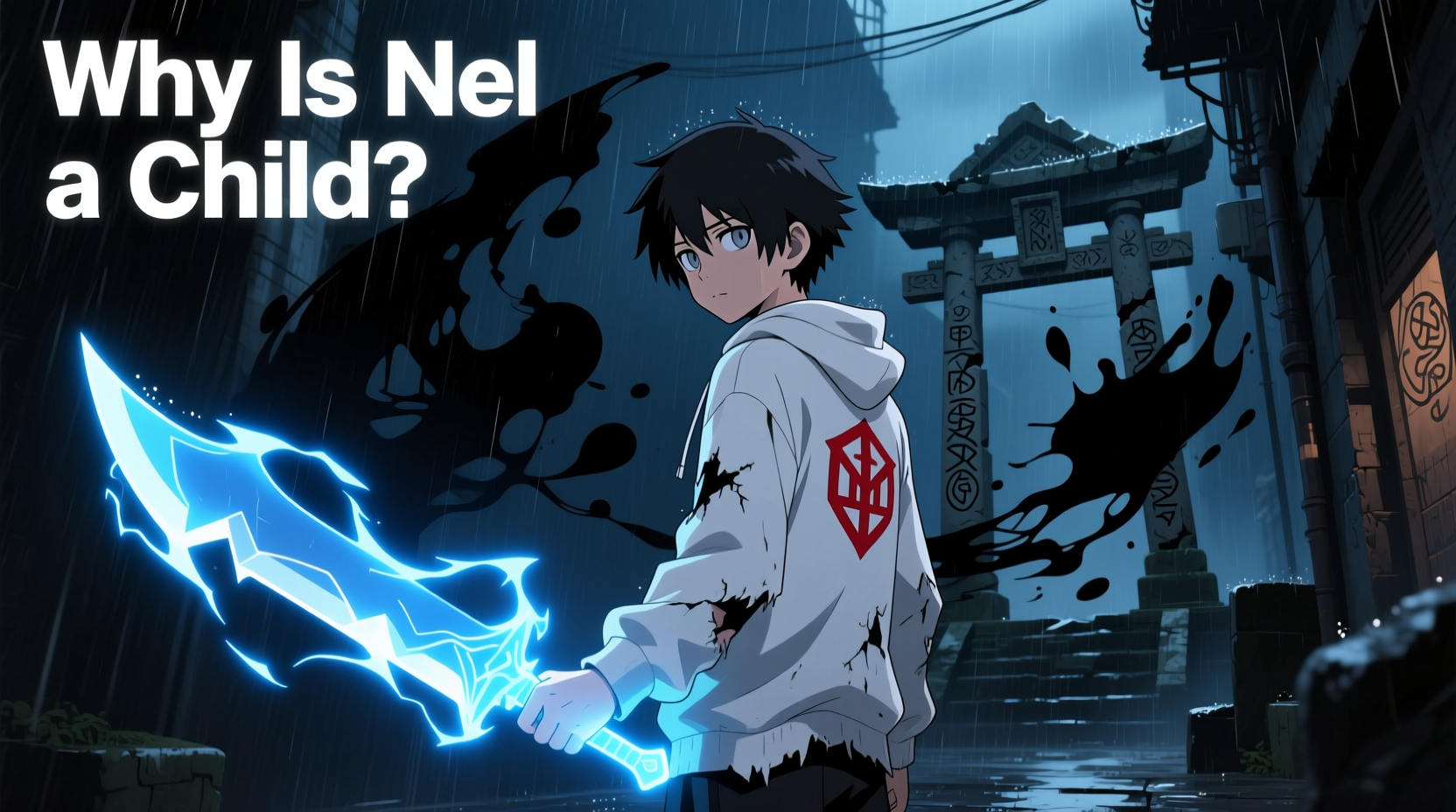
Nel is not actually a child. She is an Arrancar—a Hollow that has broken its mask and gained humanoid form and enhanced intelligence. Before her current state, Nel was one of the most powerful beings in Hueco Mundo: the former Tres Espada, ranking third among Sōsuke Aizen’s elite warriors. In this original form, she stood tall, imposing, and radiated authority. Her full name, Nelliel Tu Odelschwanck, reflects her noble lineage within the Hollow hierarchy.
Her regression into a childlike form stems from a traumatic event involving her subordinate, Nnoitra Gilga. Seeking to usurp her position, Nnoitra attacked her from behind while she showed him mercy—an act she later recalls as a failure of judgment. The assault caused severe injury and triggered a survival mechanism common among Hollows: self-reversion to a less developed state to preserve core consciousness. This process effectively reset her physical form and fragmented her memories, leaving her in the infantile state first encountered by Ichigo Kurosaki in the desert of Hueco Mundo.
“Power isn't just about strength—it's about will. Nel lost her form, but never her heart.” — Tite Kubo, in a 2006 Shonen Jump interview on character design philosophy.
Hollow Biology and Evolutionary Reversion
To fully grasp Nel’s condition, one must understand the biology of Hollows in the *Bleach* universe. Hollows are souls that have succumbed to negative emotions and lost their sense of self. Over time, some evolve beyond basic predatory instincts. Those who break their masks become Arrancars, gaining intelligence, speech, and near-Human forms. However, Hollow physiology includes regressive capabilities—when faced with mortal damage or extreme psychological trauma, they can devolve into earlier stages to survive.
Nel’s case is a controlled devolution. Her body reverted to what resembles a Gillian-class Hollow larval stage—small, seemingly weak, and lacking higher cognitive function at first glance. But beneath this shell remains her core spirit energy and subconscious instincts. This explains why, despite her childish demeanor, she instinctively protects those she bonds with and exhibits flashes of tactical awareness.
Powers and Abilities Across Forms
Nel possesses distinct abilities depending on her current state. Each form serves a different combat and narrative purpose:
| Form | Physical Traits | Abilities | Limits |
|---|---|---|---|
| Child Form (Default) | 3–4 feet tall, green hair, pacifier | Enhanced regeneration, spiritual sensing, Cero emission (weaker) | Low stamina, limited speech, no access to full memory |
| Adult Form (Released) | Over 6 feet, armored torso, ram horns, full Arrancar uniform | High-speed Sonído, Bala bursts, Gran Rey Cero, Hierro skin | Time-limited due to mental strain; reverts after exhaustion |
| Masked Release (Brief Appearance) | Full Hollow mask with glowing eyes | Unfiltered spiritual output, raw Cero dominance | Extremely short duration; seen only once in manga |
Her signature ability, Gran Rey Cero, is a concentrated fusion of multiple Cero beams—an advanced technique rarely seen even among Espada. It underscores her former rank and mastery over spiritual energy. When she releases her Zanpakutō-like Resurrección, \"Pantera,\" she gains enhanced speed, claws capable of cutting spiritual matter, and defensive durability far surpassing average Arrancars.
Memory, Trauma, and Emotional Growth
One of the most compelling aspects of Nel’s character is her journey of rediscovery. Living as a child for years in the desert with her companions Pesche and Dondochakka—former Fracción who also regressed—she formed deep emotional bonds independent of her past. These relationships grounded her innocence and provided a new sense of purpose beyond war and hierarchy.
When confronted with Nnoitra during the battle in Las Noches, fragments of her memories resurface. The trauma of betrayal returns, but so does her resolve. Rather than being consumed by vengeance, she chooses protection—particularly of Ichigo and his allies. This marks a pivotal evolution: Nel transcends her past identity not by reclaiming power alone, but by integrating compassion with strength.
Mini Case Study: The Battle Against Nnoitra
During the confrontation with Nnoitra, Nel briefly reverts to her adult form upon seeing her former subordinate. The sight triggers suppressed memories, and her body responds instinctively. Despite sustaining heavy injuries, she fights with calculated precision, using Sonído to evade attacks and delivering a devastating Gran Rey Cero. However, after defeating Nnoitra, the psychological toll forces her back into child form—symbolizing that while she can access her past, she cannot permanently live in it.
This moment illustrates a key theme in *Bleach*: identity is fluid. Power doesn’t define a person; choices do. Nel could have remained vengeful, clinging to her Espada legacy. Instead, she embraces vulnerability as part of her strength.
FAQ: Common Questions About Nel’s Form and Origins
Why doesn’t Nel stay in her adult form?
Her adult form places immense strain on her psyche due to repressed trauma. The transformation is temporary, lasting only as long as her spirit can suppress the emotional damage from Nnoitra’s betrayal. Prolonged use risks destabilizing her consciousness.
Is Nel really an Espada? Was she really number 3?
Yes. Though Aizen officially replaced her with Nnoitra after her disappearance, flashbacks and official databooks confirm she held the Tres Espada title. Her absence was exploited by Nnoitra, who falsified reports of her death.
What is the significance of her pacifier?
The pacifier is symbolic rather than functional. It emphasizes her childlike state and contrasts with her latent power. When she removes it before transforming, it acts as a visual cue signaling the shift from innocence to warrior.
Step-by-Step: How Nel’s Transformation Works
- Trigger: Exposure to extreme danger or emotional stimuli (e.g., seeing Nnoitra).
- Release Command: “Explode, Pantera!” spoken consciously or subconsciously.
- Physical Shift: Body rapidly expands; Hollow mask fragments reassemble momentarily.
- Energy Surge: Spiritual pressure spikes, visible as green aura.
- Combat Mode: Access to full Arrancar abilities for limited duration.
- Reversion: After energy depletion or emotional overload, returns to child form.
Conclusion: Embracing Duality in Strength and Innocence
Nel’s child form is more than a disguise or weakness—it is a testament to resilience. Stripped of rank, memory, and dignity, she rebuilt herself not as a weapon, but as a protector. Her story challenges the notion that power must be ruthless to be effective. In her laughter, loyalty, and moments of quiet courage, Nel embodies a rare truth in *Bleach*: sometimes, the strongest warriors wear the smallest faces.
Understanding Nel means recognizing that her regression wasn’t just biological—it was existential. And her return, however fleeting, proves that no amount of betrayal can erase true strength of spirit.




 浙公网安备
33010002000092号
浙公网安备
33010002000092号 浙B2-20120091-4
Comments
No comments yet. Why don't you start the discussion?