
For years, tech enthusiasts eagerly awaited news of a Google-made tablet that could finally bring the promise of Android into true competitive form against the iPad and Microsoft Surface. The idea of a “Pixel tablet” — a high-end, software-optimized device designed by Google itself — sparked countless rumors, concept renders, and speculative articles. Yet, as of 2024, the conversation has all but vanished. No leaks. No credible insider reports. No murmurs from supply chain sources. The silence is deafening. So why is no one talking about Google Pixel tablet rumors anymore?
The answer lies not in a single event, but in a confluence of strategic decisions, product missteps, and evolving market dynamics that have quietly reshaped Google’s hardware ambitions.
The Rise and Fall of the Pixel Tablet Hype
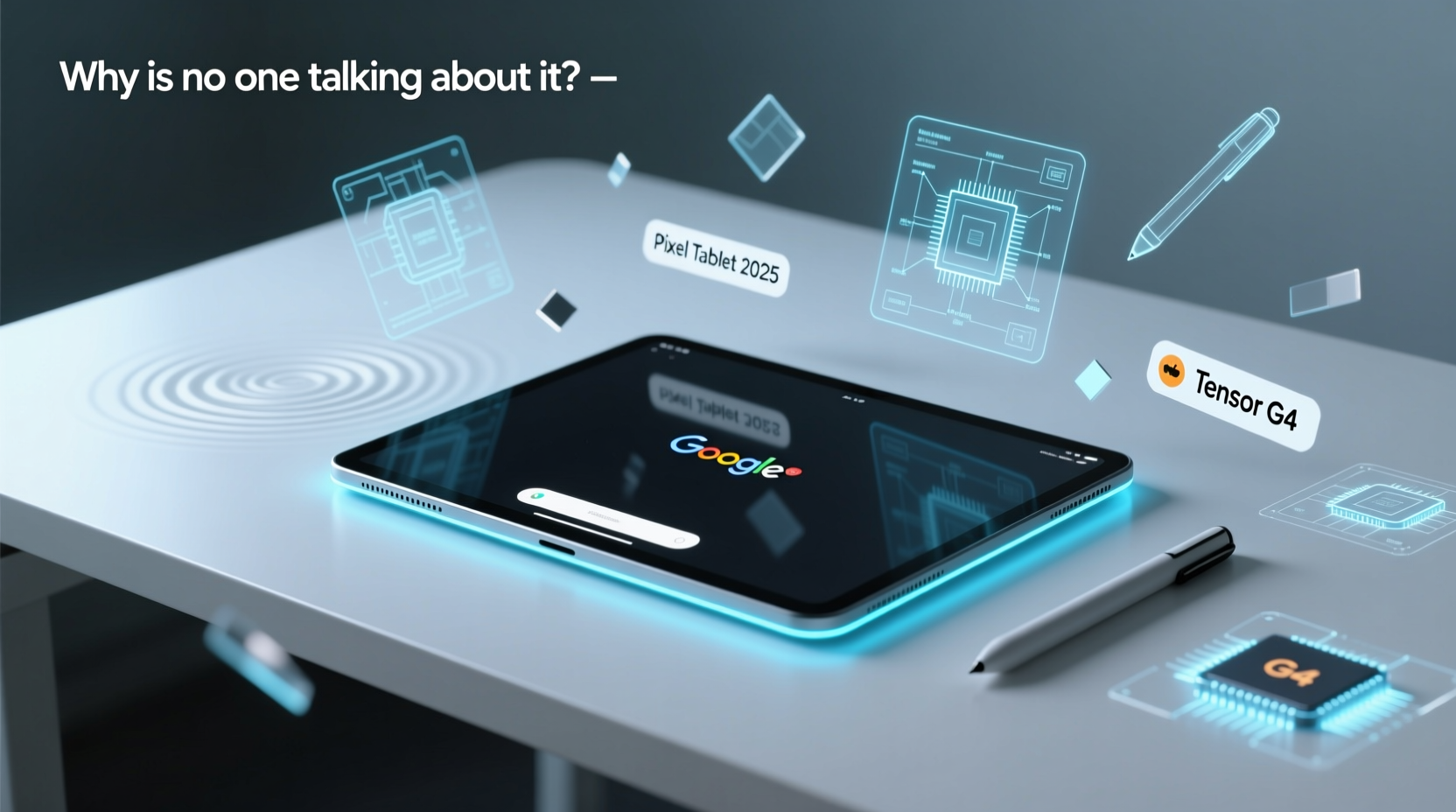
Between 2019 and 2021, anticipation for a Google-branded tablet surged. Analysts pointed to growing demand for hybrid productivity devices, especially during the remote work boom. At the same time, Google was investing heavily in Android tablet optimization with updates like improved split-screen multitasking, resizable app windows, and stylus support. It seemed inevitable: Google would release its own flagship tablet to showcase what Android could do.
Rumors pointed to codenames like “Noon” and “Tangor,” suggesting a device with premium specs, a detachable keyboard, and deep integration with Google Workspace. Tech blogs speculated on launch dates, pricing, and design cues borrowed from the Pixel phone lineup. Even Google’s acquisition of HTC’s hardware team in 2017 was seen as a sign that serious tablet development was underway.
Then, in May 2022, Google unveiled the Pixel Tablet — but not in the way anyone expected.
A Device That Played Speaker First, Tablet Second
The 2022 Pixel Tablet launched with a bizarre twist: it came bundled with a charging speaker dock. In standalone mode, it was a competent mid-range tablet with a Tensor G2 chip, an 11-inch display, and solid build quality. But Google positioned it primarily as a smart home hub — a device meant to sit on your kitchen counter, playing recipes or music, rather than a mobile productivity machine.
This pivot confused critics and consumers alike. Instead of competing with the iPad Air or Samsung Galaxy Tab S series, the Pixel Tablet targeted a niche space already occupied by Amazon Echo Show and Google Nest Hub Max — but at nearly $500.
Worse, early software limitations made it a poor tablet experience. For months after launch, users couldn’t even use it as a standalone tablet without the dock. Updates eventually fixed this, but the damage was done. Enthusiasts felt misled. Developers saw little incentive to optimize apps for a platform with minimal traction.
Strategic Shifts Behind the Silence
The lack of ongoing rumors today reflects deeper shifts within Google’s hardware division. Three key factors explain the radio silence:
- Market Realities: The tablet market is dominated by Apple (over 50% share) and Amazon (via low-cost Fire tablets). Mid-tier Android tablets struggle to justify their price without a strong app ecosystem. Google likely realized that entering this space aggressively wouldn’t yield significant returns.
- Internal Prioritization: Resources have shifted toward wearables (Pixel Watch), foldables (rumored Pixel Fold), and AI-powered smartphone features. The Tensor chip team, once expected to power a tablet revolution, is now focused on on-device AI for phones.
- Ecosystem Over Hardware: Google appears to be betting on software unification via Android 14’s tablet improvements and potential future convergence with ChromeOS, rather than pushing another standalone hardware category.
“Google isn’t abandoning tablets — they’re redefining what a tablet can be. The future may not be a ‘Pixel tablet’ as we imagined, but rather a fluid experience across devices.” — Linette Lopez, Senior Tech Correspondent, Bloomberg
Where Did the Rumors Go? A Timeline of Disappearance
To understand the vanishing discourse, here’s a timeline showing how momentum faded:
| Timeframe | Event | Impact on Rumors |
|---|---|---|
| 2020–2021 | Leaks suggest high-end Pixel tablet with stylus and keyboard | Hype peaks; major outlets publish speculative reviews |
| May 2022 | Google I/O announces Pixel Tablet with speaker dock | Skepticism grows; credibility of rumors questioned |
| June 2023 | Delayed standalone tablet mode finally rolls out | Limited interest; overshadowed by Pixel 8 leaks |
| Early 2024 | No new hardware announcements; focus on AI and foldables | Rumor mills dry up; no new codenames surface |
| Mid 2024 | Only minor software updates for existing tablet | Community discussion dwindles to near zero |
The absence of new leaks suggests either that development has been shelved indefinitely — or that any future tablet efforts are so far in stealth mode that even well-connected insiders aren’t seeing them.
Lessons from Past Failures: The Nexus 9 and Why It Matters
The story of the Pixel Tablet echoes Google’s earlier struggles with tablets. The 2014 Nexus 9, built with HTC, was critically praised for its design and performance but suffered from poor long-term software support and a lack of clear positioning. It was neither a consumer media device nor a business tool. By 2016, it was discontinued without a successor.
History repeated itself. Both devices were technically capable but lacked a compelling use case. More importantly, they failed to address the core issue plaguing Android tablets: app optimization.
Even today, many popular apps remain phone-optimized or offer awkward tablet layouts. Without developer buy-in, even the best hardware becomes a compromised experience. Google’s inability to incentivize or enforce tablet-first design has undermined every tablet effort it has launched.
What Could Revive the Conversation?
For rumors to return, certain conditions must be met. Here’s what would reignite interest:
- A credible leak showing a high-performance tablet with stylus and keyboard support
- Public statements from Google executives reaffirming commitment to tablets
- Noticeable investment in Android’s tablet UI roadmap
- Developer adoption of responsive design frameworks in major apps
- A shift toward hybrid work models increasing demand for portable productivity tools
Until then, speculation remains stagnant. The current Pixel Tablet continues to sell quietly in select markets, primarily as a secondary device or smart display — not as a flagship challenger.
Mini Case Study: A Developer’s Perspective
Consider Maria Chen, an Android app developer based in Austin. In 2021, her team began designing a note-taking app with tablet-specific layouts, anticipating the arrival of a high-end Pixel tablet. They invested six months into creating a dual-pane interface, stylus gesture support, and split-task workflows.
When the actual Pixel Tablet launched with limited functionality and low adoption, their tablet user base remained below 3%. Today, they’ve deprioritized tablet development, focusing instead on phone and foldable optimization. “It’s not worth the engineering hours if the audience isn’t there,” she says. “And without flagship devices driving adoption, it’s a catch-22.”
Maria’s experience reflects a broader industry trend: without a compelling hardware anchor, developers won’t invest in tablet experiences — and without better apps, consumers won’t buy the devices.
Checklist: Is Google Still Committed to Tablets?
Use this checklist to assess whether Google might revive its tablet ambitions:
- ✅ Are recent Android updates improving tablet multitasking?
- ✅ Is Google showcasing tablet apps at I/O or other events?
- ✅ Are there job postings for tablet UX designers or firmware engineers?
- ✅ Do third-party manufacturers (Samsung, Lenovo) continue to innovate on Android tablets?
- ✅ Is there public commentary from Google leadership about tablet use cases?
As of mid-2024, only the first two items show modest progress. The rest remain inactive, signaling low priority.
Frequently Asked Questions
Is the Google Pixel Tablet still being sold?
Yes, the Pixel Tablet is still available through Google Store and select retailers, though availability varies by region. It’s often discounted — sometimes bundled with the speaker dock at steep markdowns.
Will there be a Pixel Tablet 2?
There is no official confirmation of a second-generation model. Given the lack of rumors and Google’s current focus on AI and foldables, a direct successor seems unlikely in the next 12–18 months.
Can the current Pixel Tablet replace an iPad for productivity?
For basic tasks like email, web browsing, and video calls, yes. However, for advanced multitasking, creative work, or app variety, the iPad remains far superior due to its mature ecosystem. The Pixel Tablet lacks robust support for professional-grade apps like Adobe Fresco or Notability.
Expert Insight: What Insiders Are Saying
“The problem wasn’t the hardware — the Pixel Tablet was well-built. The problem was the strategy. You can’t launch a tablet as a speaker dock and expect developers and users to take it seriously as a computing platform.” — Benedict Evans, Technology Analyst and Former Partner at Andreessen Horowitz
“Google’s strength is software and services. Their hardware wins come when devices amplify those strengths — like the Pixel phone with computational photography. The tablet didn’t have a ‘killer feature’ beyond Tensor, which wasn’t enough.” — Dieter Bohn, Executive Editor, The Verge (retired)
Conclusion: The Silence Speaks Volumes
The absence of Pixel tablet rumors isn’t just a lapse in speculation — it’s a signal. It reflects a strategic retreat from a category Google couldn’t crack, despite multiple attempts. The combination of weak differentiation, poor go-to-market execution, and an underdeveloped app ecosystem has left the project in limbo.
That doesn’t mean the dream is dead. With Android 14 laying groundwork for better large-screen experiences and Google investing in AI-driven interfaces, a future tablet-like device could emerge — perhaps as part of a foldable or even a converged ChromeOS-Android platform.
But until then, the silence tells us everything: Google has chosen to fight its battles elsewhere. And without a clear champion on the horizon, the rumors have faded because, realistically, there’s nothing left to talk about.




 浙公网安备
33010002000092号
浙公网安备
33010002000092号 浙B2-20120091-4
Comments
No comments yet. Why don't you start the discussion?