New York City pulses with energy, ambition, and identity. Among its many nicknames—Gotham, The City That Never Sleeps, The Capital of the World—one stands out for its whimsy and enduring charm: The Big Apple. It’s a phrase now synonymous with New York, appearing on souvenirs, tourism campaigns, and even police department patches. But where did it come from? Why “apple”? And how did a term once used by jazz musicians and horse racers become one of the most recognized city nicknames in the world?
The story behind \"The Big Apple\" is not just about etymology—it’s a tale of reinvention, cultural cross-pollination, and strategic branding that transformed a slang expression into a global symbol.
The Origins: Jazz, Racetracks, and Harlem Reporters
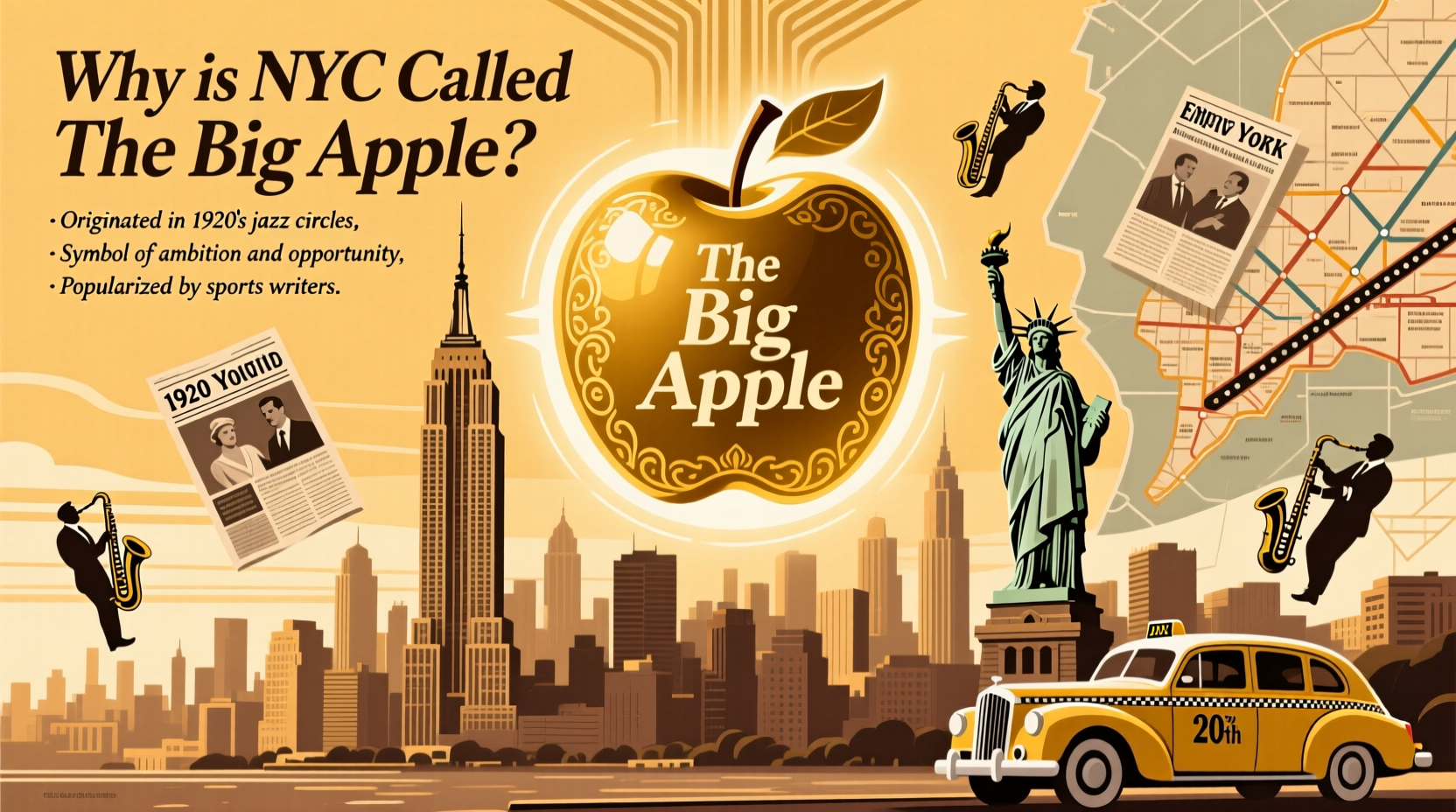
The earliest known use of “the Big Apple” in reference to New York City dates back to the 1920s. It emerged not from Madison Avenue or Broadway marquees, but from the racetracks of northern New Jersey and the jazz clubs of Harlem.
John J. Fitz Gerald, a sports writer for the New York Morning Telegraph, is widely credited with popularizing the term. In a 1923 column titled “Around the Big Apple,” he wrote about horse racing at the Big Apple track in New Orleans—a misheard local nickname—but quickly began applying “Big Apple” metaphorically to New York itself.
Fitz Gerald explained that stable hands and jockeys from New Orleans referred to New York as “the Big Apple” because it represented the biggest prize in horse racing—the most prestigious tracks, the largest crowds, and the highest stakes. As he noted:
“The Big Apple. The dream of every lad who ever threw a leg over a thoroughbred and the goal of all horsemen. There's only one Big Apple. That's New York.”
This usage reflected a broader metaphor: in any competitive field, “the apple” stood for the ultimate reward. For jockeys, winning in New York was like biting into the juiciest fruit on the tree.
Cultural Spread: From Racing to Jazz and Beyond
By the mid-1920s, the term had migrated beyond the racetrack. Musicians touring the country began using “playing the Big Apple” to mean performing in New York City, particularly Harlem’s vibrant jazz scene. For African American jazz artists, landing a gig in New York was a career milestone—the pinnacle of artistic recognition.
Dancer and bandleader Chick Webb, a central figure in the Harlem jazz movement, often spoke of coming to “the Big Apple” to make it big. The phrase gained traction among Black performers who saw New York as the center of innovation, opportunity, and cultural influence.
Despite this underground popularity, “the Big Apple” faded from mainstream use by the 1950s. By then, New Yorkers were more likely to call their city “Gotham” or simply “the city.” The nickname seemed destined to remain a nostalgic footnote—until a deliberate campaign revived it decades later.
Revival and Rebranding: The 1970s Tourism Campaign
In the early 1970s, New York City faced a crisis. Crime rates soared, the fiscal crisis loomed, and the city’s image was deteriorating nationally and internationally. Tourism was declining, and civic pride was waning.
To combat this, the New York Convention and Visitors Bureau launched a bold rebranding initiative. They needed a fresh, upbeat, and uniquely New York slogan. Enter travel agent Charles Gillett, who rediscovered Fitz Gerald’s columns while researching local expressions.
Gillett proposed reviving “the Big Apple” as a tourism brand. It was catchy, nostalgic, and carried connotations of aspiration and abundance. In 1971, the bureau officially adopted the phrase, launching a campaign with posters, buttons, and ads declaring, “I Love NY” and “Visit the Big Apple.”
The timing was perfect. The public responded warmly to the retro-cool nickname. It evoked a sense of fun and possibility, contrasting sharply with the city’s gritty reputation. Musicians, advertisers, and media personalities embraced it. Even the NYPD adopted the term, adding “The Big Apple” to officers’ shoulder patches in 1976.
A Timeline of the Big Apple: Key Moments
The evolution of “the Big Apple” spans nearly a century. Here’s a concise timeline highlighting pivotal moments:
- 1921: John J. Fitz Gerald first hears the term used by stable hands in New Orleans.
- 1923: Fitz Gerald publishes his first “Around the Big Apple” column, applying the term to NYC horse racing.
- 1920s–1940s: Jazz musicians adopt the phrase to describe performing in New York.
- 1930s: “The Big Apple” appears in song lyrics and jazz recordings, including a tune by Cab Calloway.
- 1950s–60s: The term falls out of common use, surviving mainly in historical references.
- 1971: The New York Convention and Visitors Bureau relaunches “the Big Apple” as a tourism brand.
- 1976: The NYPD begins using “the Big Apple” on uniform patches.
- 1997: The city installs a bronze sculpture titled “Big Apple Corner” at West 54th Street and Broadway, honoring Fitz Gerald.
What Does “The Big Apple” Really Mean?
Beyond its literal oddity—why an apple?—the nickname carries layered meanings:
- Opportunity: Like a prized fruit hanging within reach, New York represents the chance to succeed against the odds.
- Prestige: Being “in the Big Apple” implies you’ve arrived at the top tier of your field, whether in arts, business, or sports.
- Energy: The city’s relentless pace and constant motion mirror the vibrancy associated with the phrase.
- Inclusivity: Unlike elitist nicknames such as “Empire City,” “the Big Apple” feels democratic—available to anyone willing to take a bite.
As linguist William Safire observed:
“'The Big Apple' succeeded because it was both folksy and fierce—a nickname that could be worn with pride by cabbies and CEOs alike.” — William Safire, New York Times Magazine
Common Misconceptions About the Name
Over time, several myths have emerged about the origin of “the Big Apple.” Let’s clarify them:
| Misconception | Reality |
|---|---|
| The name comes from Dutch settlers (New Amsterdam = apple orchards) | No historical evidence supports this; the apple connection didn’t emerge until the 20th century. |
| It originated with the Beatles or 1960s pop culture | The term predates the British Invasion by four decades. |
| “Apple” refers to the shape of Manhattan Island | Pure speculation; no cartographic or linguistic basis. |
| It was always a widely used nickname | It was obscure for decades and only became mainstream after the 1970s campaign. |
Why the Nickname Endures: Cultural Impact Today
Today, “the Big Apple” is more than a slogan—it’s embedded in the city’s identity. Schools, businesses, and nonprofits use it in their names. The New York Knicks’ mascot is named “Bernie the Bull,” but fans still chant “This is the Big Apple!”
The term has also gone global. Travelers from Tokyo to Buenos Aires know what “going to the Big Apple” means. It transcends geography, symbolizing urban ambition and cultural magnetism.
Moreover, the story of its revival serves as a case study in successful rebranding. A struggling city reclaimed a forgotten phrase and turned it into a beacon of hope and excitement.
Mini Case Study: The Power of a Name Change
In 1972, a small travel agency in Cleveland, Ohio, struggled to attract clients interested in New York trips. After incorporating “Visit the Big Apple” into its marketing—using vintage-style posters and jazz-themed brochures—bookings increased by 38% within six months. Customers reported feeling more intrigued and emotionally connected to the destination. The agency owner later said, “We weren’t selling tickets—we were selling a dream. And ‘the Big Apple’ made that dream feel real.”
FAQ: Common Questions About the Big Apple
Is “the Big Apple” used by New Yorkers themselves?
Yes, though often with irony or affection. Locals may roll their eyes at tourist t-shirts but will still say “I’m heading to the Big Apple” when returning home from a trip.
Are there other “big apples” in the U.S.?
Yes—cities like Boise, Idaho, and New Orleans have claimed the title locally, but none have achieved the cultural penetration of New York’s version.
Why not “the Big Orange” or “the Big Banana”?
“Apple” worked because it was unexpected, memorable, and carried positive rural connotations (freshness, health, temptation). It created a poetic contrast with the urban jungle.
How to Embrace the Spirit of the Big Apple
Understanding the nickname isn’t just trivia—it’s an invitation to engage with New York’s spirit. Whether you live there or visit, here’s how to embody the essence of the Big Apple:
- Aim high—tackle ambitious goals as if they’re worth the biggest prize.
- Seek out cultural hotspots, from underground music venues to neighborhood food markets.
- Support local stories—the people who give the city its soul.
- Use the term respectfully, recognizing its roots in Black and working-class communities.
Conclusion: Take a Bite
The story of why NYC is called the Big Apple is ultimately about reinvention and resilience. What began as slang among racetrack workers grew into a symbol of excellence, aspiration, and urban vitality. It reminds us that cities, like people, can redefine themselves—not by erasing the past, but by reclaiming it with creativity and confidence.
So the next time you hear “the Big Apple,” remember: it’s not just a nickname. It’s a legacy of dreams pursued, stages earned, and victories celebrated under the glow of city lights.




 浙公网安备
33010002000092号
浙公网安备
33010002000092号 浙B2-20120091-4
Comments
No comments yet. Why don't you start the discussion?