
The Wano Country arc of *One Piece* has been hailed as one of the most visually striking and narratively intense sagas in the long-running anime’s history. Fans immediately noticed a dramatic shift in animation quality, character design, and overall aesthetic. The once-familiar 2D hand-drawn style gave way to something bolder—more detailed, more dynamic, and unmistakably cinematic. But why did the animation style change so drastically in the Wano arc? This transformation wasn’t accidental or sudden; it was the result of years of evolving production techniques, increased budget allocation, and a deliberate creative decision to elevate the series during its climactic phases.
Eiichiro Oda, the creator of *One Piece*, has long envisioned Wano as a pivotal arc—one that would bring together decades of lore, character development, and world-building. To match the scale of this narrative turning point, the animation studio, Toei Animation, partnered with MAPPA and other top-tier studios to push the boundaries of what a weekly shonen anime could achieve visually. The result is a fusion of traditional animation and modern digital enhancements that redefined the look and feel of *One Piece*.
The Artistic Shift: From Weekly Constraints to Cinematic Ambition
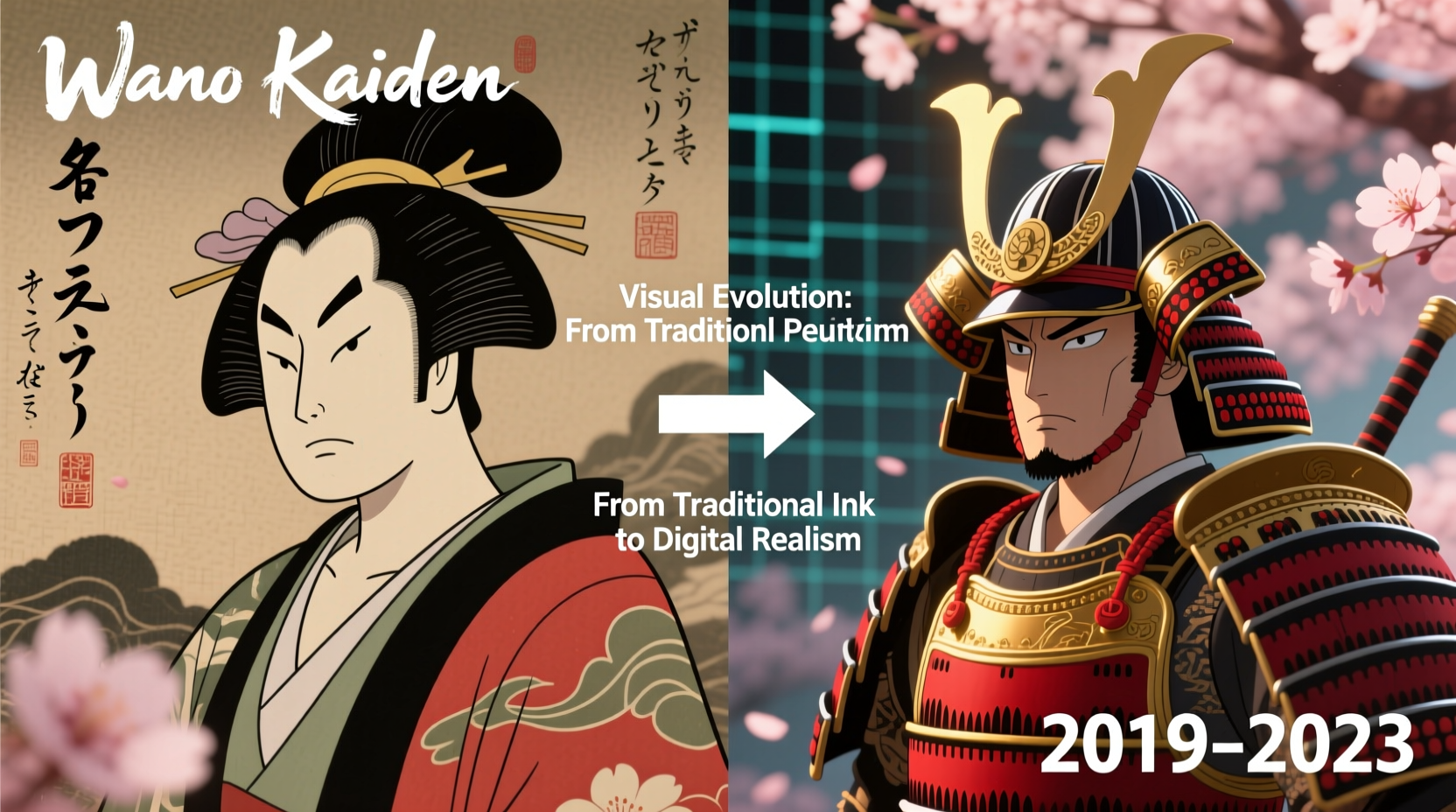
For much of its run, *One Piece* operated under tight production schedules typical of weekly anime. Episodes were often animated on limited budgets, relying on recycled frames, minimal motion, and stylized shortcuts to maintain consistency. While beloved for its charm and storytelling, the animation was frequently criticized for being inconsistent or overly static during non-climax moments.
By the time the Wano arc began airing in 2019, several factors had shifted. Streaming platforms like Crunchyroll and Hulu increased global demand and revenue, allowing Toei to invest more in key arcs. Additionally, Oda himself became more directly involved in supervising animation decisions, especially for major battles and story beats. He pushed for a more historically grounded aesthetic inspired by Edo-period Japan, which required intricate costume design, culturally accurate architecture, and choreographed fight sequences rooted in samurai traditions.
This new direction demanded a higher level of detail than previous arcs. As a result, animators adopted a hybrid approach: combining traditional 2D animation with 3D backgrounds, dynamic camera angles, and enhanced lighting effects. The use of digital compositing allowed for layered depth, making scenes feel more immersive. For example, the Onigashima raid featured sweeping overhead shots, simulated tracking movements, and complex crowd animations—elements rarely seen in earlier seasons.
Animation Studios and Collaborative Innovation
A critical factor behind the visual upgrade was the expanded network of animation studios involved. While Toei remained the lead, they outsourced key episodes and sequences to specialized studios known for high-quality action animation. Studio MIR (renowned for *The Legend of Korra*) and MAPPA (*Jujutsu Kaisen*, *Attack on Titan: Final Season*) contributed to pivotal fight scenes, bringing their expertise in fluid motion and expressive character acting.
This collaborative model allowed for what fans call “movie-quality” animation within a TV episode format. Take, for instance, Zoro’s duel against King on Onigashima. The sequence features rapid cuts, realistic sword physics, and environmental interaction—such as wind-blown flames and debris—that reflect a level of polish previously reserved for theatrical releases.
Moreover, the involvement of guest animators—sometimes referred to as “sakuga” artists—added bursts of exceptional frame-by-frame animation. These specialists are often credited individually during credits, a rare practice in mainstream anime, signaling a new era of recognition for animation talent.
Design Philosophy: Blending Tradition with Fantasy
The Wano arc introduced a unique challenge: grounding a fantastical world in real-world cultural aesthetics. Oda based Wano on feudal Japan but infused it with exaggerated *One Piece* flair—giant beasts, supernatural powers, and flamboyant fashion. Translating this duality into animation required a careful balance between historical realism and cartoonish exaggeration.
Character designs became more elaborate. Outfits now feature authentic kimono patterns, armor plating inspired by actual samurai gear, and hairstyles reflecting Edo-era customs. Yet, these elements coexist with vibrant colors, super-deformed expressions, and exaggerated proportions—hallmarks of the series’ original style.
To manage this contrast, the art team implemented a tiered visual hierarchy:
- Realism in stills: Backgrounds, architecture, and costumes are rendered with meticulous detail.
- Exaggeration in motion: Action scenes amplify speed lines, impact frames, and facial distortions for dramatic effect.
- Symbolic color grading: Warm golds and reds dominate celebratory scenes, while cold blues and greys underscore tension and loss.
“Wano was never just another island. It was meant to be a visual and thematic climax—to show how far we’ve come, not just in story, but in craft.” — Eiichiro Oda, in a 2021 Shueisha interview
Technological Advancements Behind the Scenes
Beyond staffing and artistic direction, technological upgrades played a crucial role. The transition from analog cel animation to fully digital pipelines enabled greater flexibility in post-production. Software like RETAS, Adobe After Effects, and Toon Boom Harmony allowed animators to layer effects, adjust timing, and simulate depth-of-field without costly reshoots.
One notable innovation was the use of 3D modeling for complex environments. Onigashima, the floating skull-shaped castle, was constructed using 3D assets that could be rotated and lit dynamically. This eliminated the need for multiple hand-drawn perspectives and gave directors freedom to experiment with unconventional camera angles—something impossible under traditional 2D constraints.
Additionally, digital ink-and-paint systems improved line consistency and color accuracy. Characters no longer suffered from hue shifts between episodes, and shading became more nuanced, with gradients replacing flat fills in many close-ups.
Key Technological Upgrades in Wano Production
| Technology | Purpose | Impact on Animation |
|---|---|---|
| Digital Compositing | Layering backgrounds, characters, and effects | Created cinematic depth and smoother transitions |
| 3D Environment Modeling | Rendering Onigashima and Wano cities | Enabled dynamic camera movement and scale |
| HD Resolution Pipeline | Full 1080p output with no upscaling | Sharper visuals suitable for large screens |
| Motion Capture (limited) | Guiding complex fight choreography | Improved realism in weapon-based combat |
Case Study: Episode 957 – The Raid Begins
Episode 957, titled “The Nine Red Scabbards vs. The All-Stars,” serves as a prime example of the Wano arc’s visual evolution. This episode marked the start of the Onigashima assault and featured some of the most praised animation in the series’ history.
From the opening shot—a slow zoom through storm clouds onto the fortress—the episode establishes a tone of epic grandeur. The sequence where the Straw Hats and allies descend via gliders uses parallax scrolling and particle effects to simulate wind resistance and rain. Each character’s entrance is choreographed like a film introduction, with personalized camera work and sound cues.
The battle between the Scabbards and the All-Stars showcases a blend of traditional keyframe animation and digital enhancement. Kin’emon’s fire-based attacks interact realistically with smoke and lighting, while Denjiro’s illusions employ glitch-like visual distortions reminiscent of digital artifacts. These touches go beyond mere spectacle—they reinforce the narrative theme of legacy versus innovation.
Fans noted that the episode contained over 30% more unique drawings than a standard *One Piece* episode, with significantly reduced reuse of animation cycles. This investment paid off: the episode received widespread acclaim and was later included in fan-voted “Top Anime Battles of the Decade” lists.
Why This Evolution Matters Beyond Aesthetics
The visual changes in the Wano arc are not merely cosmetic—they reflect a maturation of the medium and the franchise. As *One Piece* approaches its final saga, the creators are leveraging every available tool to deliver an emotionally resonant and visually unforgettable experience.
More importantly, this evolution sets a precedent for long-running anime. It proves that even after 1,000+ episodes, a series can reinvent itself without losing its identity. The core humor, heart, and exaggerated expressions remain intact, but now supported by a richer visual language.
It also signals a shift in industry standards. With streaming revenue enabling higher budgets, studios are beginning to treat flagship arcs like mini-series or limited events rather than disposable weekly content. This could pave the way for other long-term anime to receive similar treatment in their concluding chapters.
Actionable Checklist: How to Appreciate Wano’s Visual Depth
- Watch in HD: Use a high-resolution platform to catch fine details in costumes and backgrounds.
- Pause during action scenes: Observe individual frames for hidden symbolism and animation flourishes.
- Compare pre- and post-timeskip styles: Note how character proportions and shading have evolved.
- Research Japanese influences: Learn about ukiyo-e, kabuki theater, and samurai history to deepen context.
- Follow animator credits: Look up names in the ending roll to discover rising talents in the industry.
Frequently Asked Questions
Did the entire Wano arc have better animation?
No—while many episodes feature elevated animation, there are still filler or recap episodes with standard production values. The highest quality is typically reserved for major battles and plot milestones, such as the Onigashima raid or Luffy vs. Kaido fights.
Is the new style permanent for One Piece?
Elements of the Wano visual language—like improved lighting, sharper lines, and dynamic camera work—are likely to persist. However, the extreme levels of detail may vary depending on budget and narrative importance in future arcs.
Why didn’t earlier arcs look like this?
Earlier seasons were produced under tighter deadlines and lower budgets. Additionally, the technology and collaborative infrastructure needed for such animation weren’t as developed. Wano benefited from two decades of industry progress and growing international support for anime.
Conclusion: A New Chapter in Anime Storytelling
The visual evolution of *One Piece* in the Wano arc represents more than a technical upgrade—it’s a testament to the power of sustained creative vision. What began as a modestly animated adventure has grown into a multimedia phenomenon capable of rivaling blockbuster productions in scope and artistry.
As the final saga approaches, fans can expect further refinements in animation, storytelling, and emotional depth. The Wano arc set a new benchmark, proving that longevity doesn’t mean stagnation. Instead, it can be a foundation for reinvention.




 浙公网安备
33010002000092号
浙公网安备
33010002000092号 浙B2-20120091-4
Comments
No comments yet. Why don't you start the discussion?