
At over 1,000 chapters in the manga and more than 1,000 episodes in the anime, One Piece stands as one of the longest-running and most expansive serialized stories in history. To some, its length feels daunting; to others, it’s a testament to the depth and richness of its world. But why *is* One Piece so long? The answer lies not in filler or inefficiency, but in a deliberate, masterful approach to storytelling structure and pacing that prioritizes immersion, character development, and thematic continuity.
Eiichiro Oda, the creator of One Piece, has crafted a narrative that unfolds like an oceanic journey—vast, unpredictable, and layered. Unlike many series that follow a linear hero’s journey with compressed timelines, One Piece embraces slow-burn storytelling, episodic exploration, and cumulative worldbuilding. This article breaks down the structural and pacing decisions that explain its remarkable length while maintaining fan engagement across decades.
The Narrative Architecture: A Journey-Based Structure
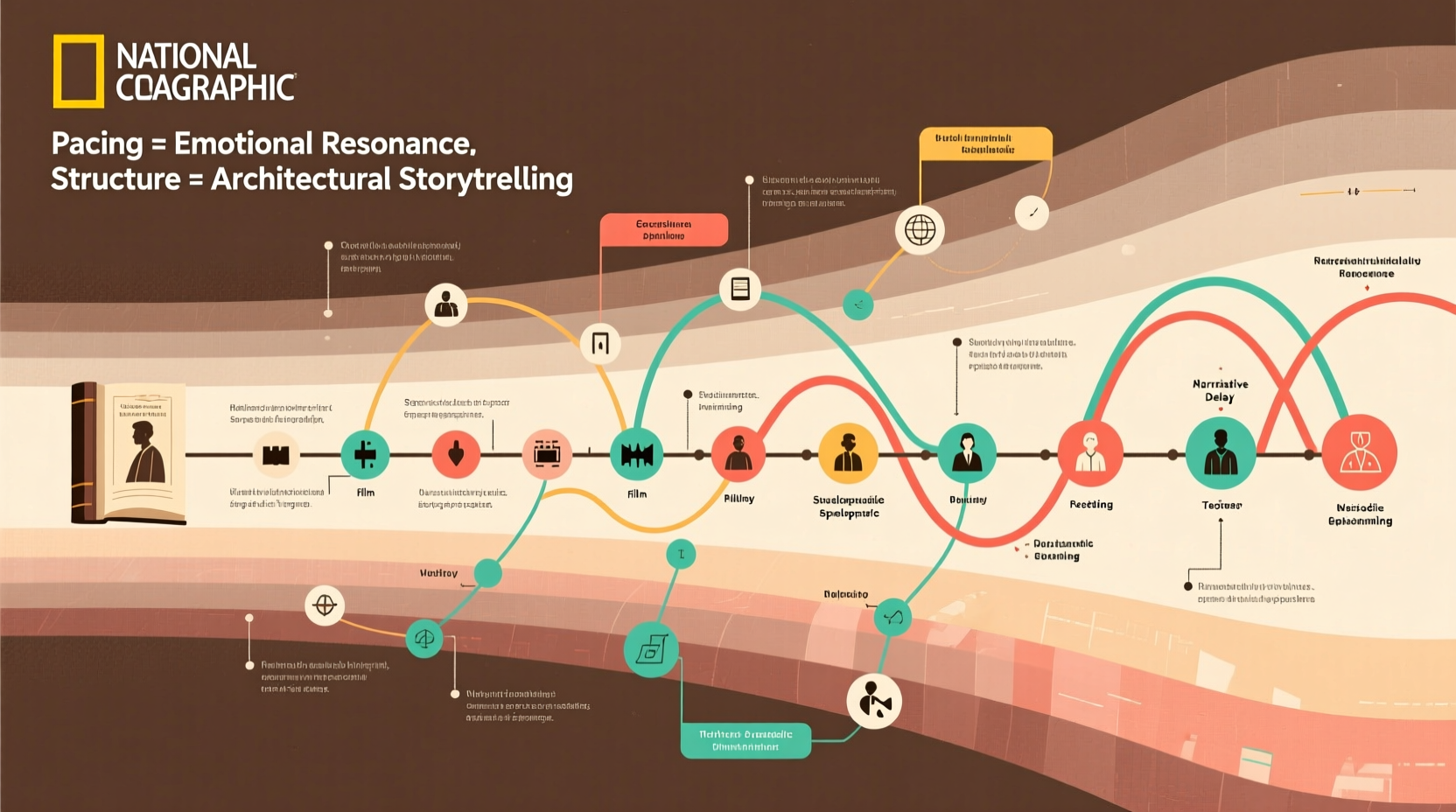
Most traditional stories follow a three-act structure: setup, confrontation, resolution. One Piece, however, operates on a modular, saga-based model. Each island or region the Straw Hat Pirates visit functions as a self-contained story arc, often lasting 10–30 chapters (or more). These arcs are grouped into larger sagas—East Blue, Alabasta, Water 7, Marineford, Wano—which serve as major turning points in the overarching plot.
This structure allows for flexibility. Instead of rushing from point A to B, the narrative meanders through side stories, character backstories, and cultural worldbuilding. For example, the Dressrosa arc spans over 150 chapters—not because of padding, but because it weaves together gladiator battles, underground trafficking, revolutionary politics, and personal vendettas involving multiple characters.
Oda treats each arc like a novel within a larger epic. This “episodic epic” format enables deep dives into themes like freedom, justice, and legacy without sacrificing momentum. The result? A story that grows organically rather than being forced toward a finish line.
Pacing Philosophy: Slow Burn With Purpose
In modern media, fast pacing is often praised. Quick cuts, rapid dialogue, and constant action dominate streaming shows. One Piece defies this trend. Its pacing is intentionally slow, using extended sequences to build tension, establish stakes, and deepen emotional investment.
Consider the Enies Lobby arc. The Straw Hats must cross a bridge under relentless attack to rescue their comrade Nico Robin. What could have been a five-minute scene in another series takes nearly 20 chapters. Why? Because every panel emphasizes exhaustion, determination, and unity. Readers feel the weight of each step. This isn’t wasted time—it’s experiential storytelling.
Oda uses time dilation strategically. Moments of silence, lingering close-ups on faces, and extended fight choreography allow readers to absorb the gravity of events. The battle between Luffy and Katakuri lasts over 100 chapters, not due to filler, but because it explores Luffy’s growth, his fear of failure, and his commitment to surpassing his limits.
This kind of pacing fosters attachment. Fans don’t just watch Luffy win—they live through his struggle.
Worldbuilding Through Pacing
Another reason for the series’ length is its commitment to worldbuilding. Unlike franchises that introduce lore via exposition dumps, One Piece reveals its universe gradually. Every island introduces new cultures, histories, and political systems. Fish-Man Island explores racial segregation and underwater ecology. Wano Country draws from feudal Japan and critiques isolationism. These aren’t backdrop details—they’re central to the story.
Oda spends dozens of chapters establishing the rules, values, and conflicts of each locale before advancing the main plot. This immersive technique makes the world feel real and lived-in. It also allows for social commentary woven naturally into the narrative.
Character-Centric Storytelling
One of the core reasons One Piece takes so long is its dedication to character development. Each member of the Straw Hat crew receives extensive backstory arcs: Zoro’s rivalry with Mihawk, Nami’s enslavement by Arlong, Sanji’s escape from Germa, and Brook’s century-long wait on a ghost ship. These aren’t brief flashbacks—they are full-fledged sagas.
Moreover, even secondary characters like Crocodile, Boa Hancock, and Sabo are given complex motivations and emotional depth. Oda believes that “everyone is the protagonist of their own story.” This philosophy expands the narrative scope dramatically, turning antagonists into tragic figures and allies into fully realized individuals.
| Character | Backstory Arc Length | Key Themes Explored |
|---|---|---|
| Nami | ~30 chapters | Trauma, freedom, betrayal |
| Sabo | ~50 chapters | Loss, revolution, brotherhood |
| Brook | ~40 chapters | Loneliness, mortality, music |
| Law | ~60 chapters | Vengeance, illness, redemption |
This level of attention ensures that when characters make choices—whether joining the crew or sacrificing themselves—the impact resonates deeply. Rushing these arcs would undermine their emotional power.
“We don’t need shortcuts. We need moments that matter.” — Eiichiro Oda, in a 2017 Shonen Jump interview
The Role of Filler and Anime Expansion
A common misconception is that the anime’s length is solely responsible for One Piece’s perceived bloat. While the anime does include filler arcs (such as the Rainbow Mist or Foxy’s Return), they account for roughly 20% of total episodes. The manga itself exceeds 1000 chapters—a volume comparable to classic epics like The Mahabharata or The Odyssey in serialized form.
That said, some anime-only content enhances the experience. The Strong World movie and its accompanying filler arc, for instance, explore themes of nature vs. greed that align with Oda’s vision. Even non-canon episodes often maintain tone and character integrity, serving as breathing room between intense sagas.
Still, the core reason for length remains rooted in the manga’s structure. Oda writes with meticulous planning—each arc foreshadowed years in advance. The revelation of Joy Boy, the Void Century, and the Ancient Weapons weren’t last-minute ideas but seeds planted in early chapters. This long-term storytelling requires space to unfold.
Mini Case Study: The Time Skip
After the Sabaody Archipelago arc, the Straw Hats are separated and defeated. To reflect their growth, Oda introduced a two-year time skip. Instead of showing training montages in real time, he fast-forwarded the narrative, returning with stronger, more skilled versions of each character.
This decision was controversial at the time—fans missed seeing the process—but it preserved pacing efficiency while allowing dramatic transformation. Post-time-skip, characters didn’t just grow stronger; they matured emotionally. Zoro trained under Dracule Mihawk, Sanji studied under Zeff’s rival, and Luffy endured brutal mentorship under Rayleigh.
The time skip exemplifies Oda’s control over pacing: knowing when to compress time and when to stretch it for maximum effect.
Thematic Depth and Serialized Mythmaking
One Piece is not just a pirate adventure—it’s a myth in the making. Oda constructs a mythology around the Void Century, the Will of D., and the true history of the world. Like ancient epics, it uses recurring symbols (the wind, laughter, hats), prophecies, and legendary figures (Joy Boy, Gol D. Roger) to create a sense of grandeur.
This mythological layer unfolds slowly. Clues are scattered across arcs, sometimes years apart. The meaning of “D.” wasn’t explored until Volume 50. The identity of the Ancient Kingdom emerged only recently. This delayed revelation keeps readers engaged over the long term, turning fandom into detective work.
Compare this to Western superhero comics, where retcons and reboots reset continuity. One Piece maintains strict narrative consistency. Every joke, throwaway line, or background detail can become significant later. This “Chekhov’s Gun” approach rewards long-term readers and justifies the series’ length as necessary for payoff.
Checklist: How One Piece Maintains Engagement Over Time
- Introduce a central mystery (the Void Century) that unfolds over decades
- Give every major character a transformative backstory arc
- Use island-hopping to vary tone, setting, and conflict
- Balance high-stakes battles with comedic and heartfelt downtime
- Plant subtle foreshadowing that pays off years later
- Maintain consistent internal logic and continuity
- Allow characters to fail, lose, and grow from defeat
Frequently Asked Questions
Is One Piece too long?
No—its length is a feature, not a bug. The series uses its runtime to develop characters, themes, and worldbuilding in ways shorter stories cannot. While it may feel overwhelming, each arc serves a purpose in the larger narrative tapestry.
How much of One Piece is filler?
Approximately 20% of the anime consists of filler content. The manga, however, is entirely canonical. Even anime filler arcs are often well-written and tonally consistent, though they don’t advance the main plot.
Will One Piece ever end?
Yes. Eiichiro Oda has stated that the manga will conclude within the next few years. He has mapped out the final arcs and confirmed that the ending is already written. The journey is long, but it has a destination.
Conclusion: Embracing the Long Voyage
The length of One Piece is not a flaw—it’s a reflection of its ambition. In an age of disposable content and binge-and-forget storytelling, One Piece dares to be patient. It builds a world brick by brick, character by character, chapter by chapter. Its pacing isn’t slow because it lacks direction; it’s deliberate because it values depth over speed.
Understanding why One Piece is so long means recognizing that great stories don’t always rush to the end. Sometimes, the journey *is* the treasure. From the quiet moments on the Thousand Sunny to the thunderous clashes at Marineford, every chapter adds to a legacy that will endure far beyond its final page.




 浙公网安备
33010002000092号
浙公网安备
33010002000092号 浙B2-20120091-4
Comments
No comments yet. Why don't you start the discussion?