
Crows are among the most intelligent birds in the animal kingdom—capable of problem-solving, tool use, and even recognizing human faces. Their striking black plumage and complex social behaviors make them fascinating to observe. However, despite growing interest in keeping crows as pets, it is largely illegal to own one in the United States and many other countries. This restriction stems from a combination of federal protections, ecological concerns, and ethical considerations designed to preserve native wildlife and prevent exploitation.
Understanding the legal and moral framework behind these restrictions helps clarify why well-meaning individuals cannot legally keep crows as companions—even if they believe they can provide excellent care.
Federal Protections: The Migratory Bird Treaty Act
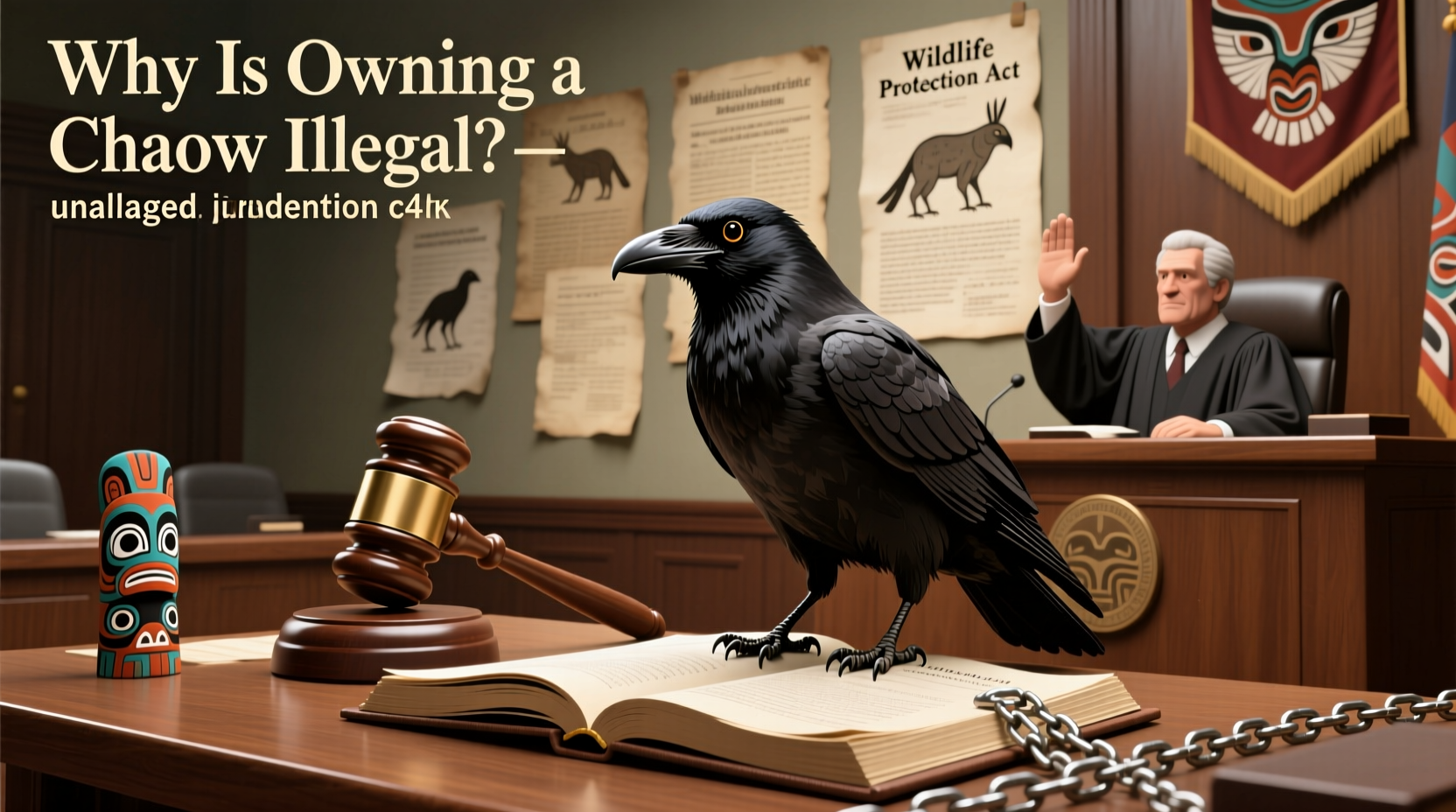
The primary reason owning a crow is illegal in the U.S. lies in the **Migratory Bird Treaty Act (MBTA) of 1918**. This landmark legislation protects over 1,000 species of native birds, including all corvids—crows, ravens, jays, and magpies. Under the MBTA, it is unlawful to capture, possess, sell, transport, or harm any migratory bird, its eggs, nest, or feathers without a federal permit.
The law was enacted in response to widespread commercial hunting and feather trade that decimated bird populations in the early 20th century. Today, it remains a cornerstone of U.S. wildlife conservation policy.
“Wildlife belongs in the wild. The MBTA exists not just to protect birds from harm, but to maintain ecological balance and biodiversity.” — Dr. Rebecca Foster, Wildlife Biologist, U.S. Fish and Wildlife Service
Violating the MBTA can result in severe penalties: fines up to $15,000 and imprisonment for up to six months per offense. These strict consequences underscore the seriousness with which the government treats unauthorized possession of native birds.
State and Local Regulations Add Further Restrictions
In addition to federal law, most states have their own regulations reinforcing the prohibition on keeping crows as pets. For example:
- In California, the Department of Fish and Wildlife explicitly bans possession of native wildlife without rehabilitation permits.
- Texas classifies crows as non-game protected species, making private ownership illegal.
- New York requires special wildlife rehabilitator licensing even for temporary care.
Even in rare cases where a crow is injured and found by a civilian, only licensed wildlife rehabilitators are allowed to provide care—with the goal of eventual release back into the wild. Permanent captivity is not permitted unless under exceptional circumstances like severe disability preventing survival in nature.
Ecological and Ethical Considerations
Beyond legality, there are strong ecological and ethical reasons discouraging crow ownership. Crows play vital roles in ecosystems:
- They help control insect and rodent populations.
- They act as scavengers, cleaning up carrion and reducing disease spread.
- They contribute to seed dispersal through foraging behavior.
Removing crows from the wild disrupts local food webs and diminishes genetic diversity. Even captive-bred crows (which are extremely rare due to breeding restrictions) lack the natural behaviors needed for successful reintroduction.
Moreover, crows are highly social and intelligent animals. In the wild, they live in complex family groups and communicate using nuanced vocalizations. Confining them to cages or homes often leads to psychological distress, manifesting as feather plucking, repetitive movements, or aggression.
Mini Case Study: The Oregon Crow Incident
In 2020, a man in rural Oregon took in a young crow he believed was orphaned. He raised it at home for several months, posting videos online of the bird mimicking human speech and playing games. While initially praised for his compassion, authorities were alerted after the footage went viral. The U.S. Fish and Wildlife Service intervened, citing violations of the MBTA. The crow was transferred to a licensed avian sanctuary, but due to imprinting on humans, it could not be released. The owner faced a $2,500 fine and was required to complete wildlife education training.
This case illustrates how good intentions can still lead to legal consequences—and why enforcement prioritizes long-term species protection over individual pet ownership.
What About Other Countries?
Laws vary globally, but many nations follow similar principles. In the UK, crows are protected under the Wildlife and Countryside Act 1981. In Canada, they fall under the Migratory Birds Convention Act. Australia prohibits keeping native birds without permits, regardless of species.
A few countries allow ownership under strict licensing—often limited to research, education, or falconry—but these are exceptions requiring rigorous oversight.
Legal Alternatives and Responsible Engagement
While owning a crow is off-limits, there are meaningful ways to engage with these remarkable birds ethically and legally.
| Action | Legal & Ethical? | Notes |
|---|---|---|
| Feeding crows in your yard | Yes | Provide water and safe foods like peanuts (unsalted) |
| Photographing wild crows | Yes | Avoid disturbing nests or nesting areas |
| Volunteering at a wildlife rehab center | Yes | Hands-on experience under supervision |
| Keeping a non-native bird (e.g., mynah) | Varies | Check local exotic pet laws; not a crow substitute |
| Raising a wild crow at home | No | Illegal and harmful to the bird’s development |
Step-by-Step Guide: What to Do If You Find a Young Crow
- Assess the situation: A fledgling crow on the ground may still be under parental care. Observe from a distance for 1–2 hours.
- Do not touch: Human scent does not cause abandonment, but handling increases stress and risk of disease.
- Keep pets indoors: Protect the bird from cats or dogs while parents feed it.
- Contact a rehabilitator: If the bird is injured, bleeding, or alone overnight, call a licensed professional.
- Follow instructions: Provide details about location and condition. Never feed or give water unless directed.
FAQ
Can I get a permit to own a crow?
Federal permits under the MBTA are typically granted only to institutions such as zoos, research facilities, or educational programs. Individual pet ownership is not approved. State-level permits are similarly restricted to wildlife professionals.
Are crows dangerous or aggressive?
Crows are generally not dangerous, though they may dive at perceived threats during nesting season (late spring). This behavior is protective, not malicious. They rarely cause injury and usually stop once the nesting period ends.
Why can I own parrots but not crows?
Parrots are non-native species not covered by the MBTA. Crows are native and ecologically integrated, so they receive higher legal protection. Additionally, parrots have been domesticated in captivity for generations, whereas crows remain fully wild animals unsuited to domestic life.
Conclusion: Respecting Nature’s Design
Crows captivate us with their intelligence, adaptability, and personality. But their wild nature is precisely why they must remain free. Legal protections exist not to frustrate curiosity, but to honor the role crows play in healthy ecosystems and to prevent exploitation under the guise of companionship.
Instead of seeking ownership, we can choose admiration from a distance—supporting conservation, creating bird-friendly spaces, and learning from these extraordinary creatures in their natural habitats.




 浙公网安备
33010002000092号
浙公网安备
33010002000092号 浙B2-20120091-4
Comments
No comments yet. Why don't you start the discussion?