
In an era defined by information overload and polarized media landscapes, finding a news source that balances accuracy, depth, and neutrality has become increasingly difficult. Among the few consistently rated as trustworthy, PBS NewsHour stands out. But what makes it so widely regarded as reliable? And how does it navigate issues of bias and public trust? This examination delves into the structural, editorial, and cultural factors that contribute to PBS NewsHour’s credibility—and how viewers can critically assess its reporting within the broader context of media bias.
A Legacy of Public Service Journalism
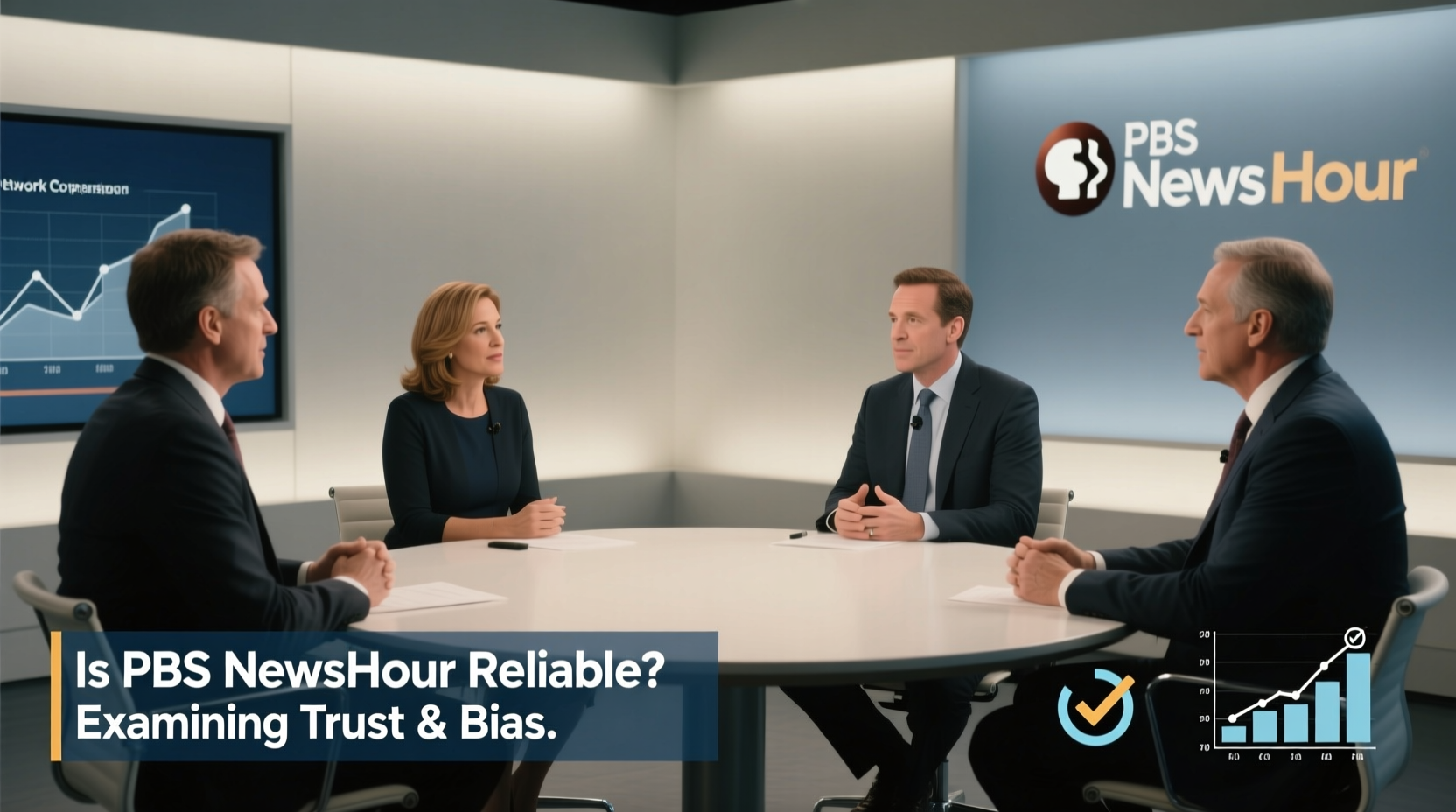
PBS NewsHour, originally launched in 1975 as *The Robert MacNeil Report* and later renamed *The MacNeil/Lehrer NewsHour*, was built on a foundation of in-depth, thoughtful journalism. Unlike commercial networks driven by ratings and advertising revenue, PBS operates as a nonprofit public broadcaster funded by viewer donations, corporate sponsors, and federal grants through the Corporation for Public Broadcasting. This financial model insulates it from many of the pressures that push other outlets toward sensationalism or partisan framing.
The program's long-form format—typically featuring extended interviews and deep-dive reports—allows journalists to explore complex issues without the time constraints common in cable news. This commitment to substance over speed fosters a reputation for thoroughness and accountability.
“PBS NewsHour doesn’t chase headlines; it explains them. That’s the difference between being first and being right.” — Dr. Kathleen Hall Jamieson, Director of the Annenberg Public Policy Center
Editorial Standards and Fact-Checking Rigor
One of the primary reasons PBS NewsHour is trusted is its adherence to strict editorial standards. The organization employs a multi-layered fact-checking process before any segment airs. Producers, reporters, and editors cross-reference sources, verify statistics, and ensure balanced representation of viewpoints—especially on contentious topics.
Transparency is another cornerstone. When corrections are needed, they are published promptly and clearly, often read aloud during broadcasts. This openness reinforces accountability and builds viewer confidence.
Understanding Bias: Structural vs. Perceived
No media outlet is entirely free of bias, but distinguishing between structural bias and perceived bias is essential. Structural bias refers to systemic tendencies in sourcing, framing, or selection of stories. Perceived bias often stems from audience expectations or political alignment.
Studies from organizations like Pew Research Center and Media Tenor Institute have analyzed PBS NewsHour’s coverage across political, economic, and social issues. These evaluations consistently place PBS among the most centrist and balanced major news programs in the U.S. For example, a 2020 Media Tenor report found that PBS displayed near-equal positive and negative sentiment toward both Democratic and Republican figures, unlike many cable networks with pronounced leanings.
However, some critics argue that PBS exhibits a \"liberal bias\" due to its focus on science, climate change, and social equity—topics often associated with progressive values. Yet this reflects a commitment to evidence-based reporting rather than ideological slant. Climate change, for instance, is covered extensively not because of political preference, but because of overwhelming scientific consensus.
Do’s and Don’ts of Evaluating Media Bias
| Do | Don't |
|---|---|
| Check sourcing diversity in reports | Dismiss a story because it challenges your beliefs |
| Compare coverage across multiple outlets | Assume neutrality means equal time for all sides (e.g., flat Earth vs. gravity) |
| Review correction policies and transparency | Rely solely on third-party labels like “left-wing” or “right-wing” |
| Consider funding models and ownership | Conflate tone or pacing with bias (calm delivery ≠ liberal) |
Case Study: Coverage of the 2020 Presidential Election
During the 2020 U.S. presidential election, PBS NewsHour faced intense scrutiny. With misinformation spreading rapidly online, the program took a deliberate approach: prioritizing verified results, contextualizing delays in vote counting, and directly addressing false claims about voter fraud.
In one notable segment, anchor Judy Woodruff interviewed a Trump campaign spokesperson and a nonpartisan election official back-to-back, allowing viewers to compare arguments grounded in evidence versus rhetoric. Rather than giving equal weight to unverified allegations, the broadcast emphasized factual accuracy—a decision praised by media analysts but criticized by some conservative viewers who felt underrepresented.
This case illustrates a central tension: striving for balance while upholding truth. PBS chose not to amplify baseless claims in the name of “fairness,” reinforcing its role as an educator rather than a platform for propaganda.
Steps to Critically Engage with PBS NewsHour (and Any News Source)
Trusting a news outlet doesn’t mean accepting everything uncritically. Here’s a step-by-step guide to engaging more thoughtfully with PBS NewsHour—or any reputable source:
- Watch the full segment: Avoid relying on clips or headlines, which can distort context.
- Identify the sources cited: Are they experts, officials, or anonymous? Is there diversity in perspectives?
- Cross-reference key claims: Use independent fact-checking sites like PolitiFact, FactCheck.org, or Reuters to verify data.
- Note language and framing: Does the narration use emotionally charged words or neutral descriptors?
- Check for corrections: Visit the PBS NewsHour website to see if updates or retractions were issued.
- Compare with other trusted outlets: See how NPR, BBC, or AP cover the same story.
Checklist: Assessing Reliability of Any News Program
- ✅ Transparent about funding and ownership
- ✅ Publishes corrections when errors occur
- ✅ Uses named, credible sources
- ✅ Provides context, not just breaking updates
- ✅ Avoids hyperbolic language and fear-based framing
- ✅ Offers diverse viewpoints based on relevance, not ideology
- ✅ Explains how conclusions were reached (methodology)
Frequently Asked Questions
Is PBS NewsHour government-run?
No. While PBS receives partial funding from federal appropriations via the Corporation for Public Broadcasting, it operates independently. Editorial decisions are made by journalists, not government officials. This separation is legally protected to preserve journalistic independence.
Why do some people think PBS is biased?
Perceptions of bias often arise when reporting contradicts personal beliefs. Because PBS emphasizes scientific consensus, institutional expertise, and policy analysis, audiences who distrust these institutions may interpret factual reporting as ideological. Additionally, compared to highly opinionated cable shows, PBS’s calm tone can be misread as aloofness or elitism.
How does PBS choose which stories to cover?
Story selection is guided by editorial judgment focused on significance, impact, and public interest. The team considers input from viewers, emerging data, and national developments. Unlike algorithm-driven platforms, human editors prioritize depth and educational value over engagement metrics.
Conclusion: Trust, But Verify—and Participate
PBS NewsHour earns its reputation for reliability through consistent adherence to journalistic principles: accuracy, transparency, fairness, and depth. Its nonprofit model, rigorous editing processes, and commitment to explaining complexity set it apart in a crowded media environment. However, no single source should be accepted without question—even the most trustworthy benefit from critical engagement.
As consumers of news, we share responsibility for maintaining a healthy information ecosystem. By applying analytical habits, seeking context, and supporting quality journalism through memberships or civic participation, we reinforce the value of trustworthy media. In doing so, we don’t just consume the news—we help shape a more informed society.




 浙公网安备
33010002000092号
浙公网安备
33010002000092号 浙B2-20120091-4
Comments
No comments yet. Why don't you start the discussion?