
When someone puts off writing a report until 3 a.m. the night before it’s due, or avoids starting a fitness routine despite genuine desire, the common assumption is simple: they’re lazy. But this label misrepresents what’s actually happening. Procrastination is rarely about lack of effort. It’s not a moral failing or a character flaw. Instead, it’s a complex psychological response rooted in emotion—specifically, in discomfort, fear, and the brain’s instinctive drive to protect itself from distress.
Understanding procrastination as an emotional regulation problem—not a time management one—changes everything. Once we shift our perspective from willpower to emotional intelligence, we can begin to address the real causes and develop strategies that work with human nature, not against it.
The Myth of Laziness
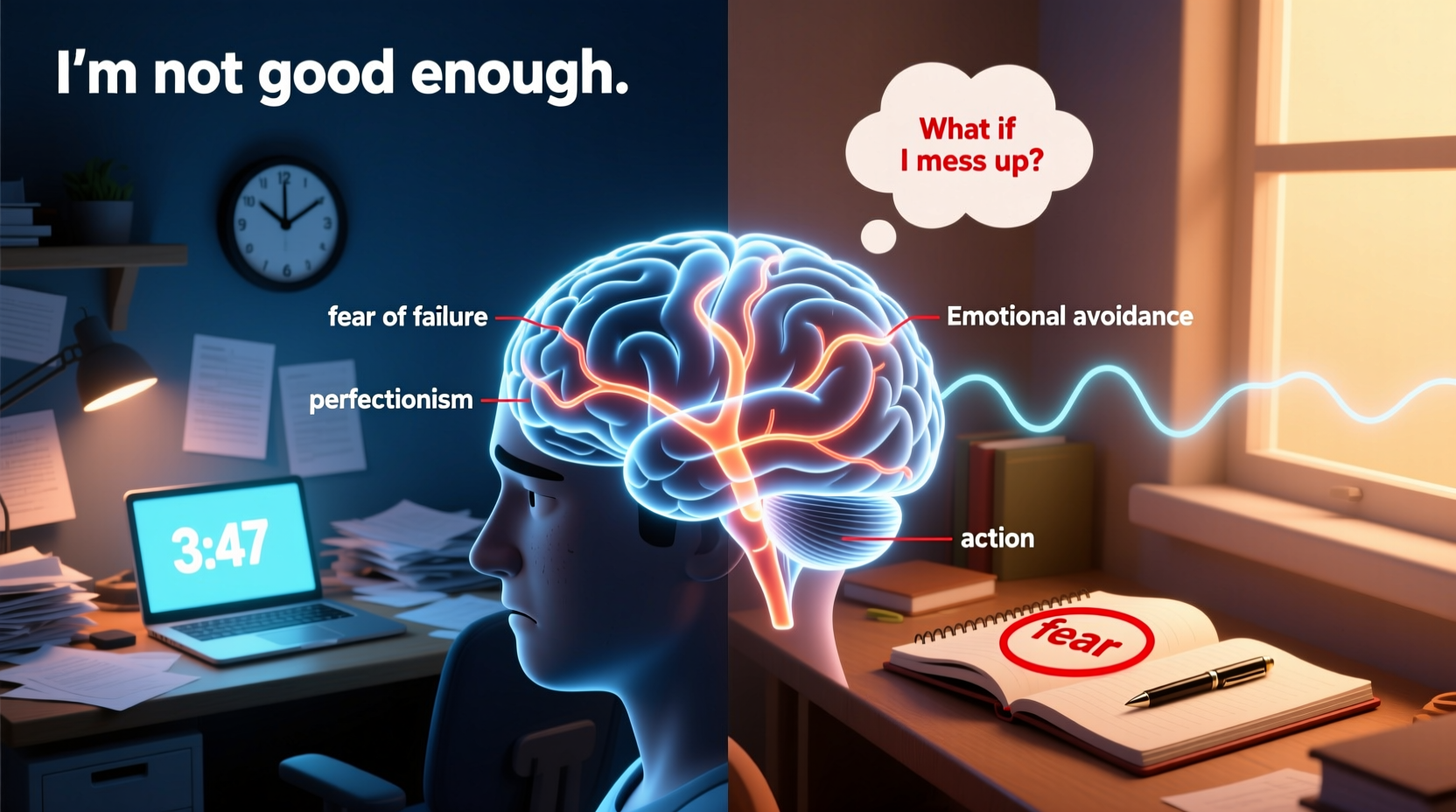
Laziness implies indifference—a lack of interest or motivation to act. A lazy person doesn’t care enough to move. But the chronic procrastinator often cares too much. They lie awake at night thinking about unfinished tasks, feel guilt over delayed responsibilities, and genuinely want to do better. This internal conflict reveals a key truth: procrastinators aren’t indifferent; they’re overwhelmed.
Unlike laziness, which involves passive inaction, procrastination is an active process of avoidance. People don’t just sit still—they clean their desk, scroll social media, reorganize files, or tackle low-priority tasks with unusual focus. These behaviors are distractions, not signs of apathy. They serve a psychological purpose: to temporarily relieve emotional discomfort.
The Emotional Roots of Delay
Psychological research increasingly shows that procrastination is less about time and more about mood. Dr. Piers Steel, author of The Procrastination Equation, identifies emotion regulation as the strongest predictor of procrastinatory behavior. When a task triggers negative emotions—such as anxiety, self-doubt, or boredom—the brain seeks immediate relief. Putting the task off provides that relief, reinforcing the habit through negative reinforcement.
Consider a student delaying work on a thesis. The project represents months of effort, high stakes, and potential judgment. The moment they sit down to write, they may feel inadequate, afraid their ideas aren’t good enough, or worried about criticism. To escape these feelings—even briefly—they open a browser tab and watch a video. The emotional pain fades, replaced by temporary comfort. The cycle repeats because the brain learns: avoiding the task = feeling better.
This isn’t weakness. It’s survival instinct misapplied in a modern context. Our brains evolved to avoid threats—real or perceived. A looming deadline may not be life-threatening, but emotionally, it can feel like one.
Fear of Failure and Perfectionism
One of the most powerful emotional triggers behind procrastination is perfectionism. Paradoxically, those who demand flawless performance from themselves are more likely to delay starting. The fear of producing subpar work becomes so intense that doing nothing feels safer than risking imperfection.
Perfectionists often tie their self-worth to outcomes. If the result isn’t excellent, they believe they’ve failed—not just the task, but as a person. This all-or-nothing thinking creates immense pressure, making initiation nearly impossible.
“Procrastination is an emotion regulation problem, not a time management problem.” — Dr. Tim Pychyl, Professor of Psychology and Procrastination Researcher
Task Aversion and Identity Conflict
Some tasks provoke resistance not because they’re difficult, but because they clash with how we see ourselves. Writing a sales pitch might feel “inauthentic” to someone who values honesty and humility. Filing taxes might trigger feelings of incompetence in someone who prides themselves on being capable. When a task threatens identity, the emotional cost of doing it can outweigh the practical benefit.
This form of procrastination is especially insidious because it’s invisible. The person may not even recognize the internal conflict. They only know they “can’t get motivated,” when in reality, their values are in tension with the action required.
In such cases, reframing the task can help. For example, instead of seeing a sales email as “pushy,” view it as “sharing valuable information with people who need it.” Aligning the action with personal values reduces emotional friction and makes progress possible.
The Role of Immediate vs. Future Rewards
The brain is wired to prioritize immediate rewards over future ones—a phenomenon known as temporal discounting. Eating a cookie now feels more satisfying than losing weight next month. Scrolling through memes offers instant dopamine; studying does not.
Tasks that offer delayed gratification (e.g., writing a novel, building a business, learning a language) are especially vulnerable to procrastination because the payoff is abstract and distant. Meanwhile, distractions provide tangible, immediate rewards. Without emotional strategies to bridge the gap, motivation collapses.
| Emotional Trigger | Typical Thought Pattern | Resulting Behavior |
|---|---|---|
| Fear of Failure | “If I try and fail, I’m a failure.” | Delay starting to avoid risk |
| Perfectionism | “It has to be perfect or not done at all.” | Over-preparation or complete avoidance |
| Boredom | “This is tedious. I’d rather do something fun.” | Seek stimulation through distractions |
| Low Self-Efficacy | “I don’t think I can do this well.” | Avoidance due to anticipated struggle |
| Identity Misalignment | “Doing this makes me feel like a fraud.” | Resistance despite capability |
Strategies That Address the Real Problem
Traditional advice—“just start,” “work harder,” “use a timer”—often fails because it ignores the emotional barrier. What works isn’t more discipline, but greater emotional awareness and self-compassion.
Step-by-Step Guide: Responding to Procrastination Emotionally
- Pause and Name the Emotion: When you notice yourself avoiding a task, stop. Ask: What am I feeling? Anxiety? Shame? Boredom? Naming the emotion reduces its intensity.
- Normalize the Feeling: Remind yourself that discomfort around important tasks is normal. Even experts feel it. You’re not broken—you’re human.
- Reframe the Task: Break it into micro-actions. Instead of “write report,” try “open document and write one sentence.” Lower the emotional threshold for starting.
- Use Implementation Intentions: Plan specific actions in advance. “When I sit at my desk at 9 a.m., I will write for 10 minutes without editing.” This reduces decision fatigue.
- Practice Self-Compassion: Replace self-criticism with kindness. Say: “It’s okay that I struggled. What matters is that I’m trying.” Research shows self-compassion increases motivation, not complacency.
Mini Case Study: Sarah’s Thesis Struggle
Sarah, a graduate student in psychology, spent months unable to make progress on her thesis. She described herself as “lazy” and “undisciplined,” despite maintaining a full course load and volunteering regularly. Her advisor grew concerned, but Sarah couldn’t explain why she wasn’t writing.
During counseling, she uncovered a deeper issue: her topic involved childhood trauma, mirroring her own experiences. Writing forced her to confront painful memories. The emotional toll made her avoid her desk entirely. Labeling this as laziness only increased her shame.
With support, Sarah began journaling her emotions before writing sessions. She started with just 10 minutes a day and used grounding techniques when anxiety arose. Over time, she separated her identity from the work—recognizing that writing about trauma didn’t mean reliving it. Progress was slow, but consistent. Six months later, she submitted her completed thesis.
Sarah wasn’t lazy. She was protecting herself from emotional pain. Once she understood that, she could respond with compassion instead of condemnation.
Checklist: Building an Anti-Procrastination Mindset
- ✅ Identify the emotion behind your delay (fear, boredom, shame)
- ✅ Challenge perfectionist beliefs (“Good enough” is progress)
- ✅ Break tasks into tiny, non-threatening steps
- ✅ Schedule work during your peak energy times
- ✅ Use self-compassionate self-talk instead of criticism
- ✅ Reflect daily: What did I do well today?
- ✅ Celebrate small efforts, not just big results
FAQ
Is procrastination always tied to emotions?
While not every delay is emotionally driven, research shows that chronic procrastination—especially on important, meaningful tasks—is almost always linked to emotional regulation challenges. Simple forgetfulness or poor planning may cause occasional delays, but persistent avoidance is typically emotional in nature.
Can ADHD cause procrastination?
Yes. Individuals with ADHD often struggle with task initiation due to differences in executive function and dopamine regulation. However, even in ADHD, emotional factors like frustration tolerance and fear of failure play a significant role. Treatment should address both neurological and emotional components.
How is procrastination different from strategic delay?
Strategic delay is intentional—a conscious decision to postpone action for better timing or more information. Procrastination is unintentional and accompanied by regret. The key difference is control: strategic delay feels empowering; procrastination feels defeating.
Conclusion: Rethink, Respond, and Move Forward
Calling procrastination “laziness” does more harm than good. It obscures the real issue—emotional distress—and replaces insight with shame. When we understand that putting things off is a coping mechanism, not a character flaw, we can respond with empathy and effective tools.
The goal isn’t to eliminate discomfort—that’s impossible. The goal is to build the capacity to move forward despite it. By naming emotions, lowering barriers to entry, and practicing self-kindness, we transform procrastination from a source of guilt into a signal for self-awareness.




 浙公网安备
33010002000092号
浙公网安备
33010002000092号 浙B2-20120091-4
Comments
No comments yet. Why don't you start the discussion?