
Pubic hair is one of the most universal yet least discussed features of human biology. Unlike the straight or wavy hair on our heads, pubic hair tends to be coarser and tightly curled. This distinctive texture isn't random—it's the result of millions of years of evolution, serving multiple physiological and protective roles. While often viewed through a cultural or aesthetic lens, the curliness of pubic hair has deep biological roots tied to thermoregulation, friction reduction, and even chemical signaling. Understanding why pubic hair evolved this way reveals insights into human development, hygiene, and sexual health.
The Evolutionary Role of Curly Pubic Hair
Human body hair distribution has changed dramatically over evolutionary history. As early humans lost much of their thick body fur to better regulate body temperature during endurance running and hunting in hot climates, certain areas—like the armpits and groin—retained dense hair growth. The curliness of pubic hair appears to be an adaptation linked to these regions' unique functions.
One leading theory suggests that curly pubic hair acts as a trap for pheromones—chemical signals produced by apocrine sweat glands concentrated in the genital area. These glands become active at puberty and secrete a thicker, odor-rich sweat that interacts with skin bacteria to produce individualized scents. Curly hair, with its dense, interwoven structure, helps retain these scent molecules, potentially playing a role in mate attraction and sexual signaling.
“Curly pubic hair likely evolved as a mechanism to concentrate and disperse body odors associated with reproductive fitness.” — Dr. Lena Patel, Evolutionary Biologist, University of Edinburgh
In addition, the coiled structure may help reduce friction during physical activity, particularly intercourse, protecting sensitive skin from chafing and microtears that could increase infection risk.
Anatomical and Biological Factors Behind Curl Formation
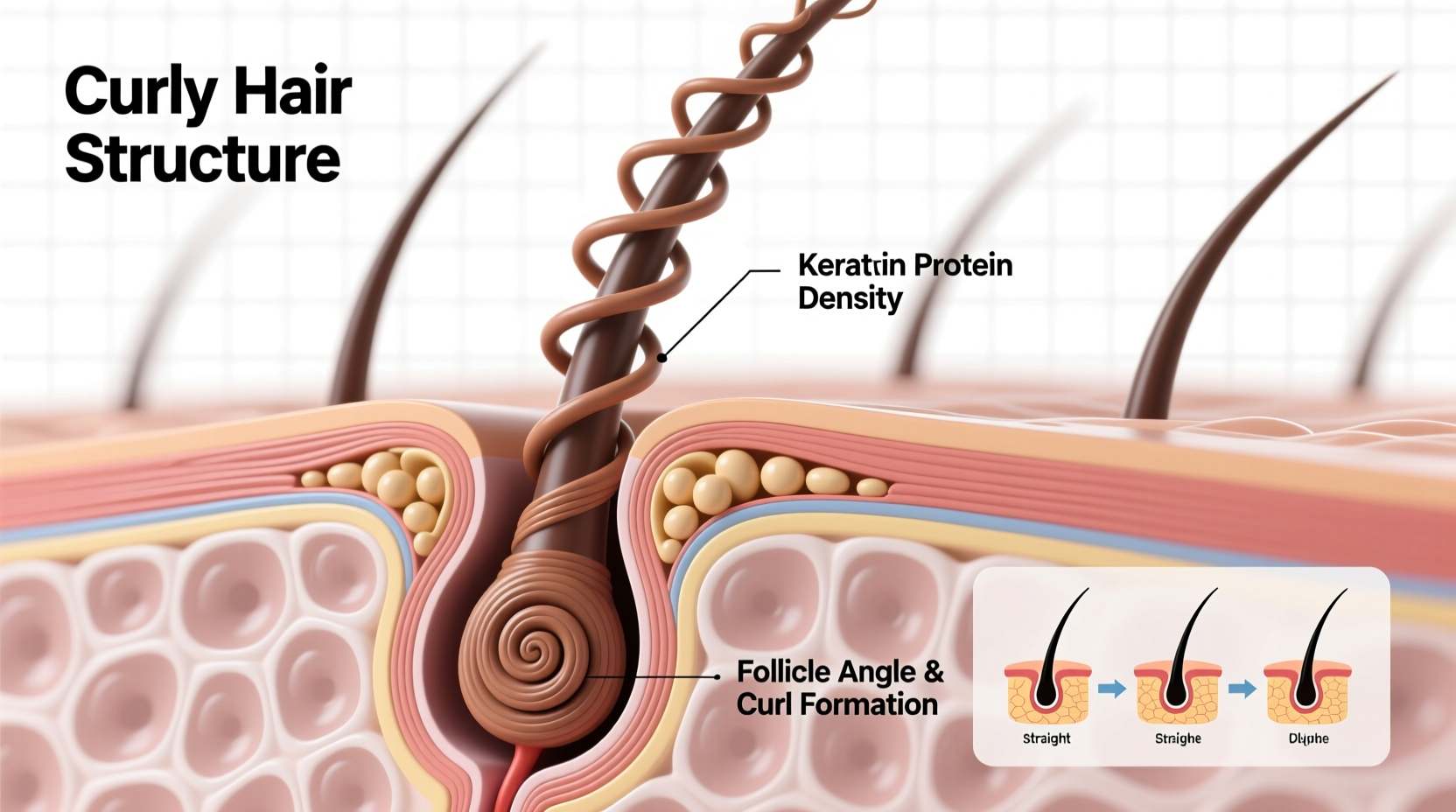
The shape of a hair strand is determined by the structure of the hair follicle. Straight hair grows from round follicles, while oval or asymmetrical follicles produce curly hair. Pubic hair follicles are typically more irregular in cross-section, which causes the hair shaft to twist as it grows—resulting in tight curls.
This structural difference is influenced by genetics and hormones. Androgens like testosterone, which surge during puberty, trigger the transformation of vellus (fine, light) hair into terminal (thick, pigmented) hair in the pubic region. These same hormones influence follicle shape and sebum production, contributing to both the texture and density of pubic hair.
Moreover, pubic hair has a shorter growth cycle than scalp hair—typically 30 to 44 days compared to 2–6 years. This limits its length but ensures constant renewal, helping maintain a clean, functional barrier over time.
Functions of Curly Pubic Hair: Protection and Regulation
Far from being vestigial, curly pubic hair performs several critical functions:
- Friction Reduction: Curled hair provides cushioning between skin surfaces during movement, reducing abrasion in the groin area.
- Barrier Against Pathogens: It traps dirt, debris, and microbes, preventing them from entering the urethra, vagina, or anal canal.
- Thermoregulation: Helps insulate the genital region while allowing airflow to prevent overheating and excessive moisture buildup.
- Scent Retention: Enhances the dispersion of pheromones, possibly influencing subconscious social and sexual interactions.
The interlocking nature of curly hair creates a mesh-like layer that’s more effective at trapping particles than straight hair. This is especially important given the proximity of the genitals to waste elimination pathways. By acting as a physical filter, pubic hair reduces the risk of bacterial migration and urinary tract infections (UTIs).
Comparative Analysis: Pubic Hair vs. Other Body Hair
| Feature | Pubic Hair | Scalp Hair | Facial Hair |
|---|---|---|---|
| Follicle Shape | Oval/Asymmetrical | Rounded (mostly) | Oval |
| Hair Texture | Tightly curled, coarse | Straight to wavy, variable thickness | Wavy to curly, coarse |
| Growth Cycle | 30–44 days | 2–6 years | 1–5 years |
| Primary Function | Protection, scent retention | Insulation, UV protection | Sexual signaling, protection |
| Androgen Sensitivity | High | Moderate | Very High |
Modern Practices and Health Considerations
In recent decades, grooming practices such as shaving, waxing, and trimming have become widespread, particularly in Western cultures. While personal preference drives many of these choices, they can impact the natural functions of pubic hair.
Complete removal increases the risk of skin irritation, ingrown hairs, and micro-abrasions that may facilitate the transmission of sexually transmitted infections (STIs) like herpes or HPV. A 2016 study published in JAMA Dermatology found that individuals who engage in extreme grooming are significantly more likely to report STIs, though causation remains debated.
“We’re seeing a rise in dermatological issues linked to aggressive pubic hair removal. The body evolved this hair for good reasons—removing it entirely removes those benefits.” — Dr. Marcus Reed, Dermatologist, Cleveland Clinic
For those who choose to groom, moderation is key. Trimming rather than complete removal preserves some protective benefits while managing appearance and hygiene.
Step-by-Step Guide to Healthy Pubic Hair Maintenance
- Wash Regularly with Mild Cleanser: Use lukewarm water and a gentle, pH-balanced soap. Avoid douching or scented products that disrupt natural flora.
- Trim Instead of Shaving: Use clean scissors or electric trimmers to shorten hair without removing it completely.
- Exfoliate Weekly: Gently remove dead skin cells to prevent ingrown hairs, especially if you groom frequently.
- Moisturize After Grooming: Apply fragrance-free moisturizer or aloe vera to soothe the skin post-trimming or shaving.
- Inspect for Changes: Monitor for signs of infection, lice, or unusual growths, and consult a healthcare provider if needed.
FAQ: Common Questions About Pubic Hair
Does everyone have curly pubic hair?
No, there is natural variation. While most people have curly or wavy pubic hair, some individuals have straight pubic hair due to genetic differences. Hair texture is influenced by ancestry, hormone levels, and follicle shape.
Can pubic hair curl pattern change over time?
Yes. Hormonal shifts during puberty, pregnancy, menopause, or medical conditions like PCOS can alter hair texture. Medications and aging may also affect curl pattern and density.
Is it unhygienic to have pubic hair?
No. Pubic hair is not inherently unclean. In fact, it plays a role in maintaining hygiene by trapping pathogens. Proper washing is sufficient for cleanliness, regardless of hair presence or style.
Conclusion: Embracing Biology with Informed Choices
The curliness of pubic hair is far more than a quirky anatomical trait—it’s a finely tuned adaptation shaped by evolution to protect, signal, and regulate. From minimizing friction to enhancing chemical communication, its functions are deeply embedded in human biology. While modern aesthetics may favor hairless ideals, understanding the science behind pubic hair empowers individuals to make informed decisions about grooming, hygiene, and health.
Whether you choose to keep, trim, or remove your pubic hair, doing so with awareness of its natural purpose leads to better outcomes for skin integrity and overall well-being. Respect your body’s design, care for it wisely, and recognize that every curl has a story written in evolution.




 浙公网安备
33010002000092号
浙公网安备
33010002000092号 浙B2-20120091-4
Comments
No comments yet. Why don't you start the discussion?