
When following international news, especially regarding Russian politics, it’s common to hear phrases like “The Kremlin announced a new policy” or “Putin’s response from the Kremlin.” Often, “the Kremlin” is used interchangeably with Vladimir Putin or the Russian government. But what does this actually mean? Why is Putin so frequently associated with the Kremlin? This article explores the origins, evolution, and political significance of the term, revealing how a physical fortress became a powerful metonym for Russia’s highest authority.
The Historical Roots of the Kremlin
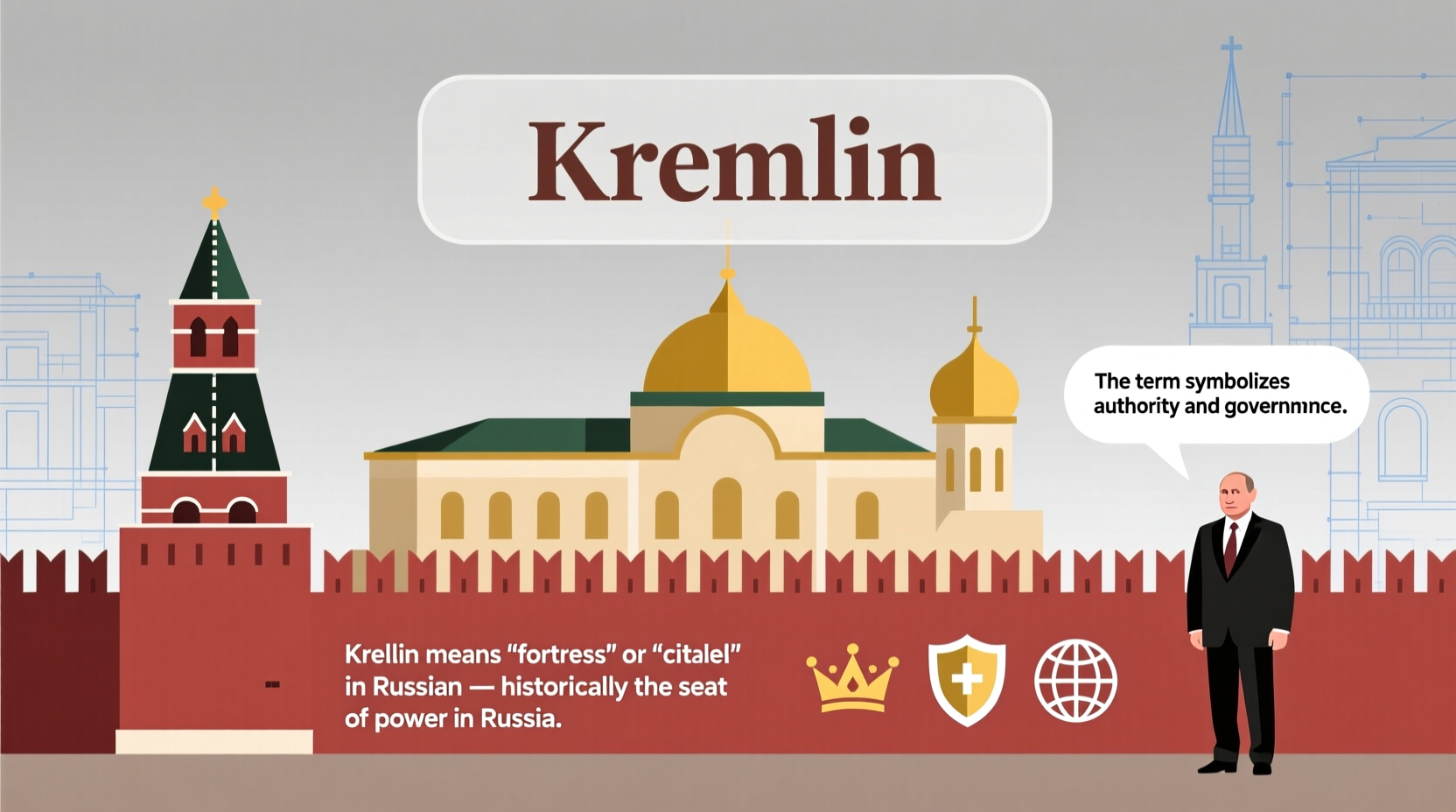
The word “Kremlin” comes from the Russian word *kremly*, which historically meant a fortified central complex in medieval Russian cities. The most famous of these is the Moscow Kremlin, located at the heart of Russia’s capital. Built in the 15th century under Ivan III, it was designed as both a defensive stronghold and a symbol of centralized power. Over centuries, it housed tsars, served as a religious center with its cathedral churches, and later became the seat of Soviet leadership.
Today, the Moscow Kremlin is a UNESCO World Heritage Site and remains the official residence of the President of the Russian Federation. It contains administrative buildings, ceremonial halls, and secure offices where key decisions affecting national and global affairs are made. Because of its enduring role at the center of Russian governance, “the Kremlin” has evolved beyond a mere geographical location—it has become synonymous with political authority in Russia.
Kremlin as a Metonym: Language and Power
In linguistics, a metonym is a figure of speech where a thing or concept is referred to by the name of something closely associated with it. For example, “Wall Street” represents the U.S. financial sector, and “the White House” stands in for the American presidency. Similarly, “the Kremlin” functions as a metonym for the Russian government or its leadership—most notably, President Vladimir Putin.
This usage reflects both convenience and strategic ambiguity. When journalists say “The Kremlin denies involvement,” they’re not referring to stones and towers but to the collective decision-making apparatus led by Putin. It allows media and diplomats to speak about state actions without always naming individuals, while still implicating the highest level of authority.
“Calling Putin ‘the Kremlin’ isn’t just shorthand—it’s a recognition that in Russia, power is deeply institutionalized around a single center, even when individual actors change.” — Dr. Elena Markova, Political Analyst at the European Institute for Russian Studies
Why Putin Is Identified With the Kremlin
Vladimir Putin has been a dominant figure in Russian politics since 1999, serving as both president and prime minister across multiple terms. His leadership style emphasizes centralization of power, loyalty to the state apparatus, and tight control over information. As such, his identity has become inseparable from the institution he leads.
The Kremlin, under Putin, operates as more than an office complex—it is the nerve center of a highly coordinated political system. Major announcements, diplomatic signals, and military directives often originate here. Because Putin personally oversees many of these decisions, attributing actions to “the Kremlin” effectively points back to him.
The Symbolism Behind the Walls
The physical Kremlin is surrounded by red brick walls and towers, some of which date back to the late 1400s. These walls are more than architectural relics—they represent separation, secrecy, and sovereignty. Access is tightly controlled, reinforcing the idea that critical decisions are made behind closed doors, away from public scrutiny.
This opacity contributes to the mystique of “the Kremlin” as an impenetrable entity. In Western media, the term often carries connotations of intrigue, authoritarianism, and strategic calculation. When analysts say “We’re waiting to see what the Kremlin will do next,” they evoke a sense of unpredictability rooted in the perceived insularity of Russian leadership.
How Global Media Uses the Term
International news outlets routinely use “the Kremlin” as a stand-in for Putin’s government. This linguistic choice serves several purposes:
- Conciseness: It’s quicker to say “the Kremlin responded” than “the presidential administration of the Russian Federation issued a statement.”
- Neutrality: Referring to an institution rather than an individual can lend a tone of objectivity, even when discussing controversial actions.
- Dramatic effect: The word carries historical weight and emotional resonance, evoking images of Cold War tensions and great power politics.
| Term | Literal Meaning | Common Usage |
|---|---|---|
| The Kremlin | A fortified complex in Moscow | Russian government or Putin’s inner circle |
| The White House | U.S. presidential residence | American executive branch |
| Downing Street | UK Prime Minister’s office | British government decisions |
| The Elysée | French presidential palace | François Hollande / Emmanuel Macron’s administration |
This table illustrates how major world powers use geographic landmarks to represent their leadership—a practice that underscores the blending of place, power, and perception in political discourse.
Case Study: The 2022 Ukraine Invasion and Kremlin Messaging
During the lead-up to Russia’s full-scale invasion of Ukraine in February 2022, global attention focused intensely on signals coming from the Kremlin. Western intelligence agencies monitored troop movements, but also parsed statements attributed to “Kremlin sources.”
For instance, days before the attack, Russian state media quoted “Kremlin officials” denying any plans for war, while simultaneously, intelligence reports indicated final preparations were underway. This dissonance highlighted how the term can be used strategically—to mislead, delay, or maintain plausible deniability.
In the aftermath, sanctions were imposed “on the Kremlin,” though technically targeting specific individuals and entities. The symbolic weight of the term made it a useful rallying point for international condemnation, even if the legal actions were more narrowly defined.
Expert Insight on Institutional Personification
“In autocratic systems, institutions become personified because power flows through personal loyalty networks. So when we say ‘the Kremlin decided,’ we really mean ‘Putin approved.’ The building is just the stage.” — Dr. Mikhail Grigorenko, Senior Fellow at the Atlantic Council
This observation underscores a key truth: in highly centralized regimes, the distinction between leader and institution blurs. The Kremlin isn’t just where Putin works—it’s the brand of his rule.
FAQ: Common Questions About the Term
Does “the Kremlin” refer only to Putin?
Not exclusively. While Putin is currently the dominant figure, “the Kremlin” can refer to the broader executive branch, including advisors, security services, and allied oligarchs. However, given Putin’s long tenure and consolidation of power, most major decisions are understood to require his approval.
Can other Russian leaders be called “the Kremlin”?
Yes. The term predates Putin. During the Soviet era, “the Kremlin” was used to describe decisions made by the Politburo or General Secretary (e.g., “The Kremlin ordered the Berlin Blockade”). Even after Putin, the term will likely persist as long as Moscow remains the center of Russian governance.
Is the Kremlin open to the public?
Parts of the Kremlin are open as a museum complex, including cathedrals and the Diamond Fund. However, the working areas—such as the Presidential Administration offices—are strictly off-limits. This duality reinforces its dual identity: a historical monument and a living seat of power.
Practical Tips for Understanding Geopolitical Language
- Identify the speaker’s intent: Is the term used to convey authority, distance, or criticism?
- Check the source: State-run media may use “the Kremlin” to emphasize unity; independent outlets might use it critically.
- Follow the timing: Sudden references to “a Kremlin statement” often coincide with crisis moments.
- Look for patterns: Repeated use of institutional names instead of personal ones may indicate efforts to depersonalize controversial decisions.
- Compare across languages: In Russian media, “Кремль” (Kreml) is used similarly, showing the term transcends translation.
Conclusion: Beyond Bricks and Mortar
The reason Vladimir Putin is often called “the Kremlin” goes far beyond geography. It reflects a deep-seated tradition in political language where power is symbolized by place. The Kremlin is not just a fortress or a workplace—it is the embodiment of Russian statecraft, continuity, and centralized control. By understanding this metonymy, readers gain sharper insight into how power is communicated, concealed, and contested in global politics.




 浙公网安备
33010002000092号
浙公网安备
33010002000092号 浙B2-20120091-4
Comments
No comments yet. Why don't you start the discussion?