
R. Kelly, once a celebrated R&B superstar known for hits like “I Believe I Can Fly” and “Ignition (Remix),” now stands as one of the most notorious figures in American pop culture due to his criminal convictions. His fall from grace was not sudden but the result of decades of allegations that culminated in multiple federal and state trials. Today, he is serving a lengthy prison sentence following convictions on serious charges related to sexual abuse, child pornography, and racketeering. This article breaks down the legal proceedings, specific charges, sentencing details, and the broader context behind why R. Kelly is in prison.
The Background: Years of Allegations
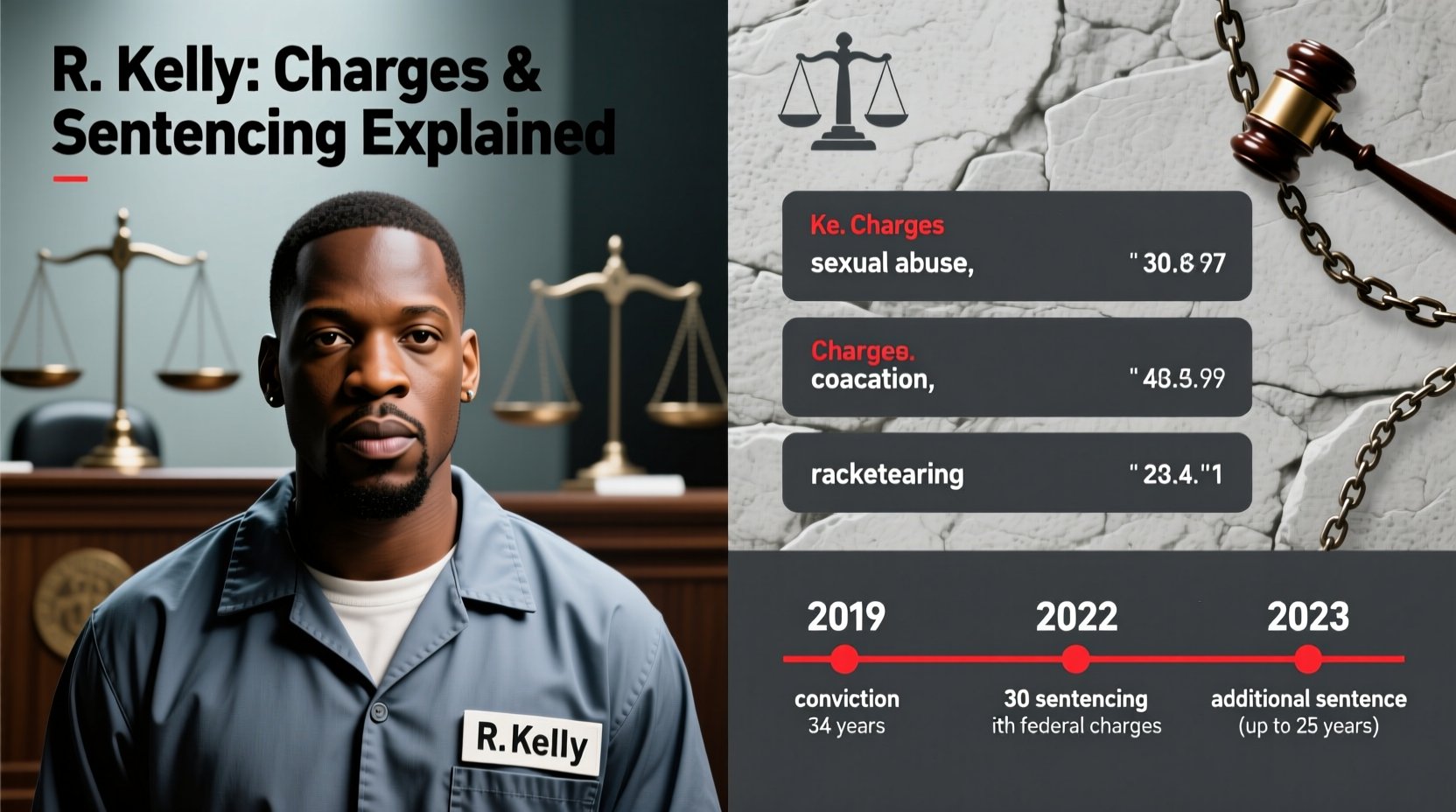
Long before his 2021 conviction, Robert Sylvester Kelly faced persistent accusations of sexual misconduct, many involving underage girls. The first major public controversy emerged in 1994 when he married Aaliyah, then just 15 years old, using a falsified identification document. Though the marriage was annulled months later, it raised red flags about his conduct with minors.
In 2002, a videotape surfaced showing Kelly engaging in sexual acts with an underage girl. He was charged with child pornography but acquitted in 2008 after a highly publicized trial. Despite this outcome, the allegations never fully disappeared. Over the years, more women came forward with disturbing accounts of manipulation, coercion, and abuse.
The turning point came in 2019 with the release of the documentary *Surviving R. Kelly*, which compiled testimonies from survivors, former associates, and family members. The film reignited public scrutiny and prompted federal authorities to act decisively.
Federal Charges and Convictions
In July 2019, a federal grand jury in Brooklyn indicted R. Kelly on multiple counts under the Racketeering Influenced and Corrupt Organizations (RICO) Act and charges related to sex trafficking. The indictment alleged that Kelly had led a criminal enterprise over two decades that systematically recruited women and underage girls for illegal sexual activity.
The key federal charges included:
- One count of racketeering (RICO) with underlying acts including sexual exploitation of a child, kidnapping, forced labor, and bribery
- Nine counts of Mann Act violations (transporting individuals across state lines for illegal sexual activity)
- One count of child pornography
In September 2021, after a six-week trial, a jury found Kelly guilty on all nine counts in the New York case. The verdict marked a watershed moment in the #MeToo era, demonstrating that even powerful celebrities could be held accountable for long-standing patterns of abuse.
“Kelly ran a criminal enterprise designed to recruit women and young girls and subject them to abuse. The evidence showed a pattern of predatory behavior spanning decades.” — U.S. Attorney Breon Peace, Eastern District of New York
Illinois and Minnesota State Charges
Following the federal conviction, Illinois authorities pursued additional charges. In February 2022, Kelly was convicted in Chicago on three counts of criminal sexual assault involving two underage victims between 1998 and 2003. These charges stemmed from incidents where he allegedly coerced teenage girls into sexual acts through intimidation and manipulation.
Later that year, in June 2022, he pleaded guilty to one count of child pornography and one count of enticement of a minor in a separate federal case in Chicago. This plea was part of a strategic move by prosecutors to secure testimony against associates, though Kelly did not cooperate as expected.
In a third jurisdiction, Minnesota, Kelly reached a plea deal in 2023 related to state-level child pornography charges involving a 15-year-old girl. He admitted to receiving and possessing explicit material, further cementing the scope of his criminal behavior.
Sentencing Timeline and Current Status
Kelly has received multiple sentences that run consecutively, ensuring he will spend the rest of his life behind bars. Here is a breakdown of his sentencing timeline:
| Case Jurisdiction | Conviction Date | Charges | Sentence |
|---|---|---|---|
| Eastern District of New York (Federal) | September 2021 | RICO, Mann Act violations, child pornography | 30 years imprisonment |
| Northern District of Illinois (Federal) | June 2022 | Child pornography, enticement of a minor | 20 years imprisonment (concurrent with NY sentence) |
| Illinois State Court | February 2022 | Criminal sexual assault (3 counts) | 20 years imprisonment (to run consecutively) |
| Minnesota Federal Court | July 2023 | Child pornography possession | 5 years imprisonment (concurrent) |
While some sentences run concurrently, the Illinois state sentence of 20 years is set to begin after the completion of his federal term. Given that Kelly was born in 1967 and is currently in his late 50s, he will likely remain incarcerated for life.
How the Legal Strategy Unfolded
Prosecutors used a multifaceted approach to dismantle Kelly’s defense. Key elements included:
- Pattern of Behavior: Presenting evidence from multiple victims across decades to show a consistent modus operandi—grooming, isolating, and controlling young women.
- RICO Application: Treating Kelly’s inner circle as a criminal enterprise allowed prosecutors to frame individual acts as part of a larger, organized scheme.
- Survivor Testimony: Allowing victims to testify publicly helped humanize the impact of his actions and counter narratives that dismissed prior allegations.
- Digital Evidence: Recovered videos, text messages, and financial records proved critical in establishing timelines and intent.
This strategy contrasted sharply with the 2008 trial, where the defense successfully cast doubt on the authenticity of the infamous tape and questioned the motives of accusers. By 2021, societal attitudes had shifted significantly, creating a legal environment more receptive to survivors’ voices.
Mini Case Study: The Role of Public Advocacy
In 2018, a group of women known as the “Survivors Network” began organizing protests outside Kelly’s concerts, demanding accountability. One member, Kitti Jones, had worked as Kelly’s personal assistant and claimed she witnessed abusive dynamics firsthand. Their activism gained traction on social media under the hashtag #MuteRKelly, leading to canceled performances and severed business ties.
This grassroots pressure played a pivotal role in prompting federal investigation. It exemplifies how public advocacy can complement legal action, especially in cases where institutions have historically failed to protect vulnerable victims.
FAQ
Is R. Kelly still appealing his convictions?
Yes. Kelly has filed multiple appeals challenging both his federal and state convictions. In 2023, the Second Circuit Court of Appeals upheld his 30-year federal sentence, rejecting claims of insufficient evidence and unfair trial procedures. Further appeals are possible, but legal experts consider success unlikely given the strength of the evidence.
Did R. Kelly show remorse during trial?
No. Throughout the proceedings, Kelly maintained his innocence and displayed little emotion. In court statements, he accused prosecutors of racism and conspiracy, framing himself as a victim of a “witch hunt.” Survivors and legal observers noted the absence of any acknowledgment or apology for the harm caused.
Can he ever be released?
It is highly improbable. With a minimum of 30 years on federal charges and an additional 20 years from Illinois set to follow, Kelly would be well over 90 years old upon potential release. Given his age and health issues, incarceration for the remainder of his life is effectively certain.
Conclusion: Justice Served, But Lessons Remain
R. Kelly’s imprisonment marks a significant moment in the reckoning with celebrity power and sexual abuse in the entertainment industry. His convictions reflect not only the perseverance of survivors but also evolving legal tools and cultural shifts that now prioritize accountability over fame.
Yet his case also raises difficult questions: How were these abuses allowed to continue for so long? Why did institutions—from record labels to media outlets—fail to intervene? And what protections exist for young fans who may still idolize artists despite their crimes?




 浙公网安备
33010002000092号
浙公网安备
33010002000092号 浙B2-20120091-4
Comments
No comments yet. Why don't you start the discussion?