
Interstate 95 (I-95) is one of the most critical transportation arteries on the East Coast of the United States, stretching over 1,900 miles from Miami, Florida, to Houlton, Maine. When sections of this major highway close unexpectedly, it can cause significant disruptions for commuters, freight carriers, and long-distance travelers. Understanding why Route 95 is closed in real time—and how to respond—can save hours of delay, reduce stress, and improve safety.
Closures on I-95 occur for a variety of reasons: accidents, construction, severe weather, infrastructure failures, or special events. With millions relying on this corridor daily, timely access to traffic alerts is essential. This guide provides a comprehensive overview of the most common causes of closures, how to stay updated, and practical strategies for navigating around them.
Common Reasons for I-95 Closures
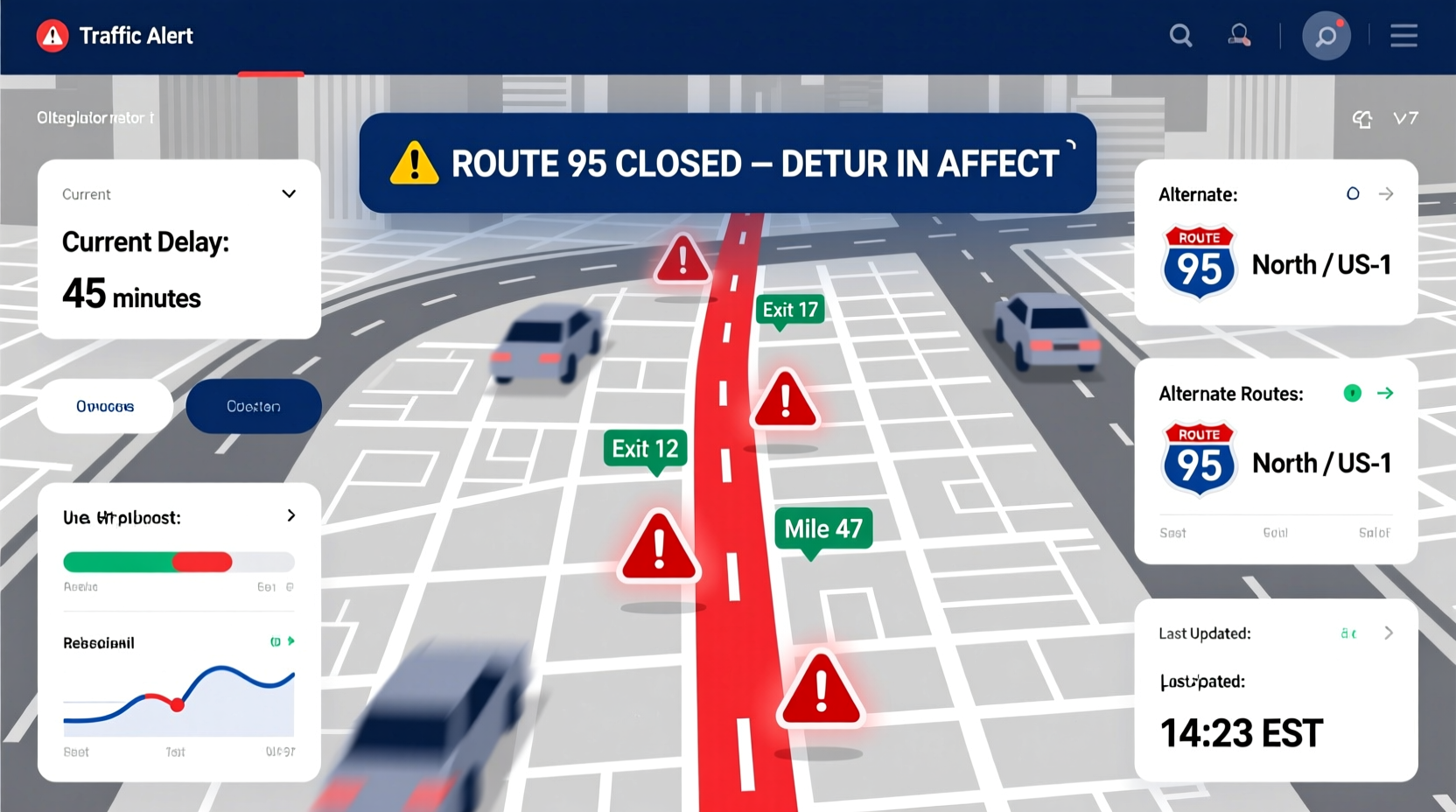
Route 95 closures are rarely arbitrary. Most stem from urgent situations requiring immediate intervention. Knowing the typical triggers helps drivers anticipate delays and make informed decisions.
- Traffic Accidents: Multi-vehicle collisions, especially involving hazardous materials, often lead to full or partial lane closures while emergency crews clear debris and investigate.
- Construction and Maintenance: Scheduled repairs, bridge work, or repaving projects frequently require overnight or weekend lane restrictions.
- Weather Conditions: Heavy snow, flooding, ice, or high winds can make stretches of I-95 unsafe, prompting temporary shutdowns, particularly in northern states during winter.
- Infrastructure Failures: Structural issues like bridge instability or pavement collapse can force emergency closures until engineers assess and repair damage.
- Law Enforcement Activity: Pursuits, crime scene investigations, or security operations may result in sudden, short-term shutdowns.
- Special Events: Presidential motorcades, large public gatherings, or emergency evacuations (e.g., hurricanes) can preemptively close lanes.
“Even minor incidents on I-95 can trigger cascading delays due to high traffic volume. Real-time awareness is key to minimizing impact.” — James R. Holloway, Senior Traffic Analyst at the U.S. Department of Transportation
How to Access Real-Time Traffic Alerts
Staying ahead of closures requires reliable, up-to-the-minute information. Several official and third-party platforms provide live updates tailored to specific segments of I-95.
Official State DOT Websites and Apps
Each state along I-95 operates its own Department of Transportation (DOT) with real-time traffic monitoring systems. These include interactive maps, camera feeds, and incident logs.
| State | DOT Traffic Portal | Mobile App Available? |
|---|---|---|
| Florida | FDOT SmartGuide | Yes |
| Georgia | NaviGAtor | Yes |
| Virginia | 511 Virginia | Yes |
| New Jersey | 511NJ | Yes |
| New York | 511NY | Yes |
| Maine | Maine 511 | Yes |
Most state systems allow users to set up email or text alerts for specific highway segments.
Navigation Apps with Live Traffic Integration
Google Maps, Waze, and Apple Maps use crowd-sourced data and GPS tracking to detect slowdowns and reroute users automatically. Waze, in particular, excels at community-reported incidents such as accidents, police presence, or debris on the road.
Step-by-Step Guide to Responding to a Route 95 Closure
When you encounter news of a closure on I-95, follow this sequence to minimize disruption:
- Verify the Closure: Check multiple sources—DOT website, radio traffic reports, and navigation apps—to confirm location, duration, and cause.
- Assess Your Position: Determine how far you are from the affected zone. If still distant, consider rerouting early to avoid backup.
- Identify Alternate Routes: Use U.S. Routes (e.g., US-1, US-17, US-301) or state highways parallel to I-95. Be aware that these roads may not handle heavy truck traffic efficiently.
- Adjust Travel Time: Add buffer time if detours are unavoidable. Rush hour congestion compounds delays on secondary roads.
- Notify Stakeholders: If you're transporting goods or arriving for a scheduled appointment, inform recipients of potential delays.
- Stay Updated En Route: Keep radio tuned to local traffic stations (e.g., 1010 WINS in NYC, WBAL in Baltimore) or refresh your app every 15–20 minutes.
Case Study: The I-95 Collapse in Philadelphia, June 2023
In June 2023, a tanker truck caught fire beneath an elevated section of I-95 in Philadelphia, causing a massive blaze that melted support beams and led to a complete collapse of the northbound lanes. The closure disrupted regional commerce and commuter patterns for over two weeks.
Emergency response teams worked around the clock, but initial confusion caused widespread gridlock. Drivers who relied solely on GPS found themselves stuck on surface streets ill-equipped for interstate volumes. However, those who monitored PennDOT’s 511 system and followed official detour signage reached their destinations with minimal added time.
This incident highlighted the importance of trusting verified government alerts over algorithmic rerouting. It also accelerated investment in redundant communication systems and faster reconstruction protocols along critical freight corridors.
Travel Planning Checklist for I-95 Drivers
Whether commuting or cross-country driving, use this checklist to prepare for potential disruptions:
- ✅ Check traffic conditions 30 minutes before departure using state 511 service
- ✅ Confirm whether your route overlaps with known construction zones
- ✅ Program alternate routes into your GPS as backups
- ✅ Pack emergency supplies (water, flashlight, phone charger) for unexpected delays
- ✅ Share your itinerary with a contact, especially for long-haul trips
- ✅ Monitor weather forecasts for regions ahead, particularly in mountainous or coastal areas
- ✅ Subscribe to AMBER alerts or emergency notifications via FEMA app
Frequently Asked Questions
How long do I-95 closures usually last?
The duration varies widely. Minor accidents may clear within an hour. Major incidents like structural failures or hazardous material spills can take days. Construction-related closures are typically announced weeks in advance with estimated completion dates.
Are there permanent alternate routes to I-95?
While no single highway fully replaces I-95, several parallel roads serve as functional alternatives: US-1, US-17 (in the South), US-301 (Mid-Atlantic), and Route 1A in New England. However, these often have lower speed limits, more intersections, and limited access for commercial vehicles.
Can I get compensation if I’m delayed due to a closure?
Generally, no. Public highways are maintained under sovereign immunity principles. However, logistics companies may adjust delivery timelines or invoke force majeure clauses in contracts when unforeseen closures occur.
Conclusion: Stay Informed, Stay Safe
Navigating Route 95 demands more than just knowing the exits—it requires proactive engagement with real-time traffic intelligence. Whether you're a daily commuter or a cross-country traveler, staying informed about closures through trusted sources can transform a potentially chaotic journey into a manageable one.
Technology has made real-time updates more accessible than ever, but human judgment remains vital. Combine app alerts with official advisories, plan ahead, and always prioritize safety over speed. The few minutes spent checking traffic conditions could save you hours on the road.




 浙公网安备
33010002000092号
浙公网安备
33010002000092号 浙B2-20120091-4
Comments
No comments yet. Why don't you start the discussion?