
Saffron has long held a place of prestige in kitchens, apothecaries, and royal courts around the world. Revered for its vibrant golden hue, distinctive aroma, and subtle earthy flavor, it remains the most expensive spice by weight—often surpassing even gold in price per ounce. But what drives this extraordinary cost? The answer lies not in marketing or rarity alone, but in a combination of ancient tradition, painstaking labor, and biological limitations that make saffron unlike any other spice.
To understand why saffron commands such high prices, one must look beyond the kitchen shelf and into the fields where it’s grown, the hands that harvest it, and the centuries of cultural significance that have elevated it to near-mythical status.
Ancient Roots: The Historical Significance of Saffron
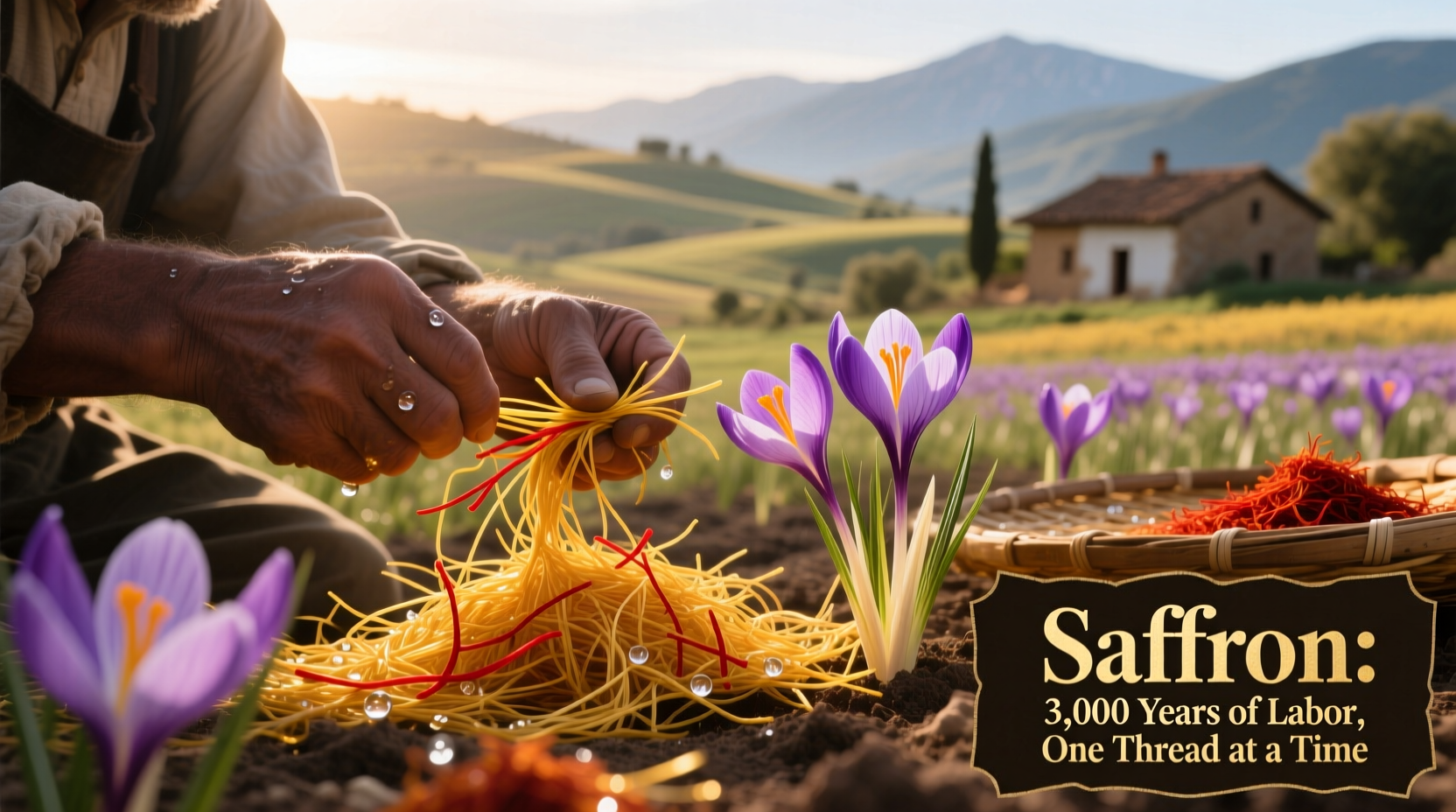
Saffron’s story begins over 3,500 years ago. Historical records and archaeological evidence trace its cultivation to Bronze Age civilizations in the eastern Mediterranean and South Asia. One of the earliest known depictions of saffron harvesting appears in Minoan frescoes on the island of Santorini, dating back to 1600 BCE. These paintings show women gathering crocus flowers, suggesting that saffron was already valued for ceremonial, medicinal, and cosmetic purposes.
In ancient Persia, saffron was cultivated extensively and used in religious rituals, dyes, and perfumes. Persian rulers are said to have scattered saffron threads across palace floors to perfume the air. In India, it became integral to Ayurvedic medicine and temple offerings, symbolizing purity and enlightenment. Buddhist monks wore robes dyed with saffron, a tradition that continues today.
The spice also played a role in medieval European cuisine and medicine. During the Black Death, it was believed to ward off disease, leading to a surge in demand. Traders along the Silk Road carried saffron westward, making it a luxury item accessible only to the wealthy. This historical legacy cemented saffron’s image as a symbol of opulence and exclusivity—a perception that persists in global markets today.
The Biology Behind the Price: What Is Saffron?
Saffron is not a seed, fruit, or bark like most spices. It is derived from the delicate red stigmas of the *Crocus sativus* flower, a sterile species that cannot reproduce naturally and must be propagated manually through corms (underground bulbs). Each crocus bloom produces only three thread-like stigmas, which are carefully hand-plucked and dried to create the final product.
This biological constraint is central to saffron’s scarcity. Unlike pepper or cinnamon, which can be harvested in bulk from mature plants, saffron requires thousands of blossoms to yield even a small amount. On average, it takes about 150,000 flowers—or 450,000 individual stigmas—to produce just one kilogram (2.2 pounds) of dried saffron.
Moreover, the *Crocus sativus* blooms for only one to two weeks each year, typically in the autumn. The flowering window is short, and the stigmas must be harvested within hours of the flowers opening—usually at dawn—before they wilt under sunlight. This narrow harvest period demands intense, time-sensitive labor, further driving up costs.
The Labor of Thousands: How Saffron Is Harvested
No machine can replicate the precision required to harvest saffron. Every step—from picking the flowers to extracting and drying the stigmas—is done entirely by hand. Farmers begin work before sunrise, moving swiftly through fields to collect open blossoms while temperatures remain cool.
Once picked, the flowers are transported to shaded workspaces where teams of workers, often women, begin the meticulous task of separating the stigmas. Using tweezers or fingernails, they pluck the three crimson filaments from each flower. A skilled worker may process 150,000 flowers in a single season—but this effort yields only about one pound of dried saffron.
After extraction, the stigmas are dried quickly to preserve flavor and color. Traditional methods involve spreading them on mesh trays over low heat or using sun-drying techniques. Improper drying can degrade saffron’s quality, reducing its market value. Because of these laborious steps, labor accounts for up to 80% of saffron’s production cost.
“Saffron isn’t farmed—it’s crafted. Each thread represents hours of human attention in a fleeting seasonal window.” — Dr. Farhad Mohammadi, Agricultural Ethnobotanist, University of Tehran
Geographic Limitations and Global Production
Saffron thrives in specific climatic conditions: hot, dry summers and cold winters with well-drained soil. These requirements limit large-scale cultivation to a few key regions. Today, Iran dominates global production, accounting for over 90% of the world’s saffron supply. Other producers include India (particularly Kashmir), Afghanistan, Greece, Morocco, and Spain.
Kashmiri and Spanish saffron are especially prized for their rich color and aroma, but production volumes are small due to political instability, land constraints, and aging farming populations. In contrast, Iran has systematized saffron farming through cooperative models and government support, enabling consistent output despite economic sanctions.
Despite increased interest in saffron farming in countries like the U.S. (California, Pennsylvania) and Australia, yields remain low and costs high due to lack of expertise and economies of scale. As a result, imported Iranian saffron still dominates international markets, though concerns about adulteration and inconsistent grading persist.
Top Saffron-Producing Countries (Annual Output Estimate)
| Country | Annual Production (Metric Tons) | Global Share | Notable Characteristics |
|---|---|---|---|
| Iran | 400–450 | ~90% | High yield, competitive pricing, variable quality tiers |
| India (Kashmir) | 10–15 | ~3% | Deep color, strong aroma, premium branding |
| Afghanistan | 5–10 | ~2% | Growing output, increasing export focus |
| Spain | 3–5 | ~1% | Premium grade, strict classification (e.g., “Coupe”) |
| Greece | 5–7 | ~1% | Protected designation (PDO Krokos Kozanis) |
Economic and Market Factors Driving Cost
Beyond biology and labor, several economic forces contribute to saffron’s high price. First, the capital investment required to start a saffron farm is significant. Farmers must purchase corms (which cost $2–$5 per bulb), prepare specialized fields, and wait a full year before the first harvest. Profitability depends on sustained yields over multiple seasons, making it a high-risk venture.
Second, saffron is highly susceptible to fraud. Due to its value, it is one of the most commonly adulterated spices. Unscrupulous sellers may mix saffron with cheaper substitutes like marigold petals, safflower, or turmeric dust, or dilute threads with glycerin to increase weight. This has led to consumer distrust and a premium placed on certified, lab-tested saffron.
To combat this, organizations like ISO have established grading standards (ISO 3632) based on crocin (color), picrocrocin (taste), and safranal (aroma) levels. Top-tier saffron labeled “Coupe” or “Super Negin” can fetch upwards of $5,000–$10,000 per kilogram, while lower grades sell for a fraction of that.
Finally, demand continues to rise. Beyond traditional use in dishes like paella, risotto, and biryani, saffron is gaining popularity in wellness products, cosmetics, and natural dyes. Clinical studies exploring its antidepressant and antioxidant properties have further boosted interest, creating upward pressure on prices.
Mini Case Study: A Family Farm in Khorasan, Iran
In the village of Gonabad, eastern Iran, the Rahimi family has grown saffron for three generations. Their 2-hectare plot produces about 8 kilograms of dried saffron annually. During harvest season, 15 family members and hired workers gather daily at 5 a.m. to pick flowers. Each person earns about $10 per day—double the local agricultural wage—for their efforts.
Last year, a sudden frost damaged 30% of the crop. Despite the loss, the family sold their saffron through a cooperative that guaranteed fair pricing and access to export markets. By adhering to ISO standards and offering traceable batches, they secured buyers in Germany and Japan willing to pay $7,000 per kilogram.
“We don’t grow saffron for quick money,” says Fatemeh Rahimi, who manages quality control. “It’s our heritage. But without proper recognition and fair trade, even the best farmers struggle to survive.”
How to Use Saffron Wisely: Tips and Best Practices
Given its cost, using saffron efficiently is essential. A little goes a long way—just a pinch (about 20 threads) is enough to flavor and color an entire dish for four people.
- Store properly: Keep saffron in an airtight container away from light and moisture. Properly stored, it retains potency for up to two years.
- Avoid powdered forms unless trusted: Powdered saffron is more prone to adulteration. Always buy whole threads from reputable sources.
- Substitute wisely: While no substitute matches true saffron, turmeric or annatto can mimic color—but not flavor. Use them only when authenticity isn’t critical.
Checklist: Buying High-Quality Saffron
- ✅ Purchase whole threads, not powder.
- ✅ Look for deep crimson-red color; avoid orange or yellow hues.
- ✅ Check for certification (ISO 3632, PDO, organic).
- ✅ Smell the threads—they should have a floral, honey-like aroma, not musty or stale.
- ✅ Perform a solubility test: Place a thread in warm water. True saffron releases a golden-yellow hue slowly over 10+ minutes.
Frequently Asked Questions
Why is saffron more expensive than gold?
While saffron can exceed gold in price per ounce in some markets, this comparison is contextual. Gold is priced globally based on weight and purity, whereas saffron’s cost reflects extreme labor intensity, low yield, and seasonal availability. At retail, top-grade saffron can reach $10,000–$15,000 per kilogram (~$300 per ounce), briefly surpassing gold’s per-ounce value depending on market fluctuations.
Can saffron be grown at home?
Yes, but not profitably. Gardeners can plant *Crocus sativus* corms in temperate climates with well-drained soil. However, you’d need hundreds of plants to harvest just a gram of saffron. It’s feasible for personal use or educational purposes, but not as a commercial venture without scale.
Is expensive saffron worth it?
For culinary authenticity and potency, yes. Premium saffron contains higher concentrations of crocin and safranal, delivering superior color, flavor, and potential health benefits. Cheaper alternatives often lack depth and may be adulterated. Investing in quality ensures both safety and sensory excellence.
Conclusion: Valuing the Threads of Time
Saffron’s price is not arbitrary—it is a reflection of centuries of tradition, biological rarity, and human dedication. From ancient frescoes to modern laboratories, its journey underscores a simple truth: some things cannot be rushed, mechanized, or replicated. Each golden thread carries the weight of pre-dawn harvests, skilled hands, and cultural memory.
Understanding why saffron is so expensive transforms how we use it—not as a mere ingredient, but as a symbol of patience and craftsmanship. Whether you’re seasoning a pot of rice or exploring its therapeutic potential, honoring saffron means valuing the labor behind every filament.




 浙公网安备
33010002000092号
浙公网安备
33010002000092号 浙B2-20120091-4
Comments
No comments yet. Why don't you start the discussion?