
Apple TV+'s *Severance* has quickly become one of the most critically acclaimed and visually distinctive series in modern television. With its eerie atmosphere, intricate narrative, and meticulous production design, the show stands out—but so does its price tag. Season 2 of *Severance* is reportedly one of the most expensive productions in streaming history, with estimates placing its per-episode cost between $15 million and $20 million. That puts it on par with blockbuster series like *The Crown* and *Stranger Things*. But why exactly is *Severance* so expensive? This article breaks down the key factors behind its soaring budget, from production complexity to talent compensation and post-production demands.
Production Design: Building a World That Doesn’t Exist
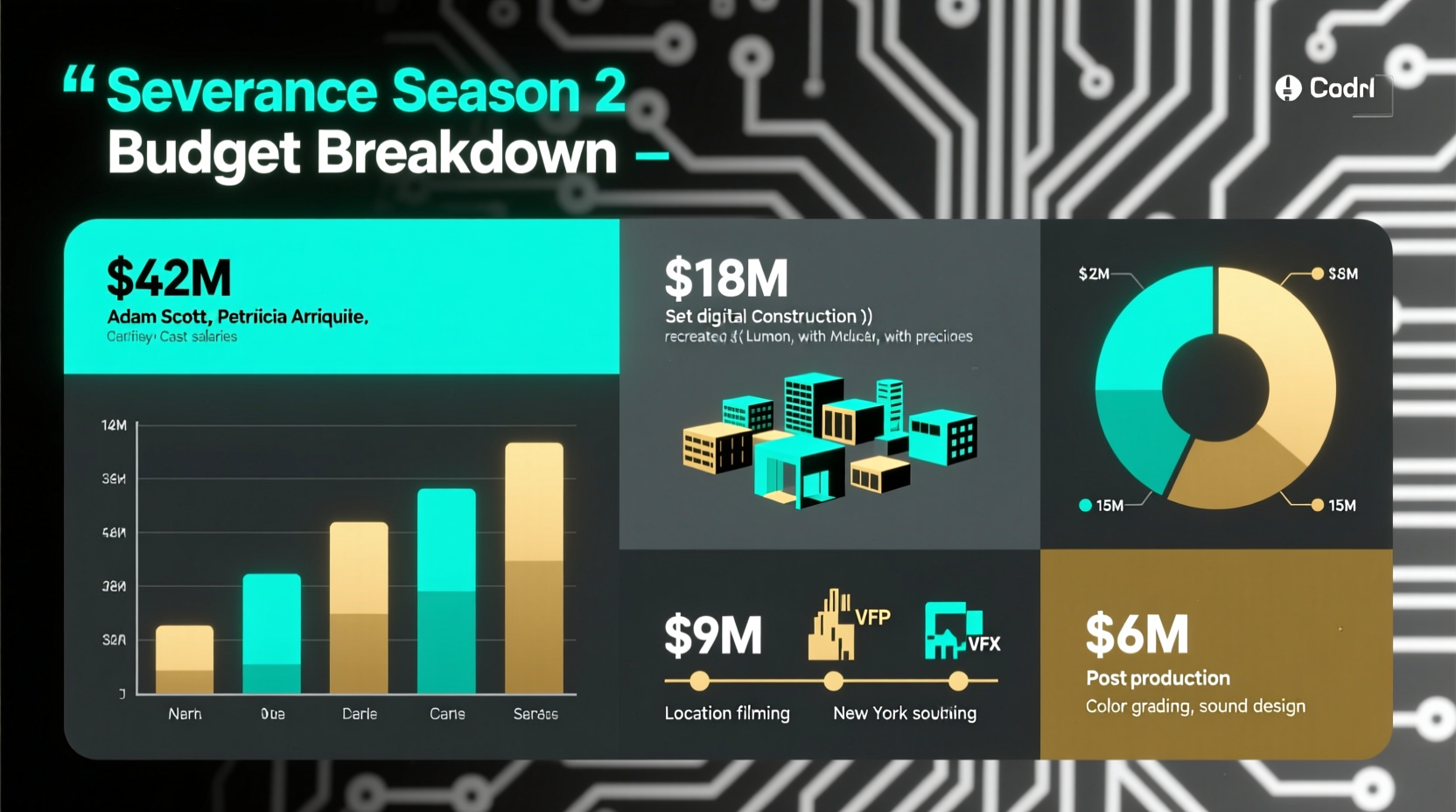
The heart of *Severance*'s visual identity lies in its production design. The Lumon Industries office—a sterile, retro-futuristic labyrinth—is not a real place. It was constructed almost entirely from scratch across multiple soundstages at York Studios in New Jersey. The set spans over 40,000 square feet and includes dozens of intentionally repetitive hallways, break rooms, and departmental offices designed to evoke psychological unease and corporate absurdity.
Every detail, from the fluorescent lighting to the vintage-inspired furniture and cryptic artwork, was hand-curated by production designer Jeremy Hindle. Materials were sourced globally, including mid-century Danish chairs and custom-made light fixtures that mimic Cold War-era government buildings. Unlike typical office sets reused across shows, Lumon’s interiors are uniquely built for *Severance*, making them non-transferable and costly to maintain.
Talent Compensation: A-List Cast and Creative Leadership
Lead actor Adam Scott, who plays Mark Scout, earns an estimated $300,000 per episode for Season 2—a substantial increase from his initial salary in Season 1. His supporting cast, including Patricia Arquette, John Turturro, Christopher Walken, and Britt Lower, also command premium rates due to their star power and the show’s rising prestige.
Beyond acting, creator Dan Erickson and executive producer Ben Stiller are central to the show’s vision and execution. Stiller, who directs multiple episodes, receives backend profit participation and a producing fee that contributes significantly to overhead. According to industry insiders, Stiller’s involvement alone adds millions to the budget through creative oversight, scheduling demands, and final cut approval.
“High-end streaming dramas today aren’t just about storytelling—they’re about assembling a dream team. When you have top-tier talent committed to quality, the budget reflects that.” — Lisa Chen, Television Finance Analyst, *Deadline Economics*
Shooting Schedule and Filming Complexity
Season 2 of *Severance* took nearly ten months to film—nearly double the time of a standard network drama. Multiple factors contributed to this extended timeline:
- Elaborate scene choreography: Long tracking shots, such as the infamous “dance break” sequence in Season 1, require precise coordination and multiple takes.
- Visual continuity: Maintaining the exact look and feel across hundreds of identical-looking hallways demands constant attention from art directors and camera teams.
- Actor availability: Scheduling conflicts among a busy ensemble cast led to fragmented shooting schedules, increasing studio rental and crew costs.
The show also uses minimal digital effects, opting instead for practical solutions—such as moving walls, rotating sets, and hidden doors—which are far more labor-intensive and time-consuming than CGI alternatives.
Post-Production and Visual Effects
While *Severance* doesn’t feature explosions or alien invasions, its post-production process is exceptionally demanding. The show relies heavily on subtle visual manipulation to enhance mood and disorientation:
- Color grading is used to desaturate the “innie” world while slightly warming the “outie” reality, reinforcing the psychological split.
- Sound design involves layered ambient noise, mechanical hums, and silence strategically deployed to build tension.
- Even minor VFX—like removing modern logos from background props or extending hallway perspectives—are handled frame-by-frame due to the show’s obsession with aesthetic consistency.
These processes require elite-level editors, sound mixers, and VFX artists working for months after filming wraps. Post-production for Season 2 reportedly consumed over $4 million alone—more than some entire indie films.
Detailed Budget Breakdown (Estimated)
| Category | Cost Per Episode (Est.) | Notes |
|---|---|---|
| Cast Salaries | $2.8 million | Includes leads, supporting actors, and recurring roles |
| Production Design & Sets | $4.1 million | Construction, maintenance, materials, and set dressing |
| Crew & Labor | $3.2 million | Over 200 crew members across departments |
| Directing & Producing Fees | $2.0 million | Ben Stiller, Dan Erickson, and key EPs |
| Post-Production | $3.5 million | Editing, sound, color, VFX, music licensing |
| Studio & Equipment Rental | $1.7 million | York Studios, camera gear, lighting rigs |
| Miscellaneous / Contingency | $1.2 million | Travel, insurance, delays, reshoots |
| Total (Per Episode) | $18.5 million | Based on 10-episode season estimate |
Mini Case Study: The Perpetuity Wing Sequence
One of the most talked-about scenes in Season 2’s early footage is the exploration of the “Perpetuity Wing”—a museum-like corridor filled with bizarre artifacts glorifying Kier Eagan, Lumon’s founder. This single sequence took six weeks to shoot and required:
- Design and construction of 14 unique sculptures and relics
- Hiring historical consultants to develop fictional corporate mythology
- Custom lighting rigs to create an otherworldly glow
- Extensive rehearsals for choreographed walking patterns
The total cost for this one storyline exceeded $1.3 million—roughly the entire budget of a typical cable drama episode. Yet, critics and fans have hailed it as a masterclass in environmental storytelling, proving that every dollar was spent in service of narrative depth.
Frequently Asked Questions
Is *Severance* the most expensive TV show ever?
No, but it’s among the most expensive per episode. *The Lord of the Rings: The Rings of Power* holds the record at ~$60 million per episode. However, *Severance* ranks in the top tier for non-fantasy, character-driven dramas.
Why doesn’t Apple cut costs on *Severance*?
Apple views *Severance* as a prestige flagship. Its critical acclaim, awards buzz, and role in driving Apple TV+ subscriptions justify the high spend. Losing the show’s artistic integrity for budget reasons could damage its brand value.
Will the budget affect future seasons?
Unlikely. If Season 2 performs well, Apple may increase investment. However, efficiencies from reusing sets and streamlined workflows could stabilize costs in Season 3.
Expert Insight: The Business of Prestige TV
“In today’s streaming wars, differentiation matters more than cost-efficiency. *Severance* isn’t just a show—it’s a statement. Apple is paying for cultural impact, not just entertainment.” — Raj Patel, Media Economist, Deloitte Insights
This philosophy explains why studios continue greenlighting high-budget projects despite uncertain ROI. In a saturated market, originality and excellence become competitive advantages. *Severance* delivers both, making its expense a strategic investment rather than a financial liability.
Actionable Checklist: What Makes a Show Budget Blow Up
For aspiring producers or curious fans, here’s how to spot a high-budget production in the making:
- Original, large-scale set construction (not repurposed locations)
- A-list cast with backend deals
- Extended filming schedule beyond 6 months
- Director or showrunner with final creative control
- Heavy reliance on practical effects over CGI
- Minimal use of stock music—original score commissioned
- Multiple post-production passes for sound and color
Conclusion: Quality Has a Price
*Severance* isn’t expensive because it wastes money—it’s expensive because it values craftsmanship. From its haunting set design to its psychologically layered performances, every element is deliberately engineered to unsettle, engage, and endure. While most shows cut corners to meet deadlines and budgets, *Severance* chooses precision over speed, authenticity over convenience.
Its Season 2 budget reflects a commitment to artistic ambition in an era where too many streamers prioritize volume over vision. Whether or not you find the story compelling, you can’t deny the effort behind every frame. In a landscape flooded with disposable content, *Severance* proves that some things are worth paying for.




 浙公网安备
33010002000092号
浙公网安备
33010002000092号 浙B2-20120091-4
Comments
No comments yet. Why don't you start the discussion?