
The name “Soap” in the Call of Duty series stands out—not because it sounds like a secret agent codename or a hardened warrior’s moniker, but because it’s literally the word for a cleaning product. Yet, John \"Soap\" MacTavish has become one of the most recognizable protagonists in modern first-person shooter history. His nickname raises eyebrows among new players: Why would a lethal special forces operative be called Soap? The answer lies not in marketing whimsy, but in real-world military tradition, linguistic quirks, and narrative design that grounds fiction in authenticity.
Understanding the origin of “Soap” as a nickname requires stepping beyond the game itself and into the culture of elite soldiers, where nicknames often carry irony, humility, or inside jokes rooted in personal history. This article explores how “Soap” emerged from real military practices, evolved within the Call of Duty: Modern Warfare universe, and became a symbol of relatability and leadership in gaming lore.
Military Nickname Traditions: More Than Just a Label
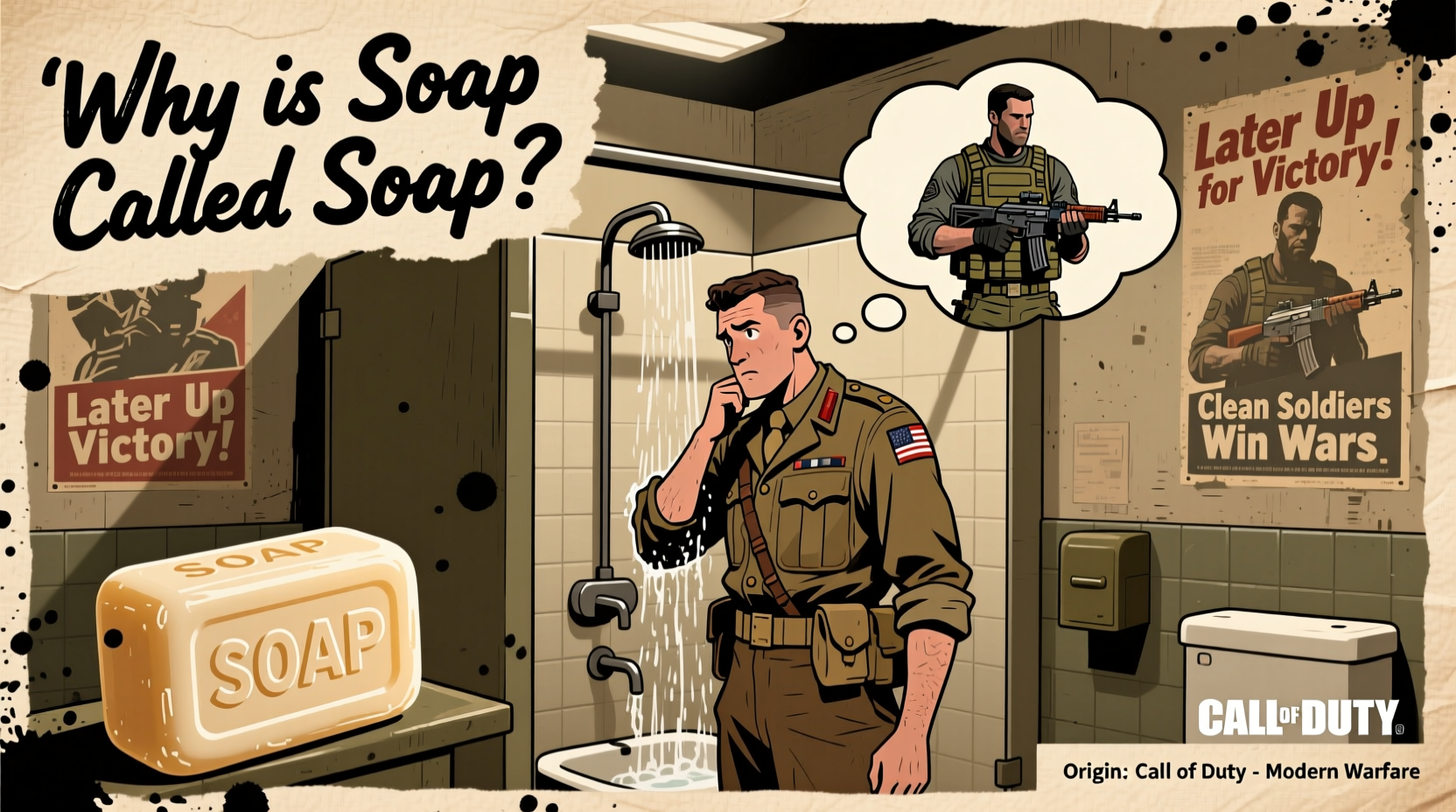
In real-life armed forces, especially among special operations units like the British SAS or U.S. Navy SEALs, nicknames are more than casual handles—they’re rites of passage. These names often emerge during training or early deployments, born from mishaps, physical traits, speech patterns, or ironic contrasts to a soldier’s demeanor.
For example, a towering soldier might be called “Tiny,” while someone overly cautious could earn “Reckless.” The nickname “Soap” fits this pattern of paradoxical labeling. It doesn’t denote softness; rather, it subverts expectations. In military circles, calling a rugged operator “Soap” undercuts ego and reinforces unit cohesion through humor.
“Nicknames in special forces serve as equalizers. They remind everyone—no matter how skilled—that they’re part of a team, not a lone hero.” — Major Daniel Reeves (Ret.), former UKSF advisor
The Real-World Origin of 'Soap' as a Military Nickname
While “Soap” as a callsign in Call of Duty is fictional, its usage mirrors actual military slang. One documented origin traces back to British Army recruits whose surnames began with “Mac” or “Mc.” During basic training, these soldiers were sometimes nicknamed after household items in a tongue-in-cheek fashion. “MacTavish” phonetically resembles “McCavity” or even “soap dish”—a subtle pun that could easily evolve into “Soap.”
Additionally, some accounts suggest that “Soap” was used ironically for soldiers who maintained unusually high standards of hygiene in field conditions. In environments defined by mud, sweat, and limited sanitation, a soldier who insisted on washing up whenever possible might be teased with the label “Soap.” Over time, such teasing solidifies into an official callsign.
This blend of phonetic play and ironic contrast makes “Soap” not only plausible but consistent with real special forces culture. The developers at Infinity Ward didn’t invent it from thin air—they tapped into authentic traditions to lend credibility to their characters.
Soap's Role in Call of Duty: From Sidekick to Franchise Icon
John \"Soap\" MacTavish first appeared in Call of Duty 4: Modern Warfare (2007) as a supporting character and squad leader under Captain Price. Initially, players assumed he was the main protagonist due to his prominent role in early missions. However, it wasn’t until Modern Warfare 2 (2009) that Soap took center stage as the playable lead for much of the campaign.
His Scottish accent, calm professionalism, and tactical competence quickly made him a fan favorite. But it was the juxtaposition of his deadly efficiency with the absurdly mundane nickname “Soap” that gave him depth. Unlike generic action heroes with names like “Rampage” or “Viper,” Soap felt human—approachable, grounded, even humorous in moments of banter.
The narrative reinforced this duality. In one memorable scene from Modern Warfare 2, when asked why he’s called Soap, he replies dryly: “You don’t want to know.” This line became iconic, fueling speculation and memes across forums and social media. Rather than explain the origin outright, the game leaned into mystery—a storytelling technique common in military units where personal histories remain unspoken unless earned.
Evolution Across the Modern Warfare Series
| Game | Role | Significance of Nickname |
|---|---|---|
| Call of Duty 4: Modern Warfare | Squad leader, secondary protagonist | Introduced without explanation; builds intrigue |
| Modern Warfare 2 | Primary playable character (first half) | Used in radio chatter; humanizes elite soldier image |
| Modern Warfare 3 | Co-leader alongside Price | Nickname symbolizes loyalty and resilience |
| Modern Warfare (2019 reboot) | Absent; legacy referenced | Becomes mythic figure—nickname evokes nostalgia |
| Modern Warfare II (2022) | Posthumous influence | “Soap” represents continuity of values |
The consistency of the nickname across reboots—even when the character isn’t physically present—shows how deeply embedded it has become in the franchise’s identity.
Why 'Soap' Works: Psychology Behind Memorable Gaming Identities
Great video game characters aren’t just defined by abilities or story arcs—they’re remembered by how they make players feel. “Soap” succeeds because his nickname creates cognitive dissonance: a tough, capable soldier with a silly name invites curiosity and emotional connection.
- Relatability: Players project themselves onto Soap partly because his name feels ordinary, unlike fantastical aliases.
- Memorability: Unusual names stick better in memory due to the von Restorff effect (the tendency to remember distinct stimuli).
- Authenticity: The nickname suggests a backstory, even if unexplained, making the world feel lived-in.
Game designers use such techniques deliberately. By choosing “Soap” over something generic like “Mack” or “Tavish,” Infinity Ward added layers of realism and charm without needing exposition.
Mini Case Study: Fan Reaction to 'You Don't Want to Know'
In 2009, shortly after Modern Warfare 2 launched, a clip of Soap responding to a teammate’s question about his name went viral on early gaming forums. The exchange:
Soldier: “So, why do they call you Soap?”
Soap: “You don’t want to know.”
Fans dissected the moment endlessly. Reddit threads speculated whether it referred to a past mission involving chemical agents, a betrayal involving betrayal and “getting clean,” or even a romantic entanglement. Though never officially confirmed, the ambiguity elevated Soap from character to legend. Modders began creating custom skins named “Soap Dish” or “Lather,” and YouTubers produced mock documentaries exploring fake military records.
This organic engagement illustrates how a simple line, paired with a curious nickname, can deepen player investment far beyond scripted content.
How to Choose Authentic-Looking Gamertags: A Checklist
For players looking to emulate the credibility of names like “Soap,” here’s a checklist inspired by real military naming conventions:
- ✅ Base it on a real trait, flaw, or incident (e.g., “Glasses,” “Tripwire”)
- ✅ Use irony or understatement (e.g., “Tank” for a small player)
- ✅ Avoid overused terms like “Shadow,” “Phantom,” or “Assassin”
- ✅ Keep it short and radio-friendly (one or two syllables ideal)
- ✅ Let it evolve naturally—don’t force it
Frequently Asked Questions
Is 'Soap' a real military callsign?
There is no widespread official record of “Soap” being used formally in elite units, but the naming convention aligns with real practices. Soldiers often receive ironic or humorous nicknames based on surname, behavior, or mishaps. So while “Soap” may not be common, it’s entirely plausible.
What does 'Soap' stand for in Call of Duty?
It doesn’t stand for anything. “Soap” is a nickname derived from his full name, John MacTavish. It plays on the sound of “Mac” sounding like “soap” in certain dialects or as a joke about hygiene. No acronym exists.
Why is Soap Scottish?
Soap is Scottish to reflect the international nature of modern special forces. The original Modern Warfare trilogy centers around a joint UK-US operation, and having a Scottish SAS operative adds cultural diversity and vocal distinction. His accent also helps differentiate him from other characters in radio communication.
Conclusion: The Lasting Lather of a Legendary Name
“Soap” endures not because it sounds cool, but because it defies expectation. In a genre filled with hyper-masculine personas and dramatic aliases, a nickname like “Soap” cuts through the noise with authenticity and wit. Rooted in military tradition, amplified by narrative restraint, and embraced by millions of players, it exemplifies how small details can define a legacy.
The next time you hear “This is Soap” crackle over the comms in a Call of Duty match, remember: behind that simple word is a world of meaning—camaraderie, irony, and the quiet strength of those who serve without needing flashy titles.




 浙公网安备
33010002000092号
浙公网安备
33010002000092号 浙B2-20120091-4
Comments
No comments yet. Why don't you start the discussion?