
Sourdough bread has earned a reputation as the more \"digestible\" alternative to conventional bread. Often praised in wellness circles and by artisan bakers alike, it’s frequently described as gentler on the stomach, lower in gluten, and even suitable for people with mild wheat sensitivities. But how much of this is backed by science, and how much is marketing or anecdotal belief? To understand whether sourdough truly supports better digestion, we need to examine the role of fermentation, its impact on carbohydrates and proteins, and what clinical research says about its effects on the human gut.
The Science Behind Sourdough Fermentation
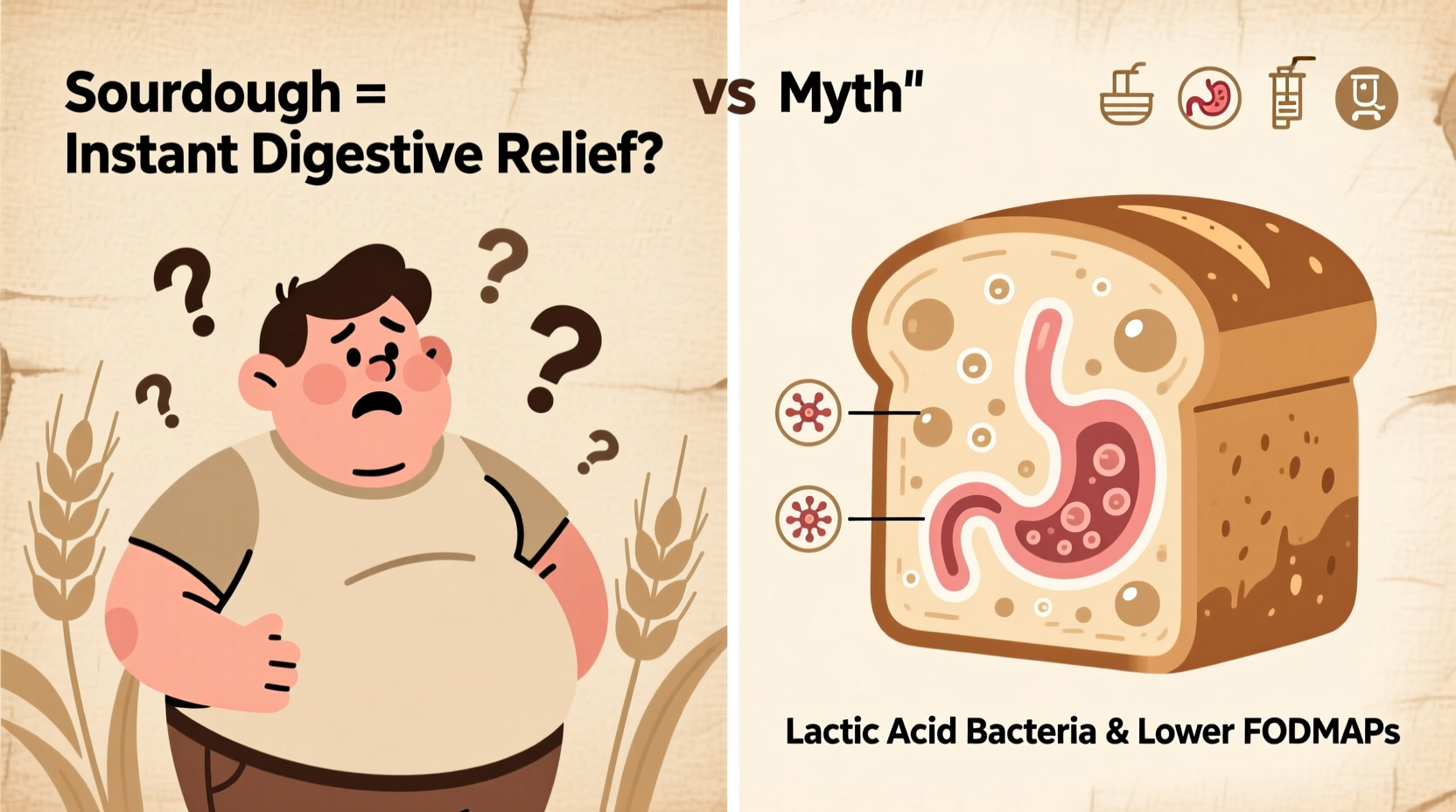
Unlike commercial bread made with baker’s yeast (Saccharomyces cerevisiae), sourdough relies on a natural starter—a mixture of flour and water colonized by wild yeast and lactic acid bacteria (LAB), primarily Lactobacillus species. This microbial ecosystem ferments the dough over an extended period, often 8 to 24 hours, breaking down components in ways that can influence digestibility.
During fermentation, LAB produce organic acids—mainly lactic and acetic acid—which lower the pH of the dough. This acidic environment:
- Slows starch digestion by modifying starch structure
- Inhibits enzymes that degrade certain nutrients
- Promotes prebiotic effects by increasing resistant starch
- Degrades phytic acid, improving mineral absorption
These changes are not merely cosmetic—they alter the biochemical profile of the bread, potentially making it behave differently in the digestive tract compared to conventionally leavened bread.
Myth: Sourdough Is Gluten-Free
A common misconception is that sourdough bread is gluten-free. It is not. If made with wheat, rye, or barley flour, sourdough contains gluten. However, the fermentation process does modify gluten structure.
Studies have shown that specific strains of lactic acid bacteria can partially break down gluten peptides—the protein fragments responsible for triggering immune responses in sensitive individuals. One study published in Clinical Nutrition found that properly fermented sourdough reduced gluten content to levels below 20 ppm (parts per million), technically qualifying as \"gluten-reduced\" under EU standards. However, this was achieved under controlled lab conditions using selected bacterial strains—not typical of home or artisanal baking.
For people with celiac disease, even trace amounts of gluten can cause intestinal damage. Therefore, unless explicitly certified gluten-free and produced in a dedicated facility, sourdough made from wheat should not be considered safe for celiacs.
“While long-fermented sourdough may reduce immunoreactive gluten, it does not eliminate risk for those with celiac disease.” — Dr. Alessio Fasano, Director, Center for Celiac Research & Treatment
Reality: Improved Starch Digestion and Lower Glycemic Impact
One area where sourdough shows consistent benefits is in carbohydrate metabolism. The acidity from fermentation slows the rate at which starches are broken down into glucose during digestion. This results in a lower glycemic index (GI) compared to regular white bread.
A comparative analysis found that sourdough wheat bread had a GI of around 53, while standard white bread scored between 70–75. This means sourdough causes a slower, more gradual rise in blood sugar—beneficial for metabolic health and insulin sensitivity.
Beyond blood sugar control, slower starch digestion may also reduce bloating and gas production in some individuals. Rapid fermentation of undigested carbs in the colon by gut bacteria produces hydrogen and methane, leading to discomfort. By pre-digesting starches during fermentation, sourdough may leave fewer fermentable substrates for gut microbes, thereby reducing gas formation.
Do’s and Don’ts of Choosing Digestible Sourdough
| Do | Don't |
|---|---|
| Choose sourdough with a tangy flavor and dense crumb—signs of proper fermentation | Assume all “artisan” bread is real sourdough; check ingredients |
| Look for loaves labeled “naturally leavened” or containing only flour, water, salt, and starter | Buy bread with added commercial yeast—even small amounts shorten fermentation |
| Opt for whole grain or rye sourdoughs, which contain more fiber and prebiotics | Select products with preservatives, sweeteners, or oils that may irritate the gut |
| Try sourdough if you experience mild bloating from regular bread | Consume sourdough if diagnosed with celiac disease without medical approval |
Gut Health and the Prebiotic Effect
The relationship between sourdough and gut microbiota is another promising angle. Fermentation increases levels of resistant starch and arabinoxylans—types of dietary fibers that resist digestion in the small intestine and serve as food for beneficial bacteria in the colon.
These compounds act as prebiotics, promoting the growth of Bifidobacteria and Lactobacilli. A balanced gut microbiome is linked to improved digestion, enhanced immunity, and even better mood regulation via the gut-brain axis.
Additionally, the organic acids produced during sourdough fermentation—especially lactic acid—may help maintain a healthy gut lining and inhibit pathogenic bacteria like Salmonella and E. coli. While these effects occur primarily during baking and aren’t live cultures like in yogurt, they still contribute to a more gut-friendly food matrix.
Mini Case Study: Maria’s Experience with Wheat Sensitivity
Maria, a 38-year-old teacher, had struggled with chronic bloating and fatigue after eating bread for years. She wasn’t diagnosed with celiac disease or wheat allergy, but avoided most baked goods due to discomfort. After reading about sourdough, she decided to try a traditionally fermented loaf from a local bakery known for long fermentation cycles.
To her surprise, she tolerated the sourdough well—with no bloating or sluggishness. Encouraged, she gradually reintroduced sourdough into her diet, always opting for whole grain varieties with a strong sour taste. Over time, she noticed improvements not just in digestion, but also in energy levels and regularity.
Her experience aligns with emerging evidence suggesting that some individuals with non-celiac wheat sensitivity (NCWS) may tolerate sourdough better than industrial bread—likely due to reduced levels of fermentable oligosaccharides (FODMAPs) and modified gluten.
Fermentation Duration Matters: A Step-by-Step Guide to Real Sourdough
Not all sourdough is created equal. Many commercially sold “sourdough” loaves use shortcuts—added yeast, short proofing times, or acidifiers—to mimic flavor without full fermentation benefits. To ensure you’re getting genuinely digestible sourdough, follow this timeline:
- Day 1: Mix equal parts flour and water with active sourdough starter. Let sit at room temperature (20–24°C) for 8–12 hours until bubbly.
- Day 2: Incorporate this levain into final dough (flour, water, salt). Perform stretch-and-fold every 30 minutes for 2–3 hours to build strength.
- Proofing: Allow bulk fermentation for 4–6 hours, then shape and cold retard overnight (12–16 hours in fridge).
- Baking: Bake at high heat (230°C+) with steam for optimal crust and crumb development.
This full cycle—totaling 24–48 hours—ensures maximal enzymatic activity and microbial breakdown of proteins and carbohydrates. Shortcuts compromise these benefits.
Common Misconceptions About Sourdough and Digestion
Beyond the gluten myth, several other beliefs circulate without strong scientific backing:
- Myth: All sourdough is low-FODMAP.
Reality: While fermentation reduces fructans (a type of FODMAP in wheat), levels vary widely. Some sourdoughs still exceed low-FODMAP thresholds. - Myth: Sourdough helps everyone with IBS.
Reality: Individual responses differ. Some with IBS find relief; others react to residual fructans or fiber. - Myth: Homemade sourdough is always better.
Reality: Poor technique or weak starters can lead to incomplete fermentation, negating benefits.
The key is individual tolerance. What works for one person may not work for another, especially given the complexity of gut health and food sensitivities.
Expert Insight: The Microbiome Connection
Nutrition scientists are increasingly focused on how food processing affects gut ecology. Dr. Eran Elinav, immunologist and microbiome researcher at the Weizmann Institute, notes:
“Our studies show that identical foods can trigger vastly different metabolic responses based on individual microbiomes. Fermented foods like sourdough may favorably modulate this interaction—but personalization is essential.” — Dr. Eran Elinav, Immunology & Microbiome Research, Weizmann Institute
This underscores the importance of listening to your body rather than relying solely on general claims about sourdough’s superiority.
FAQ: Your Sourdough Digestion Questions Answered
Can I eat sourdough if I’m sensitive to wheat?
Some people with non-celiac wheat sensitivity report better tolerance of traditionally fermented sourdough due to partial breakdown of gluten and fructans. However, this varies individually. Start with small portions and monitor symptoms. Never substitute for medical advice if you have a diagnosed condition.
Is sourdough bread easier to digest than whole grain bread?
It depends on the preparation. A poorly fermented whole grain loaf may be harder to digest than a well-made sourdough. The fermentation process in sourdough modifies fiber and protein structures, potentially enhancing digestibility despite higher fiber content.
Does sourdough contain probiotics like yogurt?
No, sourdough does not deliver live probiotics because baking kills the microorganisms. However, it offers prebiotics and postbiotics (metabolic byproducts like organic acids) that support gut health indirectly.
Checklist: How to Choose Truly Digestive-Friendly Sourdough
- ✅ Ingredients: Only flour, water, salt, and starter (no commercial yeast)
- ✅ Fermentation time: At least 12 hours, preferably longer
- ✅ Texture: Slightly dense, moist crumb with irregular air pockets
- ✅ Flavor: Noticeably tangy, not bland or sweet
- ✅ Source: Trusted bakery or homemade with active, mature starter
- ✅ Reaction: Monitor your body’s response—no bloating, gas, or fatigue
Conclusion: Balancing Hype With Evidence
Sourdough bread is not a miracle food, nor is it universally digestible. But when properly made, it represents a significant improvement over industrially produced bread in terms of nutrient availability, glycemic response, and potential gut compatibility. The long fermentation process does alter gluten and starch in meaningful ways, offering tangible benefits for many—though not all—people.
The truth lies between myth and reality: sourdough isn’t inherently “better” for everyone, but it offers a more biologically appropriate way of preparing grain. For those experiencing mild digestive discomfort with regular bread, trying authentic, slow-fermented sourdough may provide relief. Still, it should be approached with awareness, not assumed to be a cure-all.




 浙公网安备
33010002000092号
浙公网安备
33010002000092号 浙B2-20120091-4
Comments
No comments yet. Why don't you start the discussion?