
The night sky appears as a vast, silent canvas of blackness dotted with distant stars. It’s a view so familiar that most people never question it—until they do. Why, in a universe filled with billions of galaxies, each containing billions of stars, is space not blazing with light? Why is the cosmos dark? This seemingly simple question opens a profound window into cosmology, physics, and the very nature of time and space.
The darkness of space isn’t just an aesthetic observation—it’s a clue to some of the deepest truths about our universe. From ancient philosophers to modern astrophysicists, the puzzle has inspired decades of research and revolutionized our understanding of reality.
The Paradox of a Bright Sky
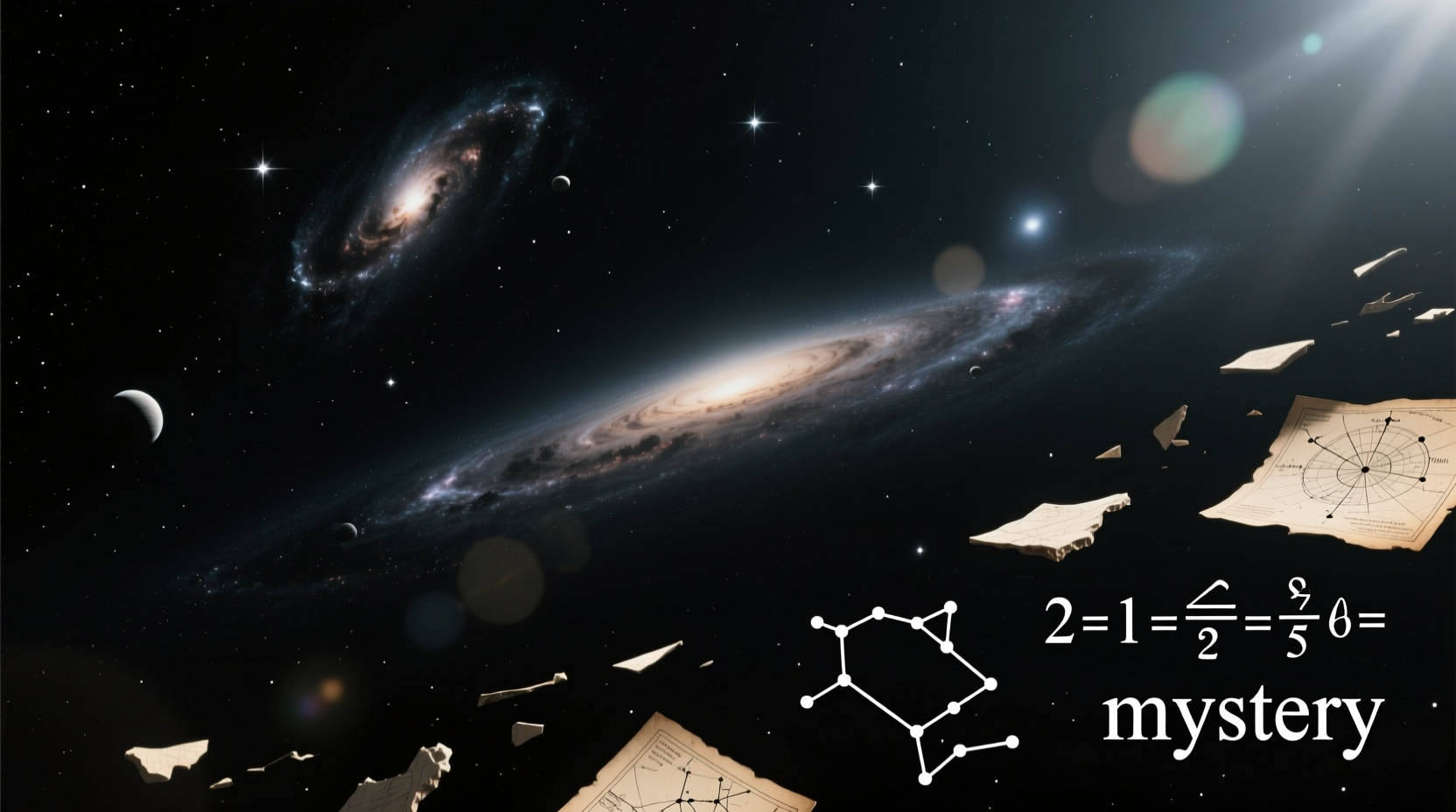
In the 19th century, German astronomer Heinrich Wilhelm Olbers formalized a paradox that had puzzled thinkers for centuries: if the universe is infinite, static, and filled uniformly with stars, then every line of sight should eventually end at a star. In such a scenario, the entire night sky should be as bright as the surface of the Sun. Yet, we observe darkness between the stars. This contradiction became known as Olbers’ Paradox.
At first glance, one might suggest that distant stars are too faint to see. But in an infinite universe, even faint light accumulates. The combined glow of countless stars should create an unbroken luminous backdrop. The fact that this doesn’t happen means one or more assumptions behind the model must be wrong.
“Olbers’ Paradox is not just about brightness—it’s a direct challenge to our assumptions about the universe’s structure and history.” — Dr. Lisa Randall, Theoretical Physicist, Harvard University
The Finite Age of the Universe
One of the most critical resolutions to Olbers’ Paradox lies in the age of the universe. Current estimates place the universe at approximately 13.8 billion years old. Because light travels at a finite speed (about 300,000 km/s), we can only observe objects whose light has had enough time to reach us since the Big Bang.
This means the observable universe has a boundary—not because space ends, but because light beyond that horizon hasn’t reached Earth yet. As a result, vast regions of the cosmos remain unseen, and their light does not contribute to illuminating the night sky.
In essence, the universe is not old enough for all starlight to have arrived. Many potential sources of light simply haven’t had time to send their photons our way.
Cosmic Expansion and Redshift
Another key factor explaining the darkness of space is the expansion of the universe. Discovered by Edwin Hubble in the 1920s, this phenomenon reveals that galaxies are moving away from each other, causing space itself to stretch.
As light travels across expanding space, its wavelength stretches too—a process called cosmological redshift. Visible light from distant galaxies shifts toward the red end of the spectrum, and for the most remote objects, it moves entirely into the infrared or microwave range, becoming invisible to human eyes.
This means that even though countless stars emit light, much of it is transformed into wavelengths we cannot see. The energy is still present, but it no longer contributes to visible brightness. Over time, as expansion continues, more and more galaxies will disappear from view, not because they vanish, but because their light becomes undetectable.
| Factor | Effect on Sky Brightness |
|---|---|
| Finite Speed of Light | Limits how much starlight reaches Earth |
| Age of the Universe | Not enough time for all light to arrive |
| Expansion of Space | Stretches light into invisible wavelengths |
| Interstellar Dust | Absorbs and scatters some starlight |
| Star Distribution | Stars are not infinitely dense or uniform |
The Role of Absorption and Intergalactic Medium
Some early explanations suggested that interstellar dust might absorb starlight, preventing it from reaching Earth. While dust does block certain wavelengths—especially in galactic planes—this alone cannot resolve Olbers’ Paradox. Absorbed light would eventually heat the dust, causing it to re-emit radiation and glow over time. In an eternal, static universe, even dust would reach thermal equilibrium and shine brightly.
However, in our dynamic universe, absorption plays a minor role. The intergalactic medium—sparse gas and plasma between galaxies—can scatter or absorb light, particularly ultraviolet and X-rays. But due to its extremely low density, it doesn’t significantly affect overall sky brightness. The primary reasons for darkness remain the finite age of the universe and cosmic expansion.
A Realistic View: What We Can Actually See
Consider a deep-field image captured by the Hubble Space Telescope. It shows thousands of galaxies in a tiny patch of sky—so small it would be like viewing a grain of sand held at arm’s length. If every region of the sky contains such density of galaxies, why isn’t the whole sky glowing?
The answer lies in scale and sensitivity. Human eyes are limited in resolution and light detection. Most galaxies in deep-field images are visible only through long-exposure photography using powerful telescopes. Their light is incredibly dim by the time it reaches Earth. Moreover, many of these galaxies existed billions of years ago; their light has been redshifted and weakened by the expansion of space.
Even with advanced instruments, we detect only a fraction of the total electromagnetic spectrum. The “darkness” we perceive is partly a limitation of our senses, but fundamentally, it reflects real physical constraints on light propagation across cosmic distances.
Mini Case Study: The Hubble Deep Field Observation
In 1995, astronomers pointed the Hubble Space Telescope at a seemingly empty region near the constellation Ursa Major. Over ten consecutive days, it collected faint light from one of the darkest patches of sky ever studied. The resulting image—the Hubble Deep Field—revealed over 3,000 galaxies, some dating back to just 500 million years after the Big Bang.
This observation confirmed two crucial points: First, the apparent emptiness of space often hides immense complexity. Second, despite the abundance of galaxies, their collective light does not fill the sky because of distance, redshift, and the universe’s youth. The darkness persists not due to absence, but due to the limits of time and perception.
Step-by-Step: How Scientists Explain the Dark Sky
- Assess the assumptions: Question whether the universe is infinite, static, and eternally existing.
- Measure the age of the universe: Use cosmic microwave background data and stellar evolution models to determine a finite age (~13.8 billion years).
- Observe galactic motion: Confirm through redshift measurements that galaxies are receding, indicating an expanding universe.
- Analyze light spectra: Detect shifts in wavelength showing that distant starlight moves out of the visible spectrum.
- Model large-scale structure: Simulate how light propagates in an evolving universe, confirming that cumulative brightness remains low.
- Validate with observations: Compare predictions with deep-sky surveys and satellite data.
Frequently Asked Questions
Doesn't the Milky Way make the sky bright?
The Milky Way appears as a hazy band of light because we’re viewing it edge-on from within. However, even this concentrated starlight doesn’t illuminate the entire sky. Most directions point beyond the galaxy’s dense plane into sparsely populated regions of intergalactic space.
If the universe is full of stars, could future technology make space appear bright?
Advanced telescopes can reveal more objects by detecting non-visible wavelengths (e.g., infrared, radio). But due to redshift and the accelerating expansion of the universe, many distant galaxies will eventually become unreachable by any signal. Over time, the observable universe will grow darker, not brighter.
Will space always be dark?
Yes, and increasingly so. As the universe expands, galaxies will move beyond our cosmic horizon. In trillions of years, distant galaxies may vanish from view entirely. Future observers in our galaxy might see only a few nearby stars against an otherwise black void—making Olbers’ Paradox seem trivial, as evidence of a vast cosmos would be lost.
Final Thoughts: Darkness as a Cosmic Signature
The darkness of space is not an absence of wonder, but a signature of profound truths. It tells us the universe had a beginning. It reveals that space is stretching. It reminds us that our perspective is limited by time, distance, and the speed of light. Far from being empty, the black sky is filled with stories written in fading light and invisible radiation.
Every time you look up at the stars, you’re witnessing a universe in motion—one that is evolving, expanding, and revealing its secrets slowly, patiently. The dark sky isn’t a void; it’s a record of cosmic history, still unfolding.




 浙公网安备
33010002000092号
浙公网安备
33010002000092号 浙B2-20120091-4
Comments
No comments yet. Why don't you start the discussion?