
Space exploration has long captured the human imagination, but its significance extends far beyond wonder and curiosity. From driving technological innovation to safeguarding Earth’s future, venturing into space delivers tangible benefits that ripple through society. While the cosmos may seem distant, the advancements born from space missions are deeply embedded in daily life—from GPS navigation to weather forecasting and medical imaging. As nations and private enterprises push further into orbit and beyond, understanding the real-world impact of space exploration becomes essential.
Scientific Discovery and Understanding Our Universe
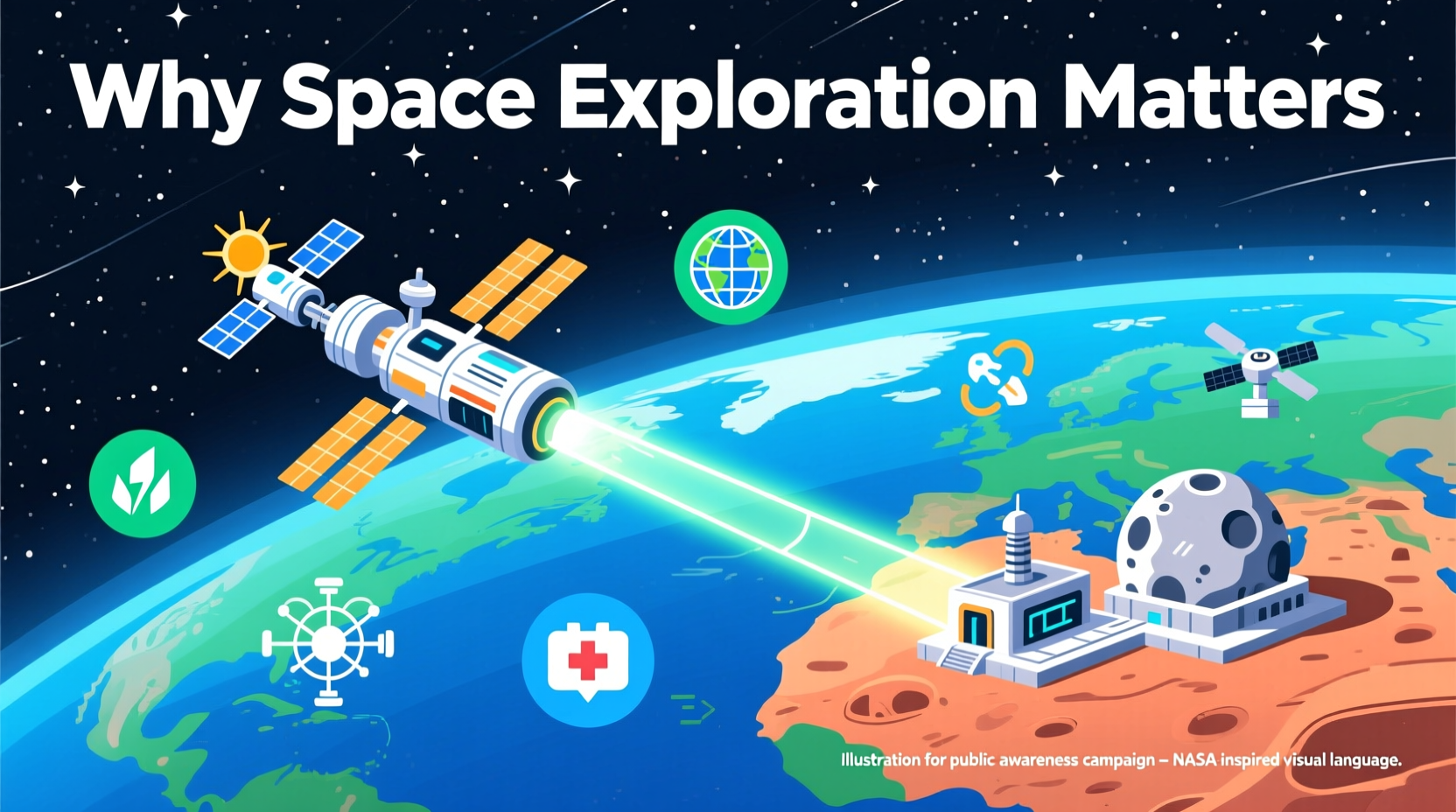
One of the most profound reasons for space exploration is the pursuit of knowledge. By studying celestial bodies, cosmic phenomena, and the origins of the universe, scientists gain insights into fundamental questions about existence, time, and matter. Missions like the Hubble Space Telescope and the James Webb Space Telescope have revealed galaxies billions of light-years away, offering clues about the Big Bang and the formation of stars and planets.
Planetary exploration—such as NASA’s Mars rovers and the Cassini mission to Saturn—has expanded our understanding of geology, atmospheric science, and potential habitability beyond Earth. These discoveries not only satisfy scientific curiosity but also help contextualize Earth’s place in the cosmos.
“We explore not because we are curious, but because we must understand our environment to survive.” — Dr. Neil deGrasse Tyson, Astrophysicist
Studying other planets also allows scientists to model climate change, volcanic activity, and atmospheric evolution under extreme conditions, providing valuable data for addressing environmental challenges on Earth.
Technological Innovation and Everyday Applications
Space exploration drives technological breakthroughs that often find their way into everyday life. The rigorous demands of space travel require lightweight materials, energy-efficient systems, and advanced computing—all of which contribute to broader industrial and consumer applications.
Examples include:
- Digital imaging sensors (CMOS) developed for spacecraft cameras now power smartphone photography.
- Insulation materials created for astronaut suits are used in energy-efficient buildings.
- Water purification systems designed for the International Space Station (ISS) support clean water initiatives in remote regions.
- GPS technology, originally developed for military and satellite navigation, underpins modern transportation, agriculture, and emergency response systems.
Notable Spin-Off Technologies from Space Programs
| Technology | Origin | Civilian Application |
|---|---|---|
| Memory Foam | Astronaut seating cushion research | Mattresses, medical padding |
| Scratch-Resistant Lenses | Spacesuit helmet coating | Sunglasses, eyeglasses |
| Portable Cordless Tools | Lunar sample collection tools | Home improvement devices |
| Infrared Ear Thermometers | Measuring star temperatures | Rapid medical diagnostics |
| Solar Panels | Power systems for satellites | Residential and commercial energy |
Economic Growth and Job Creation
The space industry is a powerful engine for economic development. According to the Space Foundation, the global space economy exceeded $546 billion in 2023, with rapid growth driven by satellite services, launch providers, and emerging space tourism ventures.
New markets such as asteroid mining, orbital manufacturing, and lunar resource extraction are transitioning from science fiction to serious investment opportunities. Companies like SpaceX, Rocket Lab, and Relativity Space are lowering launch costs through reusable rockets, making access to space more affordable and scalable.
This expansion creates high-skilled jobs in engineering, data science, robotics, and aerospace design. Moreover, startups and academic institutions benefit from government contracts and public-private partnerships, fostering innovation ecosystems in cities around the world.
Mini Case Study: The Rise of Commercial Launch Services
In the early 2000s, launching a satellite cost upwards of $20,000 per kilogram. With the introduction of SpaceX’s Falcon 9 rocket and its reusable first stage, that cost dropped below $2,700/kg by 2023. This reduction enabled small companies and developing nations to deploy satellites for communications, agriculture monitoring, and disaster response. For example, Kenya launched its first satellite in 2018 using a rideshare program on a SpaceX mission, marking a milestone in African space capability.
Global Collaboration and Peaceful Diplomacy
Space exploration fosters international cooperation. The International Space Station (ISS), jointly operated by NASA (USA), Roscosmos (Russia), ESA (Europe), JAXA (Japan), and CSA (Canada), stands as a symbol of peaceful collaboration—even during geopolitical tensions on Earth.
Joint missions promote trust, shared standards, and open data exchange. Projects like the Artemis Accords, which outline principles for lunar exploration, involve over 30 countries committed to transparency, safety, and sustainable practices in space.
Such cooperation reduces the risk of conflict over space resources and establishes norms for responsible behavior in orbit. As humanity prepares to return to the Moon and eventually reach Mars, these diplomatic frameworks will be critical to ensuring equitable access and avoiding militarization.
Ensuring the Long-Term Survival of Humanity
Earth faces existential threats—from asteroid impacts and supervolcanoes to climate instability and nuclear risks. Establishing a presence beyond Earth is not just aspirational; it is a strategic hedge against planetary catastrophe.
Exploring and potentially colonizing other worlds could ensure the continuity of human civilization. Mars, with its frozen water and thin atmosphere, is a prime candidate for future habitation. Research conducted on the ISS regarding closed-loop life support systems, food production in microgravity, and radiation shielding directly informs plans for long-duration missions.
“If the dinosaurs had had a space program, they might still be here.” — Carl Sagan, Astronomer and Science Communicator
Additionally, detecting and deflecting near-Earth objects (NEOs) is a growing priority. NASA’s DART mission successfully altered an asteroid’s trajectory in 2022, proving that humanity can defend itself from cosmic threats with sufficient preparation.
Step-by-Step: How a Space Mission Transforms Society
- Concept & Funding: Scientists propose a mission to study exoplanets using infrared sensors.
- Development: Engineers design ultra-sensitive detectors capable of operating in extreme cold.
- Launch & Operation: The telescope launches and begins collecting data on distant solar systems.
- Data Analysis: Researchers identify Earth-like planets and publish findings.
- Spin-Off Innovation: Detector technology improves medical imaging for early cancer detection.
- Public Engagement: Discoveries inspire STEM education and public interest in science.
- Policy Impact: Governments increase funding for space and related research fields.
FAQ
Is space exploration worth the cost?
Yes. While initial investments are high, the long-term returns—in technology, jobs, scientific knowledge, and planetary defense—far outweigh expenses. Every dollar invested in NASA has historically generated between $7 and $14 in economic growth.
Can space exploration help fight climate change?
Absolutely. Satellites monitor deforestation, ice melt, ocean temperatures, and carbon emissions in real time. This data is crucial for modeling climate trends and guiding policy decisions. Additionally, space-based solar power concepts could one day provide clean, continuous energy to Earth.
Will ordinary people ever travel to space?
Commercial spaceflight is already making this possible. Companies like Blue Origin and Virgin Galactic offer suborbital flights, while SpaceX plans orbital and lunar tourism missions. As costs decrease, space travel may become accessible to more people within decades.
Conclusion
Space exploration is not a luxury—it is a necessity for progress, survival, and inspiration. It advances science, fuels economies, unites nations, and expands the boundaries of what humanity can achieve. The knowledge gained from looking outward helps us better understand and protect our home planet while preparing for a future among the stars.




 浙公网安备
33010002000092号
浙公网安备
33010002000092号 浙B2-20120091-4
Comments
No comments yet. Why don't you start the discussion?