
Sunday nights often carry a quiet dread for millions of people—regardless of age, profession, or lifestyle. As the weekend winds down, a familiar unease creeps in: racing thoughts, tightness in the chest, restlessness, or even full-blown panic. This phenomenon, commonly known as “Sunday night anxiety” or “the scaries,” isn’t just a casual complaint. It’s a widespread psychological response rooted in modern work culture, circadian rhythms, and emotional regulation. The good news? It’s not inevitable. With awareness and intentional habits, it can be managed—and often prevented.
The Psychology Behind Sunday Night Anxiety
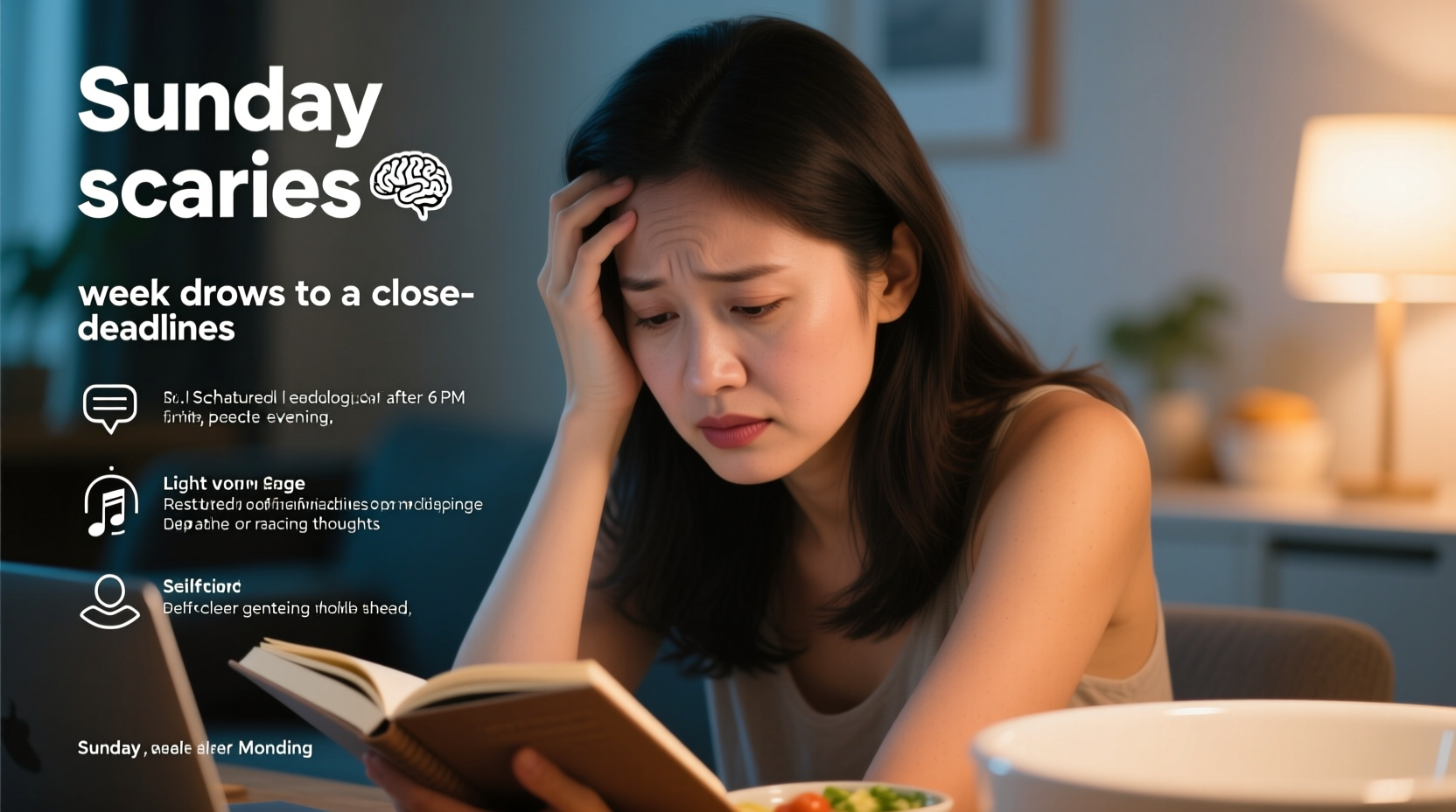
Sunday night anxiety is more than just dreading Monday morning. It’s a complex interplay of anticipation, pressure, and disrupted routines. At its core, this form of anxiety stems from what psychologists call “anticipatory stress”—a mental rehearsal of future challenges that triggers the body’s fight-or-flight response, even when no immediate threat exists.
Work-related expectations top the list of triggers. For many, Sunday evening marks the moment when the mind shifts from leisure to obligation. Thoughts like “I have three back-to-back meetings tomorrow” or “My inbox must be flooded” activate cortisol production, increasing heart rate and mental alertness at a time when the body should be winding down.
Additionally, the contrast between weekend freedom and weekday structure amplifies the discomfort. During weekends, especially if unstructured, people may sleep irregularly, consume more alcohol, or disengage from routine. When Sunday night arrives, the sudden re-entry into discipline feels jarring. This shift disrupts the circadian rhythm, making it harder to fall asleep and easier to spiral into anxious rumination.
“Anticipatory anxiety is one of the most common forms we see in clinical practice. The brain doesn’t distinguish well between imagined threats and real ones—so a stressful meeting on Monday can feel as urgent as a predator in the wild.” — Dr. Lena Reyes, Cognitive Behavioral Therapist
Biological Factors That Fuel the Scaries
While psychological stress plays a major role, biology significantly contributes to Sunday night anxiety. Two key systems are involved: the circadian rhythm and the autonomic nervous system.
The circadian rhythm governs our 24-hour internal clock, regulating sleep, hormone release, and mood. Weekend behaviors—like staying up late Saturday, sleeping in, or skipping meals—can delay melatonin production by several hours. By Sunday night, the body hasn’t naturally transitioned into sleep mode, creating a physiological mismatch between intention (to relax) and capability (to calm down).
Meanwhile, the autonomic nervous system controls whether we’re in “rest-and-digest” (parasympathetic) or “fight-or-flight” (sympathetic) mode. Chronic stress during the week keeps many people in a heightened state of alertness. Without proper decompression over the weekend, the nervous system never fully resets. Sunday night becomes a pressure cooker: unresolved tension meets looming responsibility.
Common Triggers and Who’s Most at Risk
Not everyone experiences Sunday night anxiety equally. Certain lifestyles and personality traits increase vulnerability:
- High-pressure jobs: Roles with tight deadlines, client demands, or performance reviews intensify anticipatory stress.
- Perfectionists: Those who tie self-worth to productivity are more likely to catastrophize minor setbacks.
- Remote workers: Blurred boundaries between home and office make it harder to mentally “clock out” on Sundays.
- People with existing anxiety disorders: Generalized anxiety disorder (GAD) or social anxiety can amplify Sunday-specific fears.
- Irregular weekend routines: Erratic sleep, poor diet, or excessive alcohol use destabilize mood regulation.
A 2023 study published in the Journal of Occupational Health Psychology found that 68% of full-time employees reported moderate to severe anxiety on Sunday evenings, with remote workers showing higher levels due to difficulty disconnecting.
How to Stop the Scaries: A Step-by-Step Guide
Preventing Sunday night anxiety requires both proactive planning and reactive coping strategies. Here’s a practical, step-by-step approach to reclaim your evenings:
- Reframe Your Mindset (Friday Afternoon): Instead of viewing Sunday as a countdown to doom, use Friday to plan enjoyable activities for the weekend. This shifts focus from avoidance to anticipation.
- Create a Sunday Transition Ritual (5–7 PM): Develop a calming routine that signals the end of leisure and the start of preparation. Examples include light stretching, reviewing your calendar, or brewing herbal tea.
- Limit Digital Overload (After 6 PM): Avoid checking work emails or Slack messages. These create cognitive intrusion, making it harder to disengage.
- Write Down Worries (7–7:30 PM): Use a journal to dump all anxious thoughts onto paper. This externalizes them, reducing their power. Follow up by listing one actionable step for each concern.
- Practice Grounding Techniques (As Needed): If anxiety spikes, use the 5-4-3-2-1 method: Identify 5 things you see, 4 you can touch, 3 you hear, 2 you smell, and 1 you taste. This brings attention back to the present.
- Prepare for Monday (Before Bed): Lay out clothes, pack lunch, and review your schedule. Reducing morning decisions lowers cognitive load and builds a sense of control.
- Wind Down with Intention (9 PM Onward): Read fiction, listen to soft music, or meditate. Avoid stimulating content like news or intense TV shows.
Do’s and Don’ts of Managing Sunday Anxiety
| Do | Don’t |
|---|---|
| Stick to a consistent bedtime—even on weekends | Stay up until 2 AM Saturday and sleep until noon Sunday |
| Use Sunday afternoon for light planning, not crisis-solving | Try to finish unfinished work projects on Sunday night |
| Incorporate movement, like a walk or yoga | Spend the entire day sedentary on the couch |
| Drink chamomile or passionflower tea to reduce nervous tension | Consume alcohol or caffeine after 5 PM |
| Talk through worries with a partner or friend | Ruminate alone in silence with no emotional outlet |
Real Example: How Sarah Regained Her Sundays
Sarah, a 34-year-old project manager at a tech startup, used to spend every Sunday in a state of low-grade panic. She’d wake up feeling heavy, scroll through emails compulsively, and lie awake past midnight worrying about team deliverables. Her anxiety was so predictable her partner started calling it “The Sunday Slump.”
After months of poor sleep and irritability, she consulted a therapist who introduced her to behavioral scheduling. Together, they redesigned her weekend. She began scheduling a Saturday hike, limited work communication to Friday only, and created a Sunday evening ritual: lighting a candle, writing in a gratitude journal, and preparing her favorite soup for dinner. Within three weeks, her anxiety decreased significantly. Now, she says, “Sunday is my reset day—not my dread day.”
Expert-Backed Strategies for Long-Term Relief
While short-term fixes help, lasting change comes from structural adjustments. Experts recommend integrating the following practices into weekly life:
- Time-blocking: Allocate specific hours during the week for deep work, email, and breaks. This reduces the feeling of being overwhelmed on Sunday.
- Mindfulness meditation: Just 10 minutes daily can improve emotional regulation and reduce reactivity to stressors.
- Boundary-setting: Communicate clear off-hours to colleagues. Use auto-replies to reinforce availability.
- Cognitive restructuring: Challenge catastrophic thoughts. Ask: “What’s the worst that could happen? How likely is it? Can I handle it?”
“We often forget that anxiety isn’t a flaw—it’s feedback. Sunday night anxiety is your mind signaling that something in your routine needs adjustment.” — Dr. Marcus Tran, Clinical Psychologist
Checklist: Your Sunday Anxiety Prevention Plan
Use this checklist weekly to build resilience against the scaries:
- ✅ Set a consistent wake-up time (within 90 minutes of weekday schedule)
- ✅ Complete any prep for Monday (outfit, lunch, agenda) by Sunday 7 PM
- ✅ Avoid work-related apps and emails after 6 PM
- ✅ Engage in one relaxing activity (bath, reading, music)
- ✅ Practice 5 minutes of box breathing or guided meditation
- ✅ Reflect on one positive moment from the weekend
- ✅ Go to bed within 30 minutes of your target time
Frequently Asked Questions
Is Sunday night anxiety a sign of a bigger mental health issue?
Occasional anxiety is normal, but if it leads to chronic insomnia, physical symptoms (like headaches or nausea), or interferes with daily functioning, it may indicate an underlying condition such as generalized anxiety disorder. In such cases, consulting a mental health professional is recommended.
Can changing my job schedule reduce Sunday anxiety?
Potentially. Flexible hours, remote work options, or four-day workweeks can ease the transition into the workweek. However, structure still matters—having a clear separation between rest and work time is essential, regardless of schedule.
Why do some people not experience this at all?
Individual differences in temperament, job satisfaction, and routine stability play a role. People with strong coping mechanisms, lower-stress roles, or highly structured personal lives often don’t experience significant Sunday anxiety. It’s also less common in cultures with stronger work-life boundaries, such as parts of Scandinavia.
Conclusion: Reclaim Your Nights, One Sunday at a Time
Sunday night anxiety thrives in uncertainty and lack of control. But by understanding its roots—in psychology, biology, and lifestyle—you gain the power to disrupt its cycle. Small, consistent changes compound into profound relief. You don’t have to white-knuckle through another Sunday. Start with one strategy: a calming ritual, a digital curfew, or a simple journal entry. Build from there.
Your weekends should restore you, not set you up for dread. With intention, you can transform Sunday from a pit of anxiety into a platform for calm, clarity, and readiness. The scaries don’t have to win.




 浙公网安备
33010002000092号
浙公网安备
33010002000092号 浙B2-20120091-4
Comments
No comments yet. Why don't you start the discussion?